Automotive supply chain disruptions can delay production and erode margins. The article explains where coordination fails and how SAP helps reduce the resulting costs.
Connecting regional production networks with global distribution and Tier-N suppliers defines modern auto logistics. According to industry valuations, this market is expanding from a $235.8B baseline in 2024 to an estimated $645.8B by 2034. That trajectory represents a sustained annual compounding rate (CAGR) of 10.6% across the decade.
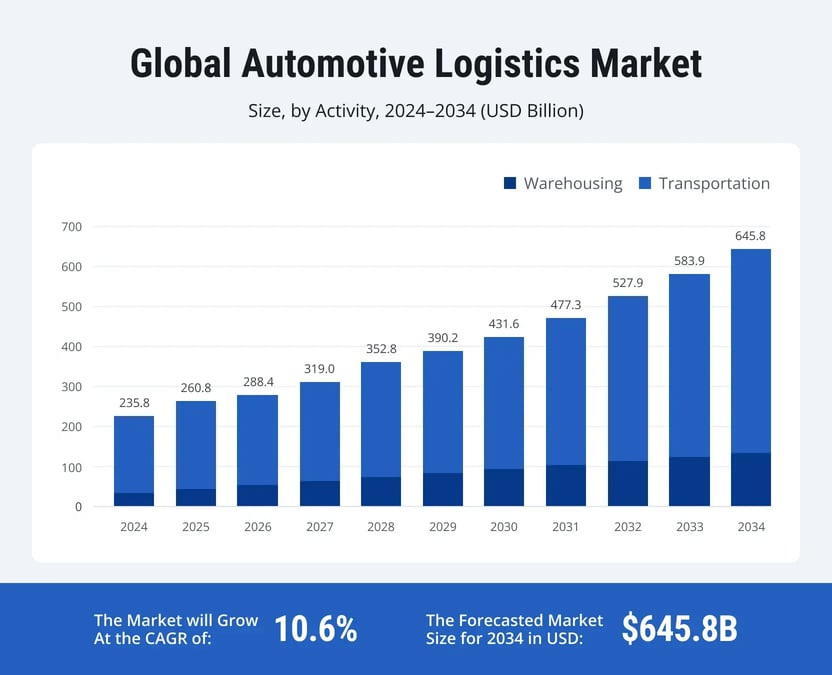 Sources: Market.us
EV production illustrates the scale of the flows behind that forecast. According to the IEA, manufacturers produced nearly 22 million electric cars in 2025, over 25% more than in 2024. China accounted for almost 75% of global output. However, only one-quarter of all supplies directly involve transporting vehicles between major production hubs and demand centers. The rest of the volumes depend on multi-tier supplier networks and tightly timed JIT deliveries.
The efficiency of these flows depends on coordination among all supply chain participants.
Where Automotive Supply Chain Coordination Fails
Recent industry data and company cases show which supply chain problems now have the greatest impact on automotive production and financial performance.
Parts shortages still impede high-margin production
Supply disruption, parts shortages, and inventory management ranked as the leading concern in the AMS/ABB survey, selected by 45% of respondents. The consequences became clear after fires halted production at Novelis’s aluminum plant in New York. Ford relied on the facility for aluminum sheets used in its F-Series pickups, so the interruption threatened output of up to 100,000 vehicles and as much as USD 2 billion in earnings.
Novelis supplemented its supply from its plants in South Korea and Europe, yet the New York facility had still not returned to full production by February 2026. Ford consequently reduced its earnings forecast and carried the production recovery into the following year, demonstrating how dependence on one upstream facility can affect both current output and future schedules.
Tariffs change sourcing costs and production decisions
Tariffs ranked first among cost concerns in the AMS/ABB survey, selected by 45% of respondents. Many vehicles contain imported components or enter the sales market after final assembly abroad, so a tariff change can increase landed cost before manufacturers have time to transfer sourcing or assembly.
By August 2026, General Motors expected gross tariff costs of $2.5 billion to $3.5 billion, potentially exceeding 20% of its operating profit. The company had already announced a $4 billion investment across three US plants, including plans to produce the Chevrolet Blazer from Mexico to the US. Relocating that capacity required plant investment and model-specific production changes over two years, while tariff expenses affected earnings immediately.
Powertrain demand makes capacity planning less predictable
Manufacturers commit tooling and supplier capacity years before actual demand becomes clear. Therefore, slower EV adoption can leave them paying for programs designed for higher volumes.
Stellantis demonstrated the financial consequences in February 2026 when it announced €22.2 billion in charges related to its broader business reset, including reductions across the EV supply chain. €6.5 billion required cash payments over the following four years, while the company cancelled its dividend and saw its shares fall by as much as 30%.
Seven months later, insufficient engine-component capacity forced Stellantis to suspend production at Mirafiori for three days after hybrid demand exceeded its forecast. Both outcomes followed a mismatch between planned capacity and the actual powertrain mix: the company reduced commitments tied to EV volumes, while a shortage of hybrid components stopped current production.
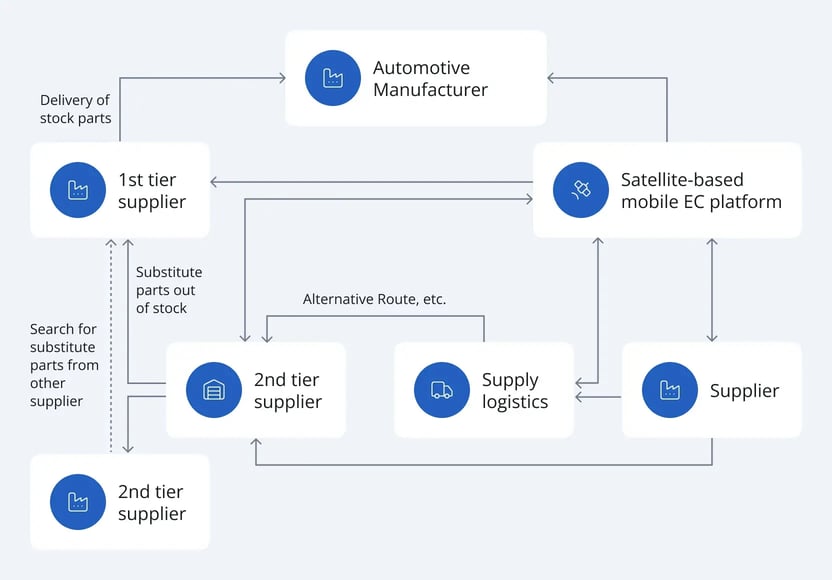
Sub-tier dependencies remain difficult to trace
When China restricted exports from the chipmaker’s local operations in October 2025, Nissan reported incomplete visibility into future supplies and confirmed sufficient stocks only through the first week of November. The company later reduced production at its Kyushu plant by 900 vehicles and announced another cut of 1,400 units. Honda halted its Mexican plant and adjusted output in the United States and Canada.
The affected chips were placed in vehicles through multiple component assemblies. OEMs therefore had to trace them across bills of materials, supplier inventories, and plant schedules before they could calculate the production impact.
Cyber incidents can suspend the physical supply chain
Greater digital connectivity creates another source of operational risk. Upstream’s 2026 Global Automotive and Smart Mobility Cybersecurity Report analyzed 494 publicly reported incidents from 2025. Ransom-related events accounted for 44% of the total, more than double the number from the previous year. Service or business disruption followed 34% of all recorded incidents.
Jaguar Land Rover experienced the production consequences in September 2025. A cyberattack stopped its UK factories for six weeks and generated £196 million in direct costs. British car production subsequently fell 23.8% year over year in October, to 59,010 vehicles. The shutdown also required supplier financing measures, because smaller companies continued carrying labor and operating costs, while JLR orders remained suspended.
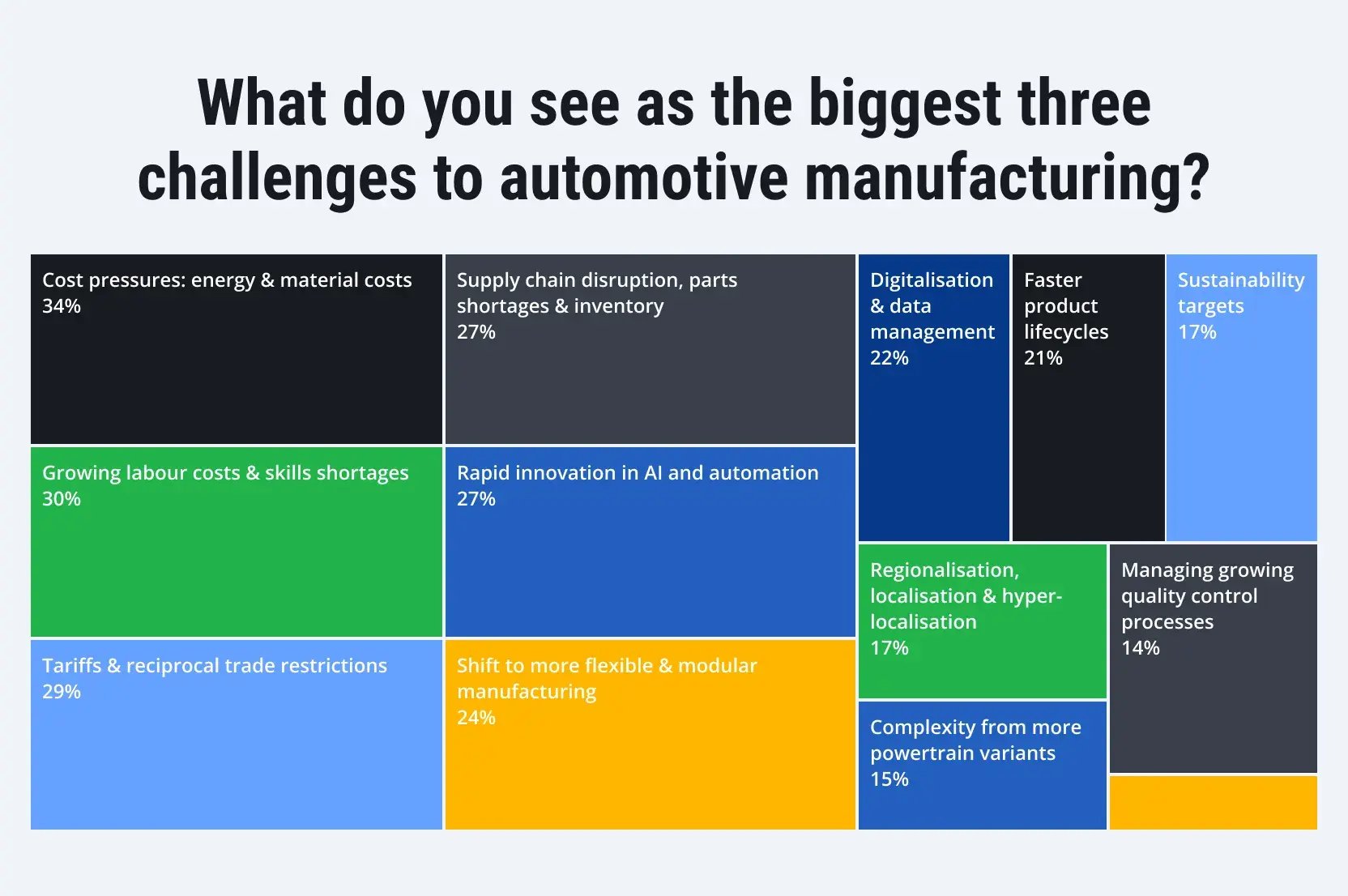 Source: AMS/ABB
How to Build a Resilient Automotive Supply Chain with SAP
The following steps help businesses combine engineering, sourcing, manufacturing, distribution, and aftersales in one ecosystem.
Align demand with vehicle mix and production capacity
Aggregate vehicle volume does not reveal which components the planned configurations will consume. Demand planning therefore needs to cover individual models, powertrains, markets, and option take rates. The resulting component requirements should then be checked against plant capacity, supplier limits, inventory, and budget before the company approves a production plan.
|
SAP solutions |
Potential outcome |
|
SAP Integrated Business Planning: Forecast vehicle demand and option take rates, calculate component requirements, and compare constrained supply scenarios. SAP S/4HANA Manufacturing Logistics: Convert the approved plan into configured production orders, material requirements, and vehicle sequences. |
|
Synchronize engineering changes with sourcing and production
Every component revision affects the production bill of materials, approved suppliers, inspection requirements, work instructions, and service records. These changes need a shared effectivity date and approval process. Otherwise, purchasing may order a new revision before the plant can use it, or production may schedule a component that has yet to complete supplier and quality approval.
|
SAP solutions |
Potential outcome |
|
SAP Engineering Control Center and SAP Product Lifecycle Management: Connect engineering data with bills of materials, routings, revisions, and controlled change records. SAP Ariba: Manage supplier qualification, sourcing, and contract approval for replacement components. SAP Quality Management: Apply the required inspection plan and approved-use conditions. |
|
Convert forecasts into confirmed supplier commitments
Forecasts provide suppliers with future volume requirements, while firm releases specify the quantities and delivery times required for production. Both records need regular reconciliation with supplier confirmations. This process gives the manufacturer time to address unsupported volumes before they enter the JIT horizon.
Molex reported partnering with SAP to onboard 900 suppliers, responsible for 70,000 parts, onto SAP Business Network within 18 months. More than 90% of purchase orders subsequently received confirmation through the network, and average confirmation time fell by one-third.
|
SAP solutions |
Potential outcome |
|
SAP S/4HANA scheduling agreements: Send forecast releases for capacity planning and detailed JIT releases for near-term delivery. Reconcile cumulative quantities and apply tolerance checks. SAP Business Network: Collect confirmations, advance shipping notices, inventory updates, and supplier quality messages. |
|
Extend supply visibility below Tier 1
Direct supplier data provides an incomplete view when capacity restrictions originate at Tier 2 or Tier 3. Multi-tier management requires a documented relationship between raw materials, components, modules, supplier sites, and vehicle programs. Then, shared demand and capacity records allow manufacturers to determine which production volumes depend on each upstream constraint.
|
SAP solutions |
Potential outcome |
|
SAP Industry Network for Automotive: Exchange time-dependent demand, capacity, shortage notifications, and traceability data with participating suppliers. SAP Integrated Business Planning: Recalculate component demand and vehicle output using confirmed upstream capacity. |
|
The result depends on supplier participation, consistent part identifiers, and current capacity data. SAP cannot expose an upstream restriction that the relevant company has not reported.
Include landed cost and trade requirements in sourcing decisions
Component sourcing needs to account for customs duties, origin rules, freight, and inventory in transit, alongside the supplier quotation. A change in manufacturing location may alter preferential tariff treatment or require additional documentation. These factors affect unit margin and the time required to move the part into production.
|
SAP solutions |
Potential outcome |
|
SAP Global Trade Services: Maintain tariff classifications, origin data, free-trade agreement rules, customs documents, licenses, and sanctions checks. SAP Integrated Business Planning and SAP S/4HANA: Compare cost supply scenarios and calculate inventory requirements for different lead times. SAP Transportation Management: Add freight routes, carrier capacity, and transport cost to the sourcing calculation. |
|
Connect JIT and JIS releases with plant logistics
JIT and JIS execution requires one current production sequence across the OEM, supplier, carrier, warehouse, and assembly line. A schedule change should update the supplier release, shipment requirement, handling-unit task, dock appointment, and line-side delivery. Separate updates increase the risk of receiving the correct part at the wrong time or in the wrong sequence.
BMW Group connected these processes through its S/4HANA-based Parts Process Chain. At the Regensburg plant, where a vehicle leaves the line every 57 seconds, the process covers supplier ordering, receiving, warehousing, quality, and delivery to production. Six months after go-live, EWM data helped identify opportunities to adjust tugger-train use and reduce internal transport distance.
|
SAP solutions |
Potential outcome |
|
SAP S/4HANA JIT/JIS processing: Generate supplier calls from the current vehicle sequence. SAP Extended Warehouse Management: Manage receiving, staging, and line-side movements for the required handling units. SAP Transportation Management: Coordinate inbound deliveries, carriers, and dock appointments. |
|
Use actual shipment and packaging data in logistics planning
Transport planning should use confirmed handling-unit quantities, dimensions, and weights. Estimates reduce truck utilization accuracy and may force shipment changes after packing begins. Returnable racks and containers also require demand planning, because their location can determine whether completed components leave the supplier on time.
KAMAX handles approximately 400 transports per day across its plants. At one pilot site, actual package data supported around 60 daily deliveries, involving 2,000 handling units, across five or six trucks. The company also reported saving about 40 labor hours during one month by automating piece counting across 1,200 containers.
|
SAP solutions |
Potential outcome |
|
SAP Extended Warehouse Management and SAP Transportation Management: Build shipments from confirmed handling-unit and delivery data. SAP Returns Management solutions: Track full and empty packaging, partner balances, receipts, returns, and future requirements. SAP Self-Billing Cockpit: Match buyer-generated settlement documents with internal deliveries and invoices. |
|
Connect production quality with component traceability
Quality management needs to control which material revision and batch enter production, record where each component was consumed, and preserve that relationship through the finished vehicle serial number. When a defect appears, the same records should support containment, supplier communication, corrective action, and warranty analysis.
SAP reported one Catena-X analysis where preliminary data indicated 1.4 million potentially affected vehicles. Combining OEM field information with supplier production records reduced the identified recall population to 14 vehicles. The same report states that shared field and production data can identify faults four months earlier, on average.
|
SAP solutions |
Potential outcome |
|
SAP Digital Manufacturing: Verify material, revision, batch, and production preconditions before processing. Record actual component consumption. SAP Quality Management: Manage inspections, stock status, quality notifications, and corrective actions. |
|
Integrate product carbon data into supplier management
Product carbon footprint calculations require material, production, energy, and logistics data from several supply chain participants. Standardized calculation and exchange processes reduce repeated manual work and allow procurement teams to include emissions in supplier and material assessments.
|
SAP solutions |
Potential outcome |
|
SAP Sustainability Footprint Management: Calculate product-level emissions from operational and supplier data. SAP Sustainability Data Exchange: Share standardized footprint records with customers and suppliers. |
|
Plan aftersales parts separately from series production
Service-parts demand follows a longer and less predictable cycle than production demand. OEMs may support parts for more than 12 years after a vehicle leaves series production, while suppliers may remove the original tooling much earlier. Planning must, therefore, account for intermittent demand, supersessions, regional stock, repair rates, and final-purchase decisions.
|
SAP solutions |
Potential outcome |
|
SAP automotive service-parts planning: Forecast long-term demand according to lifecycle stage and remaining vehicle population. Calculate final-purchase requirements. SAP Extended Warehouse Management: Control regional service inventory, batches, substitutions, and warehouse distribution. |
|
Establish the data and measurement foundation
Connected planning and execution require consistent material numbers, BOM revisions, supplier locations, lead times, production calendars, packaging records, and units of measure. Supplier onboarding should begin with single-source and line-critical components, followed by categories with lower production risk. Every alert also needs an assigned owner, response deadline, and approved action.
|
SAP solutions |
Potential outcome |
|
SAP S/4HANA: Maintain the operational master data used across planning, purchasing, logistics, production, and quality. SAP Business Network: Onboard suppliers according to component criticality and transaction volume. SAP Analytics Cloud and embedded SAP analytics: Track planning and execution results against the pre-implementation baseline. |
|
Why Choose LeverX for Your Automotive SAP Project?
LeverX brings more than 20 years of SAP experience and has completed over 1,500 projects for 900+ clients across 45 countries. Automotive manufacturers can assign LeverX the complete SAP project, from assessment and solution design through implementation, integration, launch, and ongoing support.
Building a shared SAP environment for high-volume manufacturing
An automotive parts manufacturer with more than 10,000 employees relied on disconnected systems, Excel-based planning, paper shop-floor reports, and manual recalculations after production schedule changes. LeverX began with a 15-day assessment across several assembly locations, followed by six weeks of process documentation.
The team implemented SAP S/4HANA with SAP PP/DS, MM, EWM, FICO, and Sales, supported by SAP BPC and SAP Marketing Cloud. Integration with the existing GM GEPICS MES connected production execution with planning, while SAP EWM introduced address-based storage, RF transactions, container tracking, and supplier-label management.
After go-live, warehouse inventory days decreased by 3% and production cycle time by 4%. Profit losses linked to component shortages fell by 10%, total production costs declined by 0.1–0.5%, and on-time delivery increased by 5%.
Adapting SAP EWM to enterprise-scale warehouse processes
A global automotive manufacturer headquartered in Munich required warehouse workflows aligned with its production schedules and parts-handling rules. The project covered inbound processing, staging, packaging, shipping, and transactions performed through mobile warehouse devices.
LeverX configured these processes in SAP EWM and developed custom RF applications, ABAP programs, transactions, and BAdIs. Warehouse employees can now record material movements directly from mobile devices, while client-specific packaging rules operate within the same system. Integration with the manufacturer’s wider SAP environment gives production and logistics teams access to current warehouse data, without delayed manual entry.
Synchronizing warehouse deliveries with the production sequence
A leading automaker needed material deliveries from the warehouse to follow the sequence and schedule of its production line. LeverX adapted SAP S/4HANA for Manufacturing Logistics and integrated it with SAP EWM.
Customized SAP Fiori applications manage routes, stops, loading lanes, resources, and tour statuses. RF functionality supports picking, loading, and unloading, while condition-based logic determines the appropriate routes and loading lanes. Drivers can see where each tour must go and which materials require unloading at the production supply area.
The project remains in implementation, and final performance metrics have yet to be published. Current work covers additional loading modes, delivery interruptions, tour changes, and support for further warehouse devices.
Supporting a multi-site hydrogen manufacturing rollout
A US hydrogen fuel cell systems manufacturer lacked a unified view of projects, procurement, warehouse operations, and financial data. Within a greenfield SAP S/4HANA program, LeverX took responsibility for implementing SAP PS and SAP EWM.
The first two months focused on requirements analysis and system demonstrations. LeverX then configured the solutions in phases, migrated legacy data, tested the completed processes, and prepared technical documentation. Interim results prompted the client to expand the original single-site scope to additional facilities in Europe and America.
The project took 18 months. The completed system serves more than 100 users, supports up to 1,000 projects annually, and gives managers current project and warehouse data within one SAP environment.
Complete SAP project delivery
LeverX can manage the entire SAP program or take responsibility for a specific stage alongside the manufacturer’s internal team or another implementation partner.
- Assessment: LeverX reviews existing processes, SAP systems, integrations, custom code, master data, and operational constraints before defining the project scope and expected results.
- Solution design: The team selects the required SAP products, designs the target architecture, and determines how planning, procurement, production, warehousing, and finance will exchange data.
- SAP Implementation and custom development: LeverX configures SAP applications and develops functions for automotive requirements such as JIT and JIS supply, sequence-based line delivery, RF transactions, packaging rules, and returnable-container management.
- Integration and migration: The project team connects SAP with MES platforms, warehouse devices, engineering systems, supplier interfaces, logistics providers, and external applications. Required master and transactional data undergo cleaning and transfer to the new environment.
- Testing and launch: LeverX conducts functional, integration, volume, and user-acceptance testing, prepares users, manages system cutover, and supports the initial production period.
- Ongoing support: After launch, the team resolves incidents, monitors system performance, implements updates, and adjusts processes as production volumes or supply requirements change.
Conclusion
The Ford and Nissan cases show how little time automotive manufacturers may have to respond to an upstream disruption. Ford faced up to $2 billion in lost earnings after the Novelis fire, while Nissan entered the chip shortage with confirmed supplies covering only the first week of November.
Earlier visibility gives manufacturers time to adjust sourcing or production before a shortage reaches assembly. LeverX helps automotive companies reduce that response time through SAP and can take responsibility for the project through go-live and ongoing support.
If your team still needs days to determine how a supplier constraint will affect production, contact LeverX to define the SAP changes required to act sooner.