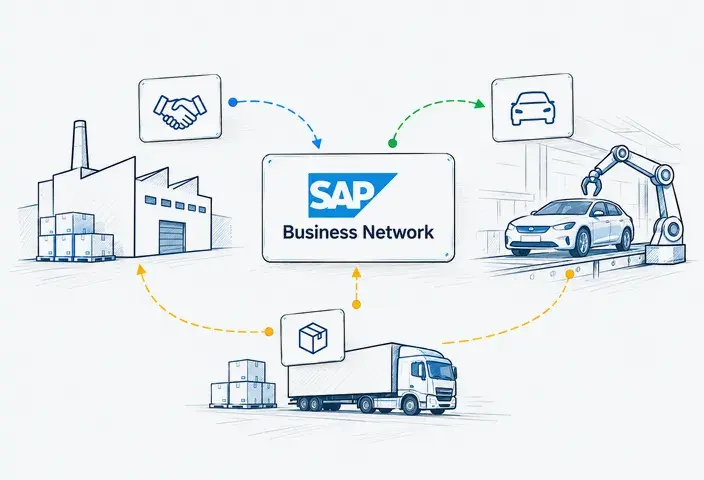
Explore the challenges facing automotive suppliers and learn how SAP supports planning, manufacturing, quality, and collaboration across every tier.
Every vehicle assembled depends on a multilayer network of manufacturers. OEMs (e.g. General Motors, Ford, Stellantis, and Tesla) define vehicle programs, manage final assembly, and sell completed vehicles. But their production depends on suppliers responsible for materials, individual parts, larger assemblies, electronics, and software.
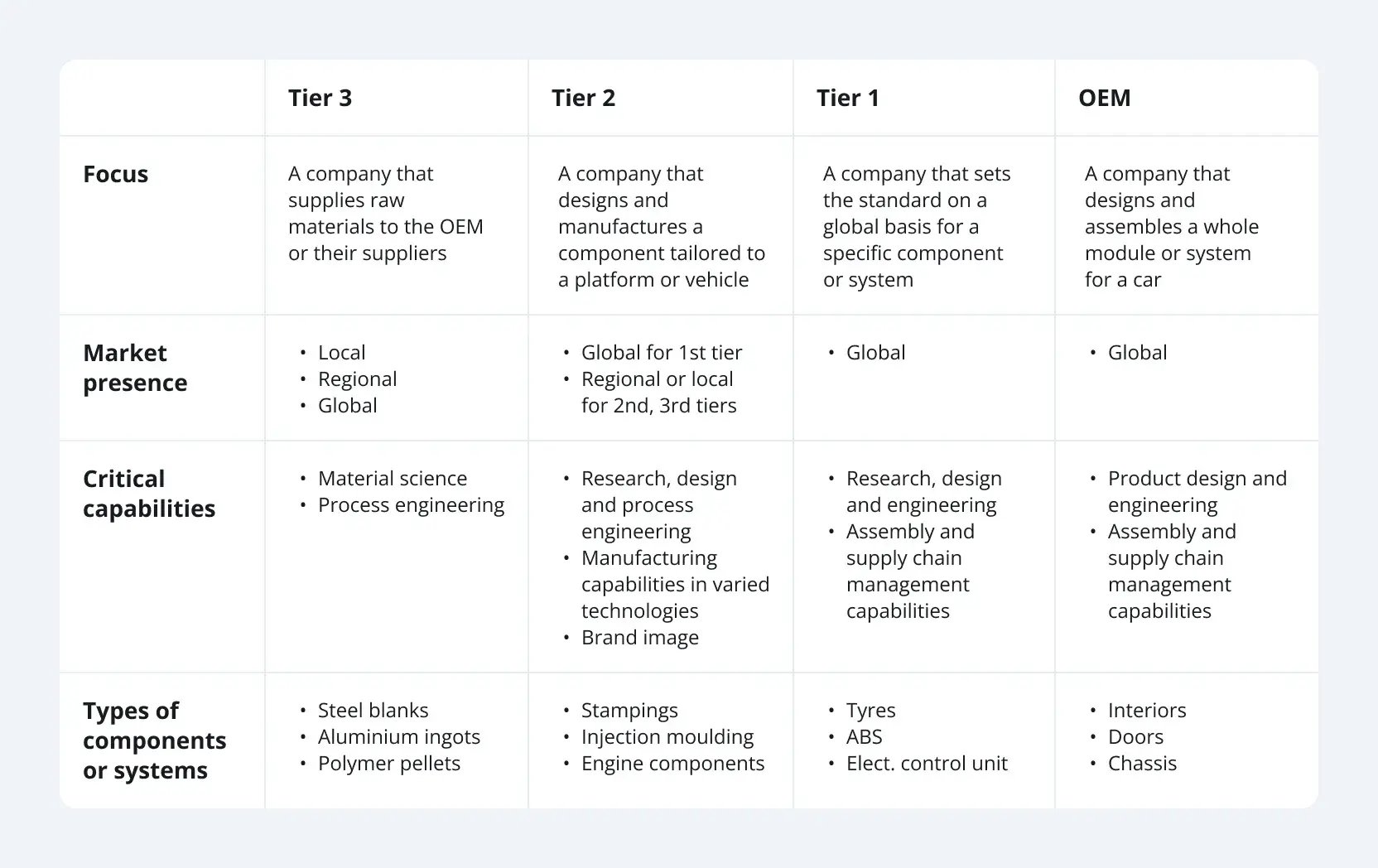
Tier 1 suppliers deliver complete systems or major modules directly to OEMs. Their products may include battery packs, seating systems, electronic control units, braking systems, interiors, or chassis assemblies. These companies work closely with OEM engineering, procurement, quality, and production teams, because their products directly affect vehicle performance, safety, and regulatory compliance. Their responsibilities include coordinating product development, maintaining complex bills of materials, and meeting delivery schedules for specific vehicle programs.
Tier 2 companies manufacture specialized components used within Tier 1 products. Examples include sensors, connectors, bearings, stamped parts, molded plastics, and precision-machined components.
Tier 3 companies supply steel, aluminum, polymers, chemicals, semiconductor materials, and other inputs required further along the production process.
These categories sometimes overlap. A diversified manufacturer may supply one product directly to an OEM and sell another through a Tier 1 customer. The assigned tier, therefore, reflects the company’s position within a specific supply relationship rather than a permanent classification of the entire business.
Dependencies connect every level of this structure. A shortage of resin at a Tier 3 company can prevent a Tier 2 plant from producing molded housings. The missing housings may then stop a Tier 1 supplier from completing electronic assemblies and eventually disrupt an OEM production schedule. Demand forecasts, engineering changes, quality records, shipment statuses, and cost updates must reach every affected company before teams can adjust purchasing and production.
What Challenges Do Automotive Suppliers Face?
Quick overview of the modern automotive industry
Automotive suppliers must manage dependencies while demand moves toward different product categories. According to the 2026 BCG Global Automotive Supplier Study, total automotive component demand could increase by approximately 3.5% annually between 2025 and 2035. Individual segments follow sharply different trajectories. Demand for batteries and electric-powertrain components could grow by around 13% per year. Non-ADAS vehicle software could record annual growth of 14-16% into the 2030s.
Components for internal-combustion-engine powertrains face the opposite trend. BCG projects an annual decline of approximately 3% from 2025 through 2030, followed by an 8% annual decline through 2035. Interiors, body parts, chassis components, and other established product categories will generally follow overall vehicle production and retain a substantial share of supplier revenue.
Suppliers consequently need to support several technology paths at once. Existing internal-combustion and hybrid programs continue to generate orders, require spare parts, and consume production capacity. Electric and software-defined vehicle programs require new equipment, technical skills, product data, and supplier relationships. Tariffs, labor shortages, changing OEM schedules, and price pressure further complicate decisions about capacity and capital investment.
Teams cannot manage these conditions effectively when product development, procurement, manufacturing, logistics, quality, and finance rely on conflicting data.
The main difficulties facing automotive suppliers emphasize where those conflicts arise and why many companies need closer coordination across their operations.
Volatile vehicle programs complicate capacity planning
BCG found that sales of several battery-electric models in North America, Europe, and China differed from their original forecasts by up to four times during the first half of 2025. Some models substantially exceeded planned sales, while others fell far short of them.
Both outcomes create operational problems. Lower demand leaves equipment idle and spreads fixed costs across fewer units. Unexpectedly high demand can cause material shortages or require expensive overtime. A supplier may also lack enough approved equipment to increase production quickly, because automotive processes often require customer validation before additional tooling or lines can produce serial parts.
Schedule changes affect companies throughout the supplier network. A Tier 1 manufacturer must convert an updated OEM forecast into revised requirements for raw materials, purchased parts, labor, storage, and transportation. Its own suppliers then repeat that process.
The technology transition requires investment while margins remain limited
Automotive suppliers must invest in electric and software-defined vehicle components, while continuing to support internal-combustion and hybrid programs. New products require engineering, equipment, employee training, and supplier qualification before production volumes stabilize. When an OEM delays a launch or lowers its forecast, the supplier retains much of the initial cost.
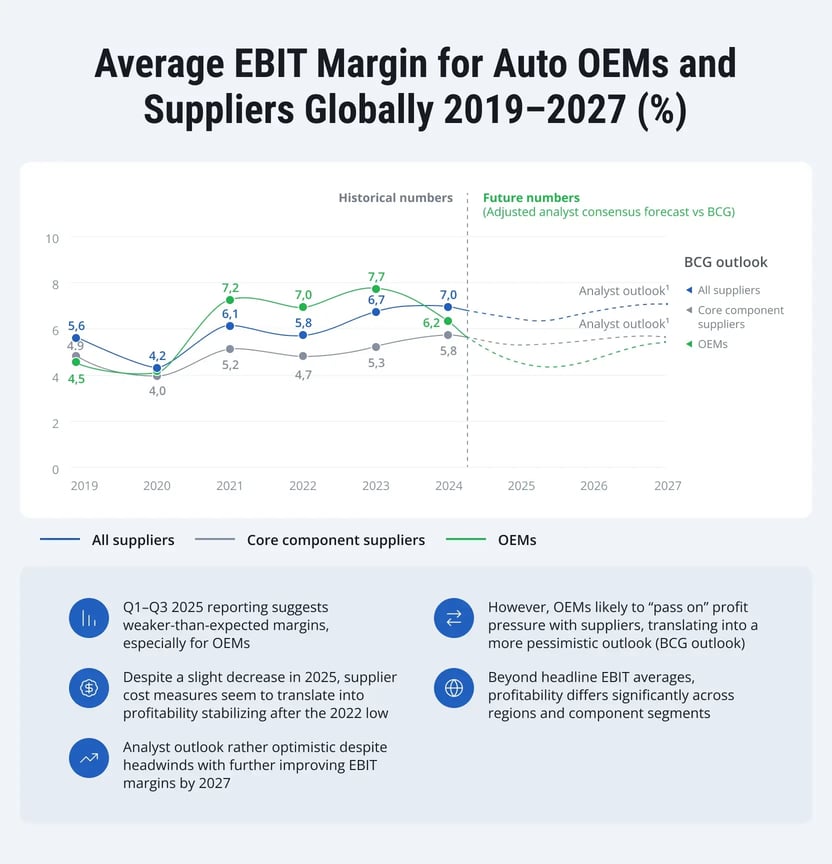
BCG’s analysis of 767 global suppliers illustrates the investment risk. Battery suppliers recorded approximately 45% annual revenue growth from 2019 through 2024, but averaged an EBIT margin of roughly 7.5%. Semiconductor suppliers achieved about 15% growth with margins above 20%. Rapid demand growth, therefore, does not guarantee returns proportional to the capital committed.
Many conventional suppliers must finance new capabilities from businesses with much smaller margins. Interior and diversified component suppliers averaged EBIT margins of approximately 4% between 2019 and 2024. At the same time, contracts, tooling agreements, and service-part obligations can require them to maintain declining internal-combustion programs for years. Smaller Tier 2 and Tier 3 companies face greater exposure because they have fewer programs across which to distribute development costs.
OEM pricing pressure leaves little room to recover unsuccessful investments. Global OEM EBIT margins fell from 7.7% in 2023 to 6.2% in 2024, according to BCG, which may prompt automakers to reduce volumes, postpone launches, or demand lower prices.
Tariffs make sourcing and pricing harder to calculate
Automotive production depends on materials and components that cross national borders. A part completed at an American plant may contain steel, electronics, castings, or subassemblies sourced from Canada, Mexico, Asia, or Europe. Some products cross a border several times, as different companies perform consecutive manufacturing steps.
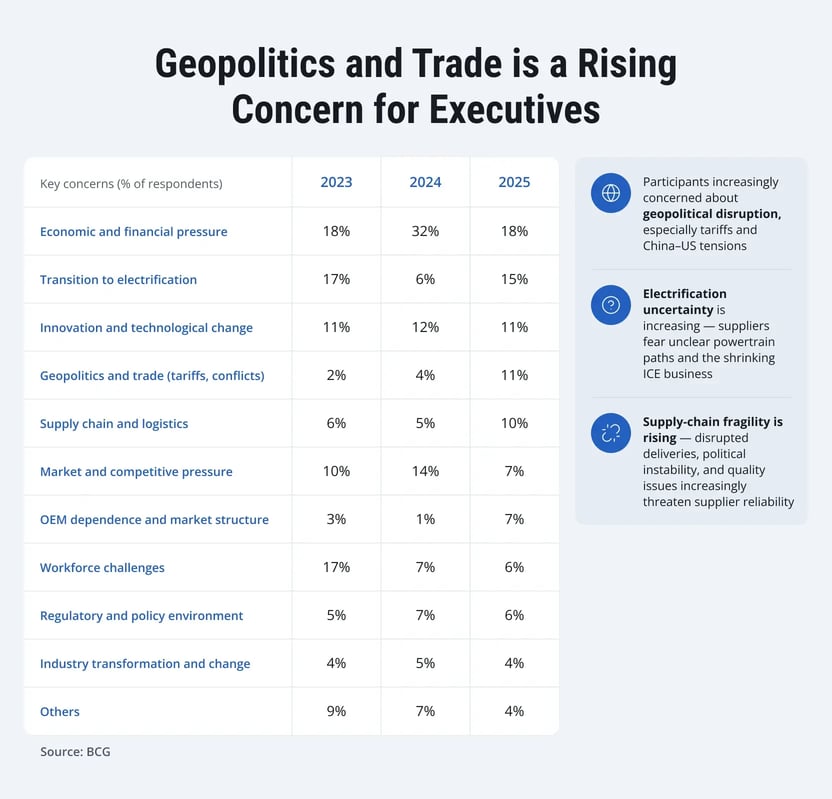
BCG reports that the average trade-weighted tariff rate reached approximately 16%, the highest level since the Smoot-Hawley period. Trade policy has therefore acquired greater importance in supplier planning. In BCG’s 2025 executive survey, geopolitics and trade accounted for 11% of the concerns named by automotive supplier leaders, compared with 4% in 2024. An analysis of supplier earnings calls also found discussions of tariffs in almost every call reviewed.
 Source: BCG
Tariff exposure depends on more than the location of the immediate vendor. Suppliers must determine the origin and customs classification of materials contained within multilevel bills of materials. They may also need documentation confirming eligibility under the United States-Mexico-Canada Agreement or another applicable trade arrangement.
These factors affect sourcing decisions. A domestic vendor may charge a higher unit price while offering a lower total landed cost after tariffs, transportation, inventory, and customs expenses. Another supplier may provide a lower quoted price but expose the buyer to exchange-rate changes or potential tariff increases.
Disruptions can affect several supplier tiers before reaching the OEM
Shipping conditions have improved since the acute disruptions of the early 2020s, although supplier networks remain exposed to material shortages, transportation delays, geopolitical events, quality failures, and financial problems among vendors. Supply chain and logistics represented 10% of the concerns reported in BCG’s 2025 automotive supplier executive survey.
A disruption several levels away from an OEM can still stop final assembly. Consider a specialized polymer used in a safety-related electronic housing. A Tier 3 shortage prevents the Tier 2 company from molding the housing. The Tier 1 supplier then cannot complete the electronic unit, even if every other component remains available.
Switching sources often takes weeks or months. Automotive companies may require laboratory testing, production trials, updated regulatory documentation, new tooling, and approval through the Production Part Approval Process. A technically similar material cannot enter serial production until the responsible parties complete these requirements.
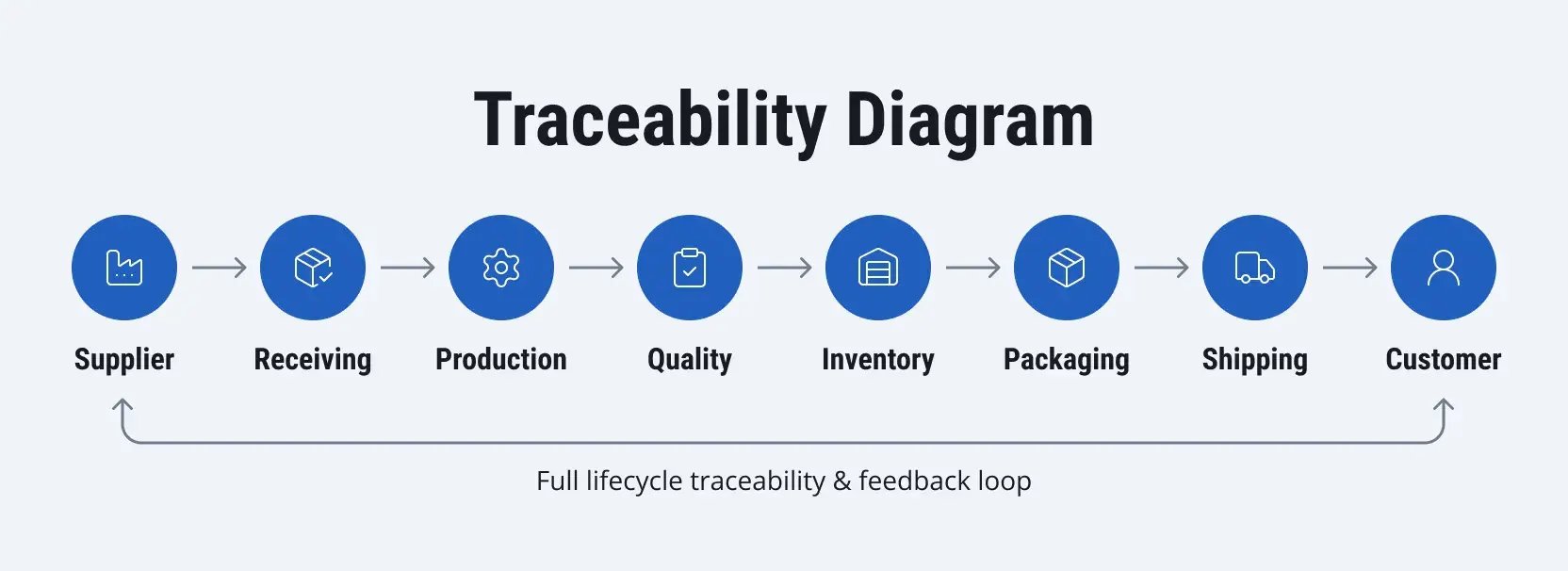
Traceability requirements increase the volume of production data
Along with material batches and inspection results, records may now include software versions, equipment parameters, engineering revisions, and rework history. Battery systems and safety-related electronics require particularly detailed records, because a defect can originate in a physical component, production process, or software configuration.
The data volume increases with every production stage. A single finished component may contain parts from several suppliers, each with its own batch number and quality documentation. The manufacturer must preserve these links throughout assembly and connect them to the finished serial number.
When plants store this information in separate manufacturing, warehouse, and quality systems, tracing one unit requires matching records across several databases. Inconsistent identifiers can force a supplier to inspect or recall a broader group of products, because it cannot isolate the affected batches quickly.
Disconnected systems delay program-level decisions
Automotive suppliers often inherit separate systems through acquisitions or gradual plant expansion. Engineering may approve a new component revision in one application, while the plant continues to use an older bill of materials stored in its ERP system. Warehouse records can then show sufficient inventory, even though part of that stock no longer matches the approved configuration.
Fragmented data also distorts program profitability. Premium freight or rework costs recorded at the plant may reach finance after the monthly report has already been prepared. As a result, the report can show an acceptable customer margin, while a specific vehicle program loses money. Teams need additional time to reconcile the records, which delays sourcing, pricing, and production decisions.
SAP Foundation for Addressing Problems
OEMs and suppliers use different SAP capabilities, because they make different decisions. OEMs coordinate vehicle programs and final assembly. Tier 1 suppliers respond to sequenced delivery calls, Tier 2 companies plan component production, and Tier 3 manufacturers manage materials with longer lead times. SAP connects these activities through common demand, product, production, and quality records.
|
Process |
OEM |
Tier 1 |
Tier 2 |
Tier 3 |
|
Demand and capacity planning |
SAP Integrated Business Planning (SAP IBP) compares vehicle demand with plant capacity and supplier commitments. |
SAP S/4HANA JIT/JIS processing converts OEM delivery calls into module production and shipment quantities. |
SAP IBP shows how forecasts from several customers affect machines, labor, and inventory. |
SAP Business Network for Supply Chain provides earlier access to customer forecasts, giving material producers more time to adjust output. |
|
Product and engineering changes |
SAP Product Lifecycle Management and SAP Engineering Control Center connect approved vehicle configurations with CAD and product records. |
SAP S/4HANA applies the approved configuration to the module bill of materials and customer order. |
SAP S/4HANA links component revisions with purchasing, production, and cost records. |
Material specifications and approved sources remain connected with procurement and batch records in SAP S/4HANA. |
|
Manufacturing and material flow |
SAP Digital Manufacturing sends current instructions to assembly operations and records production results. |
SAP Digital Manufacturing controls module execution, while SAP Extended Warehouse Management supplies components in the required sequence. |
Production orders and inspection results pass between SAP S/4HANA and SAP Digital Manufacturing. |
Batch management in SAP S/4HANA connects incoming materials with production and customer deliveries. |
|
Quality and traceability |
SAP Quality Management connects defects with vehicles, parts, and inspection records. |
SAP Quality Issue Resolution gives the OEM and supplier a shared process for root-cause analysis and corrective actions. |
Quality teams can trace a defective component to its batch, production order, and engineering revision. |
Batch records help determine which customers received material from an affected production run. |
|
Integration and data exchange |
SAP Business Technology Platform connects ERP data with engineering systems and supplier applications. |
SAP Integration Suite supports data exchange with OEM portals and plant systems. |
Existing manufacturing and quality applications can exchange records with SAP S/4HANA through managed integrations. |
Suppliers can exchange forecasts, orders, and confirmations through SAP Business Network. |
|
Carbon data |
SAP Sustainability Control Tower consolidates environmental indicators across the enterprise. |
SAP Sustainability Footprint Management calculates emissions for complete modules or systems. |
The same solution assigns emissions to individual components using material and production data. |
Material producers can calculate product footprints and provide the results to downstream customers. |
A change in an OEM forecast shows how these connections work.
- SAP IBP recalculates vehicle demand and supplier requirements, after which SAP S/4HANA sends revised schedules to the Tier 1 company.
- JIT/JIS processing converts the new call into module quantities.
- Tier 2 manufacturers receive the resulting component demand and compare it with current capacity, while Tier 3 suppliers adjust material plans before placing additional purchasing or production commitments.
- When the OEM also changes the product configuration, SAP Product Lifecycle Management and SAP S/4HANA carry the approved revision into the relevant bills of materials and production orders.
What results have automotive companies achieved with SAP?
Toyota used SAP Business Technology Platform and SAP Integration Suite to connect SAP ERP with third-party applications supporting Lexus processes. The project reduced integration costs by 50% and shortened time to market by 30%. This example shows how an OEM can connect established systems without moving every process into one application.
Automotive seat supplier Martur Fompak connected SAP Sustainability Footprint Management with SAP S/4HANA and production data from 620 work centers. Carbon-footprint calculations ran more than 50 times faster than the previous manual process. The company also reported a 34% reduction in emissions per automotive seat and a 52% reduction in transportation-related emissions.
Ariete applied SAP S/4HANA and SAP Extended Warehouse Management to production, warehousing, and quality processes. The company reported a 20% reduction in manufacturing costs, a 65% increase in on-time deliveries, and a 60% shorter financial close. The results demonstrate how shared operational records can improve production decisions and financial reporting within a component supplier.
Putting SAP to Work for Automotive Suppliers: LeverX Expertise
LeverX has worked with SAP technologies for more than 20 years and completed over 1,500 projects for 900+ clients across 45 countries. Our automotive experience covers regulatory integration, analytics, production logistics, warehouse management, and custom SAP development for OEMs and component suppliers.
LeverX has applied this experience to automotive projects with very different requirements, from regulatory invoice exchange to export analytics and custom warehouse execution.
Automating KSeF invoice exchange for Wegmann Automotive PolandWegmann Automotive Poland supplies C-parts used around vehicle wheels and power systems. To prepare for Poland’s mandatory National e-Invoicing System, the company needed to exchange sales and purchase invoices with KSeF directly from its existing SAP environment. |
|
What LeverX delivered LeverX developed a native application on SAP ABAP 7.50+ that extracts invoice data from SAP SD and FI, converts it into the required XML format, and exchanges it with KSeF through HTTPS/REST APIs. SAP ALV provides separate cockpits for inbound and outbound invoices, while SAP Business Application Log records processing events and errors. The team also adapted the application as the Polish Ministry of Finance revised its technical specifications during development. Results
|
Restoring reliable export reporting for MAHLEMAHLE used an SAP Analytics Cloud dashboard to analyze export performance for a major automotive customer. Missing records, incorrect parameters, and gaps in historical data reduced confidence in the reports. LeverX investigated the data flow between SAP HANA and SAC without interrupting the dashboard’s daily use. |
|
What LeverX delivered The team analyzed the SAC data model and its connection with SAP HANA. LeverX then reimported the complete dataset, corrected job parameters, and restored historical records. The specialists also proposed longer-term improvements, including a Delta Mechanism for transferring newly added or changed records without repeating a full import. Results
|
Adapting SAP EWM to automotive warehouse operationsA global automotive manufacturer required warehouse processes that matched its production schedules and parts-handling rules. Standard functionality did not cover every inbound, outbound, packaging, and mobile transaction required across the operation. |
|
What LeverX delivered LeverX configured SAP Extended Warehouse Management and developed custom functionality for receiving, staging, packaging, and shipping. The team created RF transactions for mobile warehouse devices and implemented custom ABAP programs, transactions, and BAdIs. The completed functionality connected warehouse execution with the manufacturer’s wider SAP environment. Results
|
How can LeverX support an SAP automotive project?
LeverX can manage a complete SAP project or take responsibility for an individual stage when the client already has an internal team or another implementation partner.
- Assessment: Analyze current processes, SAP systems, custom code, integrations, and data problems. Define the project scope and expected results.
- Solution design: Select the appropriate SAP products, prepare the target architecture, and define how business processes will operate after implementation.
- Implementation: Configure SAP applications, develop required extensions, and adapt standard functionality to automotive production or logistics requirements.
- Integration and migration: Connect SAP with plant systems, engineering applications, customer portals, government platforms, and third-party software. Clean and transfer the required data.
- Testing and launch: Run functional and integration tests, prepare users, transfer the production system, and support operations during the initial period after launch.
- Ongoing support: Resolve incidents, monitor system performance, implement regulatory updates, and improve processes as production or customer requirements change.
This scope allows automotive companies to work with one team from the initial system assessment through implementation and post-launch support.
Conclusion
Total component demand is projected to grow by 3.5% annually, battery and EV-related segments by around 13%, and ICE components are expected to decline by 3-8%. But the suppliers cannot base investment decisions on industry growth alone. They need program-level data to determine which products justify additional capacity and which contracts no longer cover their operating costs.
SAP ties demand forecasts directly to actual production output, current inventory, and financial performance. As a result, companies gain the exact data needed to allocate capital effectively, negotiate with OEMs, as well as coordinate multi-tier supplier commitments. Having this level of transparency helps suppliers capture growing market opportunities—without letting underused assets or unprofitable programs drag down financial returns.