See how automotive OEMs and suppliers can coordinate forecasts, orders, inventory, quality, and logistics through SAP Business Network.
By the time a seat system reaches final assembly, it may depend on electronics, metal structures, foam, textiles, motors, and control units supplied across several tiers. Battery packs involve a similarly complex network of dependencies, including cells, raw materials, thermal-management components, power electronics, and specialized manufacturing processes. In both cases, a disruption several tiers upstream can affect downstream production. A delayed shipment or an unmet revised requirement may eventually force changes to an assembly schedule hundreds or thousands of miles away.
Recent industry research shows the financial exposure. According to Maersk's 2025 Course for Change research, which drew on responses from 190 senior logistics and supply chain professionals in the automotive industry, average disruption-related losses among the companies represented in the study reached 4.7% of revenue in the most recent fiscal year. Automotive recorded the highest figure among the industries included in the research.
Visibility across supplier tiers remains uneven. Deloitte's commentary on the Q4 2025 MEMA OE Automotive Supplier Barometer reported that only 23% of responding companies said they had full visibility across their supply chains. Most still relied on manual processes and faced problems with sub-tier supplier participation and data integration.
Multi-tier sourcing has been part of automotive supply chains for decades. The current challenge comes from shorter planning cycles, frequent product changes, volatile demand, sourcing constraints, and the growing volume of operational information exchanged between companies. Engineering revisions can alter material requirements, while changing production schedules and supplier capacity constraints leave less time to identify and resolve supply gaps before they affect production.
Digital workflows can reduce manual reconciliation when external supplier information feeds the internal processes that depend on it. Within an SAP-based supply chain landscape, those exchanges should connect with procurement, planning, warehousing, and transportation processes.
Why Supplier Collaboration Matters More in Automotive
Automotive production leaves little room for ambiguous supply information. A planner needs to know whether a supplier can cover a revised requirement, when the material will ship, what quantity has been confirmed, and whether a quality problem affects usable stock. Suppliers need reliable information about upcoming demand, schedule changes, part requirements, and delivery priorities.
Maersk's automotive supply chain research found an association between lower disruption-related revenue losses and more extensive real-time data sharing. Among companies classified as "frontrunners" because disruption had cost them less than 1% of revenue, 64% exchanged real-time data with suppliers and logistics service providers. The figure fell to 48% among "followers," whose losses exceeded 5% of revenue. In the same research, 76% of automotive respondents regarded collaboration as crucial to disruption preparedness and risk mitigation. The comparison does not establish that data sharing caused the difference in financial performance. It does show that the companies with lower disruption-related losses in this survey were more likely to exchange current operational information with external partners.
Earlier information can widen the range of available responses. When an OEM detects a supplier constraint well before a scheduled build, planners retain vital operational flexibility. They can alter the model mix, pull from safety stock, or evaluate secondary supply sources. For automotive supplier management, that visibility matters when companies can turn supplier signals into timely planning and sourcing decisions. Operational results still depend on integration quality, established escalation rules, and supplier adherence to agreed processes.
Why Email- and Spreadsheet-Based Supplier Collaboration No Longer Scales
Email and spreadsheets remain useful for individual tasks. Problems grow when they carry thousands of time-sensitive material positions between planning, purchasing, suppliers, and logistics teams.
Consider a routine schedule change. An OEM revises demand for a component. The ERP or planning application contains the new requirement, while a supplier planner receives a spreadsheet and later returns another file with adjusted quantities. Meanwhile, a buyer asks for an expedited delivery by email, and a logistics coordinator works with separate shipment information. Every record may have been accurate when created, yet the company can still lack a reliable view of the current supplier commitment.
The issue has direct relevance for North American automotive suppliers. According to the Q4 2025 MEMA OE Vehicle Supplier Barometer, 24% of respondents identified inaccurate customer release schedules or volumes as their greatest supply chain risk to meeting customer production requirements, second only to tariffs at 34%. The same research identified a lack of supplier participation or transparency and inconsistent data formats and standards as the two most frequently reported problems in collecting and maintaining accurate supply chain data.
Purchase order changes create a similar discrepancy. A supplier may confirm a different quantity or delivery date outside the transactional process, leaving purchasing with one position while production planning works from another. When the difference becomes visible close to the requirement date, the available response often becomes more expensive.
Supplier quality issues introduce another source of fragmentation. Photos may sit in an email thread, corrective actions in a local file, and the affected order or shipment in another application. Engineers and quality teams then spend part of the resolution cycle rebuilding the context before they can address the defect. Fragmented records also make supplier performance harder to measure consistently because the events behind each transaction remain distributed across different systems and communication channels. Supplier collaboration software can bring those exchanges into defined processes and make the resulting information available to the applications responsible for subsequent planning and execution.
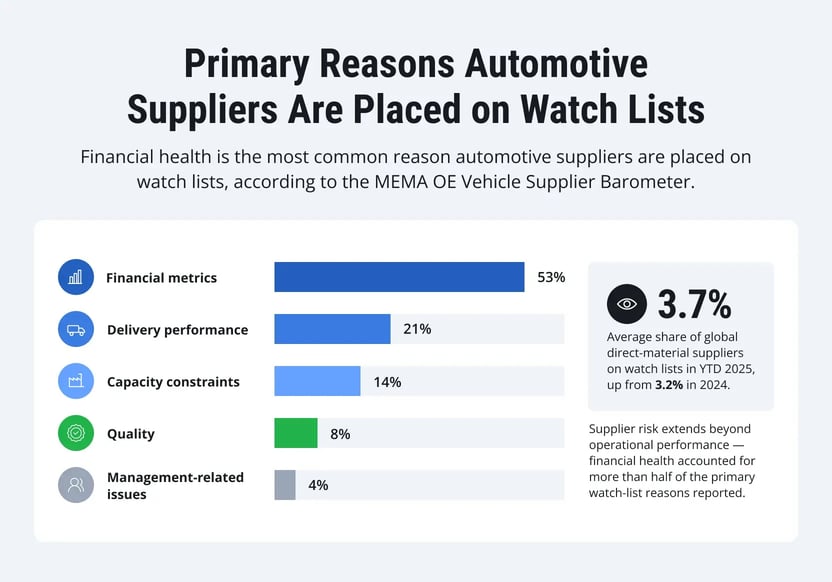
These risks make timely supplier information and structured exception handling especially important. Digital collaboration can help teams focus on shortages, confirmation deviations, inventory risks, and delivery exceptions while routine transactions remain within agreed processes. The appropriate SAP capabilities depend on whether the required scope covers direct-material transactions, collaborative planning, supplier management, or logistics visibility.
How SAP Business Network Connects Automotive OEMs and Suppliers
SAP Business Network Supply Chain Collaboration supports direct-material collaboration between buying organizations and trading partners. Its scope includes demand plans and forecasts, direct-material procurement and invoicing, inventory optimization, and quality documentation for materials and components. This operational scope should be distinguished from broader supplier relationship management processes associated with supplier governance and performance. SAP Ariba Supplier Lifecycle and Performance supports supplier registration, qualification, supplier information management, preferred-supplier processes, and performance evaluation.
Collaborative planning can extend through SAP Business Network Planning Collaboration. SAP positions the solution around supply visibility and partner commitments across multiple planning horizons, including forecasting, capacity planning, component planning, and manufacturing visibility. It can work with SAP Business Network Supply Chain Collaboration, SAP Integrated Business Planning for Supply Chain, SAP S/4HANA, or other relevant applications.
ERP and planning applications continue to manage their respective internal processes. SAP Business Network extends selected information and transactions beyond company boundaries so suppliers can participate without working directly inside the manufacturer's ERP environment.
These solutions form part of a broader SAP landscape for the automotive industry in which production planning, manufacturing execution, warehouse management, transportation, quality, maintenance, analytics, and other enterprise processes have distinct responsibilities.
Automotive Supplier Collaboration Scenarios
Collaborative demand forecasting
A supplier often needs demand information before forecast requirements become firm delivery requirements. Suppose an OEM publishes demand for an electronic control unit across several future periods. The supplier reviews those figures and commits quantities based on expected capacity and material availability. If the OEM requests 40,000 units for one period and receives a commitment for 33,000, the uncovered quantity appears while planners still have time to investigate it.
SAP Business Network Supply Chain Collaboration supports forecast collaboration for direct materials. SAP Business Network Planning Collaboration can extend this scenario across forecasts, commitments, capacity, component planning, and external manufacturing visibility over multiple planning horizons. The selected licenses and implementation scope determine how these capabilities are combined in a particular landscape.
The supplier commitment only becomes operationally useful when internal planning can consume it. That handoff connects with automotive production planning in SAP S/4HANA, where material requirements, available supply, production orders, and capacity affect the subsequent plan.
Purchase order and scheduling agreement collaboration
Automotive procurement frequently uses recurring supply arrangements. Scheduling agreements and releases allow requirements to change over time as production demand develops.
Supported SAP Business Network configurations allow suppliers to work with purchase orders, scheduling agreements, and scheduling agreement releases. SAP Business Network can also apply buyer-defined rules and tolerances to supported confirmation processes. The available transaction rules, integration scope, and user experience should be checked against the customer's release and SAP Business Network setup.
Suppose an OEM increases a requirement due next Tuesday. The supplier may confirm the full quantity, propose another date, or confirm only part of the requested volume. Capturing that response through the agreed transaction process makes the deviation visible to purchasing and connected applications. Production planning can then work from the current supplier commitment, procurement can address the uncovered quantity, and logistics teams can prepare around the expected shipment.
Shipment and delivery visibility
An order confirmation describes the supplier's current commitment. Actual transportation creates another set of risks after dispatch. Where the architecture requires wider order and shipment visibility, SAP Business Network Global Track and Trace can connect business context with tracking events from relevant logistics sources. Its capabilities include order and shipment visibility, milestone monitoring, estimated arrival information, and exception handling for supported scenarios.
The integration scope deserves careful qualification. Current SAP documentation describes standard integration with SAP S/4HANA (on-premises) and SAP Cloud ERP Private with embedded SAP Transportation Management. Other ERP deployments and integration scenarios should be validated against the target release and available integration content.
Physical movement also needs an event source. Carrier events, visibility providers, or other connected contributors supply the location and status data used to enrich the business context. A purchase order by itself provides no evidence of a truck's current position. This distinction matters in automotive inbound logistics. A supplier can produce and dispatch the correct quantity on time, while a transport delay still threatens the line-side requirement.
Inventory synchronization and replenishment
Buyer and supplier decisions can depend on inventory held at the plant, supplier, or another agreed location. Different assumptions about stock coverage can lead to unnecessary replenishment, late replenishment, or conflicting priorities.
SAP Business Network Supply Chain Collaboration supports inventory collaboration scenarios, including supplier-managed inventory, where the relevant entitlements and configuration are in place. Supplier-managed inventory information can feed replenishment processes, while monitoring capabilities can surface associated exceptions.
An automotive plant may have enough material for the current shift, while projected consumption will push stock below the required level before the next planned delivery. Shared inventory and replenishment information gives the buyer and supplier a common basis for deciding whether the supply plan needs to change. Warehouse execution remains a separate responsibility. Physical receipts, storage, picking, staging, and warehouse stock processing continue in the relevant ERP and warehouse applications, including SAP Extended Warehouse Management (SAP EWM), where deployed.
Supplier quality issue resolution
A component can arrive on time and still create a production problem. Dimensions, material properties, labeling, electronics, packaging, or another characteristic may fail the agreed specification. SAP Business Network Supply Chain Collaboration includes quality collaboration for direct materials. Buyers and suppliers can exchange quality documentation and coordinate supported quality processes across company boundaries.
The external exchange forms one part of a larger quality process. Incoming inspection, internal defect handling, production quality, and broader traceability processes remain primarily within the relevant quality and manufacturing applications. SAP Business Network can also support cross-company defect analysis, cause identification, tasks, activities, and corrective-action collaboration through quality notifications.
Multi-tier and external manufacturing visibility
An OEM can have a direct commercial relationship with a Tier 1 supplier while the actual constraint sits with a semiconductor, raw material, or specialist component deeper in the supply network.
SAP Business Network Planning Collaboration supports component planning and manufacturing visibility across trading partners. Depending on the collaboration model, suppliers and external manufacturers can share planning information that gives the buying organization earlier visibility into supply availability and commitments across multiple horizons.
This can help when an external manufacturer depends on buyer-controlled components or an upstream constraint threatens the immediate supplier's ability to meet demand. Multi-tier visibility still depends on participation. Companies outside the collaboration process remain outside the available data set. Effective coverage also requires agreed data-sharing rules and reliable mapping between the materials, locations, suppliers, and planning records used by each participant.
Disruption management
Supply exceptions become more useful when teams can assess them against business context: the affected material, plant, requirement date, available stock, sourcing alternatives, and production exposure. Procurement may work with the supplier, planning may adjust production, logistics may expedite material, and plant teams may revise execution priorities.
When an external shortage begins to affect planned or active production, the issue can extend into production planning and execution. SAP Digital Manufacturing in automotive production addresses that downstream environment, including production execution, operator activities, manufacturing data, and performance analysis.

Measuring Supplier Collaboration Success
Portal adoption alone says little about supply performance. KPIs should show whether the collaboration process improves the speed, accuracy, or reliability of operational decisions.
|
KPI |
What to measure |
Why it matters |
|
Supplier response time |
Time between a new or changed requirement and the supplier's response |
Shows how quickly planners receive usable supply information |
|
Forecast commitment coverage |
Requested quantity compared with the supplier-committed quantity by the planning horizon |
Exposes future supply gaps before firm execution |
|
Order confirmation exception rate |
Share of confirmations that differ from the requested quantity or date |
Shows where purchasing requirements and supplier capability diverge |
|
On-time, in-full (OTIF) delivery |
Deliveries received on time and in full under a consistent calculation method |
Measures fulfillment reliability |
|
Advanced ship notice (ASN) timeliness and completeness |
ASNs received with the required information before delivery |
Indicates the quality of inbound execution data |
|
Supplier quality notification cycle time |
Time from quality issue creation to agreed closure |
Measures responsiveness around supplier quality problems |
|
Supplier-managed inventory exceptions |
Frequency and duration of stock positions outside agreed thresholds |
Shows whether replenishment maintains target coverage |
|
Premium freight linked to shortages |
Expedited transport cost associated with supply exceptions |
Connects supply problems with financial impact |
|
Production disruptions linked to supplier shortages |
Line interruptions, delayed builds, or schedule changes associated with missing components |
Connects supplier performance with manufacturing continuity |
|
Digital transaction adoption |
Relevant supplier transactions completed through the agreed digital process |
Shows whether the operating model has moved away from manual channels |
Definitions need to remain stable. OTIF calculated by shipment cannot be compared directly with OTIF calculated by purchase order line. Forecast performance also needs a defined horizon because short-term and long-term forecasts measure different planning conditions. We recommend that companies establish a baseline before rollout, then analyze results by supplier group, material criticality, plant, and collaboration scenario. This makes changes in the collaboration process easier to distinguish from shifts in production volume or product mix.
The Future of Automotive Supplier Collaboration
Automotive supplier collaboration is expanding beyond the exchange of orders, forecasts, and shipment updates. More attention is shifting toward earlier risk detection, multi-tier visibility, capacity alignment, and faster assessment of how a supplier constraint could affect production.
Supplier stability is part of that challenge. According to Deloitte's analysis of strategic priorities for automotive suppliers, approximately 60% of companies had seen increased distress across their North American automotive supply base. Deloitte points to sourcing diversification and deeper multi-tier visibility among the measures that can help companies identify risk before it interrupts supply.
Demand uncertainty creates another problem for supplier planning. The 2026 Global Automotive Supplier Study from BCG found substantial variation at the vehicle-program level. In the first half of 2025, sales of several battery-electric vehicle models across North America, Europe, and China deviated from original forecasts by as much as fourfold, both above and below plan. For suppliers investing in batteries, e-powertrain systems, electronics, tooling, and manufacturing capacity, such swings can leave assets underused for one program while creating bottlenecks for another.
This puts more pressure on OEMs and suppliers to align before firm orders arrive. Forecasts need to be considered alongside available capacity, component constraints, sourcing alternatives, and changes in vehicle programs. The collaboration process can then expose where supplier commitments no longer support current production assumptions.
The next step involves using those signals for earlier risk assessment. In its analysis of automotive supply chain resilience in North America, McKinsey describes digital supply chain intelligence that combines supply, demand, market, and external data to support predictive models, identify vulnerable suppliers and components, and test alternative scenarios. The analysis includes examples of an early-warning system for supplier financial risk and digital supplier collaboration used to support faster production replanning.
AI can support this move from transaction processing toward exception assessment. SAP has announced the Business Network Assistant and related Joule Agents for SAP Business Network processes. Announced capabilities include the Order Confirmation Automation Agent, Advanced Ship Notice Automation Agent, Logistics Predictive Insights and Response Agent, and Supply Chain Impact Analysis Agent. The latter is designed to identify supply chain exceptions, associate them with affected customer orders, and quantify potential impact.
For automotive companies, the practical change concerns where planners spend their time. Transactions that meet defined conditions can increasingly move through automated processes, while buyers and planners concentrate on capacity gaps, supplier distress, material shortages, and exceptions with greater downstream exposure.
The underlying data and process design still matter. In LeverX's supply chain collaboration project with Sky Chefs, automated supplier updates and exception handling build on standardized procurement processes and structured data. The project also creates a basis for predictive analytics, demand forecasting, and future AI-supported optimization. Although the case comes from another industry, the implementation principle applies to automotive supplier collaboration as well: advanced analytics become more useful once transaction data, supplier records, and cross-company processes are sufficiently structured.
What Automotive Companies Should Address Before Implementation
For companies planning SAP supplier collaboration, the implementation scope should follow the supplier problems that create the greatest operational or financial exposure. A manufacturer dealing with repeated shortages may begin with forecasts, commitments, order confirmations, and inventory collaboration. A company with frequent supplier quality cases may give quality collaboration a higher priority. Another organization may first need to stabilize scheduling agreement processes and supplier responses.
Supplier segmentation comes next. High-volume partners can justify deeper system-to-system integration. Smaller suppliers may work effectively through the SAP Business Network user interface. Material criticality also matters: a low-spend supplier providing a unique component can carry more production risk than a much larger supplier of easily substituted material.
Connectivity should be chosen separately from message format. Supported transactional documents can use formats such as cXML or applicable EDI standards. SAP Integration Suite, managed gateway for spend management and SAP Business Network provides integration services between SAP Business Network and supported ERP environments, including the transformation and monitoring of transactional data.
Integration design needs clear ownership for each business object. Teams should establish where supplier data, materials, purchase orders, forecasts, inventory positions, quality records, ASNs, and other relevant transactions originate and which applications consume the responses.
Exception rules deserve the same attention. A two-day delivery deviation may have little effect for one material and threaten a line stoppage for another. Tolerances should reflect material criticality, lead time, stock coverage, production horizon, and the commercial agreement with the supplier. Supplier onboarding also requires capacity and governance. Critical partners need to be enabled, mapped, tested, and trained on the agreed process before a company can depend on their network data for operational decisions.
Our Expertise in Automotive Supply Chain Collaboration
LeverX provides consulting, implementation, integration, trading-partner enablement, and support services for SAP Business Network Supply Chain Collaboration. Our work around the solution includes process design, configuration, data mapping, integration, and supplier enablement.
Direct experience with supply chain collaboration is documented in the Sky Chefs supply chain collaboration case. The project extends the customer's existing SAP Ariba environment with SAP Business Network capabilities for the exchange of demand, order, and supply information, supplier commitments, automated updates, and exception handling. The case comes from another industry, while it demonstrates the SAP Business Network experience that can be applied alongside automotive process knowledge.
Our automotive SAP project portfolio covers the planning, procurement, warehouse, manufacturing, and logistics processes that sit around the supplier collaboration layer. In one SAP S/4HANA transformation for a large automotive company, LeverX worked across production planning, procurement, warehouse management, supply chain processes, and manufacturing integration. The project included Production Planning and Detailed Scheduling (PP/DS) in SAP S/4HANA, procurement and materials management processes, SAP Extended Warehouse Management (SAP EWM), centralized supplier and material master data, and support for just-in-time (JIT) and just-in-sequence (JIS) production. The existing GM GEPICS manufacturing execution system was integrated with SAP S/4HANA.
After go-live, the customer reported a 10% reduction in profit losses linked to component shortages, a 5% increase in on-time deliveries, a 3% decrease in warehouse inventory days, and a 4% reduction in production cycle time. These figures reflect the wider SAP S/4HANA transformation. They show the operational areas that better supplier information can eventually influence: material availability, planning, inventory, production continuity, and delivery performance.
The warehouse-to-line connection appears in an ongoing SAP S/4HANA for Manufacturing Logistics implementation for a leading automaker. The project addresses manufacturing logistics between the warehouse and production line according to the production sequence and schedule. Its planned capabilities include different working modes for route-train loading and delivery, verification objects, and exception processes. Because the project remains in implementation, these items should be treated as project scope and planned functionality, not completed business results.
Another automotive SAP Extended Warehouse Management project covered inbound, outbound, packaging, and RF-enabled warehouse operations for a global automotive manufacturer. LeverX configured and extended SAP EWM for material receiving, staging, shipping, automotive-specific packaging, and mobile warehouse transactions. These activities sit downstream from supplier collaboration, where digital order and shipment information needs to connect with the physical receipt and movement of material.
This combination of SAP Business Network experience and automotive planning, manufacturing, and logistics expertise helps us evaluate supplier collaboration in the context of the processes that depend on it, rather than as a standalone partner portal. For US automotive programs, choosing the right SAP implementation partner also affects architecture decisions, integration quality, supplier enablement, rollout planning, and post-go-live support.
Conclusion: From Supplier Connectivity to Operational Collaboration
Connecting suppliers digitally solves only part of the automotive collaboration problem. The real test comes later, when external information has to support a planning, procurement, logistics, quality, or production decision.
A supplier collaboration initiative needs a clear operational target. That may be a capacity constraint that threatens a scheduled build, a supplier commitment that planning needs to incorporate, or an exception that would otherwise require several teams to reconcile conflicting data manually.
We recommend starting with the supplier and material flows that create the greatest production or financial risk. From there, companies can define which information needs to cross organizational boundaries, how quickly it should arrive, and which internal process should act on it. SAP Business Network can provide the cross-company foundation for that exchange, while implementation priorities should reflect the realities of the automotive production environment.
The value becomes visible when better coordination improves component availability, inventory decisions, delivery performance, or production continuity. For us, that is the point where supplier collaboration becomes operationally meaningful.