We examine how automotive companies respond to market shifts and operational complexity, where SAP supports key decisions, and what our projects show in practice.
Since 2020, new car pricing in Western markets (specifically the US and Europe) has surged by 15-25%, driving average transaction values past $45,000. This upward trend has systematically constrained consumer purchasing power: families are delaying replacement cycles, extending the lifespan of current vehicles, as well as migrating toward pre-owned inventory. Because fewer buyers can absorb these price levels, PwC expects sales volumes in mature automotive markets to remain essentially flat through 2030.
Flat demand leaves manufacturers with limited room to recover rising costs through additional sales. Price increases risk excluding more buyers, while production cuts can raise the cost of each vehicle and leave factories underused. Manufacturers can become trapped in a cycle where weaker demand pushes unit costs higher, and attempts to recover those costs make new vehicles even less affordable.
Breaking this cycle requires addressing the operational pressures that continue to increase production costs.
Challenges the Automotive Industry Faces
Rising costs continue to erode margins
Despite record vehicle pricing, automotive profitability continues to erode. Average EBITDA margins across global OEMs dropped from nearly 11% in Q3 2024 to under 8% just twelve months later. This margin compression occurred as flat sales figures intersected with surging costs across raw materials, semiconductors, freight, tariffs, and warranty obligations. Meanwhile, European automakers endure further structural drag from regional energy costs that stay roughly double those recorded across US and Chinese manufacturing hubs. These costs limit the capital available for new vehicle programs and factory modernization.
Powertrain investments do not match demand
Misaligning production capacity with actual consumer demand leaves US automakers vulnerable to severe capital inefficiency. While nearly half of prospective buyers seek electric vehicles priced below $45,000, only 16% of available battery electric models serve this entry-level segment. Conversely, nearly one-third of EV offerings cost more than $80,000—a luxury price bracket targeted by under 2% of shoppers. As this affordability gap drives mainstream consumers toward hybrid options (whose adoption rates have doubled over the past three years), manufacturers face underutilized plant capacity — a dynamic further aggravated by aggressive price competition from Chinese automakers.
Chinese manufacturers intensify price competition
Chinese manufacturers combine lower production costs with faster growth in international markets. China produced a record 27 million cars in 2024, while European automakers have lost roughly one-fifth of their global market share since 2017. Chinese vehicles sell for approximately $25,000 on average, giving established manufacturers little room to recover higher Western production costs through pricing.
Supply chain changes increase the cost gap
Greater production localization cannot fully shield US manufacturers from global supply chain disparities. More than 55% of vehicles sold in the country already undergo domestic production, yet Chinese battery packs cost approximately 30% less per kilowatt-hour than US alternatives, and almost 50% less than European ones. Tariffs and trade restrictions can further change component costs after suppliers and production locations have been selected, forcing manufacturers to revise sourcing plans during active vehicle programs.
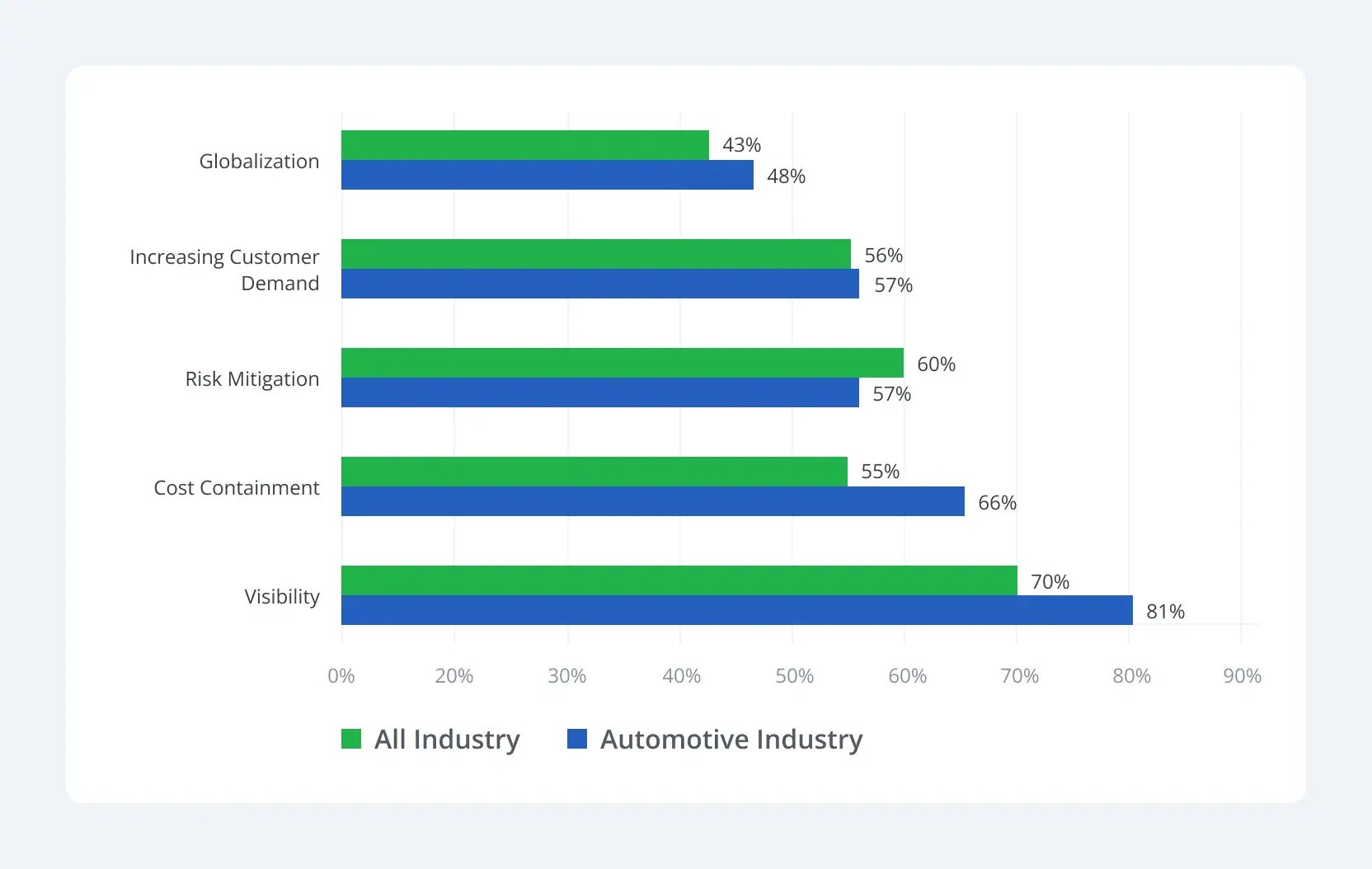
Charging infrastructure slows EV adoption
Vehicle production targets often assume that charging networks will expand alongside EV sales. Actual deployment varies considerably between regions, leaving consumers concerned about charger availability and travel range. Manufacturers can therefore invest in EV capacity without seeing the expected growth in demand, even when battery costs and vehicle prices decline. The gap between vehicle development cycles and infrastructure deployment makes long-term sales forecasts particularly uncertain.
Powertrain shifts leave factory capacity exposed
Factories configured for several powertrains remain vulnerable to rapid changes in demand. Hybrid adoption has doubled over the past three years, while battery electric vehicles may only reach broader price competitiveness in 2028–2029. Capacity decisions made several years in advance can therefore leave equipment underused and disrupt component requirements when actual orders favor a different powertrain.
Warranty and recall costs squeeze margins
Electric powertrains and software-controlled functions make defects harder to isolate, because failures may involve hardware, embedded software, or their interaction. Fragmented supplier, production, and service records can delay root-cause analysis and expand recalls to vehicles that do not contain the affected component or software version. PwC cites rising warranty provisions and powertrain-related recalls among the factors that pushed average OEM EBITDA from almost 11% in the third quarter of 2024 to below 8% one year later.
Sustainability requirements increase reporting complexity
Automakers must account for environmental impacts across production and the supplier network. Electrification makes this task harder, because battery materials pass through mining, processing, component manufacturing, and assembly operations in different countries. Incomplete supplier data can prevent manufacturers from tracing material origin or calculating product-level emissions consistently. Different emissions rules and battery requirements across markets further complicate the use of one vehicle platform in several regions.
How Does SAP Help Automotive Companies Address These Challenges?
Feature descriptions can make almost any enterprise platform sound capable of solving every industry problem. Practical value becomes clearer when each claim connects to a specific decision, the data required for it, and the operational result.
Preserving margins after a decline in sales volume
An OEM lowers its production forecast after dealers report weaker demand. Cutting output may reduce finished-vehicle inventory, but fewer units must absorb the plant’s fixed costs. Management needs to compare the inventory savings with the effect on unit cost and margin before changing factory schedules.
|
SAP solutions |
Potential outcome |
|
SAP Integrated Business Planning: Compare demand scenarios with plant capacity and inventory requirements. SAP S/4HANA: Supply current production costs and calculate the financial impact of each scenario. |
- Select a production volume that reflects current demand. - Estimate the effect of capacity utilization on unit cost. - Reduce finished-vehicle inventory without creating a larger margin loss. |
Rebalancing EV and hybrid production
A manufacturer has reserved factory capacity for battery electric vehicles, but dealer orders continue shifting toward lower-priced hybrids. The company must revise its model mix, without leaving dedicated equipment idle or creating shortages of hybrid components.
|
SAP solutions |
Potential outcome |
|
SAP Integrated Business Planning: Compare EV and hybrid demand with supplier commitments and plant constraints. SAP S/4HANA: Convert the approved plan into purchasing and production requirements. SAP Digital Manufacturing: Deliver updated orders and instructions to assembly operations. |
- Redirect capacity toward models with stronger demand. - Identify material shortages before revising the production schedule. - Limit idle equipment and excess EV inventory. - Coordinate the new model mix with purchasing and plant execution. |
Developing a lower-cost vehicle configuration
A legacy automaker needs a more affordable configuration to compete with Chinese brands. Engineers propose alternative components, but each change can affect vehicle performance, supplier contracts, manufacturing instructions, and the final cost.
|
SAP solutions |
Potential outcome |
|
SAP Product Lifecycle Management: Manage proposed changes and approved vehicle configurations. SAP Engineering Control Center: Connect CAD files with product records and engineering revisions. SAP S/4HANA: Apply approved revisions to bills of materials and recalculate vehicle costs. |
- Compare the expected savings from each design change. - Prevent outdated component revisions from reaching production. - Confirm that a lower-cost configuration still follows engineering requirements. - Shorten the path from design approval to production readiness. |
Replacing a supplier after a tariff increase
A new tariff raises the landed cost of an imported battery component during an active vehicle program. Procurement finds alternative suppliers, but their quoted prices provide only part of the information required. The manufacturer must also consider available capacity, lead times, transportation costs, and the effect of a transition on production continuity.
|
SAP solutions |
Potential outcome |
|
SAP S/4HANA: Calculate landed costs under revised tariff and transportation conditions. SAP Business Network: Exchange forecasts, orders, capacity data, and confirmations with suppliers. SAP Integrated Business Planning: Model the effect of each sourcing option on material availability and production. |
- Compare suppliers using total cost, rather than component price alone. - Detect capacity or lead-time constraints before changing the source. - Estimate how long existing inventory can support production. - Reduce the risk of an assembly interruption during the transition. |
Revising regional EV allocation when charging rollout falls behind
An automaker planned EV deliveries based on expected charging-network growth, but infrastructure deployment proceeds more slowly in several markets. Demand weakens in those locations, while vehicles continue arriving at regional distribution centers.
|
SAP solutions |
Potential outcome |
|
SAP Integrated Business Planning: Add regional charging availability and updated sales data to demand scenarios. SAP S/4HANA: Align revised allocation decisions with sales orders and available inventory. |
- Identify markets where the original EV forecast no longer remains realistic. - Redirect available vehicles toward regions with stronger demand. - Revise production before regional inventory accumulates. - Reassess the planned balance between electric and hybrid models. |
Tracing a battery control fault across delivered vehicles
Service centers report the same battery control fault in several vehicles. Engineers need to determine whether the incidents share a component batch, software version, or production condition. Incomplete traceability may force the manufacturer to recall more vehicles than the defect affects.
|
SAP solutions |
Potential outcome |
|
SAP Quality Management: Connect reported defects with inspection records and vehicle identification numbers. SAP Digital Manufacturing: Retrieve production orders and assembly data for affected vehicles. SAP S/4HANA: Trace installed components to suppliers, batches, and engineering revisions. SAP Quality Issue Resolution: Coordinate root-cause analysis and corrective actions with suppliers. |
- Identify vehicles containing the affected component or software revision. - Narrow the recall population. - Block suspect materials from further production. - Provide engineering and supplier teams with a shared defect record. - Apply corrective action to subsequent production orders. |
Recalculating a vehicle footprint after a supplier change
A manufacturer replaces a battery-cell supplier because of cost or availability concerns. The new source changes the emissions associated with materials and production, so sustainability teams must update the vehicle footprint and preserve the data behind the calculation.
|
SAP solutions |
Potential outcome |
|
SAP Sustainability Footprint Management: Calculate emissions for materials, components, and finished vehicles using operational data. SAP Sustainability Control Tower: Consolidate environmental indicators for monitoring and reporting. SAP Business Network: Collect footprint information from participating suppliers. |
- Recalculate product emissions after sourcing or design changes. - Trace reported figures to specific materials and production activities. - Detect missing supplier data before the reporting cycle closes. - Compare sourcing options by cost and environmental impact. - Support disclosures across markets with different reporting requirements. |
Which Trends Are Shaping the Automotive Industry?
Current automotive trends affect both the vehicle and the organization that produces it.
|
Software-defined vehicles |
AI and factory automation |
Mega-casting |
|
Automakers are now building their own proprietary operating systems. Why? Because vehicle software is getting far too complex to manage with third-party architectures. Controlling this software layer directly allows companies to push over-the-air updates, add new functions long after a car is sold, and basically extend software development across the entire vehicle lifecycle. |
At the same time, shop-floor IoT sensors stream production and equipment data straight into AI models. These models pick up small operational deviations and predict machinery failures early. Thus, maintenance teams can resolve issues before a breakdown stops the line; they can test any process changes inside a digital twin first, long before applying them to physical factory equipment. |
Then there is mega-casting. This approach replaces dozens of traditionally welded or fastened parts with just one large structural component. Using fewer parts cuts down on assembly steps and material waste. That said, plant managers still have to adjust their inspection tools and quality controls to handle these massive castings. |
|
Supply chain localization |
Sustainable materials and circularity |
Autonomous driving technologies |
|
Imported component costs and availability often fluctuate during active vehicle programs due to shifting tariffs and trade restrictions. In response, regional manufacturing footprints for batteries, semiconductors, and completed vehicles are being established by automakers. This localization shortens primary transport corridors, thereby mitigating exposure to international supply chain disruptions. |
Material waste reductions of up to 90% and carbon emission cuts reaching 45% are achievable through circular manufacturing practices. Specifically, production processes increasingly incorporate recycled plastics and lightweight alloys, whereas battery reuse and recycling initiatives recover critical raw materials before new extraction efforts. |
Expanded testing datasets and extensive software validation across complex operational scenarios are now required as advanced driver-assistance functions assume greater control over vehicle behavior. These systems rely on integrated sensor arrays and artificial intelligence models to interpret ambient road conditions and execute dynamic vehicle maneuvers. |
Why Choose LeverX for Your Automotive SAP Project?
LeverX brings over 20 years of SAP experience, with over 1,500 completed projects for 900+ clients across 45 countries. We deliver automotive SAP projects end to end, covering assessment, solution design, implementation, integration, launch, and ongoing support.
Regulatory integration within the existing SAP environment
Wegmann Automotive Poland needed to exchange sales and purchase invoices with Poland’s National e-Invoicing System, KSeF. LeverX developed a native ABAP application that retrieves data from SAP SD and FI, converts invoices into the required XML format, and communicates with KSeF through REST APIs.
The resulting process supports daily invoice exchange, monitoring, and error handling within SAP, without third-party middleware or an additional SAP DRC license. LeverX also adapted the application as the Polish Ministry of Finance changed its specifications during development.
Read the Wegmann Automotive case study
Reliable analytics without interrupting daily reporting
MAHLE encountered missing records, incorrect parameters, and incomplete historical data in an SAP Analytics Cloud dashboard used for export analysis. LeverX traced the problem through the SAC data model and its connection with SAP HANA, then reimported the complete dataset and corrected the job configuration. Analysts and controllers regained access to consistent current and historical data without suspending daily dashboard use. The team also proposed a delta mechanism for transferring new or changed records more efficiently in future imports.
Sequence-based material delivery to production
A leading vehicle manufacturer needed warehouse deliveries to follow the sequence and schedule of the production line.
LeverX adapted SAP S/4HANA for Manufacturing Logistics and integrated the process with SAP EWM. Customized SAP Fiori applications manage routes, stops, loading lanes, resources, and tour statuses, while radio-frequency functions support picking and loading operations. Drivers can see where each tour must go and which materials require unloading at the production supply area.
The project remains in implementation, with additional working modes and support for exceptional delivery scenarios included in the planned scope.
Controlled approval of automotive expenditures
Another automotive manufacturer handled recurring expense approvals across several separate applications. LeverX configured SAP Workflow and SAP FI to create a single process for document submission, reconciliation, approval, and bulk upload. Defined roles and approval routes now guide each request through the responsible employees, while the related documents remain available within one SAP environment. This removed the need to reconcile every approval iteration in a separate program.
These projects demonstrate LeverX’s ability to work with both industry-specific operations and supporting business processes. Automotive manufacturers can engage the team for an end-to-end implementation or a defined project stage, including:
- Assessment
- Solution design
- Configuration
- Custom development
- Integration
- Migration
- Testing
- Launch
- Ongoing support.
This delivery model also allows LeverX to join an existing SAP program, when the manufacturer already works with an internal team or another implementation partner.
Conclusion
The pressures described throughout this article converge on the same problem: demand, engineering, sourcing, production, and regulatory requirements change at different speeds while affecting the economics of the same vehicle. Therefore, a decision made in one area can increase costs elsewhere, unless every affected process receives the same data.
SAP links these processes, allowing manufacturers to assess the wider impact of a change before applying it across purchasing, factory operations, or vehicle programs. LeverX helps establish these connections within a full SAP implementation or a targeted improvement to the existing landscape.