Discover how SAP enables end-to-end manufacturing — from planning to shop floor execution and analytics — to improve efficiency and visibility.
Manufacturing doesn’t work in silos anymore. It used to be that planning, production, logistics, and maintenance each ran in their own lane, often with separate systems and limited visibility into what was happening elsewhere. Today, that kind of setup creates more problems than it solves.
Manufacturing today is anything but predictable. Demand shifts, supply chains get disrupted, costs increase, and delivery timelines tighten — all at once. To stay competitive, companies need their processes to work together, not separately.
That’s where SAP comes in. Instead of a collection of disconnected tools, it acts as a central system that ties all core processes together — from planning and production to supply chain, maintenance, and analytics. The result is a more connected operation where data flows smoothly, and decisions aren’t made in the dark.
In this article, we’ll look at manufacturing through that lens. Rather than focusing on individual solutions, we’ll walk through how the entire process fits together in SAP and what that means in practice for companies trying to run smarter, more efficient operations.
Key Challenges in Modern Manufacturing
Manufacturing doesn’t follow a steady pattern anymore. Plans shift, small issues escalate, and what starts in one area often affects the rest. The challenges are familiar, just not always obvious in the same way.
|
Challenge |
What it looks like in practice |
What does it lead to |
|
Demand volatility |
Order volumes change unpredictably, so it’s difficult to plan production properly or maintain a balanced inventory. |
Too much stock or not enough, constant plan adjustments |
|
Supply chain disruptions |
Materials arrive late, suppliers fall behind, or external factors delay deliveries. |
Production delays, missed deadlines |
|
Limited visibility |
Information sits in different systems, so it’s hard to get a clear, up-to-date picture of operations. |
Slower decisions, more guesswork |
|
Production inefficiencies |
Equipment downtime, scheduling gaps, or recurring quality issues disrupt the workflow. |
Lower output, higher costs |
|
Sustainability pressure |
There’s growing pressure to reduce waste and energy use without affecting performance. |
Extra constraints on already tight operations |
None of these problems happens on its own. A delay in supply affects production. A change in demand quickly affects inventory, and if it happens often, it makes daily operations harder to keep under control.
How SAP Connects the Entire Manufacturing Process
In many companies, manufacturing processes still feel disconnected. Planning happens in one system, production in another, logistics somewhere else, and getting a full picture takes time and manual effort.
End-to-end manufacturing in SAP is about changing that. Instead of separate tools and scattered data, everything is connected in one place. Information flows across the process, so teams don’t have to work in isolation or rely on outdated updates. What used to take constant coordination becomes part of the normal workflow.
When demand changes, it doesn’t stay in planning — it carries through to production, inventory, and purchasing without extra coordination.
At a high level, the entire process looks like this:
- Planning and demand forecasting
- Production and shop floor execution
- Logistics and inventory management
- Maintenance and asset performance
- Analytics and decision-making
One step leads into another, and the data stays with it along the way.
SAP S/4HANA sits at the center of everything, pulling data from across the process and keeping it aligned and up to date. Instead of merging systems, companies operate within a single framework where processes are inherently interconnected.
How Production Planning and Execution Work in SAP
Production planning is where things become real. It’s about turning demand into something you can actually produce with the resources you have.
From demand to production plan
It usually starts with demand forecasts, orders, or a mix of both. Based on that, MRP helps determine what materials are needed and when. This is where a lot of issues can be avoided early, before they reach production.
But demand planning on its own isn’t enough; you also need to know whether your resources can handle it.
Aligning plans with capacity
Capacity planning answers a practical question: Can we actually produce what we’ve planned?
There are always limits to machines, teams, and time. If something doesn’t line up, it’s easier to fix the plan early than deal with delays later.
Scheduling and execution
Once the plan makes sense, production orders are scheduled. The goal is to keep things moving without bottlenecks, while balancing priorities and available capacity.
Once everything is finalized, SAP S/4HANA releases the production order. This acts as the official handover to the shop floor, making it clear what needs to be produced, when, and with which resources.
From there, execution shifts to the shop floor. This is where SAP Digital Manufacturing (SAP DM) takes over as the execution layer. As the cloud-based successor to traditional SAP Manufacturing Execution (SAP MES) solutions (such as SAP ME/MII), it manages what’s happening at the station level by tracking labor, machine time, and material consumption in real time.
As production progresses, this data is continuously fed back into SAP S/4HANA, so inventory, order status, and production results stay up to date.
In practice, it’s pretty straightforward: planning happens in the core system, execution happens on the shop floor, and everything stays connected along the way.
How the process fits together
|
Step |
What happens |
Why it matters |
|
Demand planning & MRP |
Forecasts and orders are translated into material requirements |
Prevents shortages and excess inventory |
|
Capacity planning |
Checks if resources can support the plan |
Avoids overload and unrealistic schedules |
|
Scheduling |
Organizes production orders in a workable sequence |
Reduces bottlenecks and delays |
|
Execution (shop floor) |
Production is carried out and tracked in real time |
Keeps operations aligned with the plan |
|
Quality management |
Inspections and quality checks are performed during production |
Detects issues early and reduces rework and defects |
Nothing here works in isolation. If demand shifts, it flows through materials and scheduling and ends up impacting production. When everything stays aligned, things are much easier to manage.

Shop Floor Visibility and Digital Manufacturing
Planning sets the direction, but the real picture is on the shop floor. Since things don’t always go according to plan, delayed updates or manual tracking make it harder to respond quickly.
This is where digital manufacturing tools come in.
Real-time visibility on the shop floor
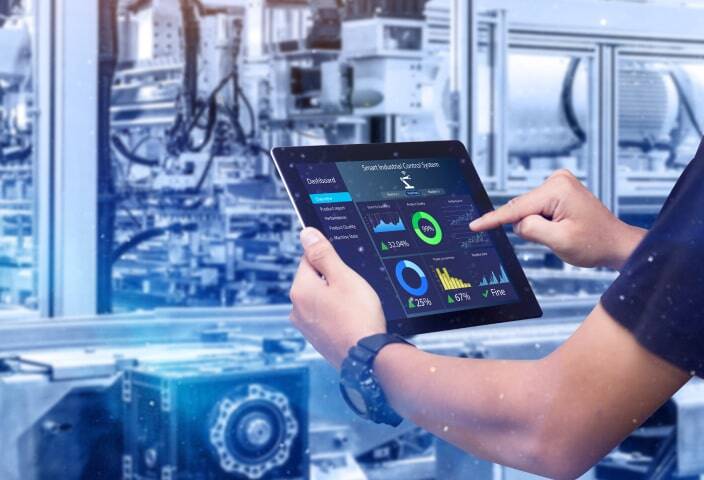
Tools like SAP Digital Manufacturing make it easier to see what’s actually going on day to day. Instead of waiting for reports, teams can follow what’s happening on the shop floor as it unfolds.
This includes:
- Production progress and order status
- Machine performance and downtime
- Quality issues as they occur
- Deviations from the plan
With this level of visibility, problems can be addressed earlier, before they affect the entire process.
Connecting equipment and systems
Another important part of this layer is integration with equipment and sensors. Through IoT technologies, data from machines can be captured and fed directly into the system.
This allows companies to:
- Monitor equipment in real time
- Detect issues earlier
- Better understand how production is actually performing
Instead of relying only on manual input, data comes directly from the source.
From monitoring to better decisions
When shop floor data is available in real time, it becomes easier to respond to changes. Delays, breakdowns, or quality issues don’t stay hidden — they can be addressed as soon as they appear.
Over time, this also helps improve planning accuracy. The more reliable the execution data, the better future plans become.

Supply Chain and Inventory Management
Production only works if materials are there when you need them. If supply and demand don’t match, even a well-planned process starts to slip.
Keeping materials on track
Procurement is closely tied to what’s happening in production. When demand changes, material needs change too. Instead of manual adjustments, systems like SAP S/4HANA and SAP Integrated Business Planning (SAP IBP) help keep purchasing and planning in sync, so materials come in when they’re needed.
Knowing what you have (and where it is)
One of the most common issues is not really knowing what’s in stock. Materials might exist somewhere in the system, just not where they’re needed, or no one realizes they’re already available.
With better visibility, it’s easier to:
- See what’s in stock across locations
- Track materials as they move
- Avoid over-ordering or running out at the wrong time
That alone removes a lot of unnecessary friction.
How warehouses fit in
Warehouses aren’t just storage — they’re part of the production flow. If materials don’t move efficiently through the warehouse, production feels it.
When warehouse processes are well organized, materials move without delays. Picking, staging, and delivery to the shop floor become more predictable, which helps keep production on track.
This is where SAP Extended Warehouse Management (SAP EWM) really makes things easier. It helps you see what’s in the warehouse and line things up with what production actually needs.
So materials don’t just sit in stock — they show up where they’re needed, right when they’re needed.
Keeping supply and demand in sync
It all comes down to alignment. Demand drives production, production drives purchasing, and supply needs to keep pace.
When these pieces stay connected, operations become more predictable, with fewer shortages and less excess stock to manage.
Asset Management and Maintenance
Production doesn’t just depend on materials — it depends just as much on equipment working reliably. When something breaks down unexpectedly, it doesn’t stay isolated but slows everything around it down.
Managing equipment over time
Equipment needs attention throughout its entire lifecycle. From installation to daily use, things wear out, performance changes, and small issues can build up over time.
Without a clear view of what’s happening with each asset, maintenance becomes reactive. Problems get fixed after they happen, not before.
Solutions like SAP Enterprise Asset Management (SAP EAM) help keep everything in one place — equipment data, maintenance history, and planned activities — so teams aren’t working blindly.
When combined with the SAP Intelligent Asset Management (SAP IAM) suite, this goes a step further. Companies can keep a single, consistent view of their assets while using predictive insights to spot potential issues earlier and move toward more proactive maintenance.
Preventing problems before they happen
Most teams try to move away from fixing only when something breaks. The goal is to catch issues early, before they affect production.
That usually means keeping an eye on how equipment is used and how it performs over time. Regular checks, usage tracking, and basic monitoring already make a difference.
In more advanced setups, predictive approaches — supported by SAP EAM and analytics — help spot patterns and warn about potential failures ahead of time, reflecting how asset management is evolving in modern manufacturing environments.
Reducing downtime and disruptions
At first, downtime doesn’t seem like a big issue. But it adds up quickly — small interruptions can turn into delays, missed timelines, and higher costs.
When maintenance is connected to production and asset data, it’s easier to stay ahead of problems. Teams can react faster, plan maintenance more carefully, and avoid stopping production when it matters most — especially when following proven asset management best practices.
Product Lifecycle and Engineering Integration
Production doesn’t just start on the shop floor — it starts earlier, in design. And if engineering and production aren’t well connected, problems usually show up later.
Connecting engineering and production
In many companies, engineering and production still work in separate systems. Designs are created in one place, while production teams rely on transferred or re-entered data. That’s where gaps start to appear.
When engineering and production are connected, product data flows directly between them. That reduces confusion, cuts down on manual steps, and helps avoid errors.
Managing product data and changes
A big part of this connection is how product data is handled, especially bills of materials (BOMs), specifications, and engineering changes.
Changes are inevitable. Designs evolve, components get replaced, and requirements shift. The challenge is making sure those changes are reflected everywhere they need to be, without delays or confusion.
With structured product lifecycle management, teams can:
- Keep product data consistent across systems
- Track changes and versions over time
- Ensure production always works with the latest information
SAP Product Lifecycle Management (SAP PLM) capabilities help manage this process, so updates don’t get lost between teams.
This becomes especially important in discrete manufacturing environments, where even small inconsistencies in product data can affect the entire production process.
The role of PLM in manufacturing
PLM connects engineering decisions with manufacturing reality. It helps make sure what’s designed can actually be produced, and that production reflects the latest design.
When PLM is part of the overall system landscape, companies can:
- Reduce rework caused by outdated data
- Speed up the transition from design to production
- Keep engineering and production aligned over time
It also plays a growing role in how companies approach product innovation, especially in more complex and fast-changing environments.
.jpg)
Real-Time Analytics and Decision-Making
When processes are connected, the data comes together too. Instead of pulling reports from different systems, teams can see what’s happening across the operation in one place.
Turning data into something useful
Having data isn’t the challenge, and most companies already have plenty of it. The difficulty is making sense of it and using it to make better decisions.
With embedded analytics in SAP S/4HANA, teams can see data from planning, production, supply chain, and maintenance as it updates. There’s no need to wait for reports or sort through different numbers, and everything is already there and up to date.
Supporting day-to-day decisions
When data is easy to access and consistent, decisions become simpler. Teams don’t have to react late — they can adjust plans, respond to issues, and keep things moving.
This applies across the process:
- Adjusting production based on demand changes
- Responding to supply delays
- Identifying bottlenecks or inefficiencies
Over time, this reduces guesswork and makes decisions more grounded in actual data, especially as companies move toward more structured, data-driven ways of working.
Moving from reporting to prediction
Analytics helps you understand not just what happened, but what could happen next.
With tools like SAP Analytics Cloud and broader data and analytics capabilities, companies can:
- Identify patterns in operations
- Forecast demand and performance trends
- Anticipate risks before they impact production
It doesn’t stop at execution. Data from the shop floor flows back into planning, so forecasts can be adjusted based on what’s actually happening. With real-time data feeding into SAP IBP, planners can align future plans with real capacity and performance.
Over time, planning and execution start feeding into each other. What happens on the shop floor shapes future plans, making them more realistic.
That shift — from reacting to past data to anticipating what’s next — comes from how modern analytics tools support more informed, forward-looking decisions.
The Role of SAP S/4HANA in Manufacturing
Across all these processes, there needs to be something that keeps everything aligned. In SAP-based environments, that role is handled by SAP S/4HANA, which acts as the digital core.
It brings together data from planning, production, supply chain, maintenance, and analytics, so everything runs on the same foundation. Instead of moving data between systems or reconciling differences, teams work with a single, consistent view of what’s happening — a key reason it’s often described as the ERP of the future.
One of the key advantages here is real-time processing. Changes in one area — such as demand or production — are reflected immediately across the system, without delays or manual updates.
S/4HANA also serves as the integration layer across functions, connecting different solutions and keeping processes aligned end to end. Whether it’s planning, execution, or analytics, everything ties back to the same core, regardless of whether it’s deployed in the cloud or on-premises.
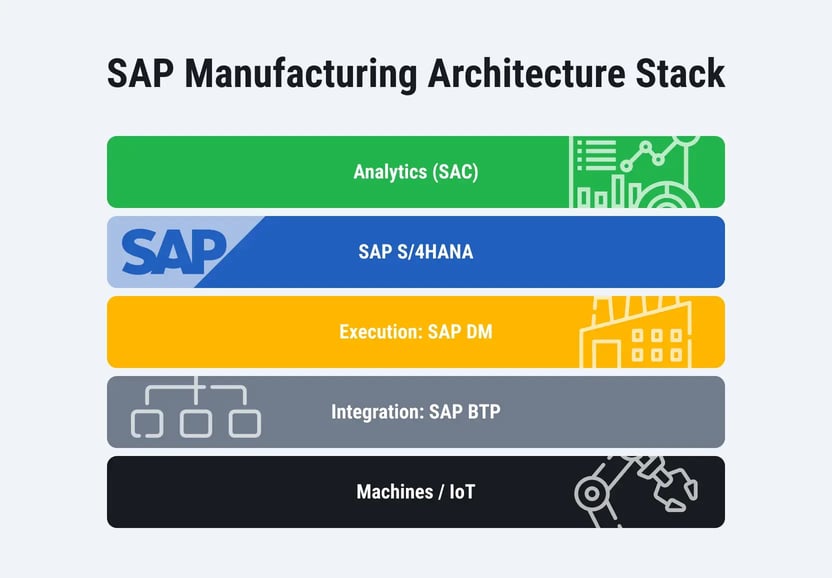
At the same time, systems outside the core — such as shop-floor machines or IoT sensors — need to be connected as well. This is typically handled through SAP BTP, which links operational data with business processes and allows it to flow between systems more easily.
This is what makes real-time scenarios possible in practice. A machine issue or quality alert on the shop floor doesn’t stay local — it can immediately trigger actions in the central system, so teams can respond without delay.
In practice, many companies also evaluate S/4HANA Cloud and the challenges that come with it, especially when deciding how to structure their system landscape.
S/4HANA also plays a part in how companies approach sustainability. With tools like SAP Sustainability Control Tower and the green ledger, environmental data is tied into financial and operational processes, so sustainability becomes part of daily decision-making.
-min-Jul-12-2022-09-46-40-14-AM.jpg)
Key Business Benefits of End-to-End SAP Manufacturing
When everything is connected, the impact becomes clear pretty quickly. Work is more predictable, teams spend less time fixing issues, and processes run with fewer disruptions.
More efficient operations
When planning, production, supply chain, and maintenance are aligned, there’s less back-and-forth. Teams don’t have to constantly check, adjust, or rework things. Processes just move forward without getting stuck.
Lower operational costs
A lot of costs come from things going off track: delays, too much stock, or downtime. When everything is connected, problems show up earlier, so there’s less need to fix things at the last minute.
Improved product quality
When everyone sees the same current information, it’s much easier to keep quality steady. Problems tend to show up earlier, before they get bigger.
Real-time visibility
Rather than waiting for updates, teams can see what’s happening in the moment. That helps them respond sooner, before small problems get bigger.
Faster, more confident decisions
When the data is clear and available right away, decisions don’t feel like guesswork. Teams can act sooner, adjust plans as needed, and keep things on track.
What To Consider When Implementing End-to-End SAP Manufacturing
Connecting processes across manufacturing sounds straightforward, but in practice, it takes preparation. Most challenges don’t come from the technology itself — they come from how data, systems, and teams are set up today.
Getting data ready
Everything depends on data being accurate and consistent. If product data, inventory records, or planning inputs aren’t reliable, issues will carry through the entire process.
Before anything else, companies usually need to clean up and align their data so systems can work properly together.
Working with existing systems
Few companies start from scratch. Most already have a mix of systems in place, including legacy solutions that still support critical processes.
It’s rarely straightforward to bring different systems together. Teams need to decide what stays, what changes, and how everything connects, especially when moving toward SAP S/4HANA.
Managing complexity across processes
When multiple functions are involved — planning, production, supply chain, maintenance — things can get complicated quickly. Aligning processes across teams takes time and coordination.
This is where having the right experience helps. Teams that understand both the technical and business sides of SAP can make the process easier to manage, especially when different types of consulting are involved.
Supporting people through change
A system can be well built, but it won’t matter if people don’t adopt it. Changes in daily work often bring some resistance if they’re not handled properly.
Things go much more smoothly when communication is clear, people are trained, and changes aren’t rushed. A lot of companies also bring in SAP consultants to help with both the system and the way teams adapt to it.
LeverX Expertise in SAP for Manufacturing
Building connected manufacturing processes in SAP is rarely just a system task. It’s about getting processes, data, and teams to work together in a way that actually fits how the business runs. That usually comes with a mix of technical and practical challenges along the way.
Manufacturing process optimization
Even with everything up and running, processes don’t always work perfectly. There’s often a chance to simplify things, remove bottlenecks, or improve how everything fits together.
MES and digital manufacturing integration
A big part of this is linking planning to what’s really happening on the shop floor. MES and digital manufacturing tools help bridge that gap, so production matches the plan more closely and teams can see what’s happening as it unfolds — something that depends on solid SAP integration across systems and processes.
Migration and system modernization
Most companies are dealing with a mix of old and newer systems. Moving to a more modern SAP setup takes some planning, especially when the current way of working is already deeply ingrained.
Ongoing support and continuous improvement
Once everything’s live, things still change. Priorities shift, processes evolve, and systems need to keep up. Ongoing support helps keep things stable.
Conclusion
In practice, what makes manufacturing work isn’t the systems themselves, but how well everything connects. When processes are aligned, there’s less need to coordinate things manually or fix gaps along the way.
Work becomes easier to manage day to day. Plans are clearer, issues show up earlier, and teams can focus more on keeping things moving than reacting to problems.
It takes some time, especially when existing systems are involved. But once everything starts working together, things settle down and become easier to manage.