









SAP S/4HANA Consulting Services for US Companies
Moving to SAP S/4HANA is about more than replacing an ERP system. It affects how your business runs every day. LeverX partners with you through the whole process. We don't just hand over a generic strategy; we provide real-world guidance, map out a clear timeline, and work side-by-side with your team from day one.
SAP S/4HANA projects succeed long before go-live. As an SAP Gold Partner, LeverX steps in early to review your existing IT setup, identify where you're likely to hit friction, and build an honest roadmap for the implementation.
ECC transitions, large-scale cloud migrations, or clean core initiatives are incredibly complex tasks. We bring years of practical SAP implementation experience to your project, cutting through the theoretical details and providing you with the necessary practical guidance to get the job done right.
SAP S/4HANA: The Foundation for a Modern Enterprise
Managing a business on a legacy system means you are always making decisions based on old data. It slows everything down. To stay competitive now, you need to see what is happening across your operations in real time, on a system that won't bottleneck when the business scales or changes direction. That is the actual utility of SAP S/4HANA: it fixes the data lag.
With the 2027 SAP ECC mainstream maintenance deadline getting closer, many organizations are starting to plan their next steps now rather than waiting until a migration becomes urgent.
Why US organizations are moving to SAP S/4HANA now:
- Beating the ECC maintenance deadline: With the clock ticking on legacy SAP support, proactive US enterprises are migrating now to secure top-tier consulting talent and avoid inflated implementation costs as the deadline nears.
- Insulating margins against volatility: In an era of shifting interest rates, labor constraints, and unpredictable supply chains, US businesses are ditching legacy tech to get the real-time financial accuracy needed to protect their bottom line.
- Improving data consistency: It's difficult to make decisions when every department has a different version of the numbers. Bringing business information into one system helps reduce confusion and makes reporting more reliable.
- Accelerating M&A and scale: US growth strategy relies heavily on mergers and acquisitions. Moving to a modern, standardized core allows companies to onboard newly acquired businesses rapidly without creating a fragmented application landscape.
- Supporting compliance and reporting: Many organizations are looking to simplify financial controls, improve reporting accuracy, and create a stronger foundation for regulatory and audit requirements.
LeverX strategic assessment:
"A migration of this scale isn't just a technology solution; it impacts every process and every team within your company. LeverX helps you navigate the complexities and develop a practical action plan to ensure business continuity today and create the conditions for rapid growth in the future."
What SAP S/4HANA Enables
Enterprise-wide visibility
Faster financial operations
Better support for growth
Smarter supply chain management
Cleaner, easier-to-maintain systems
A platform for innovation
Henry Traverso
Director of Client Solutions
SAP S/4HANA Adapted to Your Business
SAP S/4HANA sourcing and procurement
SAP S/4HANA for supply chain
SAP S/4HANA sustainability management
SAP S/4HANA for finance
SAP S/4HANA for manufacturing
SAP S/4HANA customer experience (CX)
SAP S/4HANA for energy and utilities
SAP S/4HANA for real state and construction
SAP S/4HANA for professional services
Choosing the Right Path To SAP S/4HANA
There is more than one way to move to SAP S/4HANA, and the right choice depends on what you are trying to achieve. Some companies want a clean start. Others need to protect years of proven processes. Many want something in between.
LeverX provides the structural insights needed to compare data transition options, helping you select a deployment strategy that respects your current operational realities and budgetary targets.
Greenfield
Brownfield
Bluefield
LeverX perspective
The deployment methodology an enterprise selects drives broad operational changes across the entire corporate structure. This decision shapes long-term data visibility, external interface performance, audit readiness, and the day-to-day stability of core business units.
Conducting a comprehensive technical audit before finalizing the migration strategy protects the enterprise from unexpected implementation issues. By identifying outdated settings, data inconsistencies, and interface complexities early on, organizations can avoid costly rework of engineering solutions and create a highly reliable baseline for management review.
LeverX works with your team to evaluate the trade-offs and build a practical SAP S/4HANA migration strategy that supports both the project and the business behind it.
Standard Implementation vs. Strategic Transformation
| Standard implementation | LeverX strategic advisory & transformation | |
| 1 | Focuses on deploying SAP S/4HANA | Aligns SAP S/4HANA with business goals and transformation priorities |
| 2 | Migrates existing data and processes | Evaluates opportunities to improve processes and reduce complexity |
| 3 | Delivers a successful go-live | Focuses on adoption, business outcomes, and long-term value |
| 4 | Preserves existing customizations | Identifies opportunities to reduce technical debt and support a Clean Core approach |
| 5 | Addresses immediate project requirements | Builds a roadmap that supports future growth, cloud adoption, and innovation |
| 6 | Treats implementation as a standalone project | Considers the broader impact on operations, reporting, integrations, and users |
| 7 | Measures success by technical completion | Measures success by business performance and value realization |
Core SAP S/4HANA Capabilities
Unified business platform
Miscommunication usually happens because different departments are looking at different data. When you share a single source of truth, alignment happens naturally. You can catch red flags before they turn into real problems and keep daily tasks moving forward instead of getting bogged down in endless alignment syncs.

Flexible migration options
Not every organization needs a complete reset. Some want to redesign processes, while others prefer to build on what's already working. SAP S/4HANA gives you the flexibility to choose the path that makes the most sense for your business.

Clean Core approach
What seems like a small customization today can become a bigger challenge during the next upgrade. A Clean Core approach helps keep your SAP environment easier to manage as the business grows.

Data consolidation and standardization
- Automatically aggregate data from different sources, enabling comprehensive analysis and reporting.
- Harmonize data to a unified standard, facilitating its analysis and interpretation.
SAP S/4HANA for Global Operations
As companies expand, fragmented systems and regional silos make it difficult to maintain a clear organizational overview. SAP S/4HANA centralizes these moving parts into a single cohesive system.
- Seamless acquisitions: Onboards new companies using a shared blueprint, balancing standardized corporate workflows with the operational flexibility the new team needs.
- Simplified financial consolidation: Unifies financial data across multiple legal entities, international subsidiaries, and varied accounting standards. This is especially valuable for U.S.-based organizations looking to eliminate manual data collection and standardize complex reporting.
- Unified operational management: Connects purchasing, production, and shipping data under one roof to eliminate silos, tracking inventory accurately and accelerating fulfillment.
- Regional compliance support: Centralizes global operational visibility while dynamically supporting local tax, regulatory, and reporting requirements across different states and countries.
- Real-time cash visibility: Pulls global financial data out of regional spreadsheets into a single view, allowing treasury teams to track worldwide cash positions and mitigate currency risks.
- Data-driven planning: Consolidates organization-wide data to provide a clean, reliable foundation for forecasting, scenario planning, and SAP Business AI features.
How LeverX Supports Your SAP S/4HANA Journey
Strategic advisory
SAP implementation

System integration

Application management services (AMS)

Data management and governance

SAP BTP integration

Every SAP S/4HANA project starts with a few important decisions. Let's discuss the approach that makes the most sense for your business
Why Choose LeverX for SAP S/4HANA Consulting
Two decades of practical SAP expertise
We speak both SAP and business
Staying connected as an SAP Gold Partner
We stay involved after go-live
We don't start with technology
Deep industry-specific experience
No two SAP projects are identical. A manufacturer faces entirely different daily hurdles than a retailer or a utility provider. With hands-on experience across more than 30 industries, we tailor the system to the actual operational realities of your specific market.
SAP S/4HANA Projects in Practice
Retal Group: Supporting Global Growth with SAP S/4HANA
Global Fishing Company: Modernizing Warehouse Operations

RĪGAS SILTUMS: Modernizing Utility Operations
SAP Finance Localization for the Baltics

WHAT OUR CUSTOMERS SAY
Developing Mobile Solution for a Banking Company
LeverX developed a mobile solution that allowed the banking company to improve customer service and increase customer satisfaction.

Fintech Solution Development for a Group of Banks
LeverX provided the client with several solutions that ensure smooth bank performance in several ways, from providing additional security to facilitating operations and improving revenue growth.
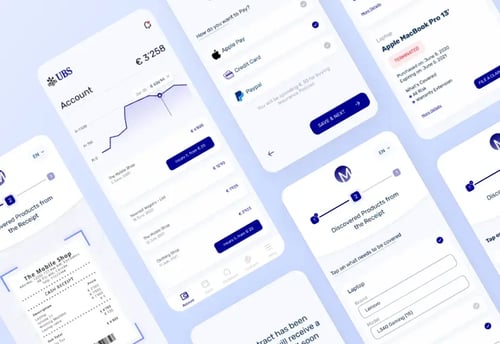
Data science solution development for the fintech sector
Merchant recognition solution based on machine learning.
Industries We Serve
A Practical Path To SAP S/4HANA
Discover
Once a plan is selected, we detail all its aspects and create a realistic schedule. We also ensure that all relevant specialists, both you and us, are kept informed from the outset to avoid any misunderstandings later.
Prepare
This is where we look at your wish list and see how it fits into the actual software. We'll map out how your day-to-day tasks will change so we can prove the system will actually do what your team needs it to do.
Explore
After we lock down the plan, we start the technical work. We'll set up the software to match your requirements, transfer your data, link your existing tools together, and build out any custom features we agreed on.
Realize
Before going live, we spend time testing the software and walking your team through how to use it. We want the whole company ready for the change, so there aren't any bad surprises when you open for business.
Deploy
The work doesn't stop just because the system is live. We stick around to support your team, fix early bottlenecks, and help you optimize and improve the platform as your business needs change over time.
Run
CONTACT US
If you are looking for an SAP Global Strategic Supplier or Technology Partner for your business, fill out the form below, and we will contact you at short notice.
Frequently Asked Questions
How does SAP S/4HANA support U.S. climate disclosure requirements?
We have global branches. How does it handle both local and U.S. GAAP reporting?
What is SAP S/4HANA?
Do we need to move to the cloud to use SAP S/4HANA?
How do we know which migration approach is right for our business?
Should we choose RISE with SAP or manage SAP S/4HANA ourselves?
This choice really comes down to how you want to handle your day-to-day operations. Going with RISE with SAP essentially offloads the headache of infrastructure management by bundling your software licenses, hosting, and day-to-day support into one predictable subscription. It is designed to fast-track your move to the cloud without forcing your team to manage the underlying technical stack.
When you are weighing RISE against a self-managed approach, you have to look at your internal IT strengths, data privacy rules, and how much custom code you are carrying. If your internal tech team is small, the simplicity of a fully managed platform makes a lot of sense. But if your business requires deep, granular control over the server environment or faces highly specific compliance mandates, handling the hosting yourself might be the path you have to take.
Ultimately, this isn't just a choice about servers or data centers. The right option is the one that aligns with your long-term business goals and determines how agile you need your IT department to be as your operations scale.
How do organizations justify the investment in SAP S/4HANA?
The business case has to focus on operational numbers, not just the fact that it's a newer software version. Leadership teams usually judge the investment by how much manual overhead they can strip out of daily routines and whether it lowers long-term maintenance costs. The ultimate goal is building a clean data foundation so that when you want to deploy AI or automation later, you aren't stuck fixing broken backend code.
Is it possible to migrate to SAP S/4HANA without disrupting your daily operations?
No migration is completely disruption-free, but most problems can be avoided long before go-live. The organizations that handle these projects best don't rush them. They understand what they're working with, test carefully, prepare their users, and introduce changes in a controlled way. That makes the transition far more predictable for the business.
How long does an SAP S/4HANA implementation take?
SAP timelines are always a moving target. If you have clean data and a simple setup, you can launch in a few months. However, if we are dealing with years of bad data habits and twenty legacy integrations, it is going to take significantly longer. We always start with a deep-dive assessment for this exact reason; otherwise, you are just throwing darts at a calendar.
Why are so many organizations adopting a Clean Core strategy?
Many organizations discover that every customization added over the years creates additional work during upgrades, integrations, and system changes. What starts as a small modification can gradually increase maintenance costs and slow down future projects.
Every time you add custom code to your ERP, you’re basically building a technical debt trap. What seems like a harmless quick fix today will break during your next upgrade, forcing your IT team to waste weeks fixing it. A Clean Core strategy just means using standard SAP features out of the box as much as possible. It keeps the system lightweight, lowers your maintenance bills, and means future updates won't turn into a massive, expensive nightmare.
Contact Us
What happens next?
-
1
An expert will reach out to you to discuss your specific requirements and objectives.
-
2
We’ll sign an NDA to ensure any sensitive information is kept secure and strictly confidential.
-
3
We’ll work with you to prepare a customised proposal based on the project’s scope, timeline, and budget.
years of expertise
projects
professionals
Contact Us