



main banner

SAP Integrated Business Planning (SAP IBP) Consulting and Implementation Services

Improve supply chain planning with SAP IBP and LeverX. We guide U.S. businesses from initial assessment and consulting to solution design, implementation, and ongoing support. With LeverX, you get:

  • Assessment of your supply chain planning processes and requirements.
  • Tailored SAP IBP solution design and architecture.
  • Implementation scope, roadmap, and cost estimate.
  • SAP IBP configuration and implementation.
  • System integration and planning data migration.
  • Ongoing application support and optimization.

LeverX: Your Strategic SAP IBP Partner in the U.S.

As an SAP Gold Partner and Global Strategic Supplier, LeverX combines more than 20 years of SAP expertise with deep supply chain knowledge. We help U.S. businesses modernize planning processes, improve demand and supply visibility, and connect strategic planning with operational execution.

20+
Years of SAP expertise
F500
Trusted by Fortune 500 Companies
SCM
Center of Excellence
Certified
SAP Gold Partner

Supply Chain Planning Challenges SAP IBP Helps Solve

Inaccurate demand forecasting
Historical data, changing customer behavior, seasonality, promotions, and market fluctuations can make demand forecasting unreliable, leading to stockouts or excess inventory.
Excess inventory and working capital constraints
Disconnected inventory planning across warehouses, distribution centers, and manufacturing facilities can result in excessive safety stock, obsolete products, and tied-up working capital.
Supply-demand imbalances
Changes in customer demand, production capacity, material availability, and supplier lead times can disrupt supply plans and affect order fulfillment.
Fragmented planning processes
Sales, finance, procurement, manufacturing, and logistics teams often work with separate planning tools and inconsistent assumptions, making it difficult to establish a unified business plan.
Limited supply chain visibility
Without connected planning data and timely alerts, businesses may struggle to identify supply disruptions, demand changes, and inventory risks early enough to respond.
Manual and spreadsheet-based planning
Excessive reliance on spreadsheets, manual calculations, and repetitive planning activities increases the risk of errors and limits planners' ability to focus on strategic decisions.
Inefficient scenario planning
Businesses may lack the tools to evaluate the potential impact of supplier delays, capacity shortages, demand fluctuations, and other disruptions before making operational decisions.
Disconnected strategic and operational planning
Long-term business objectives, financial plans, and daily supply chain activities may not align, resulting in unrealistic production plans, missed targets, and inefficient resource allocation.
Facing supply chain planning challenges? We'll help you address them with SAP IBP

Henry Traverso

Director of Client Solutions

Why Implement SAP IBP?

SAP IBP helps organizations connect planning processes, improve supply chain visibility, and respond more effectively to market changes.

More accurate demand forecasts

Use statistical forecasting, machine learning, and demand sensing to incorporate historical data and relevant demand signals into planning.

Optimized inventory levels

Balance inventory targets across supply chain locations to reduce excess stock while supporting customer service requirements.

Better supply-demand alignment

Coordinate demand, supply, capacity, and material requirements to develop more feasible planning scenarios.

Integrated S&OP processes

Align sales, finance, procurement, and manufacturing teams around shared operational and financial plans.

Faster planning decisions

Use what-if simulations, alerts, and planning analytics to evaluate alternatives and respond to changing business conditions.

Improved supply chain resilience

Identify potential disruptions, understand their impact, and evaluate alternative supply and inventory scenarios.

Key SAP IBP Capabilities

LeverX helps organizations select and configure SAP IBP capabilities according to their planning requirements, operating model, and supply chain complexity.

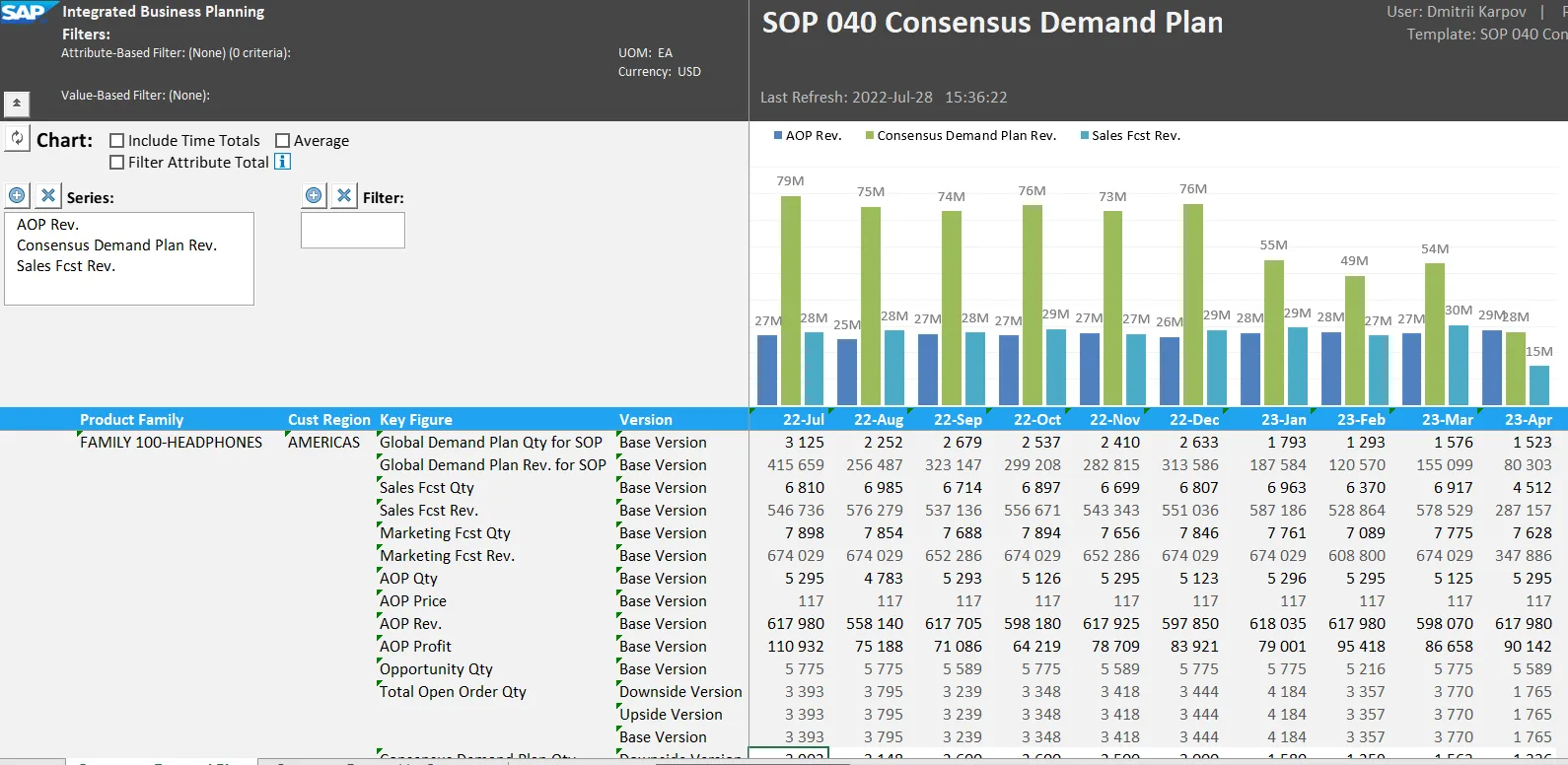
Sales and Operations Planning (S&OP)

Align demand, supply, financial objectives, and operational plans through a collaborative planning process.

Key capabilities include:

  • Demand and supply review.
  • Cross-functional planning.
  • Executive S&OP meetings.
  • Financial and operational plan alignment.
  • What-if scenario modeling.
  • Performance monitoring.
  • Planning version comparison.
  • Consensus demand and supply planning.

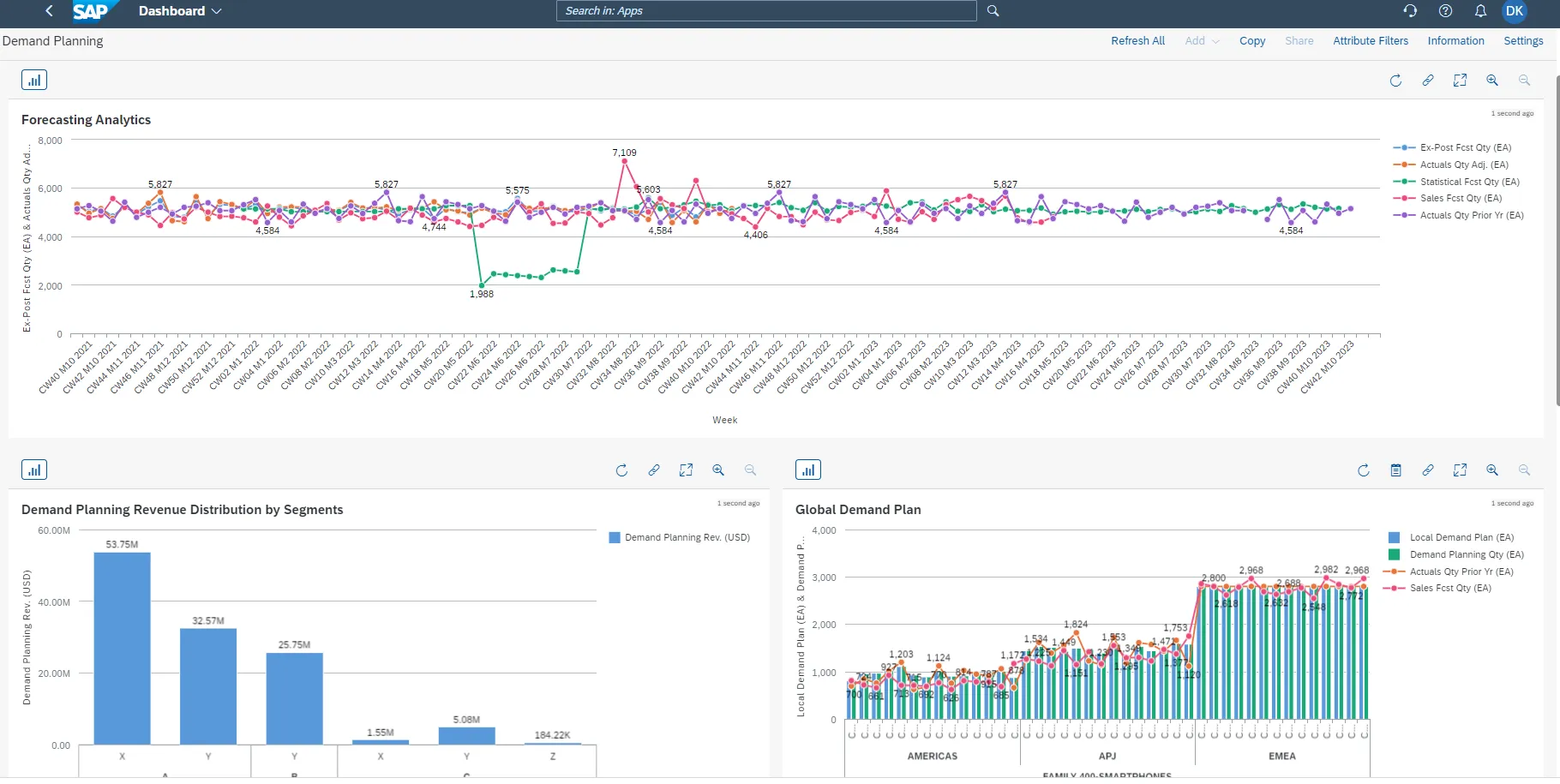
Demand Planning and Demand Sensing

Improve forecast quality by combining historical sales data, statistical models, market information, and short-term demand signals.

Key capabilities include:

  • Statistical forecasting.
  • Machine learning-based forecasting.
  • Advanced demand sensing.
  • Historical demand analysis.
  • Outlier detection and correction.
  • Product lifecycle forecasting.
  • Promotion and seasonality analysis.
  • Forecast Value-Add (FVA) analysis.

Inventory Planning and Optimization

Determine appropriate inventory targets across the supply network while balancing customer service levels, demand variability, and working capital.

Key capabilities include:

  • Inventory target setting.
  • Multi-Echelon Inventory Optimization (MEIO).
  • Safety stock optimization.
  • Inventory segmentation.
  • Demand and supply variability analysis.
  • Service-level planning.
  • Inventory risk analysis.
  • Excess and obsolete inventory reduction planning.

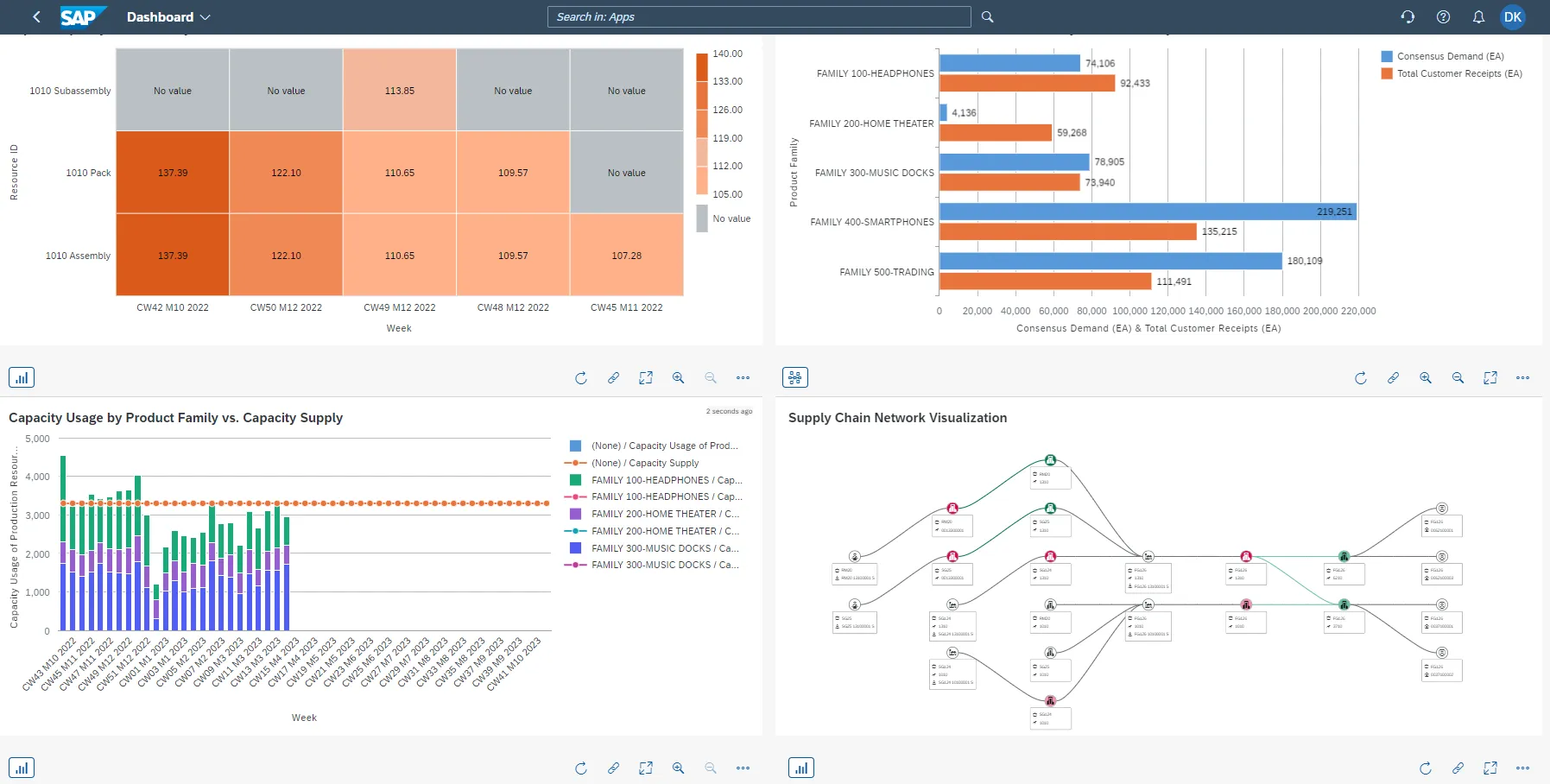
Response and Supply Planning

Develop feasible supply plans based on demand, production capacity, material availability, and other operational constraints.

Key capabilities include:

  • Constrained and unconstrained supply planning.
  • Multilevel supply planning.
  • Rough-cut capacity planning.
  • Material and capacity constraint analysis.
  • Supply allocation.
  • Order prioritization.
  • Response management.
  • Scenario-based supply planning.

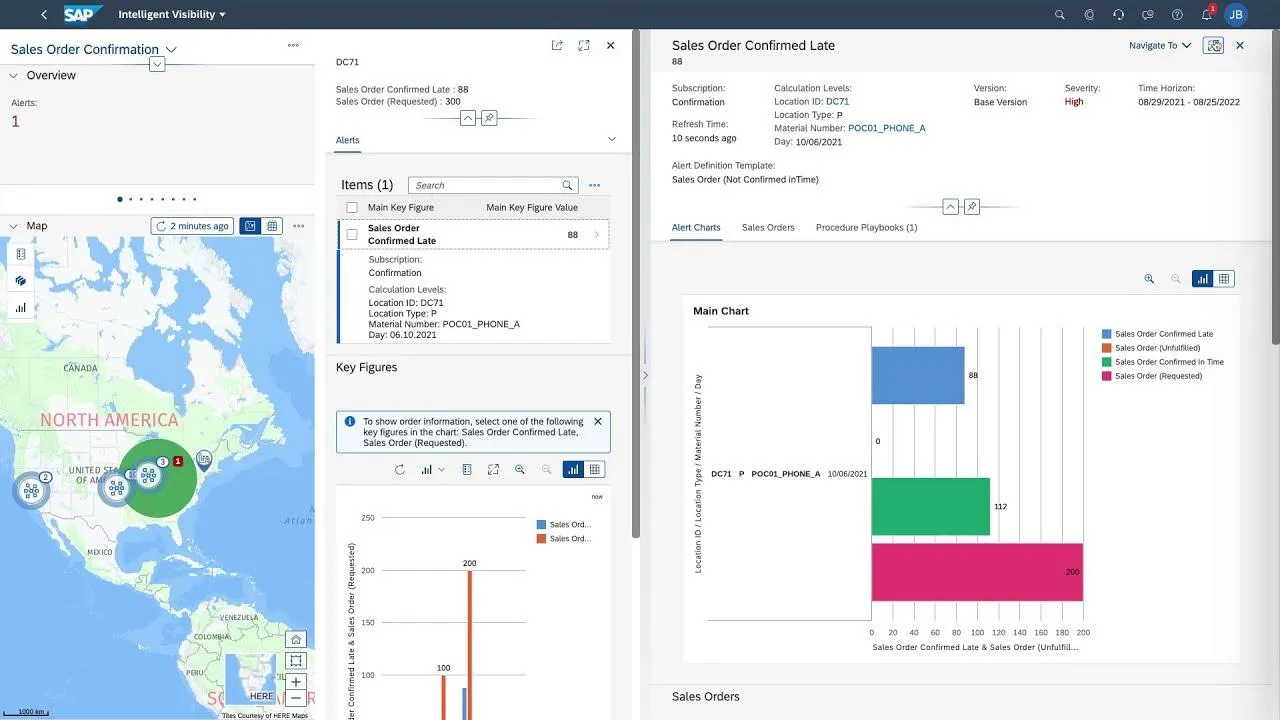
Supply Chain Visibility and Exception Management

Improve visibility into planning performance and identify issues that may affect supply chain execution.

Key capabilities include:

  • Supply chain KPI monitoring.
  • Planning alerts and exceptions.
  • Supply-demand imbalance analysis.
  • Scenario comparison.
  • Supply network visibility.
  • Exception prioritization.
  • Planning performance analysis.
  • Collaboration across planning teams.

Demand-Driven Replenishment (DDMRP)

Maintain optimal material availability by positioning inventory buffers and triggering replenishment based on actual demand and supply variability.

Key capabilities include:

  • Strategic inventory buffer positioning.
  • Buffer profiles and stock level calculation.
  • Dynamic buffer adjustments.
  • Average Daily Usage (ADU) analysis.
  • DDMRP-based replenishment recommendations.
  • Replenishment priority monitoring.
  • Supply and inventory status visibility.
  • Integration with SAP S/4HANA for replenishment execution.

Start with the Right SAP IBP Engagement

Whether you're exploring SAP IBP, looking to improve existing supply chain planning processes, or considering a transition from SAP APO, LeverX offers focused engagements to help you define the right approach.

SAP IBP consultation

Best fit for: Businesses considering SAP IBP or looking for expert guidance on improving demand, supply, and inventory planning.

Discuss your supply chain planning challenges, business requirements, and objectives with our SAP experts. Explore relevant SAP IBP capabilities, implementation options, and integration scenarios.

You receive: Expert recommendations, potential solution approaches, and clear next steps.

Book a consultation

Personalized SAP IBP demo

Best fit for: Organizations evaluating SAP IBP and looking to understand how it can improve their planning processes.

Explore relevant SAP IBP capabilities through a guided demonstration based on your business scenarios, including demand forecasting, inventory optimization, supply planning, and S&OP.

You receive: A tailored product demo, insights into relevant capabilities, and recommendations for your planning processes.

Request a demo

SAP APO to IBP migration assessment

Best fit for: Organizations planning to transition from SAP Advanced Planning and Optimization (SAP APO) to SAP IBP.

Evaluate your existing planning processes, configurations, data structures, custom developments, and integration landscape. Identify migration requirements and define a practical transition strategy.

You receive: A migration assessment, preliminary project scope, and a transition roadmap.

Plan your SAP IBP migration

SAP IBP implementation cost estimate

Best fit for: Businesses planning SAP IBP implementation and looking to understand the required investment, resources, and project scope.

Evaluate your planning requirements, selected SAP IBP capabilities, data readiness, integration needs, and business complexity to estimate implementation effort and costs.

You receive: Preliminary project scope, implementation cost estimate, timeline, and resource requirements.

Get a project cost estimate

Our SAP IBP Services

LeverX provides end-to-end SAP IBP services, helping organizations modernize supply chain planning, improve forecasting, optimize inventory, and coordinate business decisions.

SAP IBP consulting and planning assessment

We evaluate your existing supply chain planning processes, business requirements, and IT landscape to define an SAP IBP strategy aligned with your operational and financial objectives.

Our services include:

  • Supply chain planning process assessment.
  • Demand forecasting and supply planning analysis.
  • Inventory management evaluation.
  • S&OP maturity assessment.
  • Planning data quality and governance review.
  • Current system landscape assessment.
  • SAP IBP architecture recommendations.
  • Business requirements and gap analysis.
  • Implementation strategy and project planning.

SAP IBP implementation

We configure and deploy SAP IBP capabilities to support integrated demand, supply, inventory, and S&OP processes.

Our services include:

  • SAP IBP solution architecture and configuration.
  • Planning area and master data setup.
  • Key figure and planning level configuration.
  • Planning operator and application setup.
  • Demand and supply planning configuration.
  • Inventory optimization setup.
  • S&OP process implementation.
  • Planning views and user interface configuration.
  • Functional and integration testing.
  • Deployment and user training.

Demand planning and forecasting optimization

We help organizations improve forecasting processes by configuring statistical models, demand sensing capabilities, and collaborative planning workflows.

Our services include:

  • Forecasting process assessment.
  • Statistical forecasting configuration.
  • Demand sensing implementation.
  • Forecast model selection and validation.
  • Historical data preparation.
  • Outlier detection and correction.
  • Promotion and seasonality planning.
  • Forecast Value-Add analysis.
  • Demand planning process optimization.

Supply planning and response management

We configure planning processes that help businesses balance demand with production capacity, material availability, and supplier constraints.

Our services include:

  • Supply planning architecture and configuration.
  • Constrained and unconstrained planning setup.
  • Capacity and material constraint modeling.
  • Multilevel supply planning.
  • Rough-cut capacity planning.
  • Supply allocation and prioritization.
  • Response planning configuration.
  • What-if scenario development.
  • Supply planning process optimization.

Inventory planning and optimization

We help organizations establish inventory planning processes that balance stock availability, service levels, and working capital requirements.

Our services include:

  • Inventory planning assessment.
  • Safety stock strategy design.
  • Multi-Echelon Inventory Optimization configuration.
  • Inventory segmentation.
  • Target stock level calculation.
  • Lead time and demand variability analysis.
  • Inventory scenario modeling.
  • Excess and obsolete inventory analysis.
  • Inventory planning optimization.

SAP IBP integration and data management

We connect SAP IBP with ERP, manufacturing, logistics, and analytics systems to support reliable data exchange across the planning landscape.

Our services include:

  • SAP S/4HANA and SAP ERP integration.
  • SAP Integration Suite implementation.
  • SAP Cloud Integration for Data Services (CI-DS) assessment and configuration, where applicable.
  • Master data synchronization.
  • Transactional data integration.
  • Integration with SAP EWM and SAP TM.
  • SAP Analytics Cloud integration.
  • Third-party ERP and planning system integration.
  • External demand data integration.
  • Interface testing and monitoring.
leverx
Ready to improve your supply chain planning? We'll help you define the right SAP IBP approach

Explore SAP IBP Planning Capabilities

SAP IBP supports sales and operations planning, demand forecasting, supply planning, inventory optimization, and supply chain monitoring. For new customers subscribing after April 20, 2026, the licensing model requires SAP Integrated Business Planning foundation, with advanced demand, advanced supply, and advanced inventory optimization applications available separately.
Sales and operations planning
Demand planning
Inventory planning and optimization
Response and supply planning
Supply chain monitoring

Sales and operations planning

With SAP IBP's sales and operations planning capabilities, you always know where there is a shortage and where there is an oversupply of stock, where warehouses are overcrowded or empty, where downtime is expected, and other crucial elements to your successful sales and operations questions.

What do you get?

  • A unified data model for demand, supply, and finance
  • “What-if” scenarios
  • A real-time picture of the financial impacts of different scenarios
  • A clear vision of upcoming risks and opportunities

Need help identifying the right SAP IBP capabilities?

SAP IBP Use Cases Across Supply Chain Operations

logo-1

Demand forecasting and sensing

Combine historical sales, order patterns, promotions, and other demand signals to refine forecasts and identify short-term changes in customer demand.
logo-2

Collaborative sales and operations planning

Bring sales, finance, procurement, and manufacturing teams together to establish an aligned business plan and evaluate its financial and operational impact.
logo-3

Multi-echelon inventory optimization

Determine inventory targets across manufacturing facilities, distribution centers, and warehouses to balance service levels with inventory costs.
logo-5

Supply planning under constraints

Evaluate production capacity, material availability, supplier lead times, and other constraints to create more feasible supply plans.
logo-6

Supply chain scenario planning

Simulate demand changes, supplier disruptions, capacity shortages, and alternative sourcing scenarios to support faster planning decisions.
logo-7

Demand-driven replenishment

Coordinate replenishment requirements with inventory targets, demand signals, and supply constraints to maintain product availability across the network.

SAP IBP Integration Ecosystem

SAP IBP works with ERP, manufacturing, warehouse, transportation, and analytics systems to connect supply chain planning with operational execution.

LeverX designs integration architectures that help organizations synchronize planning data and improve coordination across their enterprise systems.

  • SAP S/4HANA: Exchange master data, transactional information, inventory data, and planning results to connect supply chain planning with ERP execution.
  • SAP ERP (ECC): Integrate legacy ERP data with SAP IBP to support demand, supply, and inventory planning during modernization initiatives.
  • SAP Extended Warehouse Management (EWM): Connect planning outputs with warehouse execution data to improve inventory visibility and coordinate replenishment and distribution activities.
  • SAP Transportation Management (TM): Align supply and distribution plans with transportation requirements, freight operations, and logistics constraints.
  • SAP Production Planning and Detailed Scheduling (PP/DS): Connect tactical supply planning with detailed production scheduling and capacity planning.
  • SAP Analytics Cloud (SAC): Combine planning data and financial information in analytical dashboards to evaluate performance and support business decisions.
  • SAP Business Technology Platform (BTP): Use SAP integration and extension services to connect SAP IBP with SAP and non-SAP applications.
  • Third-party ERP and external data sources: Integrate additional demand signals, supplier data, market information, and operational inputs from external applications.

The integration architecture depends on your SAP landscape, data sources, available interfaces, and planning requirements.

Benefits of SAP Integrated Business Planning

More accurate demand forecasting

Combine historical data, market signals, and advanced forecasting models to improve demand predictions and anticipate changes in customer needs.
Optimized inventory levels

Balance stock availability and customer service requirements while reducing excess inventory and tied-up working capital.
Better supply-demand alignment

Coordinate demand forecasts, production capacity, and material availability to create more realistic and responsive supply plans.
Faster planning decisions

Use real-time planning data, scenario simulations, and analytics to evaluate alternatives and respond to supply chain changes.
Improved cross-functional collaboration

Align sales, finance, procurement, and manufacturing teams around shared plans, assumptions, and business priorities.
Greater supply chain resilience

Identify potential disruptions, assess their impact, and evaluate alternative scenarios to make supply chains more adaptable.
Lower planning effort

Automate repetitive forecasting and planning activities to reduce manual work and give planners more time for strategic decisions.

Why Choose LeverX for SAP IBP Consulting and Implementation?

Retal Group

"The SAP solution supported by the LeverX team helped us achieve the utmost process automation and optimized financial and logistics processes."
JAVED IQBAL

Javed Iqbal

SAP Project Manager

Proven SAP expertise

With more than 20 years of SAP experience and 950+ completed projects, LeverX helps organizations modernize complex enterprise and supply chain environments.

Supply chain planning knowledge

Our specialists understand demand forecasting, S&OP, supply planning, inventory optimization, and the operational processes that connect them.

End-to-end SAP capabilities

We support the entire SAP IBP lifecycle, from planning assessment and solution design to configuration, implementation, integration, and ongoing support.

Cross-industry experience

Our teams work across more than 30 industries, including manufacturing, automotive, retail, logistics, chemicals, and pharmaceuticals.

Integration and data expertise

We connect planning platforms with ERP, warehouse, transportation, manufacturing, and analytics systems to establish reliable planning data flows.

SAP partnership and innovation

As an SAP Gold Partner and Global Strategic Supplier, we work across the SAP ecosystem and help businesses adopt relevant planning and analytics capabilities.

How We Can Help

We provide a full spectrum of services for SAP IBP:

Industries We Serve

Leveraging our experience with SAP together with diverse industrial expertise, we’ll help you select solutions that will drive meaningful, long-term value for your company.

Implementation Roadmap

We follow the SAP Activate methodology, which breaks down the implementation of SAP Integrated Business Planning for Supply Chain into six essential stages:
  • Current Processes Evaluation: Assess existing business processes and identify the organization's needs.
  • Defining Technical Requirements: Create a detailed specification of the functional and technical needs of the new system. 

Discover

  • Setting Goals and Objectives: Establish and agree on the goals to be achieved throughout the project.
  • Assembling the Project Team: Appoint team members and define their roles and responsibilities.
  • Project Plan Development: Create a comprehensive plan that outlines project phases, timelines, resources, and key performance indicators.
  • Budget Determination: Estimate and approve the budget.
  • Specifications Preparation: Develop the technical and functional specifications for the development team.

Prepare

  • Ensuring Business Requirements are Met: Check that SAP IBP aligns with business requirements and project objectives.
  • Data Validation: Verify the accuracy and compliance of the data.

Explore

  • Data Migration: Transfer data from existing systems to the new one.
  • System Configuration: Set up the solution according to requirements and specifications.
  • Customization: Develop additional features and modules, if the standard solution does not meet all needs.
  • Integrations: Configure SAP IBP to work with other IT systems and applications.

Realize

  • Testing: Perform functional, integration, regression, and load testing to ensure that all works correctly.
  • User Training: Organize sessions to help users become familiar with the new system.

Deploy

  • System Readiness Check: Verify that the system is ready for operational use.
  • Launch: Officially transition to active use of SAP IBP.
  • Ongoing Support: Continuously monitor solution performance to identify and resolve any issues.

Run