Discover how SAP S/4HANA ERP works, including its key features, deployment options, business benefits, and migration from SAP ECC.
With SAP ECC’s mainstream maintenance ending in 2027, SAP is positioning SAP S/4HANA as its next-gen ERP, intended to replace earlier versions and serve as the intelligent heart of the modern business. The ERP closes the gap between raw data and actual decision-making. In this blog post, we will explore how this transition allows companies to ditch their legacy baggage and stay competitive in a digital-first market.
What Is SAP S/4HANA?
You can think of SAP S/4HANA as the engine behind a modern business. At its simplest, it is an ERP suite built to run on the SAP HANA in-memory database. That specific database is the reason the system can crunch massive amounts of data in real time without compromising the general performance. It essentially gives you a single system of record for finance, supply chain, manufacturing, and your daily operations.
But it does much more than just log your transactions. Because AI and analytics are baked right into the workflows, you aren't stuck waiting days for reports to sync up. You get a live look at what is happening across the company at any given second. This allows teams to stop relying on manual guesswork and start making moves based on the actual data sitting in the system. It’s the ultimate starting point for any business that wants to stop fighting with slow legacy tech and start moving at the speed of the market.
-min-Jul-12-2022-09-46-40-14-AM.jpg)
What Makes SAP S/4HANA Different?
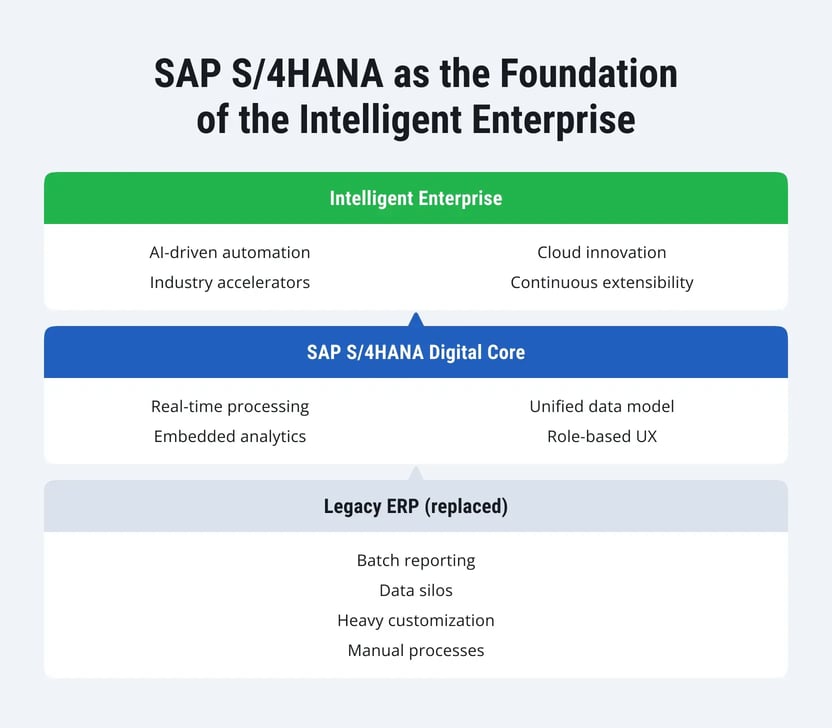
The way SAP S/4HANA is built actually reshapes how a company handles its data and daily tasks. Below are the specific features that set this platform apart from older ERP versions.
Live data instead of old reports
Because the system uses the SAP HANA in-memory database, your actual transactions and your analytics happen in the same place. You don't have to wait for data to move into a separate warehouse or wait for overnight batches to finish. Finance and supply chain teams get to work with what is happening right now, which makes things like month-end closing or forecasting happen much faster.
A leaner and faster data structure
One of the biggest changes is how SAP cleaned up the data model. They stripped out the redundant tables and aggregates that slowed down older systems. This makes the database much smaller and faster. It’s easier to manage and usually leads to lower long-term IT costs because the system isn't bogged down by decades of data bloat.
Smart tools that actually work
AI and machine learning are embedded into the actual daily workflow. The system can predict when you might run out of materials or handle the headache of matching invoices that used to take hours of manual work. It stops being just a place to store data and starts being a tool that helps you stay ahead of problems.
A better way for people to get things done
The Fiori interface finally replaces those old, complicated SAP screens of SAP GUI that used to scare some users. It uses role-based apps that feel more like modern web tools. Since people only see the apps they need for their specific job, training goes much faster. It also cuts down on those annoying data-entry mistakes that happen when a screen is too cluttered.
Industry setups that are ready to go
SAP S/4HANA comes with best practice templates for specific areas like manufacturing or retail. These aren't just empty shells; they have the specific rules and regulatory needs for your sector built in from day one. This helps get the system live much quicker because you aren't stuck building every single process from scratch.
Everything is connected in one place
The digital core means finance, sales, and manufacturing all live in one single environment. The walls between departments are basically gone. If a salesperson closes a deal, the impact hits the supply chain and finance records instantly. You get a level of transparency that was impossible when you had to jump between three different disconnected systems.
Deciding How To Deploy
You aren't forced into a single setup with SAP S/4HANA. The choice of deployment options can depend on how much of the technical heavy lifting you want to handle yourself versus how much you need to customize the code.
Taking the cloud route
Companies choose the cloud when they want to move fast. In this setup, SAP and your hyperscaler, like AWS, handle the servers and the security for you. You pay a subscription and get new features, like AI updates, as soon as they drop. It is the most effective way to keep your internal IT costs from spiraling.
This makes sense if you need to get the system live quickly or have offices scattered globally that need to stay on the same page. It also works well if you'd rather have a predictable monthly bill than a giant upfront cost for hardware.
Staying on your own servers
If you need total control over every single byte of data, staying on-premises is usually the better call. This is the common path for large-scale companies that have spent years building custom workflows they simply cannot ditch.
You should probably stick with this if you are in a highly regulated field where data isn't allowed to leave your building. It’s also the right move if you already own expensive data centers or if your business needs deep, complex system tweaks that a standard cloud version just won't support.
The hybrid middle ground
A hybrid setup is a mix of both worlds. You might keep your core finance and manufacturing on your own hardware, but run your newer, customer-facing apps in the cloud. It is a smart way to start the transition without the risk of a sudden move that might break your most important operations.
We see this most often with large companies moving away from SAP ECC in stages. It lets them innovate in the cloud while keeping their most sensitive records locked down at home. It’s basically a path for anyone who wants to modernize without taking high risks on a single go-live date.
What Do You Actually Get Out of the Move?
The technical side of SAP S/4HANA is one thing, but the main migration reason is related to the business result. Companies that update their ERP usually see a shift in how they handle their daily work, their data, and their bottom line. Here are the most significant SAP S/4HANA benefits.
Working faster across the board
By pulling all your core functions into one place, you finally get rid of those annoying manual workarounds and double data entries. When your workflows are automated, and your data is validated in real time, you see a massive drop in the time it takes to get things done in finance, procurement, and manufacturing.
The result is pretty clear: month-end closing happens faster, inventory levels stay lean, and you aren't constantly guessing about your delivery dates. It’s about being more efficient without the extra effort.
Live reporting and closing the books in days
Since your transactions and your analytics share the same database, you don’t have to wait for overnight reports or separate data warehouses. Finance teams can see their actual cash flow and profitability at any given second. Companies often experience that their financial close cycles can shrink significantly because the data is already clean and ready for an audit.
Better choices based on real facts
With SAP S/4HANA, you get live insights into what is happening across the entire company. Managers can see their KPIs and supply chain risks immediately, rather than reading about them in a report two weeks late. Having built-in analytics means you can stop reacting to problems after they happen and start predicting them instead.
Cutting down on long-term costs
A simpler data model can reduce infrastructure complexity. You're dealing with a smaller database footprint and fewer redundant apps. Over time, this makes the whole IT operation much cheaper to maintain. If you go the cloud route, you also get to trade those massive upfront hardware costs for a predictable monthly bill.
Moving as fast as the market
The biggest advantage might just be how fast you can pivot. Whether you’re launching a new business model, expanding into a new country, or acquiring another company, SAP S/4HANA lets you scale without the system holding you back. You finally have a foundation that supports innovation instead of one that limits it because the tech is too old.
Where the Impact Is Actually Felt
While almost any company can use this ERP system, the biggest wins usually happen in sectors where waiting even an hour for data is a problem.
Manufacturers and retailers
For anyone making or selling physical goods, this is really just a game of timing. If your demand forecast and your material levels aren't perfectly synced, you're throwing money away. SAP S/4HANA handles production planning as it happens, rather than forcing you to rely on reports from three days ago. It’s a similar story in retail, where having one single view of what’s actually in stock across your stores and website stops the headache of running out of your best sellers while the wrong products gather dust.
Moving goods and handling logistics
If an organization can't see where its shipments are, it’s essentially moving blindly. SAP S/4HANA pulls orders, warehouses, and transport plans into one spot so you aren't jumping between three different screens to track a single package. It makes it much easier to find better routes and keep a tighter grip on fuel and labor costs.
Regulated fields like healthcare and utilities
Healthcare and energy groups have a number of rules to follow. SAP S/4HANA makes tracking procurement and assets way more transparent. Automating the boring administrative work lets your team focus on actual patient care or keeping the grid running rather than drowning in a paper trail for the next audit. It provides the kind of transparency you need to stay accountable without the usual manual effort.
How It Fits Into the Bigger SAP Picture
SAP S/4HANA is really the center of the wheel. It gets much more powerful when you start plugging in other SAP tools for things like hiring, buying, or talking to customers. It’s less about having separate apps and more about making sure data flows where it needs to go without anyone having to type it in twice.
Managing spend and people
When you connect SAP S/4HANA to SAP Ariba, your buying process extends way beyond your own walls. You can track purchase orders and invoices across the whole SAP Business Network in real time. It basically turns procurement into one smooth, end-to-end process where you can actually see where every dollar is going.
The same logic applies to SAP SuccessFactors. By linking your HR data with your finance system, your labor costs and headcount planning stay in sync. You aren't stuck with two different versions of your organizational chart; HR and finance can finally look at the same map.
Building and analyzing on the fly
SAP Business Technology Platform (SAP BTP) is the layer where you actually build new things. It lets you create custom apps or automate weird workflows without messing up the main ERP code. It’s the best way to keep your core system prepared for updates while still getting the specific tools your business needs.
For the numbers people, SAP Analytics Cloud (SAC) plugs right in to handle planning and forecasting. Since it uses a live connection, you can run different business scenarios or check your KPIs without having to move massive piles of data around first.
Connecting the front and back office
Integrating with SAP Customer Experience (SAP CX) solutions means your sales and service teams are actually talking to your warehouse and finance teams. When a deal closes in the SAP Sales Cloud, the fulfillment and billing happen automatically in SAP S/4HANA because the data is already there.
Finally, for the supply chain, tools like SAP Integrated Business Planning for Supply Chain (SAP IBP) and SAP Extended Warehouse Management (SAP EWM) make sure your demand planning and warehouse management stay in lockstep with your production. It’s all about making sure that what you plan to sell is actually what you’re making and shipping.
The Reality of Moving From SAP ECC To SAP S/4HANA
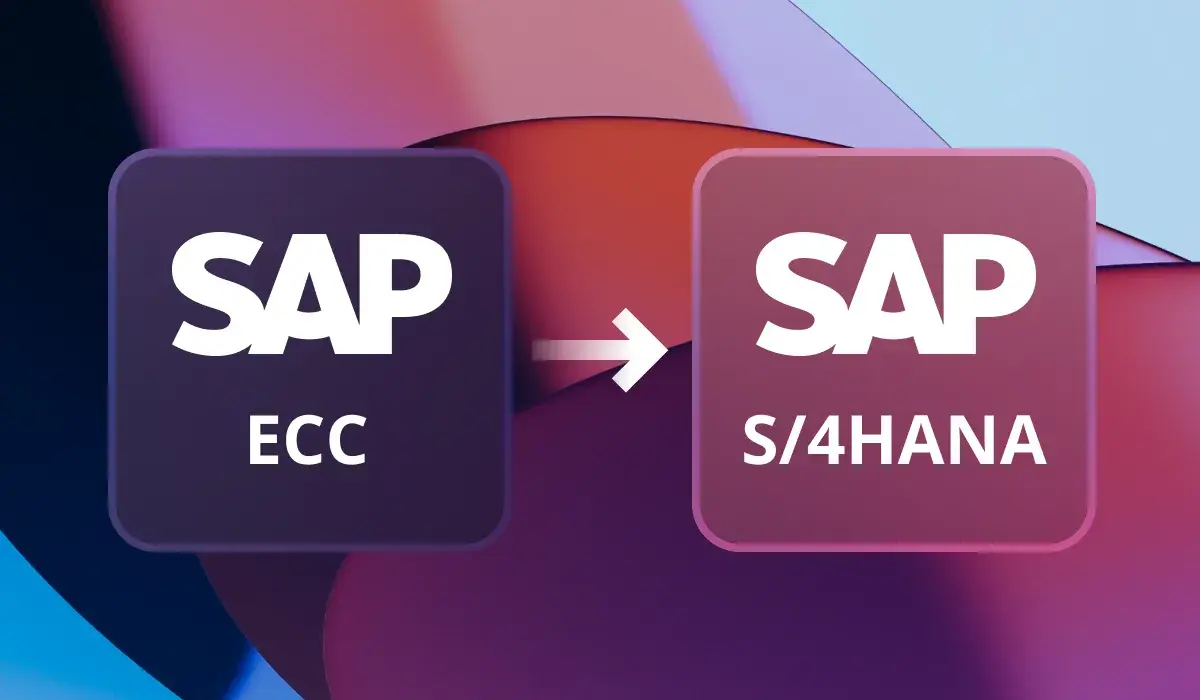
If you are still running SAP ECC, there is a trap of thinking that SAP S/4HANA is just another patch or a quick version update. It isn't. This is a total rework of how your data lives and how your people actually function day-to-day. Getting it right usually means navigating a few pretty intense phases to ensure business continuity. That’s why SAP specialists recommend preparing your business for the SAP S/4HANA shift.
Digging through the legacy clutter
You have to look at the foundation before you touch a single record. That means being honest about your old custom code and figuring out which add-ons are actually going to break.
At this stage, you have to pick a migration scenario. You either go for a greenfield start by essentially throwing the old stuff away and starting fresh, or a brownfield conversion where you move the existing setup over. Some businesses try a selective transition, which means picking only the business processes that still matter with their history. That is, there is no need for a full system conversion.
Cleaning up the data debt
This is usually where projects either fly or fail. Ingesting decades of chaotic records into a high-speed system is a recipe for disaster. You have to put in the work to archive old files and eliminate duplicate entries. If you feed the system with poor, low-quality data, your reports will be just as unreliable as they were before.
Stress-testing the technical switch
Once the strategy is set, the real heavy lifting begins. You move to the new architecture and start tweaking configurations, but you don't just flip the switch and go home. You have to run significant stress tests. You need to know that when a worker in the warehouse ships a box or a financial department records a journal entry, the entire system won't just lock up.
Don't forget the people
The best software on earth is a waste of cash if your team hates using it. SAP S/4HANA looks different because of the Fiori apps, and it changes the way people handle their tasks. You need a real plan to get them comfortable. If you ignore the human side of this shift, you’ll end up with frustrated staff and a return on investment that takes forever to show up.
What Can Go Wrong (And How to Avoid It)
As we have found out, moving to SAP S/4HANA is a complex undertaking rather than a walk in the park. Most companies run into the same issues.
The hurdles you’ll likely face
The biggest headache is usually legacy baggage. Large companies often have SAP ECC setups that are so heavily customized they barely resemble the original software. Figuring out what to keep and what to kill off is a huge time-sink. Then there’s a data quality trap. If your old system is full of duplicates or outdated records, SAP S/4HANA’s real-time analytics will just give you bad news faster.
You also have to worry about system friction. Because SAP S/4HANA is so interconnected with your CRM and manufacturing tools, one bad integration can ripple through the whole business. And finally, there’s the human factor. If your team finds the new Fiori apps confusing, they’ll find workarounds that mess up your data and your ROI.
Rules for a successful move
If you want to survive the transition, you need to stop thinking about this as an IT project. It’s a business overhaul.
- Pick your path early. Don't get stuck between the options of starting fresh and converting your old system. Pick a greenfield or a brownfield strategy and stick to it based on your long-term goals, not just what’s easiest today.
- Commit to a clean core. This is the golden rule. Stop writing custom code inside the ERP. If you need a custom tool, build it on SAP BTP. It keeps the center of your system in order and makes future updates way less painful.
- Fix the data before you move. Invest in serious data cleaning months before you start the migration. Clean data is an important condition for your new AI and analytics tools to provide actual value.
- Test until it works. Don't just check if the buttons work. Run full business scenarios. Simulate a busy sales day or a supply chain shortage to see if the new architecture holds up under pressure.
- Lead from the top. Technical success doesn't matter if the leadership isn't aligned. You need stakeholders who actually advocate for the change, rather than just waiting for it to be over.
In the end, the companies that treat this as a chance to rethink how they work are the ones that actually see their costs drop and their speed increase.
The Bottom Line
SAP S/4HANA is essentially a complete reset of how an organization handles its data. It brings finance, manufacturing, and supply chain operations into one environment where information is available immediately. This change moves a business away from simply recording past transactions and allows it to act on live data as it arrives.
Because AI and automation are built into the actual processes, you can support software modernization initiatives. In a fast market, relying on old technology is a significant risk. Migrating to SAP S/4HANA provides the transparency and speed required to remain competitive over the long term. It is a strategic step for many companies that need to function effectively in a digital economy and take their steps towards digital transformation.
LeverX Services
Moving to SAP S/4HANA takes a solid plan and a very strict way of managing the project from start to finish. We provide a wide range of services to help you modernize your system, from the first talk about strategy to the final go-live and support.
Figuring out the plan
We start by digging into your current SAP setup to see what the move will actually look like. Whether you want to start from scratch or just convert what you have, we help you pick the right path. Our team looks at your industry requirements while making sure the center of your system stays simple and easy to manage later on.
Implementation and data moves
LeverX handles the actual work of setting up SAP S/4HANA. If you are starting fresh or moving over from SAP ECC, we take care of the configuration and the technical build. We also handle the data checks to make sure your business keeps running without any downtime during the transition.
Fixing the data and the system
Our team spends time cleaning up your old, messy records so they actually fit the new SAP S/4HANA model. We also look at your old custom code to see what can be deleted or improved. This keeps the new system from getting weighed down by outdated logic and makes the whole thing run much faster.
Connecting your software
We make sure SAP S/4HANA talks to the rest of your apps. This includes linking it with SAP BTP, SAP Ariba, SAP SuccessFactors, and SAC. We also connect it to your third-party software, so data flows through the whole company without people having to enter it twice.
Process fixes and custom tools
We do more than just install software. We look for ways to make your finance and supply chain work better. If you need a specific tool that the standard system does not have, we will build a custom-fit solution on SAP BTP. This keeps your main system clean and easy to update.
Moving to the cloud or a mix
If you are moving away from your own servers, we handle that transition carefully. We help you shift to a cloud or a hybrid setup without losing any work or breaking security rules. The goal is to keep your data safe while making sure you stay compliant with whatever regulations your industry follows.
Better design with Fiori
We change how your employees use SAP by setting up Fiori apps. Instead of old, clunky screens, users get intuitive applications built for their specific jobs. This makes people more productive and cuts down on the time you need for training.
Security and keeping things running
LeverX takes over the daily tasks like system monitoring, backups, and security checks. We keep your environment safe and stable, handling all the necessary updates so you don't have to worry about the hardware. This lets your own IT staff focus on the business instead of just keeping the lights on.
Global support
Our team is available 24/7 to support you with fixing problems and keeping the system stable. If you are a global company, we help you roll out SAP S/4HANA to different regions using setups that we already know work, which helps save time and money.