LeverX has officially become an SAP Sell Partner in Latvia, reinforcing its local presence and ability to deliver innovative SAP-based services to Latvian businesses.
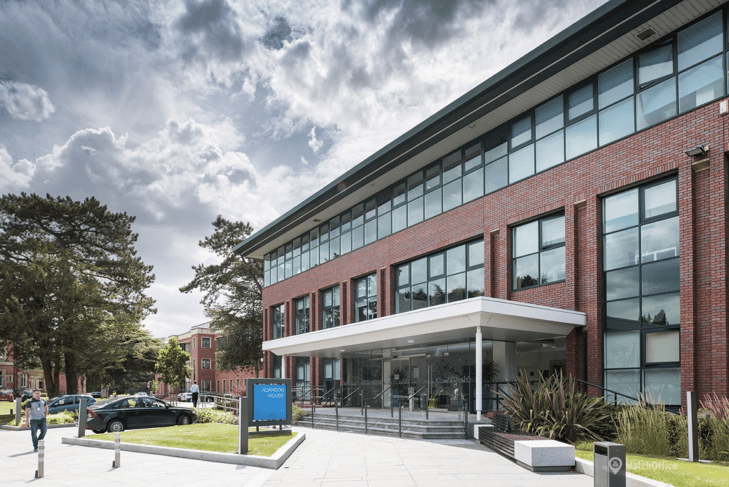
London, UK — LeverX has established a local presence in the United Kingdom to support enterprise SAP programs, backed by its global delivery network. As an SAP Gold Partner and Global Strategic Supplier, we contribute to both SAP implementation and product development.
Our UK presence provides a direct engagement model for companies working with SAP technologies. It connects local business requirements with teams involved in building, deploying, and maintaining SAP solutions.
This expansion reflects growing demand for structured SAP transformation across UK industries.
UK Presence Backed by Global SAP Delivery
Our UK office-hub serves as a local coordination point for SAP programs. It provides direct communication, on-site support when required, and alignment with regional business and regulatory requirements.
This structure allows projects to be managed close to the client while maintaining consistency in delivery standards.
Global delivery structure
Project execution is supported by distributed teams of SAP-certified specialists. These teams operate across established delivery centers and follow unified engineering and implementation practices. This model ensures access to the required expertise at each stage, from system design to post-deployment support.
Role as SAP strategic supplier
LeverX works with SAP not only as an implementation partner but also as a contributor to SAP product development. This involvement provides direct insight into platform architecture and release cycles. It also supports more accurate planning and execution of enterprise SAP programs.
This approach combines local accountability with global execution capacity. It is supported by long-term collaboration with SAP and a measurable delivery scale.
Operational scale and SAP partnership
LeverX’s UK expansion is grounded in established SAP delivery metrics built over more than two decades.
We have worked with SAP technologies for over 20 years. Our global team includes more than 500 SAP-certified specialists and over 2,200 employees in total. We have delivered more than 1,500 projects for clients across multiple industries and regions.
Our partnership with SAP includes Gold Partner status and recognition as a Global Strategic Supplier. This status reflects ongoing collaboration in both implementation and product development.
Our certifications confirm specialization across key SAP platforms, including S/4HANA, SAP Business Technology Platform, and SAP PLM solutions.
This foundation supports a structured service model aligned with a broad SAP technology scope.
Our SAP Services Available for UK Enterprises
LeverX delivers the same SAP services in the United Kingdom as in other regions. The scope does not change. The delivery model remains consistent.
What changes is the execution context. UK projects require alignment with local regulatory frameworks, data residency expectations, and industry-specific standards. These factors are considered during system design and implementation.
In general, we provide the following SAP services:
-
SAP consulting — defining system architecture, selecting deployment models, and planning transformation roadmaps
-
SAP implementation — deploying SAP solutions across business units and configuring them to business processes
-
S/4HANA migration — transitioning existing SAP environments to S/4HANA, including system conversion and landscape redesign
-
SAP integration — connecting SAP systems with external platforms and legacy applications
-
Application Management Services (AMS) — maintaining system performance, applying updates, and resolving incidents
-
Support and maintenance — providing ongoing technical support and system monitoring
-
SAP managed services — operating SAP environments with defined service levels and performance metrics
In addition to core services, we apply several structured approaches used in large-scale SAP programs:
-
Clean Core approach — limiting custom code and managing extensions through SAP Business Technology Platform to simplify future upgrades
-
Cloud transformation via RISE with SAP — transferring SAP landscapes to managed cloud environments with defined infrastructure and service models
-
Change management frameworks — helping users adopt new technology through training, aligning processes, and controlled rollout plans
Service delivery is aligned with a broad SAP technology scope, which defines the systems and platforms used across these engagements.
Key SAP Domains for UK Transformation
LeverX focuses on SAP domains that address current transformation requirements across UK industries. These areas reflect common project patterns such as supply chain restructuring, ERP modernization, and the adoption of data-driven processes.
Supply Chain Management & PLM
LeverX implements SAP solutions that cover the full product lifecycle, from engineering to delivery. This includes SAP PLM and SAP ECTR for product data management, SAP IBP for supply chain planning, and SAP EWM and SAP TM for warehouse and transportation management.
These systems are integrated to maintain data consistency between engineering, planning, and logistics. Product changes defined at the design stage can be reflected in supply planning and distribution processes without manual data transfer. This structure reduces delays between product updates and operational execution.
S/4HANA & ERP transformation
We deliver S/4HANA programs based on system conversion, landscape transformation, or new implementation. This includes both on-premises and cloud-based deployments. Projects are structured using SAP frameworks such as RISE with SAP and GROW with SAP, depending on system scope and business requirements.
Our work covers financial processes, procurement, manufacturing, and core business operations. We also address data migration, system architecture, and process standardization. This ensures that ERP environments support current operations while remaining maintainable over time.
Business Technology Platform (BTP) & AI
We use SAP Business Technology Platform (BTP) to extend standard SAP functionality and manage integrations. This includes SAP Integration Suite for system connectivity, SAP Build for application development, and SAP Datasphere for data management.
The platform also includes SAP Business AI capabilities such as Joule, which provides AI-based assistants and automation scenarios. SAP Build enables low-code development for business applications and process automation. SAP Datasphere supports data integration and modeling for analytics and reporting.
These components are used to extend SAP systems, connect external data sources, and prepare data for analytical and AI-driven use cases.
While these domains reflect the most common transformation areas, our work is not limited to them. We also support SAP solutions in finance, customer experience, human capital management, analytics, and sustainability. Our teams have experience across the broader SAP portfolio and can support projects that involve multiple systems or less typical configurations.
LeverX's UK Delivery Priorities
Our work in the UK follows a defined set of priorities shaped by regulatory requirements, system complexity, and long-term maintainability. These priorities reflect common constraints in enterprise SAP environments and guide how we structure delivery and architecture decisions.
Data residency and sovereign cloud
UK-based organizations often require control over where data is stored and processed. We address this through SAP deployment models that support data residency requirements, including cloud and hybrid environments aligned with local regulations.
This includes configuring SAP landscapes using infrastructure options provided within RISE with SAP and related cloud services. We define system architecture with attention to data location, access control, and compliance with frameworks such as GDPR. This approach reduces risk in cross-border data handling and supports audit requirements.
AI in operational workflows
AI adoption in SAP environments is moving toward operational use cases rather than experimental deployments. In the UK context, this includes demand forecasting, production planning, and logistics optimization.
SAP Business Technology Platform is used as the integration layer for these scenarios. It connects SAP data with AI services and external models. SAP Joule and related AI components are applied in defined workflows such as ticket classification, process automation, and exception handling.
The objective is to reduce manual decision steps in supply chain and engineering processes. This includes data-driven triggers for inventory adjustments, maintenance planning, and order prioritization.
Sustainability and ESG reporting
Sustainability requirements in the UK are increasingly linked to structured reporting and traceable operational data. SAP Sustainability Control Tower is used to collect and structure ESG-related metrics across enterprise systems.
This includes energy consumption data, supply chain emissions tracking, and reporting aligned with regulatory frameworks. The system design focuses on traceability from transaction-level data to aggregated sustainability indicators.
The implementation approach typically connects finance, procurement, and logistics systems to ensure consistent data inputs for reporting.
SAP Transformation Delivered Through Measurable Outcomes
Our delivery model is based on project experience across multiple industries. These projects reflect how SAP solutions are applied to specific operational challenges, with measurable outcomes in system performance, data accuracy, and process control.
Below are selected examples that illustrate this approach.
One of the large-scale transformation programs was delivered for FUCHS. We implemented an integrated SAP-based platform to manage business workflows, equipment data, and operational processes within a single environment. The system processes real-time data, including IoT inputs and laboratory results, with response times measured in seconds.
As a result, the client improved equipment utilization, reduced downtime, and enabled faster operational decisions based on consistent data.
For Eurasia Group, we delivered a migration to SAP S/4HANA to replace a legacy ERP environment and support business growth. The project included system conversion, process redesign, and deployment of Fiori-based user interfaces. The updated system allows faster data processing, supports the addition of new modules, and provides embedded analytics for operational control. This migration established a structured foundation for scaling operations and managing increasing transaction volumes.
In a project for MAHLE, we addressed data inconsistencies in SAP Analytics Cloud reporting. The Tesla Export dashboard contained incomplete and unreliable data due to issues in data transfer from SAP HANA. We corrected data import logic, restored historical records, and ensured accurate parameter handling within reports. After these changes, the system produced consistent and complete datasets, allowing analysts and controllers to rely on reporting outputs for decision-making.
For Girteka, we implemented SAP SuccessFactors to restructure HR processes across a large workforce. The solution introduced centralized employee data management, automated recruitment and onboarding workflows, and improved time management for operational staff. It also enabled employee self-service and aligned performance tracking with company objectives. This implementation supported consistent HR processes across departments and improved visibility into workforce data.
In addition to these projects, we have delivered targeted SAP solutions across different domains:
-
For Makro, we implemented SAP-based processes to support the transition to international financial reporting standards.
-
In a product lifecycle management project, we deployed SAP PLM to centralize engineering data and improve collaboration across facilities, which resulted in a 25–35% increase in process efficiency.
-
For JBS, we implemented a combination of IPS and BMAX solutions to automate material master data creation, which reduced manual input and improved data consistency.
Each project begins with a clear definition of the operational issue to be addressed. This includes system analysis, process review, and alignment with business objectives. Based on this, we design and implement SAP solutions that address specific constraints rather than applying standard templates.
This approach ensures that system changes produce measurable results in day-to-day operations.
Our Engineering Approach to SAP Delivery in the UK
SAP delivery typically splits into two layers. One defines architecture and recommendations. The other executes implementation and system changes. In many programs, these layers are handled by different teams. This creates a gap between design intent and system behavior during delivery.
LeverX works within a single delivery chain. Consulting inputs, technical design, and implementation are handled by the same engineering teams. System decisions are made with deployment constraints already considered. This reduces rework during implementation and keeps architecture aligned with how SAP systems operate in production.
This structure is reflected in how SAP programs are executed across industries and regions, including the UK. It applies to ERP transformations, integrations, and data-driven platforms, where system behavior depends on consistent design and execution across all phases.
For UK enterprises, SAP engagement typically starts with understanding the current system landscape and transformation goals. This includes reviewing existing SAP environments, identifying technical constraints, and defining viable migration or extension paths. A structured assessment provides a starting point for decisions on S/4HANA, integration, or platform modernization.
Contact the UK team to review SAP system architecture and discuss ongoing or planned transformation programs.
FAQ
What differentiates LeverX from local SAP consultancies in the UK?
We combine advisory, implementation, and engineering within one delivery structure. This includes direct experience with SAP product development, which informs how we design system architecture, manage extensions, and plan upgrades. As a result, project decisions are based on how SAP systems behave in practice, not only on documentation.
How do you address UK data residency and GDPR requirements?
We define data storage and processing rules at the architecture level. This includes selecting appropriate hosting regions, configuring role-based access control, and implementing data retention policies. We also align SAP system configuration with audit requirements, including logging and traceability of data access.
Do you provide on-site SAP consulting in the UK?
Yes. Our UK team supports on-site workshops, system analysis, and project coordination. This is combined with remote delivery for development, testing, and support tasks, depending on project requirements.
How do you maintain a Clean Core during S/4HANA transformations?
We start with a detailed custom code assessment using SAP tools such as the Custom Code Migration App. Each object is evaluated for removal, adaptation, or extension. Business logic that cannot be replaced with standard SAP functionality is moved to SAP Business Technology Platform using APIs and event-based services.
We also apply governance rules for transport management and restrict direct modifications in the core system. This ensures that future upgrades can be applied without reworking custom developments.
Can you support complex, multi-system SAP landscapes?
Yes. We design and manage system landscapes that include ERP, analytics platforms, supply chain systems, and external applications. This includes defining integration patterns, managing data consistency across systems, and monitoring interface performance. We also handle version dependencies during upgrades or phased transformations.
What is your approach to long-term SAP system support?
We structure Application Management Services around system stability and controlled change. This includes continuous monitoring of system performance, root cause analysis of incidents, and regular patch and upgrade cycles.
We also manage transport requests, validate changes in test environments, and ensure that production systems remain consistent. In parallel, we track system usage and recommend adjustments based on actual operational data.