Discover how SAP IBP, SAP EWM, and SAP TM work together to improve supply chain performance, reduce operational costs, and build a measurable business case for SAP transformation.
SAP’s deadlines for legacy logistics functions require affected companies to plan their replacement. That work also involves deciding how the new warehouse and transport processes will connect with supply planning. Leaving those connections unresolved risks spending money on new software while teams still rely on calls and spreadsheets to coordinate deliveries.
The consequences can erase part of the expected return. Warehouse delays can disrupt transport schedules, while urgent shipments increase fulfillment costs. Establishing the financial case for new supply chain software also requires attention. In McKinsey’s survey of 88 senior supply chain executives across industries and geographies, one-third of respondents reported having no quantified business case for their advanced planning and scheduling systems. Also, 15% said their implementations had failed to meet business objectives.
Connecting SAP IBP, SAP EWM, and SAP TM helps address these dependencies during the transition. Understanding where that investment pays off starts with the decisions each application supports and the information teams need to share.
|
TL;DR
|
How SAP IBP, SAP EWM, and SAP TM Divide the Work
The three applications support different decisions, with different levels of detail and time horizons.
|
Solution |
Processes covered |
Where it can deliver value |
|
SAP IBP |
|
Reduce excess inventory while maintaining target service levels. Align purchasing and production plans with expected demand, and compare supply options before committing resources. |
|
SAP EWM |
|
Handle more orders with available warehouse resources. Reduce picking errors and stock searches. Coordinate order preparation with planned departures. |
|
SAP TM |
|
Lower freight costs by combining compatible shipments and comparing carrier options. Reduce manual booking work and connect freight expenditure to the orders that generated it. |
SAP IBP Pays Off When Supply Plans Reflect Warehouse and Transport Constraints
SAP Integrated Business Planning (SAP IBP) supports cloud-based demand forecasting and supply planning. Companies use it to set inventory targets and agree on plans across sales and operations. Planners can compare alternatives — for example, replenishing a distribution center from another location or increasing production — and assess the consequences before the business commits resources.
Moving from SAP APO
SAP IBP succeeds SAP APO in demand and supply network planning. For companies using SAP APO for these tasks, the move to SAP IBP involves rebuilding planning models and processes in the cloud application.
The support timeline adds urgency. For SAP SCM 7.0 releases covered by SAP’s maintenance commitment:
- December 31, 2027: mainstream maintenance ends.
- December 31, 2030: optional extended maintenance ends.
When moving from SAP APO, companies can use SAP IBP for longer-term tactical planning at each plant and add SAP Production Planning and Detailed Scheduling (SAP PP/DS) if they need detailed production scheduling. When the two solutions are integrated, SAP IBP can pass plant-level production plans to SAP PP/DS. Production planners can then turn those plans into daily schedules based on local constraints such as shift patterns and available machine capacity. SAP PP/DS can send the scheduling results back to SAP IBP so they inform the next tactical planning cycle.
How planning improvements produce a return
Lower inventory without increasing delivery risk
SAP IBP calculates recommended safety stock levels based on inputs such as planned demand, production and transportation lead time, and target service levels. Planners use these recommendations to set inventory targets that help each facility hold as much stock as it needs to meet its target service level.
Those inventory targets depend in part on how long replenishment takes. Planners can compare dispatch readiness records from SAP EWM with departure and arrival times tracked in SAP TM using shipment-event data. This helps them see whether recurring delays occur before dispatch or in transit. If actual replenishment times consistently differ from planned lead times, planners can use those findings to revise the lead times in SAP IBP and reassess how much stock each facility needs to meet its target service level.
The financial return depends on reducing inventory without spending the savings on emergency freight or losing sales through shortages.
Protect priority orders during shortages
When available supply cannot cover every order, SAP IBP can support demand prioritization and allocation of limited supply. These capabilities depend on the planning functions in use, particularly order-based planning, and the configured integration with SAP S/4HANA. A manufacturer may use them to prioritize deliveries to customers whose production would stop without a particular component.
Approved allocation decisions need to update the relevant order commitments in SAP S/4HANA. Execution rules then guide how SAP EWM prioritizes warehouse work and how SAP TM supports the required deliveries. The project needs to define how those decisions pass from planning into execution.
The financial benefit can include fewer contractual penalties and less emergency freight needed to correct allocation mismatches.
Respond faster to supply disruptions
With connected shipment-event data, SAP TM helps identify the transport delay; SAP EWM provides the warehouse stock position. Through configured data flows, planners can use updated availability information in SAP IBP to compare recovery options.
For example, planners may evaluate supply from another location. Warehouse and transport teams then confirm the preparation and delivery requirements before the revised plan receives approval.
Earlier decisions leave more time to arrange alternative supply and can reduce the need for expensive recovery shipments.
What a reported planning transformation achieved
In a customer account published by SAP, energy technology company SLB described fragmented planning across business lines and a heavy reliance on spreadsheets. Its transformation combined SAP IBP with changes to planning processes and change management.
SLB reported a 37% reduction in days inventory outstanding over three years. Planning activities that had previously taken up to three weeks took less than one week.
SAP EWM Pays Off When Better Warehouse Coordination Reduces Fulfillment Costs
SAP Extended Warehouse Management (SAP EWM) controls warehouse operations from receiving goods to preparing outbound shipments. It tracks stock at storage-bin level and organizes work for warehouse employees. Advanced capabilities support processes such as labor management and warehouse automation.
Moving from SAP WM
SAP EWM provides the target for complex warehouse processes previously handled in SAP Warehouse Management (SAP WM). The transition involves configuring warehouse workflows and migrating relevant data, including storage bins and stock. SAP provides migration tools, although the project also needs to account for existing developments and equipment connections.
The applicable timeline depends on where SAP WM runs:
- SAP ECC: SAP ERP 6.0 enhancement packages 6–8 follow the SAP Business Suite maintenance timeline — mainstream maintenance through December 31, 2027, with optional extended maintenance through December 31, 2030.
- SAP S/4HANA On-Premise: Usage rights for affected SAP WM compatibility-pack functions expired on May 31, 2026. Different provisions apply to eligible cloud-subscription systems.

Simpler warehouse operations may continue within the supported scope of SAP Stock Room Management. SAP EWM becomes relevant where the required processes exceed that scope.
How warehouse improvements produce a return
Meet departure times with fewer last-minute adjustments
Picking orders faster brings limited benefit if they still miss their booked transport. SAP EWM can organize picking and staging around departure requirements received through its integration with SAP TM. Warehouse execution updates then inform transport teams about progress.
SAP IBP contributes earlier by helping teams agree on replenishment volumes and dates. Warehouse managers can assess the resulting workload before it reaches daily execution.
Together, these processes help reduce missed pickups and the additional freight expense required to recover them.
Handle peak volumes with less overtime
Expected replenishment volumes and dates from SAP IBP give warehouse teams an earlier basis for assessing peak workloads and staffing needs.
Within SAP EWM, wave management groups work for coordinated processing. Configured release rules, warehouse capacity, and transport requirements help teams control how much picking work enters execution.
This can help the warehouse absorb additional volume with existing resources and avoid overtime caused by compressed preparation windows.
Make incoming stock available sooner
An inbound shipment affects both receiving work and subsequent supply commitments. SAP TM can send planned freight information to SAP EWM, allowing warehouse teams to organize receiving activities around expected arrivals. SAP EWM then records receipt and putaway as employees complete the work.
Updating planning with the resulting stock information through the configured SAP ERP–SAP IBP integration helps planners distinguish expected supply from stock actually received.
Coordinating these steps can shorten avoidable receiving delays and reduce emergency replenishment decisions based on outdated inventory information.
SAP EWM and SAP TM integration for a European retailer
A discount retailer operating more than 10,000 stores needed SAP EWM to work with its existing non-SAP ERP, Wawi, and SAP TM. LeverX connected these systems and integrated Vanderlande’s automated case-picking equipment into the warehouse processes.
The SAP EWM–SAP TM integration made picking and loading updates available to transport planners as warehouse work progressed. This helped teams coordinate outbound shipments using current preparation status. The connection with Vanderlande supported more automated and accurate case picking, while the Wawi integration linked warehouse execution with the retailer’s existing ERP.
SAP TM Pays Off When Coordinated Shipments Reduce Freight Costs
SAP Transportation Management (SAP TM) supports the movement of goods between locations, from planning loads and selecting carriers to calculating and settling freight charges. Transport planners can compare options against delivery requirements and respond when shipment quantities or schedules change.
Moving from SAP LE-TRA
SAP TM succeeds SAP Logistics Execution – Transportation (SAP LE-TRA) within SAP S/4HANA. Its basic scope supports essential shipping processes, while advanced capabilities, including optimizer-based planning and load planning, require additional licensing. The transition scope therefore depends on whether the company needs to preserve existing processes or introduce more advanced transportation planning.
The applicable dates differ by environment:
- SAP S/4HANA: Extended usage rights for the SAP LE-TRA compatibility scope run through December 31, 2030.
- SAP ECC: Covered releases follow the SAP Business Suite maintenance timeline — mainstream maintenance through December 31, 2027, with optional extended maintenance through December 31, 2030.
How transportation improvements produce a return
Move more goods in fewer shipments
SAP TM can consolidate compatible orders. This creates opportunities to use vehicle capacity more fully and reduce the number of paid trips.
The opportunity depends partly on upstream decisions. Replenishment schedules agreed through SAP IBP determine which goods need to move and when. SAP EWM supports preparing those goods for the consolidated departure.
For example, combining deliveries saves transport expense only if both can be prepared within the agreed delivery window.
Include freight costs in supply decisions
SAP TM calculates freight charges and supports allocating them to the orders that generated the expenditure. Warehouse execution provides the shipped quantities against which those costs can be assessed.
Planning teams can review this cost history alongside supply scenarios in SAP IBP. Repeated small transfers from a distant warehouse, for example, may consume the savings expected from concentrating inventory there. Including those costs in the planning model itself requires the relevant cost inputs and configuration.
Bringing actual freight expenditure into the planning review helps the business compare alternatives using their delivery costs as well as their inventory implications.
SAP TM implementation for a food retailer
A large food retailer needed to coordinate deliveries between distribution centers and stores using its own fleet and external carriers. LeverX implemented SAP TM to bring these transport operations into a shared planning and execution process.
The solution connected SAP TM with a carrier collaboration portal for contracting and tendering. A third-party routing service supplied road restrictions for delivery planning, while SAP Event Management supported monitoring and exception handling. Together, these components helped teams plan transport and respond to changes using information from connected systems.
The retailer reported:
- 20% higher productivity for long-distance delivery vehicles.
- 3% higher vehicle space utilization on long-distance deliveries.
- 2% lower contracted carrier rates and 5% lower spot freight rates.
The project also reduced empty mileage, fuel consumption, and cargo damage. These results reflect the combined implementation scope, including integrations and changes to daily transport processes.
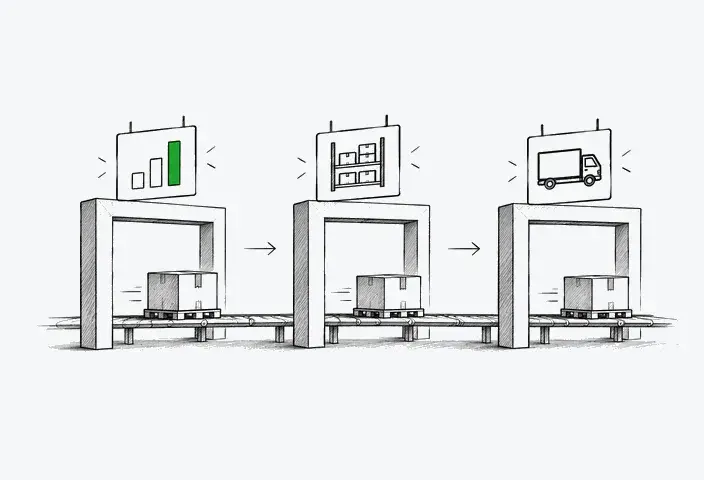
How Integration Changes the Outcome of a Customer Order
Consider an illustrative promotion for a consumer goods manufacturer. Demand increases in one region shortly before the campaign begins. Existing inventory can cover part of the increase, while additional supply requires replenishment from another location.
SAP IBP supports evaluating the revised demand against available supply and inventory targets. Once the business approves a response, configured integration transfers the relevant planning outputs into operational processes. SAP S/4HANA manages the associated purchasing, production, or stock-transfer documents, depending on the scenario.
SAP TM then supports planning the required movement, including load composition and carrier arrangements. SAP EWM organizes the warehouse work required for the departure. Their interaction can follow a transport-driven or warehouse-driven process, depending on the design. SAP’s Advanced Shipping and Receiving capability supports coordination between transportation and warehouse activities, including loading and unloading across warehouse locations.
Now suppose the warehouse finds damaged stock during picking. The immediate response may involve reducing the shipment quantity or sourcing replacement goods. Transport planning needs the updated quantity before confirming the final load. If the shortage affects future availability, planning also needs the revised position through the relevant data flow.
The timing depends on the decision. A loading team needs operational updates during the shift. A monthly planning review can use aggregated information. Treating every update as an immediate reason to recalculate the entire supply plan can create unnecessary changes. The integration design determines which information moves, how quickly, and which process uses it.
How Operational Improvements Translate into Financial Returns
A shorter picking cycle or a lower inventory target gives the business an opportunity to save money. The financial result depends on what changes in daily operations and whether the saving survives the costs incurred elsewhere.
Define how teams respond to execution updates
Suppose warehouse progress indicates that an order will miss its planned loading time. Transport planners need enough notice to assess whether they can move the pickup or arrange another service.
That response also requires authority. If an alternative carrier costs more, the team needs an agreed approval route before the original departure window closes. The process therefore needs to specify:
- Who handles the exception: for example, the transport planner responsible for the shipment.
- Which decisions they can make: such as rescheduling within the customer’s delivery window.
- When approval becomes necessary: for additional expenditure or a revised customer commitment.
This turns a status update into a decision process that can prevent a missed delivery.
Calculate the benefit after the full cost of delivery
A business case needs to include the work required to achieve the proposed improvement. Shipment consolidation, for example, may require advanced SAP TM capabilities, accurate load data, and changes to warehouse preparation schedules.
The investment includes applicable licenses, data preparation, configuration, integration, testing, and employee training. Recurring support and operating costs reduce the annual net benefit. A saving that depends on capabilities excluded from the project scope cannot support that project’s return calculation.
Measure what actually changed
|
Operational improvement |
Evidence of financial value |
What would overstate the return |
|
Lower inventory |
A sustained reduction in inventory value, with carrying costs assessed separately. |
Counting the entire cash release as a recurring annual saving. |
|
Faster warehouse work |
Reduced paid overtime, avoided recruitment, or additional volume handled with existing resources. |
Treating every hour released as a payroll reduction. |
|
Lower freight expenditure |
Lower cost for comparable shipment volumes and service requirements. |
Attributing a market-wide fall in carrier rates entirely to SAP TM. |
|
Fewer late deliveries |
Documented reductions in penalties or emergency transport expense. |
Assigning a financial value to every improvement without checking affected orders. |
For illustration, a sustained €2 million inventory reduction releases that amount of working capital. With an assumed annual carrying-cost rate of 8%, the corresponding annual carrying-cost benefit would total €160,000 before additional operating costs.
The distinction also prevents double counting across applications. If coordinated warehouse and transport work avoids one emergency shipment, that avoided charge contributes once to the overall business case, even though SAP EWM and SAP TM both helped achieve it.
Connect SAP IBP, SAP EWM, and SAP TM with LeverX
LeverX brings supply chain consulting and SAP implementation expertise into one project team. We help you define how planning decisions should reach warehouse and transport teams, then configure the applications and integrations needed to make that process work.
Our work covers:
- Supply chain assessment and business case: We examine how planning decisions affect warehouse operations and freight costs and identify opportunities for improvement, agreeing on the measures needed to assess the project’s financial return.
- SAP implementation and configuration: Our team translates agreed business requirements into planning models, warehouse workflows, and transportation processes.
- Integration with SAP and external systems: LeverX connects planning with execution through the required ERP integrations. Our scope can include non-SAP ERP systems, warehouse automation, and carrier services, with rules for exchanging updates and recovering failed messages.
- Transition from legacy SAP solutions: We map processes currently supported by SAP APO, SAP WM, or SAP LE-TRA to their target applications, preparing the migration scope and adapting existing developments where the new processes still require them.
- Testing across planning and execution: Our team test complete business scenarios across the connected applications, including shortages, changed shipment quantities, missed pickups, and failed data exchanges.
- Data preparation and migration: LeverX experts help validate the master data and operational records required by the target solution.
- User training and operational handover: Our consultants train planners and execution teams using their daily workflows. Training covers exception handling and responsibilities across applications, helping employees understand both their own tasks and the effects on other teams.
- Post-go-live support and optimization: We resolve production issues and review how the implemented processes perform against agreed measures. Further work can address recurring exceptions or extend the solution to additional warehouses and markets.
Discuss your supply chain project with LeverX. We can help turn your operational priorities into an agreed implementation scope, with responsibilities and delivery requirements defined before implementation begins.