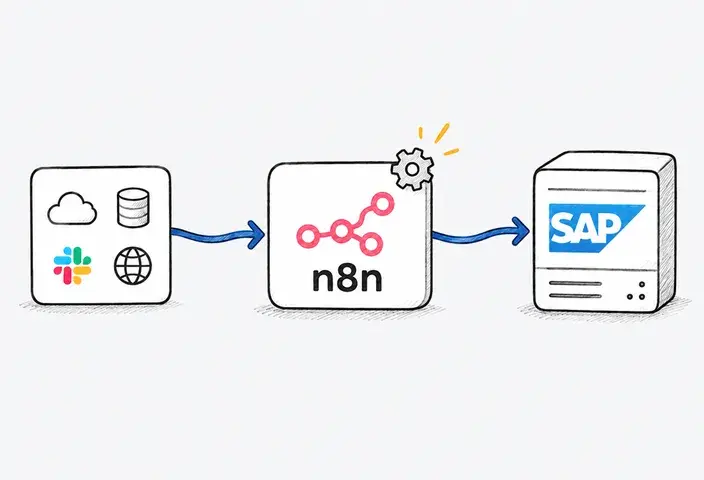
Explore how SAP Business Suite enables autonomous, AI-driven operations with SAP Cloud ERP and SAP BTP in 2026 and beyond.
Exploring the Types of SAP Consulting: Technical, Functional, and Beyond
Most ERP environments still do a solid job of executing what people tell them to do. The problem is everything that happens before execution. Teams spend too much time reconciling data across systems, validating assumptions, and debating what the numbers actually mean. By the time a decision is approved, the situation has already changed. This is the gap modern enterprises are trying to close: not another layer of automation, but a reliable way to run operations with speed, context, and fewer manual handoffs.
SAP Business Suite is SAP’s answer (not to be confused with SAP Business Suite 7), and it should not be read as a routine ERP refresh. It reflects SAP’s 2026+ suite direction: an intelligent business ecosystem that brings together SAP Cloud ERP, SAP Business Technology Platform (BTP), and embedded analytics with AI capabilities. The point of this combination is practical. It creates a foundation for more autonomous operations, where systems continuously analyze data, predict outcomes, recommend next steps, and, in defined scenarios, trigger decisions with limited human intervention within predefined guardrails.
The logic is simple: AI is only as valuable as the data it can trust and the processes it can reach. When AI, data, and integration work together, companies gain something more than just faster reporting. They gain a self-learning enterprise that adapts to changing conditions. That shows up in the outcomes leaders care about: quicker response to market shifts, better decision accuracy, and lower operational costs because fewer actions depend on manual review and rework.
We can speak to this shift because we see where it works and where it breaks. It usually comes down to the same three factors: data quality, integration across systems, and how SAP is implemented at scale.
This article is for executives, transformation leaders, enterprise architects, and SAP teams who want a clear view of what SAP’s 2026 Business Suite direction changes, what it can realistically enable, and what you need in place to get value from it. We’ll walk through the ecosystem behind the suite, demonstrate how autonomous operations are applied in real business scenarios, and connect it to SAP’s direction toward an intelligent, sustainable enterprise.
.webp)
From Automation to Autonomy: The Evolution of ERP
ERP has always promised control. For years, that control came from standardization: define a process, enforce it, and report on it. The model worked when markets moved more slowly, and exceptions were manageable. Today, exceptions are the workflow. Demand shifts mid-quarter. Suppliers miss windows. Costs spike unexpectedly. In that environment, an ERP that only executes instructions becomes a bottleneck.
This is why ERP systems are moving from automation to autonomy. Not because AI is the future, but because legacy mechanisms can't handle the way decisions are made today.
ERP 1.0 was focused on automating manual work. The system recorded transactions, applied rules, and generated reports. It reduced labor costs, but still relied on humans to interpret what was happening and make decisions about next steps.
ERP 2.0 and 3.0 brought integration and optimization. Processes became more connected across finance, procurement, production, and sales. Organizations improved visibility and throughput. Even then, the intelligence lived outside the system. Analysts pulled data into separate tools, built models, and then pushed recommendations back into operations. The loop was slow, and it broke under pressure.
ERP 4.0 is the next step, an ERP that can sense what is changing, understand what it means, and respond. Autonomous does not mean the system runs wild. It means the system can support decisions at the moment, using the current context, and can carry out predefined actions when governance and confidence levels support it.
That is what SAP’s Business Suite strategy is designed to support, and it starts with how the suite is designed. AI is not something you attach later as an extra tool. It is built into the core. That matters because embedded AI can work with live operational data, react as events happen, and help shape decisions while there is still time to change the outcome.
Two capabilities make this practical. First, real-time, context-aware decision support. The system looks at what is happening right now, using the full business context. It can spot anomalies, show what is causing them, and recommend actions that fit your rules, limits, and priorities.
Second, event-driven processing across multiple data sources. Modern operations do not run on ERP data alone. The signals that matter often arrive from outside the core system: IoT streams from equipment, changes in CRM pipelines, supply chain disruptions, production status updates, and logistics events. An AI-native suite is built to ingest these signals, connect them to business context, and update recommendations as conditions change.
Under the hood, intelligence is not a single feature. It is a set of methods applied that create measurable results.
- Machine learning strengthens forecasting and optimization by detecting patterns at an enterprise scale. It enables earlier response, more efficient resource use, and faster identification of risks that are hard to detect through manual controls.
- Natural language processing lowers the barrier to action. Users can ask questions in everyday language and get immediate guidance through copilots, assistants, or chatbots, with no need to navigate complex application flows.
- Predictive analytics gives you an early signal. It flags risks while they are still manageable and highlights opportunities while you still have time to act.
The business payoff is practical. Fewer decisions depend on manual reviews and gut calls made under pressure, so errors drop. The organization adjusts faster because the system keeps rechecking conditions as they change, instead of waiting for the next planning cycle. And when decisions are driven by live signals rather than stale snapshots, operations become more flexible and more resilient.
Autonomy is not a marketing label. It is a response to operational reality. The companies that treat it as a design principle will move quickly, waste less effort, and keep control even when the environment does not cooperate.

Intelligent Finance and Data-Driven Management
Finance must deliver accuracy and speed at the same time. The bottlenecks are typically disconnected signals, heavy manual review, and insight cycles that lag operational reality. With SAP’s Business Suite direction in 2026 and beyond, embedded AI supports continuous detection, dynamic forecasting, and decision support inside core finance processes.
Where AI delivers value in core financial functions
|
AI capability |
What it does in finance |
What changes for the business |
|
Anomaly and error detection |
Early detection of unusual records, inconsistencies, duplicates, and outliers |
Fewer late corrections, smoother close, and less rework |
|
Fraud and compliance signals |
Detects patterns that may indicate suspicious activity or policy violations |
Lower exposure, stronger controls without expanding manual review |
|
Predictive forecasting |
Updates revenue, cost, and cash projections as new signals appear |
Better planning, fewer surprises, faster adjustments |
|
What-if analysis |
Runs scenarios and shows how each one affects margin, working capital, and cash |
Decisions are grounded in numbers and tradeoffs, not gut feel |
|
Recommendation support |
Suggests corrective actions within defined constraints |
Faster response, more consistent decisions across teams |
When these capabilities are embedded into core processes, finance shifts from retrospective reporting to real operational guidance.
- Controllers spend less time chasing inconsistencies and more time strengthening controls and improving data discipline.
- Financial planning and analytics teams move faster because scenario work is repeatable and tied to current signals.
- Executives see KPI movement and forecast drivers earlier, which reduces last-minute surprises and supports better decisions under pressure.
AI in Supply Chains: From Planning to Self-Adaptive Networks
Supply chains rarely fail because the plan was wrong on day one. They fail because reality changes on day two. Demand shifts, weather disrupts routes, suppliers miss windows, and equipment breaks at the worst possible moment. When planning is locked into fixed cycles and manual updates, small issues spread fast.
The suite’s goal is a different operating model. AI is used to keep planning and execution connected in near real time, so the network can adjust as conditions change.
Smarter demand planning and logistics
In demand planning, AI becomes useful when it can incorporate more than historical sales. With SAP Integrated Business Planning (SAP IBP), demand planning can pull in broader signals and refresh forecasts as new inputs arrive, so inventory targets stay closer to real volatility. That reduces late-cycle guesswork and helps replenishment decisions reflect what is happening now, not what was true weeks ago.
Logistics improves in the same way: it becomes less reactive when plans can be recalculated quickly and consistently. In SAP S/4HANA Transportation Management, route planning and load decisions can be adjusted when constraints change, with clearer tradeoffs across cost, delivery time, and capacity. Teams spend less time scrambling to fix disruptions and more time protecting service levels.
IoT visibility and predictive maintenance
Many supply chain problems turn expensive because teams see them too late. IoT changes the timing by bringing real-time signals from assets, vehicles, and equipment into the picture. With SAP Business Network Global Track and Trace, organizations can improve shipment visibility across partners and carriers, so delays and exceptions surface earlier and can be tied to business impact.
This visibility becomes even more valuable when it connects to equipment health and maintenance decisions. SAP Asset Performance Management helps identify early signs of failure, estimate likelihood and timing, and support predictive maintenance planning. When those insights feed execution in SAP S/4HANA Asset Management, maintenance can be scheduled in “smart windows” that align with production plans and asset criticality. The payoff is fewer surprise breakdowns, less disruption on the floor, and more stable throughput.
Sustainability and ESG built into operations
Sustainability gets easier when operations waste less. Smarter routing reduces fuel use. Better planning reduces excess stock and scrap. More disciplined energy management lowers emissions without slowing execution. For organizations that need credible reporting, SAP Sustainability Footprint Management helps quantify emissions and product footprints using operational data, while SAP Sustainability Control Tower supports ESG steering and reporting across the enterprise. When these capabilities are in place, progress ties back to everyday operational decisions instead of separate sustainability programs.
The result: an adaptive supply network
When SAP IBP forecasts, SAP S/4HANA Transportation Management planning, real-time visibility from SAP Business Network Global Track and Trace, and reliability intelligence from SAP Asset Performance Management work together, the supply chain starts adjusting itself within defined governance. Plans refresh as conditions change, issues are caught earlier, and teams can balance cost, service, and sustainability using live signals instead of last month’s view.
AI for Customers and Employees
Most organizations want to be customer-centric and employee-first. The challenge is doing it at scale, when customer expectations shift fast, teams are overloaded, and the signals you need are spread across systems. AI helps when it turns that noise into guidance people can actually use, without adding yet another layer of dashboards, manual tagging, or admin work.
In SAP’s Business Suite direction in 2026 and beyond, AI supports both customer experience and employee experience by connecting operational data to everyday actions. The goal is not personalization as a slogan. The goal is better timing, higher relevance, and more consistent decisions.
Go-to-market: marketing, sales, and service in one connected loop
Customer-facing teams usually have plenty of data and too little time. The problem is not access to signals — it’s turning them into consistent action across marketing, sales, and service without adding more dashboards or manual work.
In SAP Business Suite, AI helps unify this loop by connecting CRM activity, purchase history, service interactions, and engagement patterns to the decisions teams make every day. The goal is simple: higher relevance, faster follow-through, and a more consistent customer experience across channels.
What this enables in practice
- Next-best actions and offers based on customer context, intent, and timing
- Lead and opportunity intelligence that supports qualification, routing, and follow-up sequencing
- Churn and retention signals that surface early risk drivers, such as declining engagement, changes in ordering behavior, or repeated issues
- Service prioritization based on impact and urgency, not ticket volume alone
- Sentiment and feedback analysis that groups recurring pain points, so teams can address root causes, not isolated complaints
- Campaign optimization that adapts to performance signals, improving spend efficiency and message consistency
When these capabilities operate under clear governance and good data discipline, customer interactions become more coherent across touchpoints. Teams spend less time stitching together context and more time executing consistently, delivering relevance without randomness and personalization without chaos.
HR and talent management: decisions grounded in skills
On the employee side, the strongest decisions are the ones tied to skills and trajectory, not job titles and gut feeling. AI can support skill assessment by reading role requirements, learning history, and performance signals, then recommending development paths that fit both the person and the business. Common HR use cases include:
- Skills mapping and personalized learning paths
- Attrition risk prediction with practical retention recommendations
- Diversity and inclusion analytics for consistent measurement and visibility
Retention is where timing matters most. Attrition risk models can highlight teams or roles under pressure before turnover becomes a pattern. The point is not surveillance. It is early visibility, so leaders can respond with targeted actions, such as workload changes, role adjustments, development opportunities, or compensation review, where it is truly justified.
SAP BTP as the Technological Foundation of Intelligence
AI only works at scale when the underlying platform is built for it. Models alone do not create intelligence. What matters is how data moves, how systems connect, and how insights turn into actions inside real business processes. This is where SAP Business Technology Platform plays its role at the center of the suite’s strategy.
SAP BTP is where the suite’s intelligence is made operational. It unifies data and integration, then provides the analytics and AI services that make those capabilities usable across the business.
One platform, one operational view
At the core of SAP BTP is a governed data fabric (a unified logical layer) that connects enterprise systems without forcing everything into a single physical database. Finance, supply chain, manufacturing, HR, and customer data remain where they belong, but they can be accessed, combined, and analyzed as one logical view.
This matters because AI depends on context. When data stays fragmented, models produce narrow or misleading results. When data is connected, AI can understand relationships across processes and support decisions that reflect how the business actually runs.
Key building blocks support this foundation:
- SAP AI Core and AI Launchpad, which handle the development, training, deployment, and governance of machine learning models
- SAP Business AI, including SAP Joule, which embeds AI agents and decision support directly into business processes and user workflows
- SAP Analytics Cloud, which turns insights into dashboards, forecasts, and KPI views that business users can work with
- SAP Integration Suite, which connects cloud and on-premises systems, applications, and external data sources without brittle custom interfaces
Together, these components allow AI to move from experimentation into daily operations.
Built for extension, not one-size-fits-all
No two industries use intelligence in the same way. SAP BTP is designed to extend standard SAP scenarios rather than lock companies into a fixed model.
Organizations can build industry-specific AI applications, for example:
- Demand and quality models tailored for manufacturing
- Predictive maintenance and route optimization for logistics
- Risk and compliance analytics for finance
- Validation and traceability scenarios for life sciences
Low-code and no-code tools enable the extension of processes without lengthy development cycles. Business and IT teams can adjust workflows, add intelligence to existing scenarios, and respond faster when requirements change.
Data quality is the real multiplier
AI accuracy rises and falls with data quality. SAP BTP addresses this directly by treating data governance as a core capability, not a side task.
SAP Datasphere is central to this work. It helps teams align data models and definitions, manage business meaning, and maintain one trusted view across domains. When everyone uses the same definitions, forecasts improve, recommendations hold up under scrutiny, and governance becomes something you can enforce.
From platform to practical intelligence
SAP BTP is not about adding another technical layer. It is about making intelligence usable across the enterprise. By connecting data, integrating systems, governing AI, and enabling extension, it provides the conditions AI needs to deliver value at scale. Without that foundation, intelligence stays fragmented. With it, the SAP Business Suite can support decisions that are timely, contextual, and grounded in how the business actually operates.

Trust, Security, and Responsible AI Architecture
AI is useful only if teams believe what it tells them. In large organizations, belief is earned through governance, security, and responsible controls. If any of that is missing, risk and compliance will push back, and business users will hesitate to act. SAP Business Suite treats trust as a design requirement, not a late-stage add-on.
AI governance and compliance by design
If AI is going to influence decisions, people need to understand why it reached a conclusion. They also need to prove it later if an auditor asks. SAP uses explainable AI, so teams can see what drove a result, validate it, and document the logic when required.
Governance is also aligned with regulatory and compliance expectations. The platform can support governance patterns commonly used to meet GDPR obligations and audit requirements, but organizations still need to configure controls and processes to meet their specific regulatory scope. Data usage, model behavior, and decision outcomes can be traced and reviewed, which can reduce risk and simplify audits.
Data security and cyber resilience
AI touches sensitive data, so access control has to be strict. The suite relies on role-based permissions to limit visibility for users, applications, and models across data, analytics, and AI assets.
Protection extends beyond access. Data and models are secured throughout their lifecycle, from training and deployment to execution and monitoring. Cyber resilience is built into the platform, enabling systems to continue operating, recover more quickly, and minimize impact when incidents occur. The goal is continuity, not just defense.
Ethical AI as an operating principle
Responsible AI is not treated as a policy document. It is applied as a set of operating principles that guide how intelligence is built and used. SAP’s responsible AI is grounded in three core ideas:
- Transparency, so users understand how decisions are supported
- Fairness, to reduce bias and unintended discrimination
- Human oversight, to ensure people remain accountable for critical outcomes
This means AI can recommend and prioritize, but it does not quietly take over decisions that carry risk. Teams can monitor model behavior, review outcomes, and keep human approval in place where judgment and accountability are required.
Trust in real business scenarios
You can see these principles in day-to-day SAP scenarios. Explainable forecasts help finance teams understand what changed and why. In HR, skills and attrition models provide guidance, while managers still make the decisions. In compliance-heavy workflows, approval steps stay explicit even when AI provides recommendations.
The result is an AI setup that enterprises can actually use. It supports innovation while keeping control, and it speeds up decisions without weakening accountability.
Business Impact and Economic Value of SAP Business Suite in 2026 and Beyond
Artificial intelligence is only valuable if it changes outcomes. In the case of SAP’s Business Suite direction, value is realized when decisions are made faster, operations are completed with fewer obstacles, and resources are used more efficiently. The economic impact isn't tied to any one feature. It arises from how intelligent functions are consistently applied across processes.
Measurable performance gains
Organizations see the strongest gains where AI shortens the distance between signal and action:
- Faster decision cycles when real-time analytics and AI-driven recommendations reduce analysis delays and cross-functional reconciliation
- Lower operational friction when targeted automation reduces manual steps and exception handling
- Reduced unplanned downtime when predictive signals enable earlier interventions and better maintenance scheduling
- Improved forecast performance when data definitions are aligned, and models update as conditions change
These gains compound over time because improvements in one area reinforce others. Better forecasts improve planning. Better planning reduces disruption. Fewer disruptions lower cost and risk.
Where the ROI comes from
The return is not limited to efficiency savings. The larger payoff comes from better choices made earlier.
Higher ROI through predictive scenarios
Leaders can test options before committing resources, compare outcomes, and choose paths with clearer risk and reward profiles.
Scalable intelligence for growth
AI capabilities scale across markets, products, and regions because the underlying platform and governance model are reusable, not rebuilt per rollout.
Stronger sustainability and ESG performance
When routing is smarter, energy use is managed better, and inventory stays closer to real demand, emissions and waste drop naturally. It becomes part of how the business runs, not a side initiative.
From cost reduction to strategic advantage
SAP’s suite strategy shifts AI from experimentation to economics when decisions happen faster because the system surfaces what matters, and costs fall because fewer actions depend on manual intervention and late correction. The result is an enterprise that can run leaner and still grow, adapt, and invest with more confidence.
LeverX: Turning SAP Business Suite Into Operational Results
SAP’s Business Suite direction sets the course, but outcomes depend on execution. Intelligence does not scale on product features alone. It scales when data is trustworthy, systems are connected, governance is real, and teams can adopt new ways of working without slowing the business down. This is where many transformations get stuck.
LeverX helps companies move from architecture to impact. We support SAP Business Suite initiatives end-to-end, from advisory and design through implementation and integration. Our focus is practical: build an intelligent foundation that fits the existing landscape, then deliver use cases that improve performance in finance, supply chain, and customer and workforce operations.
Our work is anchored in three areas.
- SAP BTP expertise to connect systems, manage enterprise data, and extend standard scenarios without creating technical debt
- AI and analytics capabilities to operationalize forecasting, anomaly detection, decision support, and scenario modeling under clear governance
- Industry SAP experience to apply intelligence where it actually creates leverage, not where it merely looks impressive in a demo
Clients typically choose a partner because they want fewer surprises. They want clear tradeoffs, realistic sequencing, and solutions that will survive audits, reorganizations, and the next wave of change. We bring that discipline to the work. We help decide what should be automated, what requires human approval, and how to scale intelligence without losing control.
If your goal is autonomous operations, the path has to be staged and measurable. LeverX helps teams move in that direction with tangible results, faster decision cycles, lower operational friction, and intelligence that can expand to new markets and products without rebuilding the foundation each time.
Conclusion
SAP Business Suite is not about adding AI on top of ERP. It is about changing how the enterprise runs, with intelligence built into core processes, so decisions can be made closer to the moment events occur.
Across finance, supply chain, and customer and workforce operations, the pattern is consistent: less manual friction, earlier signals, and faster course correction. That impact only holds when trust is built in through governance, security, and explainable outcomes.
For organizations evaluating the suite, the real question is readiness: data quality, integration, and the ability to operationalize intelligence at scale. LeverX helps teams build that foundation and deliver use cases that produce measurable results without losing control or creating technical debt.

-min-2.jpg)