See how SAP Transportation Management helps control freight costs, optimize routes and capacity, improve carrier decisions, and strengthen delivery performance.
A single catastrophic decision rarely inflates a logistics budget. Transportation cost leakage can accumulate through thousands of small planning and execution decisions across an enterprise network. A planner dispatches a partially utilized trailer when compatible orders are not identified in time for consolidation. Another one books a premium spot-market rate while cheaper contracted capacity sits unused on the same lane. A carrier arrives before the outbound load is ready, creating avoidable waiting time and potential detention charges. Multiplied across high shipment volumes, these routine disconnects reduce operational margins.
Logistics teams must balance order deadlines, transportation capacity, fuel surcharges, and loading dock capacity while operational conditions shift constantly. Regional carrier capacity tightens unexpectedly, fuel prices fluctuate weekly, and buyers demand tight delivery windows. Manual planning with static spreadsheets becomes increasingly difficult to scale as the number of shipments, constraints, and transportation alternatives grows.
Dedicated freight management software alters this approach. Modern transportation planning software can evaluate shipment demand across relevant locations and identify opportunities to consolidate compatible freight into more efficient movements. Planning can then account for applicable carrier rates alongside schedules, resource availability, and other operational constraints. SAP Transportation Management supports these planning processes using transportation demand, rates, resources, and configured operational constraints. Beyond carrier selection and tendering, SAP TM supports transportation execution, freight charge calculation, downstream freight settlement processes, and monitoring based on available status and execution information. When integrated with relevant ERP and warehouse processes, SAP TM can keep transportation decisions connected with the business demand and execution data that affect them.
Practical route scheduling requires context beyond geographical distance. A mathematically shortest path provides little value if the destination facility lacks open dock doors or if the selected carrier lacks available drivers. Enterprise route planning, therefore, has to account for resource availability, service windows, capacity, schedules, and other relevant operational restrictions. A theoretically efficient route has little value if the resulting movement cannot be executed under actual network conditions.
Core Challenges in Modern Freight Operations
Transportation decisions now affect far more than the logistics budget. Capacity shortages can put delivery commitments at risk. Weak consolidation raises unit transportation costs. A carrier rejection may force a planner into the spot market, while a warehouse delay can leave booked equipment waiting at the dock.
These pressures become harder to manage as shipment volumes and network complexity increase. A manufacturer shipping from several plants and distribution centers may have multiple carriers serving the same destination, each with different rates, equipment, transit times, and capacity commitments. Some orders can travel together; others have incompatible delivery windows, product requirements, or origins. Production delays can change a load shortly before departure, forcing planners to reconsider decisions that appeared settled earlier in the day.
External conditions add another source of variability. Carrier capacity can tighten on individual lanes, severe weather can disrupt transit schedules, port congestion can alter gateway choices, and fuel or accessorial charges can change the economics of a planned movement. Multimodal networks introduce another layer because road, rail, ocean, and air services operate under different schedules, capacities, and lead times.
As a result, transportation teams routinely have to evaluate cost, available capacity, equipment utilization, pickup and delivery windows, warehouse readiness, transit schedules, carrier agreements, product restrictions, and execution changes at the same time. The challenge grows when the information required for those decisions sits across different systems or planning teams.
Fragmented transportation demand
Sales orders, purchase orders, stock transfers, returns, and replenishment processes can create transportation requirements across several facilities and business units. Planning those requirements separately limits the network view available to planners.
Two customer orders heading toward the same region, for example, may leave on separate vehicles because they entered different planning queues. Each shipment can appear reasonable when reviewed independently, even though combining them could reduce the number of freight movements.
Fragmentation also increases dependence on spreadsheets and planner experience. Local knowledge remains valuable for unusual lanes or customer requirements, although applying that knowledge consistently becomes harder as the network adds locations, carriers, and shipment volume.
Underused transportation capacity
Transportation capacity depends on more than vehicle weight. Volume, pallet positions, equipment dimensions, loading sequence, product compatibility, and handling requirements can all determine how much freight a resource can carry.
Poor visibility into upcoming demand can leave that capacity unused. Orders may enter planning at different times, or service requirements may prevent consolidation opportunities from being identified early enough. The financial effect appears in higher transportation costs per unit and additional movements required to ship the same volume.
Capacity decisions also carry service consequences. Holding freight for another consolidation opportunity may improve equipment utilization while increasing the risk of missing a delivery window. Planners need enough information to judge when the savings justify the additional timing exposure.
Complex carrier allocation
Carrier selection becomes difficult when rates, capacity, equipment, lane coverage, contractual commitments, transit times, and service requirements have to be compared shipment by shipment.
Time pressure often narrows the practical choice to a carrier that can respond quickly. Repeated decisions of this kind can shift volume away from contracted allocations, increase spot-market purchases, and create uneven carrier utilization across the network. These patterns can persist even when procurement has negotiated competitive rates. The source of the cost leakage may sit in day-to-day allocation rather than the contracts themselves.
Route and schedule complexity
A feasible transportation movement has to satisfy several conditions at once. Pickup and delivery windows, intermediate stops, transit schedules, resource availability, equipment restrictions, and loading sequences can all affect the plan.
The number of alternatives increases quickly in multi-stop and multimodal networks. Adding another delivery may improve equipment utilization while extending transit time for freight already on board. A rail connection may reduce transportation cost while missing the customer's required arrival window. An additional consolidation point can save capacity on one leg and create handling or timing problems on another.
Manual planning becomes increasingly difficult as these dependencies accumulate. Planners can still handle specialized movements and exceptions, while large networks need a structured way to evaluate a much wider set of feasible combinations.
Disconnects between transportation and warehouse execution
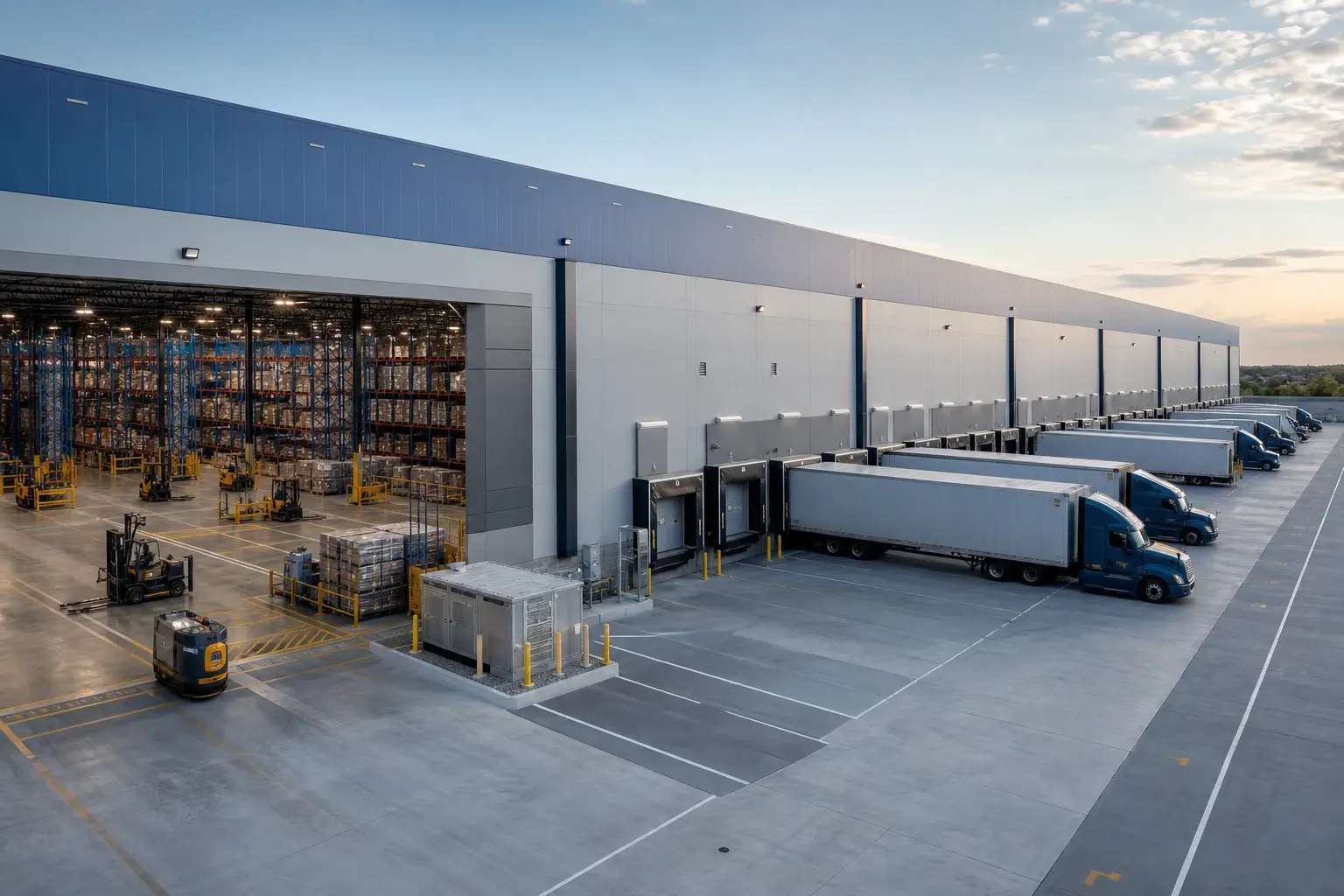
Transportation and warehouse teams work around the same physical shipment, yet their planning cycles often move at different speeds. A carrier may arrive while an outbound load remains in picking. Several vehicles may receive overlapping loading times even though the facility has limited dock capacity. A late transportation change can also leave the warehouse with little time to adjust staging activities.
The operational consequences include waiting time, detention charges, missed appointments, delayed departures, and additional replanning. High-throughput facilities feel this exposure most sharply because a small timing mismatch can affect several subsequent movements.
Limited visibility into transportation cost
The quoted freight rate captures only part of the shipment economics. Fuel surcharges, tolls, detention, special equipment, handling charges, and other accessorial costs can materially change the final amount paid.
Weak cost visibility also makes diagnosis harder. Rising freight spend may reflect market-rate increases, lower equipment utilization, greater use of premium services, unfavorable carrier allocation, or changes in the underlying network. Each cause requires a different response. Rate negotiations alone will have a limited effect when the main source of exposure comes from load planning or execution.
Reactive disruption management
Transportation plans frequently change after initial planning. Orders slip, carriers reject tenders, equipment becomes unavailable, customers move appointments, and weather or port conditions affect transit.
Teams working with fragmented data often respond to one shipment at a time. Solving the immediate exception can break a consolidated movement, consume contracted capacity needed elsewhere, or push another shipment onto premium transportation.
Earlier visibility gives planners more options. The practical requirement extends beyond creating an efficient initial plan; transportation teams also need enough context to understand how an execution change affects connected loads, service commitments, and downstream movements.
Across these challenges, the same operational pressure keeps appearing: the number of transportation dependencies can exceed what manual planning processes can evaluate consistently at scale. That creates a clear role for transportation planning software - systematizing repeatable decisions while leaving experienced planners to handle exceptions, commercial tradeoffs, and disruptions that require judgment.
How SAP Improves Freight Management
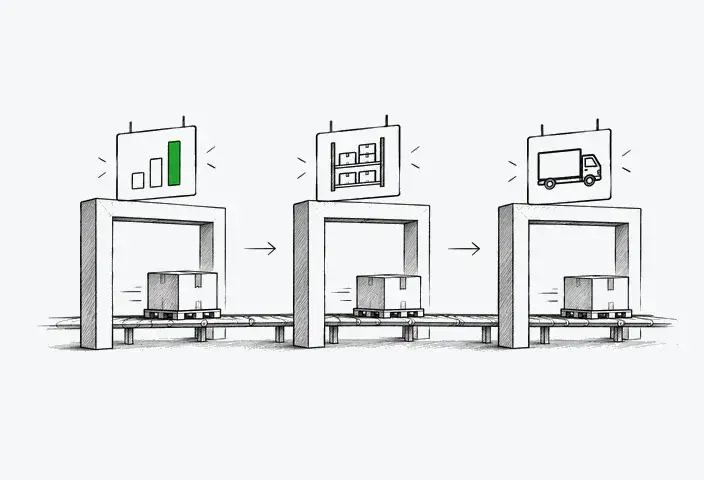
Solving transportation inefficiency requires more than automating individual dispatch tasks. The larger opportunity is to connect transportation demand, planning decisions, carrier engagement, execution, and freight costs within the same operating model.
SAP Transportation Management provides that framework. It helps companies manage transportation processes from initial demand through planning and execution to charge calculation and settlement. Instead of relying on separate tools and manual handoffs at each stage, transportation teams can work with a consistent set of business and logistics data.
This matters because freight decisions are sequential. A change in an order can affect transportation demand. A planning decision determines which freight movement must be executed. Carrier availability can force that plan to change. Execution events influence whether customer commitments remain achievable. Actual transportation charges eventually have to be reconciled against what was planned and agreed upon. SAP TM connects these stages rather than treating them as unrelated transactions.
Converting business demand into transportation requirements
Transportation planning starts before a carrier is selected. Demand can originate from processes such as customer orders, deliveries, purchase orders, or stock transfers, depending on the scenario and system landscape. SAP TM uses this underlying business demand as the basis for transportation planning.
That connection reduces one of the weaknesses of stand-alone planning: the need to reconstruct logistics demand manually after commercial or supply chain decisions have already been made elsewhere.
It also gives planners a clearer view of what actually needs to move, between which locations, and within what time requirements. When the underlying demand changes, transportation teams have a structured basis for assessing the effect on the existing plan.
Building executable transportation plans
Once transportation demand is available, SAP TM supports the process of turning requirements into planned freight movements. Planning can account for configured resources, capacities, locations, schedules, transportation modes, incompatibilities, costs, and other operational constraints. Depending on the scenario, planners can use manual, interactive, or optimization-supported planning approaches.
The distinction is important. The degree of automation can vary by transportation scenario. A stable, repetitive transportation flow may justify a high degree of automated planning. An unusual project shipment, capacity shortage, or commercially sensitive customer order may require direct planner intervention. SAP TM allows companies to design planning processes around those differences rather than forcing every shipment through the same decision path.
The resulting freight orders or related transportation documents then provide an operational structure for execution. Planners are no longer working only with an abstract pool of orders; they have defined transportation movements that can be assigned, communicated, monitored, and adjusted.
Systematizing carrier selection and tendering
Carrier choice is one area where structured decision logic can remove a significant amount of repetitive manual work. SAP TM supports carrier selection processes in which eligible carriers can be evaluated and ranked according to configured criteria and transportation requirements. Depending on the process design, a carrier can be assigned directly, or a tendering process can be initiated.
Carrier acceptance is another condition of execution; identifying a preferred carrier in the system is only one step. The carrier still needs to accept the business under the relevant process.
By connecting selection and tendering with transportation planning, companies can apply sourcing rules more consistently and reduce reliance on ad hoc decisions made under dispatch pressure. Planners can then concentrate on rejected tenders, capacity shortages, strategic loads, or other cases where negotiation and judgment add more value.
Connecting planning with transportation execution
Transportation plans begin losing value as soon as actual conditions change. SAP TM carries planned transportation objects into execution, allowing logistics teams to work with freight orders and associated execution information rather than moving the process into an unrelated tracking environment. Relevant milestones and status information can be used to understand how actual transportation is progressing against the plan.
This creates a more useful basis for exception management. If a planned movement encounters an execution problem, the issue can be evaluated in its transportation context. The team can determine which freight is affected, which downstream commitments are exposed, and whether replanning is required. That is a different operating model from discovering a delay through an email or phone call and manually reconstructing its impact across several spreadsheets.
Bringing freight charges into the process
Planning efficiency means little if transportation teams cannot connect operational choices with their financial consequences. SAP TM supports freight charge calculation based on maintained transportation agreements, rate structures, and relevant charge conditions. This brings transportation cost into the operating process earlier, before carrier invoicing becomes the first point of financial visibility.
The system also supports downstream settlement processes for transportation services. This creates an important feedback loop. Planned movements, carrier arrangements, and transportation charges can be evaluated within a connected process, giving organizations a better foundation for analyzing where freight spend originates.
It also helps distinguish different cost problems. Higher transportation expenditure caused by market rates requires a different response from higher expenditure caused by poor carrier allocation, unnecessary premium shipments, or inefficient load planning.
Managing transportation by exception
One practical benefit of using SAP TM for freight management is the ability to shift planner attention away from routine transactions. In a manual environment, every shipment demands some level of human involvement simply to keep the process moving. At scale, planners spend much of their day checking information, comparing options, contacting carriers, and updating records.
A more structured process changes that workload. Repeatable decisions can follow predefined planning and execution rules, while planners intervene where actual conditions fall outside those rules.
Carrier markets change, customers escalate priorities, production slips, and disruptions create situations that cannot always be resolved through predefined logic. The value of automation is that experienced planners spend less time reproducing routine decisions and more time handling the cases where their knowledge materially changes the outcome.
SAP TM brings demand, planning, carrier decisions, execution, and freight costs into a common transportation process. The next layer is optimization. Once transportation demand and constraints are represented in a structured planning environment, companies can begin addressing a harder question: how should shipments, capacities, routes, and modes be combined to produce a feasible plan at an acceptable cost?
Route Optimization With SAP
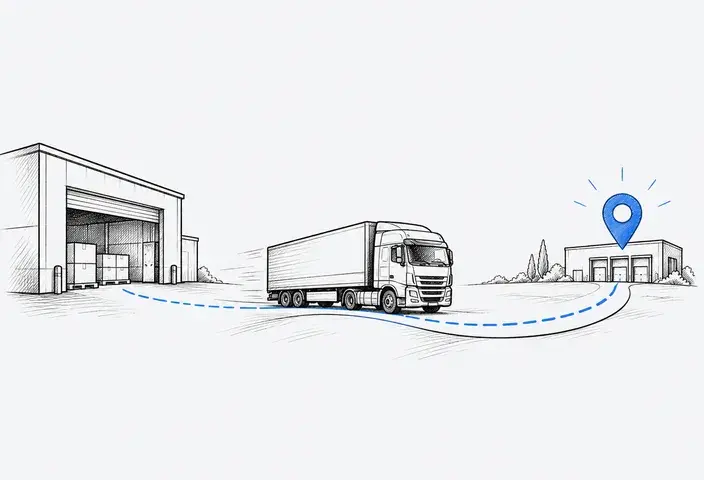
A route can be geographically efficient and still be a poor transportation plan. The shortest path between two locations says nothing about whether the vehicle has enough capacity, whether the customer can receive the shipment at the proposed time, whether a suitable carrier is available, or whether another order could share part of the journey. Once these variables enter the calculation, route optimization becomes a broader transportation planning problem.
SAP Transportation Management approaches that problem by evaluating transportation demand within a model of costs and operational constraints. Depending on the planning scenario and configuration, the system can support decisions about how freight is grouped, which resources or transportation alternatives are used, and how movements are scheduled through the network. The resulting plan ultimately has to work under real execution conditions.

Consolidating transportation demand
One of the first decisions is whether shipments that were created separately should actually travel separately. Consider three customer orders leaving the same distribution center for destinations in the same geographic area. Dispatching three vehicles may satisfy every order individually, but it could also create unnecessary transportation costs. Consolidating compatible shipments into fewer movements may produce a better result.
Geographic proximity is only one factor in determining whether shipments can travel together. Orders may have different pickup dates, requested delivery times, product restrictions, equipment requirements, priorities, or handling conditions. Combining them can improve utilization while simultaneously making the delivery sequence harder to execute.
SAP TM allows these factors to become part of transportation planning. Instead of consolidating freight simply because two destinations appear close on a map, planners can work within defined requirements and constraints. Its value comes from identifying consolidation opportunities that still satisfy the relevant operating requirements.
Improving vehicle and resource utilization
Poor utilization creates a simple economic problem. The company pays for transportation capacity that it does not productively use. Fixing it is less simple. A truck may run out of weight capacity before its physical space is filled. Another load may be limited by volume. Pallet positions, equipment dimensions, product incompatibilities, and loading requirements can impose further restrictions. In some operations, the sequence in which freight must be unloaded also affects which orders can travel together.
Transportation planning needs a realistic representation of the resources involved. Where relevant resource and capacity data are maintained, SAP TM can apply the maintained resource restrictions when evaluating feasible load combinations.
Useful capacity targets depend on the service conditions attached to each movement. Maximizing vehicle fill in isolation can undermine the result if the resulting consolidation causes a missed customer commitment. The more useful target is economically efficient capacity use within the service conditions the business has agreed to meet.
Planning multi-stop movements
Direct transportation from one origin to one destination is only one network pattern. Retail distribution, parcel operations, wholesale networks, and other high-volume environments may require several pickups or deliveries within the same movement. The sequence of those stops affects distance, transit time, vehicle utilization, and the feasibility of individual delivery commitments.
Adding another stop may make better use of the vehicle, but extend the journey for freight already on board. Reordering stops can reduce travel while creating a timing conflict at a customer location. A route that looks attractive from a mileage perspective may become impractical once service windows are considered.
SAP transportation planning can evaluate these dependencies within the constraints defined for the scenario. That matters because multi-stop optimization is fundamentally combinatorial. As the number of orders and possible stops grows, the number of potential plans increases rapidly. Manual planning can still handle exceptions and specialized routes, but systematically evaluating large numbers of alternatives becomes much harder.
Accounting for time as well as distance
Distance is an obvious transportation cost driver, which is precisely why it can receive too much attention. Transportation networks operate on calendars and schedules. Distribution centers have operating hours. Customers accept deliveries during defined windows. Transportation services depart at specific times. Loading and unloading consume time. Some resources are available only during certain periods.
A route that saves miles but arrives after a receiving location closes is not a viable alternative. Effective SAP transportation planning depends on accurate time-related data alongside geographic and cost information. When calendars, durations, schedules, and delivery requirements are represented correctly, planning can evaluate whether a proposed movement is feasible within the available time.
The quality of the resulting plan depends on whether these time-related assumptions reflect actual operating conditions. Unrealistic calendars or transit durations can narrow the value of optimization even when the planning logic itself is sound.
Supporting multimodal transportation
In international and complex domestic networks, route optimization can extend to the choice of transportation mode and the structure of individual legs. Modes such as road, rail, ocean, and air have different cost structures, lead times, capacities, schedules, and operational dependencies. A lower-cost mode may require a longer transit time. A faster alternative may be economically unjustifiable for routine freight but appropriate for an urgent order. Intermodal movements add transfer locations and additional stages that have to fit into the overall schedule.
SAP TM supports multimodal and multistage transportation scenarios in which freight can move through different legs of a transportation chain. This broadens the optimization question. Instead of asking, "Which road should this truck take?" planners can evaluate how a shipment should move through the network and which transportation alternatives are appropriate for individual stages. For global supply chains, that distinction is substantial. Changing the transportation structure can produce a larger financial effect than incremental reductions in road mileage.
Reducing empty miles without making unrealistic promises
Empty mileage consumes time and operating capacity without moving productive freight, making it a natural target for transportation optimization. SAP TM can help identify opportunities to combine demand, resources, and movements more efficiently and expose recurring patterns of underused capacity.
Some empty mileage, however, originates in the structure of the transportation network. Imbalances between inbound and outbound demand, equipment compatibility, available backhaul freight, and commercial agreements can restrict the alternatives available to planners. In these cases, network design and commercial conditions may influence empty miles more strongly than routing logic.
Persistent empty mileage should therefore be examined beyond individual route decisions. The underlying cause may point to network design, procurement strategy, carrier collaboration, or capacity positioning, requiring a broader response than changes to optimization parameters.
Balancing cost against service
Transportation optimization ultimately comes down to tradeoffs. A company could reduce freight costs by accepting slower service. It could maximize utilization by holding orders longer. It could prioritize the fastest available option and watch transportation spend rise. Each choice improves one variable at the expense of another, so the appropriate result depends on business priorities.
The planning model has to reflect what the business is actually trying to protect. Hard requirements — physical capacity, product incompatibilities, mandatory delivery conditions, or other non-negotiable restrictions — need to remain constraints. Business preferences can often be treated differently, depending on the scenario. A preferred carrier, desirable delivery pattern, or target utilization level may influence the plan without making every alternative impossible.
This separation between requirements and preferences is one of the most important aspects of transportation optimization. If too many preferences are configured as absolute restrictions, the planning space becomes unnecessarily narrow. If genuine operational constraints are treated as optional, the system can produce plans that dispatchers cannot execute.
The quality of the optimized plan depends on more than the optimization engine. It depends on whether the transportation model accurately represents the economics and physical limits of the network.
For that reason, successful route optimization is as much a data and process discipline as a software capability. SAP TM can evaluate combinations at a scale that manual planning cannot reasonably reproduce, but the organization still has to define what a feasible and commercially worthwhile transportation plan actually looks like.
Integrating Freight Management Into the Digital Supply Chain
Transportation sits between processes that rarely move at the same pace. A sales order can change after transportation has been planned. Production may release goods later than expected. A warehouse can face a loading bottleneck just as several carriers arrive. A logistics partner may reject a tender or report a delay while customer service is still working against the original delivery commitment.
Managing these events in separate systems creates a visibility gap. Each team may have accurate information within its own application, yet the transportation plan continues to reflect conditions that no longer exist.
Integration addresses that gap. SAP Transportation Management can operate within a broader SAP landscape in which commercial demand, transportation planning, warehouse execution, carrier collaboration, and logistics data remain connected. The operational advantage comes from making changes in one process available to the teams and systems responsible for the next transportation decision.
SAP S/4HANA: Connecting transportation to business demand
Transportation requirements originate in upstream business processes. Sales orders, purchase orders, stock transfers, deliveries, and returns determine what needs to move, between which locations, and within what time frame. Keeping transportation planning close to these transactions reduces the need to recreate demand manually and gives planners a more current view of changes that can affect execution.
In modern SAP landscapes, SAP Transportation Management can operate as an embedded component of SAP S/4HANA. This model keeps transportation processes and the ERP transactions that generate demand within the same SAP S/4HANA environment, supporting tighter process integration across order management, delivery processing, transportation planning, execution, and freight settlement. SAP documents TM as an application component of SAP S/4HANA and SAP S/4HANA Cloud.
What matters operationally is continuity. Transportation should not begin as an isolated process after order and delivery decisions have already been finalized elsewhere. When business demand and transportation planning share a consistent data flow, planners have a stronger basis for responding to quantity changes, timing shifts, cancellations, or other events that affect the movement of goods.
SAP EWM: Aligning the transportation plan with the loading dock
Transportation planning and warehouse execution manage different parts of the same physical movement. Integration with SAP Extended Warehouse Management (SAP EWM) helps coordinate transportation requirements with warehouse activities such as staging, loading, and handling.
SAP supports integrated TM and EWM scenarios, including freight-order-based processes and Advanced Shipping and Receiving. Depending on the process design, transportation and warehouse execution can exchange the information needed to coordinate activities around the physical movement.
This connection becomes especially important in high-throughput facilities. Transportation planners need confidence that the freight they schedule can actually be prepared and loaded. Warehouse teams, in turn, benefit from visibility into the vehicles and transportation requirements they are expected to handle. The integration provides a shared process foundation and reduces coordination through phone calls, spreadsheets, and last-minute intervention.
SAP Business Network for Logistics: Extending the process beyond the enterprise
Internal integration solves only part of the transportation problem. Carriers remain outside the company's ERP boundary. Tender requests, confirmations, shipment updates, documents, and execution information frequently pass between shippers and logistics service providers. When those exchanges rely heavily on email or other unstructured channels, transportation teams spend time chasing responses and manually updating internal records.
SAP Business Network for Logistics extends digital collaboration to external logistics partners. Its freight collaboration capabilities can work with SAP Transportation Management to support interactions between shippers and carriers across relevant transportation processes.
Carrier response directly affects whether planned capacity becomes available for execution. A transportation plan that assumes capacity from a carrier that has not accepted the load remains an assumption. Digital tendering and collaboration give transportation teams a more structured way to move from planned capacity to confirmed execution and to exchange subsequent logistics information with their partners.
The quality of collaboration still depends on partner adoption and process design. Connecting a carrier to a network does not automatically fix weak tendering rules, inaccurate master data, or poor exception ownership. It does, however, remove some of the communication friction that makes those problems harder to manage.
SAP Business AI: Adding intelligence without confusing it with optimization
AI deserves a precise role in this architecture. Transportation planning has used mathematical optimization and rules-based automation long before the current wave of generative AI. Those capabilities should not be relabeled as artificial intelligence simply because AI now receives more attention.
SAP Business AI can complement logistics processes where relevant capabilities are available by supporting tasks such as information retrieval, analysis, prediction, and user assistance. Joule and other SAP Business AI capabilities are increasingly embedded across SAP's cloud portfolio, although availability depends on the specific product, release, deployment model, and licensed services.
That makes AI an additional layer rather than a replacement for transportation planning fundamentals. An AI-assisted process can help a user work with logistics information more efficiently. It cannot compensate for an incorrect transportation lane, missing carrier capacity, unreliable transit duration, or badly maintained location master data. The optimizer and AI services are still working from the operational information available to them. For transportation organizations, the priority remains baseline data integrity and process integration. AI becomes more useful after those foundations exist.
Creating a continuous logistics data flow
The larger value of integration appears when these components are considered together. SAP S/4HANA provides the business context that creates logistics demand. SAP TM translates that demand into transportation processes. SAP EWM connects the transportation plan with warehouse execution. SAP Business Network for Logistics extends collaboration to carriers and other external logistics partners. SAP Business AI can add intelligent assistance and automation where supported and appropriate.
This architecture reduces the number of points at which transportation information has to be manually reconstructed. That matters during normal operations, but it matters even more when something changes. Suppose an outbound order is delayed and the warehouse cannot stage it for the originally planned departure. In a disconnected landscape, transportation may discover the problem only when the vehicle arrives. The planner then has to determine which freight is affected, contact the carrier, revise the movement, and communicate the new expectation downstream.
With connected logistics processes, the organization has a better chance of identifying the mismatch earlier and evaluating its consequences using shared operational data.
Integration does not prevent the delay. It shortens the distance between the event and the transportation decision that follows it. For complex supply chains, that is the more meaningful definition of digital logistics. The architecture earns its value when transportation decisions remain aligned with current conditions across orders, warehouses, carriers, and the physical network.

Business Benefits of Intelligent Transportation Planning
Transportation optimization needs to be visible in real operating data. Building a convincing business case starts with a baseline grounded in comparable lanes, order profiles, service levels, and timeframes. External variables like fluctuating fuel prices, shifting shipment volumes, mode shifts, and broader freight market conditions must be isolated from process changes. That isolation ensures any savings linked to SAP TM reflect real improvements in planning and execution rather than market swings.
Freight cost per shipment and per unit
Evaluating freight cost per shipment, cost per unit shipped, and cost per mile reveals whether spending scales logically alongside shipment volume. Tracking accessorial charges, expedited freight spend, and variances between planned and actual costs adds critical context where daily execution strays from initial expectations.
A drop in cost per unit usually points to better order consolidation, improved carrier choices, or smarter mode selection, provided shipment profiles stay consistent. On the flip side, sharp gaps between planned and actual spend tend to highlight late route adjustments, unexpected accessorial fees, master rate errors, or ground-level execution challenges that the original plan completely missed.
Capacity utilization
Weight, cubic volume, pallet counts, and overall equipment space show how much payload fills available trailer capacity. Looking at the total shipment runs needed to move a given volume offers another practical benchmark, particularly for networks reliant on load aggregation.
However, utilization gains shouldn't be judged in a vacuum. Packing trailers more tightly loses value if it causes missed delivery windows, excess dock handling, or emergency rerouting. Monitoring load density and service metrics together keeps planners from optimizing trailer space at the expense of delivery performance.
Tender acceptance and contracted carrier allocation
Primary tender acceptance, contract compliance, spot market frequency, carrier response times, and lane allocation metrics show how closely day-to-day tendering follows procurement contracts.
When primary carriers repeatedly decline tenders on a specific lane, it usually signals underlying friction like unviable lead times, stale contract rates, unfulfilled volume commitments, or seasonal shifts the agreement didn't account for. A sudden spike in spot market reliance points to the same core breakdown. Tracking these trends gives procurement and logistics teams clear data to adjust carrier contracts and refine routing guides.
On-time pickup and delivery
Punctual pickups, on-time arrivals, appointment compliance, transit time variance, and emergency intervention frequency provide a direct window into fleet and carrier dependability. When shipments repeatedly run late on a specific route, the problem warrants a deeper look. Delays can stem from flawed transit assumptions, slow warehouse staging, tight dock booking slots, or underperforming carriers. Filtering delay logs by carrier, route, origin, and destination helps separate random weather disruptions from systemic planning mistakes.
Delivery-promise accuracy and customer exceptions
Carrier execution directly influences whether customer delivery promises hold up. To measure reliability effectively, logistics teams monitor delivery window adherence, ETA precision, shipping complaints, and the percentage of delayed orders caught before the delivery deadline passes.
Detecting delays early gives support and operations teams enough time to adjust routes, arrange backup transport, or update the customer proactively. Over time, seeing fewer last-minute fires signals that daily shipments align well with original execution schedules.
Planner productivity
Planner workload can be measured through load orders handled per planner, manual touches per shipment, time spent on routine tendering, and the percentage of shipments requiring direct intervention. These data points demonstrate whether automated workflows actually eliminate repetitive administrative tasks. When a planning team manages higher freight volumes with fewer manual overrides, they free up capacity to address tender rejections, tight capacity corridors, high-priority loads, and recurring network bottlenecks. That operational leverage adds clear value, even when headcount remains static.
Exception response time
Measuring the time elapsed between flag detection and planner action provides a practical benchmark for supply chain agility. Re-planning rates, disruption-driven rush freight costs, and the proportion of issues resolved before impacting the customer offer further proof of operational health.
Response timing is critical because resolution options shrink as deadlines approach. Catching a delay hours before a shipping cutoff leaves room to secure another carrier, change routes, or shift departure times. Discovering that same delay after the cutoff often forces high-cost expedited shipping or leads to a broken customer delivery commitment.
Network-level cost and service variance
Lane-level and carrier-level variance often uncovers structural flaws that high-level shipment KPIs conceal. Comparing costs, load factors, tender acceptance rates, transit consistency, premium freight reliance, and empty miles across different facilities, destinations, modes, and carrier tiers brings those hidden issues into focus.
Persistent performance outliers justify a wider review of network topology, carrier mix, trailer positioning, or transport modes. For example, recurring empty miles on a single corridor usually indicate a mismatch between inbound and outbound freight, while constant reliance on expedited freight on a specific route points to unrealistic transit time baselines or inadequate carrier capacity allocations.
Our Expertise in Transportation Optimization
Transportation optimization rarely starts and ends with SAP TM configuration. Planning logic depends on order flows, master data, warehouse processes, carrier relationships, integration architecture, and the rules a company uses to balance freight cost against service requirements.
With two decades of SAP expertise, our LeverX team approaches transportation projects from the operating model outward. Before defining the target solution, our teams examine how transportation demand enters the planning process, where manual intervention occurs, how loads and carriers are assigned, which constraints determine execution, and where the largest sources of financial or operational friction appear. This time-proven, vetted assessment approach helps separate problems that require SAP configuration from those rooted in process design, data quality, or integration gaps.
Our transportation and logistics capabilities include:
- SAP TM implementation. We design and configure transportation processes around the organization's network, shipment profile, planning requirements, carrier model, and existing SAP landscape.
- Transportation process optimization. Existing workflows are assessed for planning bottlenecks, unnecessary manual steps, weak consolidation logic, carrier allocation issues, and other sources of avoidable transportation cost.
- SAP EWM integration. We connect transportation planning with warehouse execution so that freight movements, staging, loading, and related logistics activities can operate within a coordinated process.
- SAP Business Network for Logistics integration. Digital carrier collaboration can be incorporated into transportation processes to support more structured tendering, communication, and exchange of execution information with logistics partners.
- Logistics transformation projects. Where transportation problems extend beyond a single application, we help align SAP TM with the wider supply chain architecture and the business processes surrounding order fulfillment, warehousing, and logistics execution.
- SAP Application Management Services. After go-live, transportation processes still evolve. Changes in carriers, lanes, volumes, business rules, integrations, and operational requirements may require ongoing application support and optimization.
The appropriate scope depends on the maturity of the existing transportation operation. Some organizations need a new SAP Transportation Management implementation. Others already have the technology in place but struggle with planning parameters, integrations, data quality, or processes that have accumulated workarounds over time.
In either case, the objective should remain measurable. A transportation initiative needs to address identifiable operational exposure — excessive freight spend, poor capacity utilization, high manual workload, recurring service failures, limited carrier collaboration, or weak visibility into execution.
Technology follows from that diagnosis. When transportation processes, system architecture, and operating rules are designed together, SAP TM can become more than another logistics application. It provides the transactional and planning foundation for managing transportation decisions consistently as the network changes.
Turning Transportation Data into Better Freight Decisions
Coordinating daily freight movements demands continuous adjustment. Unplanned volume spikes, scarce trailer availability, and strictly enforced delivery appointments frequently derail morning dispatch plans by the afternoon. Planners need practical ways to resolve these routine schedule breaks without dedicating hours to manual recalculations.
SAP Transportation Management provides a mechanism to reduce this reactive workload. The software weighs incoming transport orders against current carrier availability, routing rules, specific service levels, and line-haul rates. Linking this planning engine to SAP S/4HANA, SAP EWM, and third-party logistics providers connects routing decisions directly to actual warehouse staging and production events.
Evaluating a software upgrade requires a strict look at current floor-level operations. Supply chain leaders need to locate exact areas of excess freight spend. Teams must determine which routing choices force planners into excessive keyboard time, find lanes with ignored contracted carrier rates, and pinpoint specific routes generating repeated late-arrival fines.
Answering these direct questions reveals whether the underlying friction stems from outdated software, flawed master data, poorly designed dock workflows, or systemic network imbalances. Documenting these operational gaps creates a concrete benchmark for tracking cost reductions following an SAP TM rollout.
LeverX guides organizations through mapping these dependencies, configuring transport processes, and installing the SAP software suite. We help teams adapt logistics parameters as facility requirements change over time. Faced with escalating line-haul rates or persistent tracking gaps, operations managers work with our teams to revise specific dispatch behaviors before writing the system architecture to enforce those new rules.
Networks suffering from uncontrolled accessorial fees or daily routing exceptions require targeted intervention. Logistics leaders must isolate the exact shipping decisions causing the friction and configure the SAP software entirely around solving those specific operational deficits.