A practical guide to the key terms of an SAP AMS contract, including SLA targets, escalation rules, pricing conditions, and service accountability.
An SAP application management services (AMS) contract can look comprehensive on paper yet leave critical gaps in accountability. A provider may meet its initial response target while a business-critical process remains unavailable for hours. What matters is not just how quickly someone responds, but what the provider is required to do next, how performance is measured, and what happens when commitments are missed.
Before signing, organizations need to examine the specific obligations behind each service level agreement (SLA), including the conditions that limit or exclude the provider's responsibility.
Quick answer: When negotiating an SAP AMS contract, consider an initial response within 30 minutes, 24/7, for P1 incidents and within two business hours for P2 incidents. These are illustrative negotiation targets, not universal industry standards or SAP-mandated requirements. The contract should also define restoration commitments, SLA clock rules, escalation responsibilities, billable support boundaries, performance reporting, remedies for missed targets, and transition-out obligations.
What Must an SAP AMS Contract Cover?
An SAP AMS contract should identify the supported applications, modules, production and non-production environments, third-party integrations, support hours, and explicit exclusions. It should also define which activities are covered, including incident management, service requests, problem management, standard changes, release support, and enhancements. For each category, the agreement should specify whether the work is included in the service scope, excluded, or requires separate approval.
These boundaries need to be specific enough to prevent disputes when incidents occur. For example, if users suddenly lose access to SAP S/4HANA, the agreement should clarify whether the AMS provider investigates SAP authorizations, coordinates with the identity-management team, or only routes the issue to another party.
An AMS agreement typically consists of several documents, each serving a different purpose:
- Master Services Agreement (MSA): Establishes overarching legal terms, including liability, confidentiality, and termination provisions.
- Statement of Work (SOW) or service schedule: Defines the supported landscape, service scope, deliverables, and exclusions.
- SLA annex: Specifies service targets, measurement methods, and performance obligations.
- Responsibility matrix: Assigns operational responsibilities to the customer, AMS provider, and other relevant parties.
- Commercial schedule: Documents fees, included services, and additional charges.
The exact structure varies by engagement, but the documents should be consistent and establish which terms take precedence if provisions conflict.
Responsibility boundaries are particularly important in cloud environments. As explained in the SAP Agreements documentation, SAP cloud contracts include service-specific terms and availability SLAs. These commitments are separate from an AMS provider's obligations to investigate incidents, manage escalations, and coordinate resolution.
The contract should therefore distinguish SAP's responsibilities as the software or cloud service provider, the AMS partner's operational duties, and the customer's obligations for access, approvals, and business decisions. This prevents incidents from remaining unresolved because responsibility falls between different parties.
The agreement should also define responsibilities for granting, reviewing, and revoking system access, including privileged access. Where applicable, it should establish data processing terms, subcontractor approval and oversight requirements, security incident notification procedures and deadlines, and business continuity obligations. Customers should also request appropriate evidence of the provider's security and continuity controls.
Which SLA Targets Should You Negotiate for P1–P4?
An SAP AMS SLA should connect incident priority to measurable service commitments. However, a fast response does not necessarily mean a fast recovery. Before agreeing on specific targets, distinguish five measures:
- Initial response: A qualified support specialist acknowledges the incident and begins investigating. An automated ticket confirmation does not qualify.
- Mitigation or workaround: A temporary measure allows affected business operations to continue, even if the underlying issue remains.
- Service restoration: The affected system or business process returns to the agreed operational state.
- Final resolution: The underlying defect is corrected, eliminating the need for a temporary workaround.
- Root-cause analysis (RCA): The cause of the incident is investigated and documented, with preventive actions identified where required.
The following table provides illustrative AMS negotiation targets, not universal industry benchmarks or SAP-mandated requirements. Actual commitments should reflect business criticality, support coverage, system dependencies, and the provider's responsibilities.
|
Priority |
Business impact |
Suggested initial response |
Additional commitments to negotiate |
|
P1 — Critical |
Production outage or critical business process unavailable, with no viable workaround |
30 minutes, 24/7 |
Measurable restoration target with defined applicability conditions and breach remedies; continuous incident handling and hourly status updates |
|
P2 — High |
Major business disruption, such as delayed order processing or invoicing |
2 business hours |
Agreed mitigation target, potentially within 1 business day, and a separate measurable restoration target with defined conditions and remedies where binding |
|
P3 — Medium |
Noncritical functionality impaired, but business operations can continue |
1 business day |
Resolution or an agreed remediation schedule, potentially within 10 business days |
|
P4 — Low |
Minor defect or request with limited business impact |
2 business days |
Resolution scheduled within an agreed maintenance or release cycle |
SAP's own commitments provide a useful reference, but they should not be copied directly into an AMS agreement. According to SAP Mission Critical Support, SAP Enterprise Support specifies an initial response within one hour for very-high-priority cases and four hours for high-priority cases. For very-high-priority cases, SAP also specifies a four-hour corrective action target, which may be satisfied by providing a fix, workaround, or action plan. The applicable support agreement determines how this period is calculated and which prerequisites and exclusions apply.
These are SAP support commitments, not automatic obligations of an independent AMS provider. Delivering an action plan is also not equivalent to restoring service. For each negotiated restoration target, the AMS contract should explicitly state whether it is a binding SLA commitment or a nonbinding objective, how restoration is measured and verified, which conditions and exclusions apply, and what remedies follow a breach of a binding target. Restoration deadlines should reflect the customer's SAP landscape, business criticality, and technical dependencies rather than follow a universal recovery timeframe.
For critical incidents, organizations should also negotiate a separate deadline for root-cause analysis after service is restored. This prevents temporary recovery from being treated as the end of the provider's responsibility.
When Can the SLA Clock Start, Pause, or Reset?
SLA targets are only meaningful when the contract defines how time is calculated. A four-hour restoration commitment, for example, may offer little protection if the provider can delay the start of the clock or exclude extended periods from its measurement.
The agreement should specify whether each SLA timer starts when a ticket is submitted, an automated monitoring alert is generated, or the provider formally accepts the incident. If the trigger is provider acceptance, the contract should also limit how long the provider has to accept or reject a ticket. Otherwise, the SLA start time may be delayed simply because the ticket remains unaccepted. It must also establish whether targets are measured continuously or only during agreed business hours. For critical incidents requiring 24/7 coverage, the clock should not wait for the next business day.
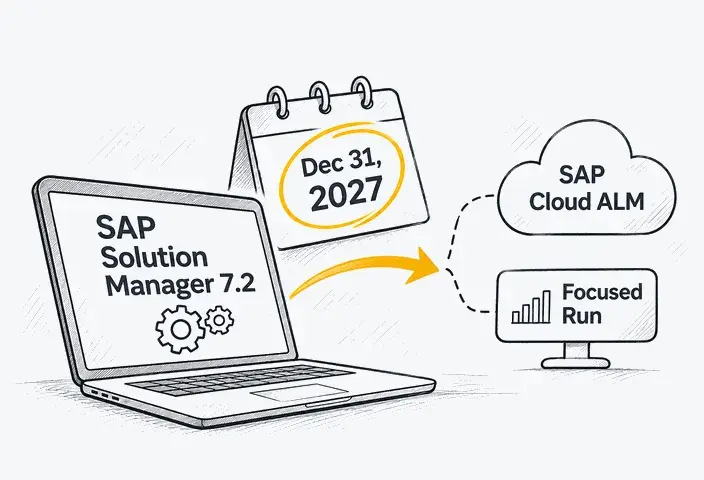
Clock pauses should be limited to explicitly defined circumstances. These may include waiting for customer-provided access, required information, or approval that genuinely prevents further work. The contract should require the provider to record the reason, start and end timestamps, and evidence supporting each pause. SAP Solution Manager's service level management documentation illustrates how customer-action statuses can affect processing-time calculations. However, the applicable rules must be defined in the specific AMS agreement.
Consider a P1 incident reported at 9:00 a.m. with an illustrative four-hour restoration target. If the provider cannot proceed because required customer access is unavailable from 10:00 to 10:30 a.m., an expressly permitted 30-minute pause would move the deadline from 1:00 to 1:30 p.m. The interruption should not affect the separately measured initial response target.
Dependencies on SAP or third-party vendors require particular attention. Any exclusion of their processing time must be negotiated explicitly. Even when the restoration clock is paused, the AMS provider should remain responsible for coordinating the incident, following up with the relevant parties, and communicating progress.
Finally, the contract should prevent unilateral priority downgrades and unjustified clock resets. Changes to incident severity should require documented customer approval, while reassignment between support teams or reopening an unresolved incident should not automatically erase elapsed SLA time.
How Should Escalation and 24/7 Coverage Be Defined?
An SAP AMS escalation process should establish who owns an incident, when additional expertise is required, and how responsibility is maintained across teams. Support may be organized into L1 (initial triage), L2 (functional and configuration issues), and L3 (specialized technical problems), but support tiers alone do not guarantee timely resolution.
Who owns a critical incident?
An escalation matrix should distinguish incident coordination, technical resolution, and approval authority. These responsibilities may belong to different parties, depending on the AMS engagement model and the nature of the incident. For every P1 incident, the contract should require a designated incident owner who remains accountable for coordination, even when SAP or third-party vendors participate in resolution.
|
Responsibility |
What it covers |
Typical owner |
|
Coordinate |
Directs the investigation, manages escalations, and communicates progress across teams. |
AMS provider in managed support; the customer may retain this role in staff augmentation. |
|
Resolve |
Investigates and fixes the affected component or provides a workaround within the responsible party's scope. |
AMS provider, SAP, or third-party vendor, depending on the issue and contractual scope. |
|
Authorize |
Approves priority changes, high-impact workarounds, and planned downtime where approval is required. |
Authorized customer representative, unless decision-making authority is explicitly delegated. |
The contract should also define time-based escalation triggers, responsible contacts, and who can create and manage support cases through SAP for Me. These responsibilities should remain clear even when several parties are involved in resolving an incident.
What does 24/7 coverage actually include?
Round-the-clock support should mean more than accepting tickets outside business hours. The agreement needs to specify when qualified specialists are available, which incident priorities receive continuous attention, and how unresolved issues are handed over between shifts or regional teams.
Each handover should preserve the incident history, completed actions, outstanding dependencies, and next steps. Coverage for lower-priority incidents may follow standard business hours, provided these limitations are explicitly documented.
Example: At 2 a.m., an integration between SAP S/4HANA and a third-party warehouse system fails, preventing warehouse operations. Under a clearly defined escalation agreement, the on-call team engages the appropriate integration specialists, coordinates with the external vendor, and maintains a single incident owner throughout the investigation.
The contractual objective is continuous accountability: the customer should know who is coordinating recovery, what actions are underway, and when the next update is expected.
Which AMS Pricing Terms and Exclusions Should Be Explicit?
An SAP AMS engagement model defines how support is delivered, while the pricing structure determines how services are charged. Managed support, on-demand assistance, and staff augmentation can follow different commercial arrangements. Even a fixed monthly fee may exclude certain activities or include limits that trigger additional charges.
The contract should also specify when and how rates may change, including approval requirements and notice periods, and how fees are adjusted if the scope of support or service volume changes. Renewal terms should clarify whether the agreement renews automatically, what pricing applies, and how much notice is required for non-renewal or termination.
How are tickets and support capacity counted?
If pricing depends on ticket volume or consultant hours, the agreement should define what counts as billable work. Key provisions include the number of tickets or hours covered, the billing period, minimum billing increments, unused capacity rollover, and rates for exceeding agreed limits.
Example: Suppose 15 finance users submit separate tickets for the same invoice-posting error. Does the provider treat them as one underlying incident or 15 billable tickets? The contract should establish how duplicate reports, linked tickets, and reopened incidents are handled. Otherwise, a single technical failure could generate unexpected charges.
Which activities require additional approval?
Not every request belongs to routine application support. The agreement should distinguish incident resolution and standard maintenance from enhancements, new integrations, custom development, and other separately chargeable work.
For activities outside the agreed scope, the provider should supply an estimate and obtain authorization before proceeding. The contract should specify overage rates, whether 24/7 incident handling is included in the base fee, and any separate charges or approval rules for after-hours or emergency work outside the agreed coverage.
In an SAP S/4HANA implementation and support project for a European construction group, LeverX combined ongoing application management, SAP Basis support, and additional development within a single engagement. The project demonstrates LeverX's experience delivering different types of SAP support and development services together.
How Should SLA Performance Be Measured and Enforced?
SLA commitments have limited value unless the customer can verify whether they have been met. An SAP AMS contract should establish how performance is recorded, reported, and reviewed, along with the consequences of missed targets.
What should an SLA performance report include?
The agreement should require regular SLA reporting, typically monthly, with results broken down by incident priority and service. Each report should provide enough information to verify performance rather than simply presenting an overall compliance percentage. For each metric, the report should show the number of eligible incidents, the number that met the target, and any incidents excluded from the calculation.
At a minimum, the reporting framework should cover:
- Target achievement: Number of incidents, agreed targets, actual response and restoration times, and compliance rates by priority.
- SLA breaches: Missed commitments, affected services, and documented reasons for noncompliance.
- Supporting evidence: Ticket timestamps, approved exclusions, and records used to calculate SLA performance.
- Performance trends: Recurring failures, changes in incident volumes, and progress on previously agreed improvements.
For example, a provider might report 98% overall SLA compliance while having missed two critical P1 restoration targets. Reporting results separately by priority makes such failures visible.
This approach is consistent with ISO/IEC 20000-1:2018, which establishes requirements for monitoring, measuring, and reviewing service performance.
The contract should also specify the reporting schedule, calculation methodology, access to supporting records, and a defined period during which the customer can dispute reported results.
What happens when an SLA is breached?
A missed target should trigger a documented review, not simply appear as an exception in the monthly report. Depending on the severity and frequency of breaches, the agreement may provide several remedies.
A corrective action plan should identify the cause, required improvements, responsible parties, and completion deadlines. For qualifying failures, the contract may also establish service credits, calculated according to an agreed formula and subject to specified conditions or limits.
Repeated or material breaches may trigger management escalation, additional remediation requirements, or termination rights if these provisions are included in the agreement.
The contract should clearly define how remedies are requested or applied, including notification deadlines and any applicable exclusions. Customers should also check whether service credits are designated as the exclusive remedy for SLA breaches, potentially limiting their ability to pursue other contractual remedies. Service credits and termination provisions should not be assumed to apply automatically; their availability depends on the agreed terms and applicable law.
The objective is not simply to penalize missed targets, but to ensure that performance failures are documented, addressed, and less likely to recur.
What Transition and Exit Terms Should Protect the Customer?
An SAP AMS contract should define when the provider formally assumes operational responsibility and when service level commitments take effect. Before SLA measurement begins, both parties should agree on acceptance criteria covering system access, essential documentation, outstanding incidents, and support readiness. The agreement must also identify who handles incidents during the handover and what happens if the acceptance conditions are not met.
Exit provisions should specify notice periods, ownership and transfer rights for support materials, and the outgoing provider's obligations to hand over ticket history, unresolved incidents, runbooks, monitoring configurations, and applicable operational scripts. The agreement should define delivery deadlines, any licensing or security restrictions, and the provider's duties to assist the incoming team. It should also assign responsibility for revoking privileged access and rotating shared credentials when they are no longer needed. Any transition assistance fees should be agreed in advance to prevent unexpected costs.
What Should Be on Your SAP AMS Contract Checklist?
Before signing an SAP AMS agreement, verify that every critical commitment appears in the contract or its referenced schedules and annexes. Use this checklist to review the provider's proposal and identify terms that still require clarification.
- Service scope and exclusions. Confirm that the SOW or service schedule identifies supported SAP systems, environments, and integrations, and specifies which incidents, service requests, problem management activities, standard changes, release support tasks, and enhancements are included or excluded.
- Roles and responsibilities. Request a responsibility matrix covering the AMS provider, your internal team, SAP, and relevant third parties. Verify access management, data processing, subcontractor arrangements, security incident notification, and business continuity obligations, where applicable.
- Priority definitions and SLA targets. Check that the SLA annex specifies P1–P4 criteria, response targets, applicable restoration commitments, and the conditions under which each target applies.
- SLA measurement rules. Verify that clock start events, permitted pauses, business-hour calculations, priority changes, and reset restrictions are explicitly documented.
- Escalation procedures. Require an escalation matrix with incident ownership, named contacts or roles, notification triggers, and responsibilities for coordinating external support.
- Support coverage. Confirm the agreed service hours for each priority, regional coverage, on-call availability, and procedures for transferring unresolved incidents between shifts.
- Performance reporting. Request the reporting template, calculation methodology, review schedule, and procedures for accessing evidence and disputing reported results.
- Service failure remedies. Check the provisions governing corrective action plans, service credits, repeated breaches, and any agreed termination rights.
- Pricing and additional charges. Verify included support capacity, billing rules, overage rates, exclusions, approval requirements for additional work, price adjustment mechanisms, and renewal terms.
- Transition and exit obligations. Confirm support acceptance criteria, the SLA start date, notice periods, handover of ticket history, runbooks, monitoring configurations and applicable scripts, transition assistance terms, and procedures for revoking privileged access.
Any unresolved item should be clarified before signing and reflected in the applicable contract documents. A commitment made during negotiations should not depend solely on a sales presentation or an informal understanding.
Conclusion
An effective SAP AMS contract makes service commitments measurable, verifiable, and enforceable. Before signing, make sure the agreement provides a clear basis for evaluating provider performance and addressing unmet obligations.
LeverX provides SAP Application Management Services covering incident resolution, SAP Basis administration, proactive monitoring, application maintenance, and ongoing enhancements. Organizations can choose managed SLA-based support, on-demand assistance, or staff augmentation based on their operational requirements and the responsibilities they want to delegate.
FAQ
How useful was this article?
Thanks for your feedback!