Learn how SAP Cloud ERP supports scalable growth, Fit-to-Standard implementation, and continuous innovation for modern enterprises.
The strategy for enterprise software is moving toward cloud-first models faster than ever. Most organizations are now leaving behind heavy infrastructure and systems that were modified too deeply. They are looking for platforms that prioritize speed and the ability to innovate constantly.
With SAP ECC mainstream maintenance ending in 2027, many companies are rethinking their ERP strategy and planning their move to SAP S/4HANA. Cloud has become a primary foundation for many modern businesses.
This is where RISE with SAP comes in. It allows migrating legacy systems to a cloud-first architecture, making the transition easier by putting everything into one contract, so an organization isn’t stuck chasing different vendors when it needs help.
Being able to scale quickly has become a major requirement for staying competitive. Companies often need to enter new markets or change their business models quickly. An ERP system has to support that kind of rapid growth without forcing the business into a long and difficult transformation project.
The problem is that many legacy ERP setups are so customized that they actually hinder progress. Years of constant changes have created high maintenance costs and made every single upgrade feel like a massive risk. Instead of helping the company move forward, the old system eventually becomes a limitation.
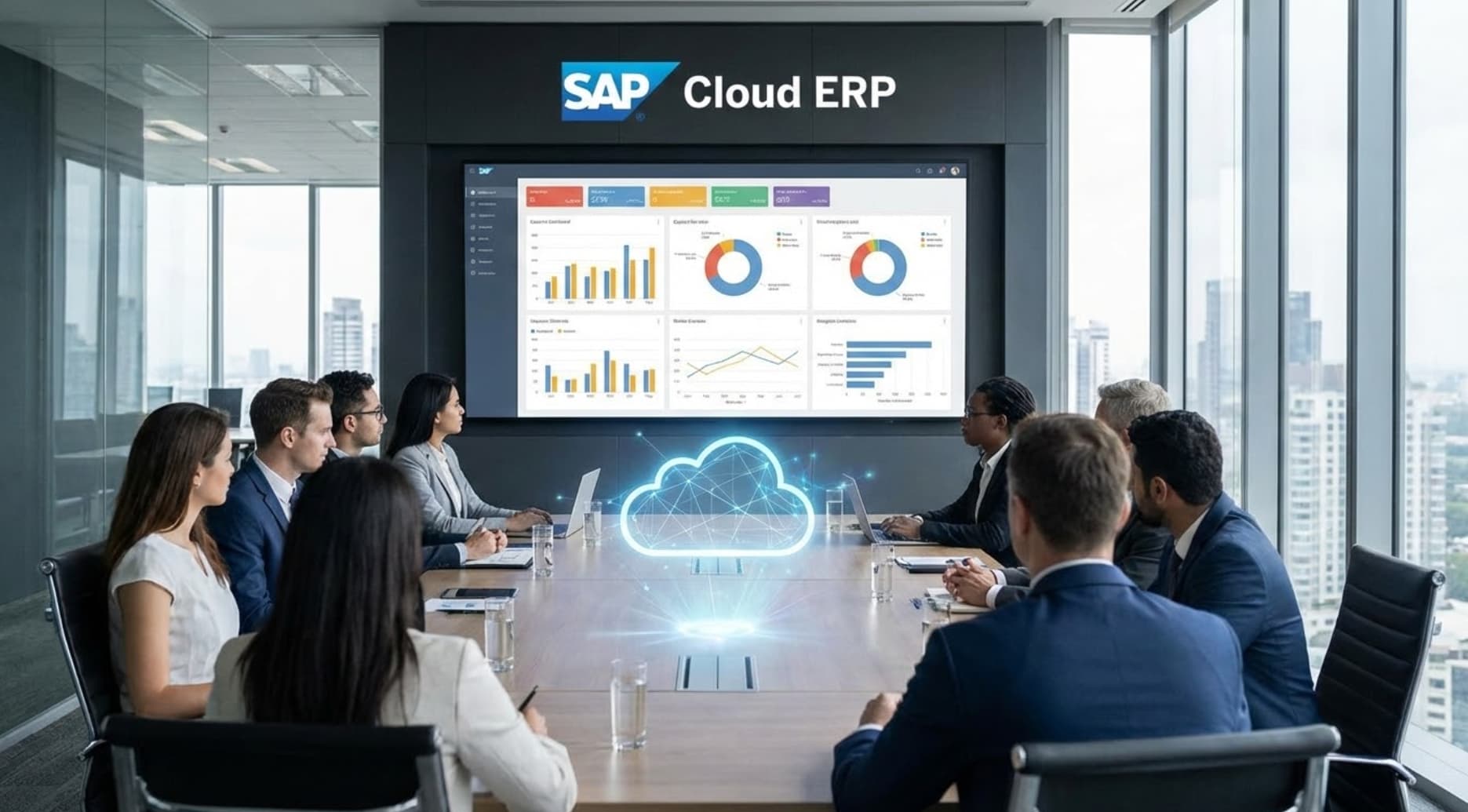
SAP Cloud ERP (formerly SAP S/4HANA Public Cloud) was built specifically to solve these issues as a modern standard platform. Since it is a cloud-native solution, it comes with preconfigured processes and analytics already built in. It runs on hyperscalers such as AWS, Microsoft Azure, and Google Cloud, while allowing businesses to select their data center region to meet regulatory and compliance requirements. The subscription model includes continuous updates so businesses can keep innovating and growing without needing to rebuild their entire ERP foundation every few years.
SAP Cloud ERP as a Ready-to-Use Platform
What exactly is it?
SAP Cloud ERP works as a standard, public cloud environment for companies that need to get up and running fast without losing the ability to pivot later. It functions as the modern, cloud-native center for the entire SAP landscape. It is also widely used in a two-tier ERP strategy, in which headquarters may continue operating on an on-premises SAP S/4HANA system, while subsidiaries run SAP Cloud ERP as a flexible two-tier solution aligned with corporate standards.
Unlike traditional on-premises systems that need heavy infrastructure and constant custom coding, this version is delivered as a service. It runs on a cloud-native architecture using a subscription model. This means updates and security patches arrive automatically, so you never have to deal with those massive, disruptive upgrade projects every few years.
By choosing this path, you are building a strategy on standardization and scalability instead of relying on heavy core modifications.
What comes in the box?
SAP standard business processes already set up
The system includes built-in processes for finance, procurement, and sales. These are preconfigured based on proven best practices. This allows your organization to start working with a solid, end-to-end model from the first day without having to design workflows from scratch.
SAP embedded analytics and reporting
Real-time insights are part of the daily workflow with SAP analytics. Reporting is not a separate tool you have to log into; it is embedded directly into your tasks. This lets you see financial and operational data while you are actually doing the work.
.webp)
Ready-to-use industry templates
SAP provides templates that already account for market and regulatory needs. This reduces the need for deep core-level changes. You get a framework that handles your specific industry requirements while staying within a clean, standardized system.
Why standardization is a smart move
Standardization isn't a cage; it is a way to grow faster. Having one unified process model makes it much easier to manage different regions and offices. It stops the buildup of technical debt by keeping custom code to a minimum, which makes scaling up far more predictable.
Working within a consistent, well-structured environment also makes onboarding new employees a lot easier. People can learn the system faster when it follows a logical standard. This gives your business the stability it needs without losing the agility to change when the market moves.
When SAP Cloud ERP Is the Right Choice
Fast-growing and scaling companies
High-growth organizations often need more structure but cannot afford to lose speed. This is where SAP Cloud ERP fits best. As you move into new markets or different regions, you need a system that can be deployed fast and copied across locations without getting stuck in technical complexity.
It also helps when you have to turn on new processes immediately. Whether you are facing market shifts or new laws, you can scale using a foundation that is already standard. This beats redesigning your whole system every time the business pivots.
New business models and digital initiatives
Launching new products and services
Bringing a new offering to market requires financial and supply chain processes that work from day one. This platform gives you a framework that is ready to go, supporting growth while keeping your operations under control.
Digital-first operating models
For businesses built on data, a cloud-native platform is a way to get real-time visibility across every department. It keeps your information connected so you never have to make decisions based on outdated reports.
Innovation units and pilot business lines
Special teams or pilot units can use this structured environment to stay flexible. It prevents them from building "shadow IT" or disconnected systems that eventually become a headache for your IT department to consolidate and bring under governance.
Subsidiaries and distributed organizations
Larger corporate groups can use SAP Cloud ERP to run a single, unified template across all subsidiaries. This gives headquarters the transparency and central governance it needs. Meanwhile, local units still have the room they need to handle regional compliance rules.
Standardization can make the rollout much faster. With a clear roadmap, you can implement the solution entity by entity. This repeatable approach significantly reduces the risk of the project stalling.
Greenfield ERP implementations
This is a perfect choice for greenfield projects since you aren't held back by legacy constraints. You get to design a clean architecture from the start. It allows you to skip the legacy system complexity that usually slows down older, inherited systems.
Starting fresh like this lines up with the SAP Clean Core strategy. It ensures your system stays stable and simplifies future upgrades. A clean core is also essential for using SAP BTP for extensions when custom development is kept outside the ERP foundation. Without this separation, automated updates and AI capabilities fail.
Fit-to-Standard as the Foundation of SAP Cloud ERP
What the SAP Fit-to-Standard approach actually means
At the center of SAP Cloud ERP is the Fit-to-Standard philosophy. Instead of trying to bend the software to fit every old legacy habit, the business aligns its workflows with predefined SAP standards.
The idea here is to avoid the trap of excessive core modifications. You rely on proven SAP best practices that are already built into the tool. This isn't about limiting your business. It is about simplifying things by adopting optimized processes that have already been tested across entire industries. By moving the organization toward the system standard, you cut out unnecessary complexity and build a much more stable foundation for the future.
How this approach speeds up your results
Fewer custom developments to manage
Keeping modifications to a minimum reduces the technical heavy lifting. It also lowers your implementation risk and makes every future update much easier to handle.
A more predictable project scope
When you use predefined processes as your baseline, timelines and project goals become much clearer. It is a lot easier to manage a project when you aren't constantly chasing new custom requirements.
Faster go-live and quicker value
Standardized setups allow for a much faster deployment. This lets your business see the benefits sooner and allows your team to focus on actual optimization instead of endless rework.
Flexibility without breaking the core system
Choosing standardization doesn't mean you lose all your flexibility. SAP Cloud ERP allows for side-by-side extensions using SAP BTP. This lets you build extra functionality when you truly need it without actually touching or modifying the core system code.
This model also makes it easier to integrate with other external solutions, keeping your entire IT landscape connected. This whole approach supports a long-term strategy known as the SAP Clean Core. You keep the main system stable and ready for upgrades, while your specific extensions can evolve on their own. In SAP Cloud ERP, classic modifications are technically restricted to ensure a clean core. In-app extensibility and the extensions on SAP BTP (with the use of tools such as the SAP Cloud SDK) enable you to meet custom requirements.
Fast and Structured Implementation
What to expect during the project
The SAP intelligent cloud ERP is built for deployment that stays both fast and predictable. Most projects start with a very tight scope and a quick initiation phase. This allows your team to move from the planning stage to actual execution without getting stuck in months of preparation.
The rollout follows a phased approach. We prioritize your most important core processes first, then introduce more capabilities in structured waves. This method keeps complexity low and ensures you see a return on your investment much sooner. By focusing on standard configurations and early validation, we make sure the transition to the new system is controlled and easy to measure.
The SAP Activate Methodology
We guide the implementation using the SAP Activate framework. It is a repeatable roadmap designed to keep things on track. It provides a solid structure but still leaves enough room to be flexible as the project moves forward. You can learn more about it in our SAP Activate guide.
Starting with an MVP and expanding
You don't have to do everything at once. SAP Cloud ERP works best with an MVP-based approach. You launch with the core functions that provide immediate value to your daily operations.
Once that foundation is solid, you can expand. New processes or integrations are added in iterative phases. This allows you to stay flexible and grow at your own pace without risking the stability of the entire system.
Innovation Built Into SAP Cloud ERP
Constant updates instead of massive upgrades
SAP Cloud ERP relies on a continuous innovation model to keep the system current. You get functional improvements and regulatory updates on a regular basis rather than waiting years for a major release.
These updates happen automatically in the cloud. This shift removes the need for those giant, disruptive upgrade projects that used to drain IT budgets. You aren't stuck in expensive, multi-year cycles anymore. It also keeps technical debt from piling up. Since the system stays standardized and fresh, you can use new features without the fear of your ERP foundation becoming obsolete.
AI, automation, and sustainability
Automation inside your workflows
The platform actually embeds automation into the tasks your team does every day. When you cut out the manual heavy lifting in finance or procurement, you naturally get more consistent results. It also takes away a lot of the risk that comes from simple human error during data entry.
Practical AI for better decisions
The AI features in SAP are designed for daily use. They help with forecasting and finding strange patterns in your data. Having these predictive tools inside your workflows means you can make decisions based on real facts instead of gut feelings.
Handling ESG and sustainability
Reporting on ESG and sustainability is now part of the platform. It helps you track environmental data with more transparency. This makes it much easier to stay compliant as laws change. These tools combined create an intelligent environment that keeps your business moving.
Business Value of SAP Cloud ERP
Getting to results faster
SAP Cloud ERP allows for much shorter implementation cycles than traditional software programs. Since you start with predefined processes and a set deployment plan, your organization can move from the kickoff meeting to actually using the system in a fraction of the time.
This speed means you see measurable outcomes sooner. Whether you are looking for better financial transparency or tighter control over procurement, the value shows up in stages. You don't have to wait for the end of a multi-year project to see an improvement in how the business runs.
A clear and predictable economic model
The platform uses a subscription pricing model, which moves your investment from a high upfront cost to a regular operating expense. This gets rid of the need for massive spending on hardware and the ongoing headache of maintaining your own servers.
RISE with SAP makes the model even more streamlined and accountable. It bundles the Cloud ERP software, infrastructure on the hyperscaler of your choice, and managed services into one subscription.

Since the software is delivered as a service, things like system updates and core maintenance are already covered. This gives you a much more predictable ownership model. Budgeting becomes simpler because you aren't dealing with the hidden costs or high overhead that usually come with managing your own IT infrastructure.
Built for growth and quick changes
SAP Cloud ERP is designed to grow with you without needing a total system overhaul every few years. You can add new entities, more users, or different processes right into the existing framework.
The cloud-native setup also makes it easier to keep up with new laws or sudden market shifts. It creates a foundation that evolves as your business does. Instead of the ERP system becoming a bottleneck that limits what you can do, it stays flexible enough to support your long-term goals.
How LeverX Supports Your Transition
The LeverX team provides end-to-end support for the whole project lifecycle. This moves from the first assessment all the way through to long-term optimization.
Process alignment and Fit-to-Standard workshops
The work starts with workshops designed to line up your business processes with SAP best practices. This phase is about getting the scope clear and avoiding the trap of too much customization. Our consultants help you figure out exactly where the standard features work and where you might actually need a controlled extension.
Fast implementation with SAP Activate
We use the SAP Activate framework to keep the project efficient. By following clear milestones and a phased rollout, we can speed up the time it takes to see results. This structured approach keeps the process transparent and ensures the quality of the system stays high throughout the implementation.
As part of RISE with SAP, organizations also get access to the SAP Business Process Transformation suite (formerly Signavio). During the Explore phase of SAP Activate, the toolset helps identify inefficiencies and process improvements.
Handling extensions and integrations
If your business needs a feature that isn't in the standard box, we build side-by-side extensions using SAP BTP. This keeps your SAP Cloud ERP core clean and easy to update. It allows for custom innovations or connections to external systems that your team relies on without messing with the main system code.
Support after go-live and ongoing optimization
The work doesn't stop just because the system is live. We stay on to help with stabilization. This means making sure your users actually adopt the new tools and the system performs at its best. We also help you manage new releases and add new capabilities as your business grows. This ensures the platform stays valuable year after year as your needs change.
Why SAP Cloud ERP Is the Move for Cloud-First Businesses
SAP Cloud ERP offers a standardized and scalable foundation that actually keeps up with modern business. Its cloud-native setup and built-in best practices mean you can deploy faster and keep technical debt low.
This solution works best for companies growing at a fast pace or those launching entirely new business models. It is also a great fit for large corporate groups with many branches or anyone starting a fresh greenfield project. You get the operational stability you need plus the flexibility to change direction — all without the mess of a heavily customized legacy system.
For organizations that prioritize the cloud, this platform lines up perfectly with digital goals like quick adaptation and making decisions based on real data. It keeps your system landscape clean and ready for upgrades so you can focus on sustainable growth.

%20(1).webp)