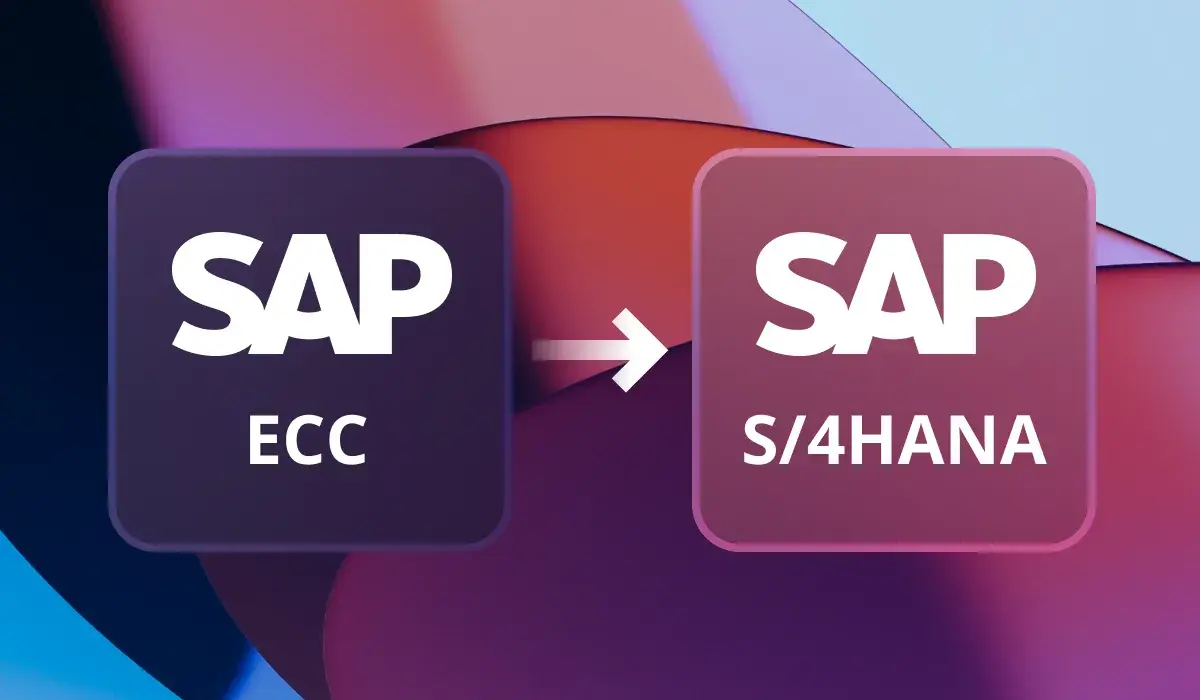
Moving from SAP ECC to SAP S/4HANA is one of the most significant transformation projects a U.S. business can undertake. It is not simply a technical upgrade. The migration can affect financial processes, tax reporting, supply chain operations, integrations, custom development, internal controls, and everyday ways of working.
For U.S. organizations, the complexity can be even greater when the SAP landscape supports multiple legal entities, states, shared-service centers, production sites, distribution facilities, and connections to banks, payroll platforms, tax providers, EDI networks, and other external systems.
SAP Business Suite 7 core applications remain under mainstream maintenance through December 31, 2027. This makes early preparation increasingly important for organizations planning their SAP S/4HANA migration strategy.
While SAP S/4HANA provides a modern digital foundation, migration projects can face challenges caused by years of accumulated complexity. Poor data quality, extensive custom code, fragmented integrations, unclear business requirements, U.S.-specific localization, and limited user adoption can increase project costs and delay expected benefits.
Successful migration depends on identifying these risks early and addressing them through structured planning, strong governance, and a clear transformation strategy.
This guide explores the 10 biggest SAP S/4HANA migration challenges for U.S. businesses, explains their potential business impact, and provides practical recommendations to help CIOs, SAP leaders, and transformation teams deliver a smoother and more predictable transition.
Executive Summary: What Causes Most SAP S/4HANA Migration Projects to Struggle?
Successful SAP S/4HANA migration starts with understanding where transformation risks typically emerge. The biggest challenges are rarely caused by the target platform itself. They usually come from years of accumulated complexity in data, custom developments, integrations, business processes, and organizational practices.
For U.S. businesses, that complexity can be amplified by multi-entity finance, state-level operations, tax requirements, banking integrations, payroll dependencies, and reporting or control requirements.
SAP S/4HANA Migration Risk Assessment Matrix
| Risk Area | Business Impact | Priority | Typical Root Cause |
| Data Quality and Governance | Migration errors, incorrect postings, reporting issues, and extended stabilization after go-live | 🔴 Critical | Large volumes of outdated, duplicated, or inconsistent legacy data |
| Legacy Custom Code | Conversion delays, compatibility issues, and increased maintenance complexity | 🔴 Critical | Years of uncontrolled ABAP modifications and Z-developments |
| System Integrations | Disrupted business processes and failures across connected systems | 🔴 Critical | Complex point-to-point interfaces and outdated middleware dependencies |
| Migration Strategy | Either unnecessary legacy complexity or excessive transformation effort and cost | 🔴 Critical | Choosing Greenfield, Brownfield, or Selective Data Transition without sufficient business analysis |
| Cutover and Downtime Planning | Business disruption, delayed operations, and missed delivery commitments | 🔴 Critical | Insufficient rehearsal cycles and weak migration planning |
| Business Process Redesign | Limited value realization if legacy inefficiencies are recreated in S/4HANA | 🟠 High | Resistance to adopting SAP standard processes and Best Practices |
| Testing Complexity | Production issues, financial inconsistencies, and operational disruption after launch | 🟠 High | Incomplete test scenarios and limited business involvement |
| Change Management | Slow adoption, productivity decline, and extended support requirements | 🟡 Medium | Focus on technical delivery without sufficient business preparation |
| User Adoption | Workarounds, inefficient processes, and resistance to redesigned workflows | 🟡 Medium | Limited training and insufficient engagement of key users |
| Project Governance and Planning | Budget overruns, scope expansion, and delayed delivery | 🟡 Medium | Planning before the full complexity of the landscape is understood |
Executive Risk Takeaway
SAP S/4HANA migration delays are rarely caused by software limitations. High-impact risks typically stem from poor source data quality, underestimated custom code remediation, complex integrations, insufficient migration rehearsals, and a lack of business readiness.
For U.S. businesses, late discovery of tax, payment, reporting, or legal-entity requirements can add another layer of risk. Organizations that address these areas early and establish clear governance can make migration more predictable and reduce disruption during testing and cutover.
Why SAP S/4HANA Migration Is More Than a Technical Upgrade
Many U.S. businesses initially approach SAP S/4HANA migration as a technology refresh: replace the existing ERP environment with a modern platform and preserve the processes that already work. In reality, the transformation can be much broader.
SAP S/4HANA changes how financial data, business processes, user interaction, and system extensions are managed. The migration can affect finance, tax, supply chain, procurement, manufacturing, shared services, and operational teams.
For U.S. organizations, this can also mean reviewing how the target environment supports U.S. GAAP reporting, internal controls where applicable, tax and withholding processes, payment formats, multi-entity reporting, and connections with local business applications. The target architecture should therefore be assessed before major migration decisions are finalized.
The key difference is that a traditional upgrade generally aims to preserve the existing environment, while an S/4HANA transformation creates an opportunity to simplify operations, reduce technical debt, standardize processes, and establish a stronger foundation for automation and analytics.
The 10 Biggest SAP S/4HANA Migration Challenges for U.S. Businesses
The 10 Biggest SAP S/4HANA Migration Challenges
SAP S/4HANA migration projects rarely struggle because of the technology alone. The biggest risks usually come from years of accumulated complexity: poor data quality, undocumented customizations, fragmented integrations, business processes built around legacy requirements, and organizational resistance to change.
For U.S. businesses, these challenges are often connected to additional requirements around finance, tax, payments, auditability, legal entities, and distributed operations.
Challenge 1: Poor Source Data Quality and Governance
Why It Happens
Years of ERP usage can create large volumes of duplicated master data, obsolete records, inconsistent material information, unresolved business partners, and unexplained financial balances.
In U.S. environments, data quality problems can also involve tax attributes, bank details, legal-entity assignments, intercompany relationships, and state-specific reporting data.
Business Impact
Poor data quality can lead to migration errors, incorrect reporting, failed transactions, tax inconsistencies, reconciliation problems, and extended stabilization after go-live.
How to Overcome It
Start data preparation before the technical migration begins. Profile legacy data, remove unnecessary records, establish ownership rules, and prepare master data for SAP Business Partner and other target structures.
For a deeper look at data profiling, cleansing, harmonization, reconciliation, and historical-data decisions, see our SAP S/4HANA data migration strategy guide.
For U.S. businesses, the data assessment should explicitly review financial balances, tax-related attributes, payment information, company codes, intercompany relationships, and historical records that may be required for audit or reporting.
Recommended Tools: SAP Migration Cockpit, SAP Data Services, SAP Master Data Governance.
Expert Recommendation: Treat data quality as a continuous governance activity, not simply as a migration task. The quality of the new S/4HANA environment depends directly on the quality of the data entering it.
Challenge 2: Legacy Custom Code Technical Debt
Why It Happens
Many SAP customers have accumulated thousands of custom ABAP developments, Z-programs, enhancements, and modifications created to support historical business requirements.
Some of this logic may support genuinely differentiated processes. Other developments may exist because previous SAP releases lacked functionality that is now available as standard.
Business Impact
Unsupported or unnecessary custom code can increase migration complexity, create compatibility issues, and make future upgrades more difficult.
For U.S. organizations, custom code may also contain logic related to tax reporting, finance controls, payment processing, interfaces, or local reporting requirements. Retiring or changing this logic without analyzing its business role can create downstream compliance or operational issues.
How to Overcome It
Perform custom code analysis early and classify developments into three categories:
- Retain — business-critical functionality that must continue.
- Adapt — code requiring changes for S/4HANA compatibility.
- Retire or Replace — obsolete functionality covered by standard S/4HANA capabilities.
Required extensions should follow Clean Core principles and, where appropriate, be implemented using SAP Business Technology Platform.
Recommended Tools: SAP Readiness Check, Custom Code Migration tools, SAP BTP.
Expert Recommendation: Do not automatically migrate every historical customization. Many legacy developments exist because of previous system limitations rather than true business differentiation.
Challenge 3: Complex and Unmapped System Integrations
Why It Happens
U.S. SAP landscapes often connect with MES, WMS, CRM, payroll, banks, tax platforms, EDI networks, e-commerce systems, and other external applications.
Over time, these integrations can become difficult to document and maintain. Some may rely on legacy middleware, direct database access, custom file exchanges, or system-specific logic.
Business Impact
Unmanaged integration changes can disrupt order processing, manufacturing visibility, supplier communication, payroll, payment processing, logistics, and financial data flows.
For U.S. operations, an integration failure can also affect tax reporting, banking transactions, payroll processing, or EDI communications with major customers and suppliers.
How to Overcome It
Create a complete integration inventory before migration. Document interfaces, dependencies, data ownership, error handling, business-critical flows, and downstream systems.
Where appropriate, replace fragile point-to-point connections with standardized APIs and integration patterns. LeverX SAP Integration Services cover SAP and non-SAP connectivity, API and middleware architecture, and integration across finance, supply chain, and other business systems.
Recommended Tools: SAP Integration Suite, SAP Integration Advisor, SAP Cloud Connector.
Expert Recommendation: Integration testing should begin early. Interface failures discovered during cutover are among the most expensive issues to resolve.
Challenge 4: Choosing the Wrong Migration Strategy
Why It Happens
Organizations can select Greenfield, Brownfield, or Selective Data Transition based on technical preference rather than business objectives.
For U.S. businesses, the choice can also be affected by legal-entity structure, historical data requirements, financial controls, the level of customization, and the need to preserve local processes.
Business Impact
The wrong approach can either carry unnecessary legacy complexity into S/4HANA or create excessive migration effort and cost.
Choosing a Migration Approach
|
Business Objective |
Best-Fit Approach |
|
Remove legacy complexity and redesign processes |
Greenfield / New Implementation |
|
Preserve established ERP processes while moving to S/4HANA |
Brownfield / System Conversion |
|
Consolidate landscapes while selectively transforming processes and data |
Selective Data Transition |
How to Overcome It
Evaluate the migration strategy based on:
- Level of customization.
- Data retention requirements.
- Process maturity.
- Business transformation goals.
- Number and complexity of existing SAP landscapes.
- U.S. legal-entity and reporting requirements.
- Required speed of transition.
- Integration complexity.
A detailed SAP S/4HANA assessment can help evaluate the current landscape, custom code, data quality, integrations, business processes, and potential migration approaches before the project scope is finalized.
Recommended Tools: SAP Readiness Check, SAP Signavio Process Insights.
Expert Recommendation: Migration strategy should be a business decision, not only an IT decision.
Challenge 5: Business Resistance to Process Standardization
Why It Happens
Business teams often want to reproduce familiar legacy processes instead of adopting SAP Best Practices.
For U.S. businesses, the situation can be more nuanced because local requirements may genuinely justify differences in tax, payments, reporting, or controls.
Business Impact
Excessive customization can increase implementation effort, testing requirements, and long-term system complexity. At the same time, forcing a local requirement into a global template without proper analysis can create compliance or operational issues.
How to Overcome It
Adopt a Fit-to-Standard approach. Start with SAP standard functionality, then identify which U.S. requirements genuinely require localization or controlled extensions.
A useful decision sequence is:
Global standard → U.S. requirement → supported localization/configuration → controlled extension where necessary.
For broader target-state and transformation planning, SAP S/4HANA consulting services from LeverX can help evaluate the trade-offs between process standardization, customization, and migration approach.
Recommended Tools: SAP Activate, SAP Signavio.
Expert Recommendation: Every significant deviation from standard processes should have a clear business justification and an owner accountable for the additional cost and maintenance implications.
Challenge 6: Repeated Migration Cycles and Cutover Preparation
Why It Happens
Migration is an iterative process requiring multiple data loads, transformation adjustments, reconciliation, and validation cycles.
For U.S. businesses, cutover planning can also be affected by monthly and quarterly financial closes, payroll schedules, tax reporting, payment cycles, customer shipments, and operational calendars.
Business Impact
Manual migration activities can slow the project, increase errors, and reduce the time available for final validation. Poorly timed cutovers can also create unnecessary pressure on finance, operations, and IT teams.
How to Overcome It
Automate migration pipelines where practical and perform multiple rehearsal cycles. LeverX's ECC to S/4HANA migration framework for the U.S. includes infrastructure assessment, automated data profiling and cleansing, and migration planning designed around the current SAP landscape.
|
Migration Cycle |
Purpose |
Example |
|
Mock Load 1 |
Identify data quality issues and mapping gaps |
Validate master-data mappings and identify rejected records |
|
Mock Load 2 |
Validate transformation rules and reconciliation |
Compare migrated balances against the source system |
|
Final Rehearsal |
Confirm timing, execution sequence, and cutover readiness |
Run the complete migration using production-like volumes |
For U.S. operations, the final rehearsal should also validate critical payment files, interfaces, financial close activities, and other time-sensitive business processes where applicable.
Recommended Tools: SAP Migration Cockpit, SAP Data Services.
Expert Recommendation: The final rehearsal should simulate real production conditions rather than simply validate that individual technical steps work.
Challenge 7: Testing Complexity and Limited Test Coverage
Why It Happens
Large SAP environments contain thousands of process variations across departments, legal entities, locations, and integrations.
U.S. businesses may also need to validate state-level tax scenarios, U.S. payment processing, withholding, intercompany transactions, payroll integrations, banking interfaces, and customer or supplier EDI.
Business Impact
Insufficient testing can lead to production defects, broken integrations, financial inconsistencies, tax reporting issues, and operational disruption.
How to Overcome It
Combine:
- System Integration Testing (SIT).
- User Acceptance Testing (UAT).
- Regression testing.
- Automated testing where appropriate.
- Performance testing.
- End-to-end business scenario validation.
- U.S. localization testing.
For U.S. finance, test scenarios can include payment files, withholding, 1099-related reporting, intercompany accounting, multi-entity reporting, and relevant approval and control workflows.
Recommended Tools: SAP Cloud ALM, Tricentis Test Automation for SAP.
Expert Recommendation: Testing should involve business users early, not only technical teams. The most important test cases should reflect real end-to-end business scenarios.
Challenge 8: Organizational Change and User Adoption
Why It Happens
Users may need to adapt to redesigned processes, new roles, SAP Fiori workflows, and new reporting practices.
For U.S. organizations with distributed teams, adoption may also vary by legal entity, facility, shared-service center, or function.
Business Impact
Poor adoption can create productivity losses, workarounds, increased support requirements, and inconsistent use of the new system.
How to Overcome It
Provide role-based training, involve key users early, establish change networks, and communicate how new processes affect day-to-day responsibilities.
Training should also account for differences between corporate, shared-service, finance, manufacturing, and field operations where relevant.
Recommended Tools: SAP Enable Now, SAP Companion.
Expert Recommendation: Train users around business scenarios and tasks, not simply SAP transaction codes or application screens.
Challenge 9: Cutover and Downtime Risks
Why It Happens
Final migration activities combine data extraction, transformation, loading, validation, reconciliation, and business readiness checks within a limited timeframe.
For U.S. businesses, cutover timing can be particularly sensitive around month-end and year-end close, payroll cycles, major customer shipment periods, or critical payment runs.
Business Impact
Extended downtime can affect shipments, production, procurement, customer service, payroll, payments, and financial operations.
How to Overcome It
Optimize migration performance through:
- Parallel processing where appropriate.
- Delta migration strategies where supported.
- Optimized data transformation.
- Multiple cutover rehearsals.
- Clearly defined rollback procedures.
- Business blackout windows aligned with critical U.S. operating calendars.
Recommended Tools: SAP Migration Cockpit and relevant SAP data transformation and migration capabilities.
Expert Recommendation: Define explicit Go/No-Go criteria before production migration begins. The decision should be based on technical, data, business, financial, and operational readiness, not simply whether the migration scripts completed successfully.
Challenge 10: Unrealistic Planning and Governance Failures
Why It Happens
Projects are sometimes planned before the organization fully understands the complexity of data, custom code, integrations, business processes, and organizational change.
In U.S. programs, governance can become more complex when corporate teams, local business units, shared services, tax stakeholders, finance, IT, and global template teams all have different priorities.
Business Impact
Poor planning can result in budget overruns, delayed timelines, scope expansion, and reduced implementation quality.
How to Overcome It
Complete detailed readiness assessments before finalizing scope, budget, and delivery plans. Establish executive governance with clearly defined decision rights, escalation paths, and measurable project KPIs.
LeverX's SAP S/4HANA assessment services cover areas such as system landscape, custom code, data quality, business processes, integrations, and migration approach evaluation.
The governance model should clearly distinguish between global design decisions and U.S.-specific requirements.
Recommended Tools: SAP Readiness Check, SAP Signavio, SAP Cloud ALM.
Expert Recommendation: Strong executive governance is essential. Migration risks should be actively monitored throughout the program, not only reviewed during major milestones.
SAP S/4HANA Migration Challenges: Examples and Business Impact
Understanding a risk is easier when it is connected to a practical migration scenario. The examples below illustrate how common challenges can translate into measurable project consequences for U.S. businesses.
| Migration Challenge | Practical Example | Potential Business Impact |
| Poor Data Quality | Duplicate suppliers and obsolete materials remain in the migration scope | More rejected records, reconciliation effort, and post-go-live cleanup |
| Legacy Custom Code | Critical Z-programs require significant adaptation for S/4HANA | Additional remediation, development, and testing effort |
| Complex Integrations | A legacy interface is not compatible with the target architecture | Disrupted order, logistics, or finance processes |
| Wrong Migration Strategy | An organization rebuilds heavily customized legacy processes without reassessing them | Higher implementation effort and continued technical debt |
| Process Standardization | Business units request every legacy workflow to be reproduced | More customization and higher long-term maintenance costs |
| Testing Complexity | An important end-to-end order-to-cash scenario is not tested | Production defects and operational disruption |
| Cutover Planning | Final data loads take longer than the approved downtime window | Delayed go-live or the need to execute rollback procedures |
| User Adoption | Employees are insufficiently prepared for redesigned Fiori workflows | Workarounds, lower productivity, and increased support demand |
| Governance | Scope changes are approved without assessing their downstream impact | Budget overruns and schedule delays |
The objective is not to eliminate every migration risk. It is to identify the risks that can materially affect business continuity and address them before they become critical-path issues.
Which SAP S/4HANA Migration Challenges Have the Greatest Business Impact?
Which SAP S/4HANA Migration Challenges Have the Greatest Business Impact?
To help project sponsors allocate resources effectively, the matrix below prioritizes migration risks by likelihood and potential commercial impact.
Migration Challenge Priority Matrix
| Migration Challenge Domain | Occurrence Likelihood | Commercial Impact | Overall Priority |
| Data Quality and Governance | Very High | Very High | ⭐⭐⭐⭐⭐ Immediate Focus |
| Legacy Custom Code Remediation | High | Very High | ⭐⭐⭐⭐⭐ Immediate Focus |
| Complex System Integrations | High | High | ⭐⭐⭐⭐ High Priority |
| Testing and Mock Validation | High | High | ⭐⭐⭐⭐ High Priority |
| Cutover and Downtime Planning | Medium | High | ⭐⭐⭐⭐ High Priority |
| Migration Strategy | Medium | High | ⭐⭐⭐⭐ High Priority |
| Change Management and Adoption | Medium | Medium | ⭐⭐⭐ Medium Priority |
| Project Governance and Planning | Medium | Medium | ⭐⭐⭐ Medium Priority |
Priority Focus Recommendation
Resource allocation should follow risk priority. Source data profiling, custom code assessment, integration discovery, and U.S. localization analysis should begin early, often well before the final technical migration plan is executed.
Early attention to these areas gives the project team more time to retire obsolete functionality, resolve data issues, validate U.S. requirements, and reduce pressure during the build, testing, and cutover phases.
How to Reduce SAP S/4HANA Migration Risk
Reducing SAP S/4HANA migration risk requires addressing the main sources of complexity before the technical migration begins. The most successful programs combine strong governance, data preparation, process standardization, testing discipline, and a clear approach to custom development.
For U.S. businesses, this framework should also explicitly include localization, multi-entity requirements, financial controls, tax, payments, and external integrations.
Actionable Risk Reduction Checklist
| Best Practice Pillar | Strategic Execution Mechanism | Example | Direct Business Value |
| Clean Data Early | Profile legacy data, remove unnecessary records, and establish master data ownership | Archive obsolete vendor records before migration | Reduces migration volume, reconciliation effort, and data-related defects |
| Assess Custom Code | Scan custom ABAP and classify developments for retention, adaptation, retirement, or replacement | Retire a Z-report now covered by standard S/4HANA analytics | Reduces remediation effort and future maintenance |
| Standardize Processes | Use SAP Best Practices and Fit-to-Standard as the baseline | Replace a heavily customized approval workflow with a standard process | Reduces development and testing requirements |
| Automate Migration Tasks | Create repeatable extraction, transformation, and loading processes | Reuse the same validated mapping during successive mock loads | Improves consistency and accelerates migration cycles |
| Test Multiple Cycles | Combine SIT, UAT, regression, and performance testing | Run an end-to-end order-to-cash rehearsal before final cutover | Identifies defects before production |
| Follow Clean Core | Keep the ERP core as standard as practical and use appropriate extension models | Move a required custom service to a suitable side-by-side extension | Simplifies future upgrades and reduces core modifications |
| Establish Governance | Implement executive steering controls, risk registers, and scope management | Require business approval for material customization requests | Improves budget and schedule predictability |
A successful SAP S/4HANA migration is not achieved by moving data from one system to another. It requires reducing complexity before migration, making deliberate decisions about what should be standardized, and creating an ERP foundation that can evolve with future business needs.
What Does a Successful SAP S/4HANA Migration Look Like?
A successful SAP S/4HANA migration should be measured by more than whether the new system goes live on schedule. The target environment should also deliver reliable data, stable integrations, standardized processes, and a controlled operating model from day one.
Before go-live, project leadership should define measurable success criteria across technical, operational, financial, and business dimensions.
SAP S/4HANA Migration Success Criteria
| Success Area | Example KPI / Target | Business Benefit |
| Data Quality | 100% reconciliation of critical opening balances and master data validation | Reduces financial discrepancies and post-go-live corrections |
| Custom Code | All critical developments classified as retain, adapt, replace, or retire | Reduces technical debt and future maintenance effort |
| Integration Stability | 100% of critical interfaces tested end-to-end | Protects order, supply chain, and financial processes |
| Test Coverage | Critical business scenarios covered in SIT and UAT | Reduces production defects and operational disruption |
| Cutover Performance | Final migration completed within the approved downtime window | Minimizes business interruption |
| User Adoption | Key user and role-based training completed before go-live | Reduces workarounds and support demand |
| Process Standardization | Approved deviations from SAP standard processes documented and justified | Limits unnecessary customization |
| Post-Go-Live Stability | Critical incidents monitored against agreed SLAs during hypercare | Enables faster stabilization of the new environment |
Use a Go-Live Readiness Scorecard
These metrics should be reviewed before the final Go/No-Go decision. Any unresolved issue affecting financial integrity, critical integrations, security, data completeness, U.S. localization, or core business processes should have a documented mitigation or contingency plan.
The objective is not to achieve a technically perfect migration. It is to ensure that the business can operate reliably in S/4HANA from day one while maintaining a clear path for further optimization.
SAP Tools That Help Solve Migration Challenges
SAP provides a suite of tools designed to diagnose risks, support data migration, analyze processes, manage integrations, and coordinate project delivery.
| SAP Tool Component | Primary Purpose in Migration | Project Lifecycle Phase |
| SAP Readiness Check | Analyzes ECC compatibility, custom code, sizing considerations, and simplification items | Discover and Assess |
| SAP Migration Cockpit | Supports structured migration of relevant master and transactional data using predefined migration objects and mapping capabilities | Realize and Deploy |
| SAP Signavio | Provides business process analysis and process intelligence to identify inefficiencies and opportunities for standardization | Discover and Explore |
| SAP Integration Suite | Supports APIs, integration flows, message mapping, and connectivity between SAP and external systems | Realize and Run |
| SAP Cloud ALM | Supports implementation monitoring, testing, task management, and project governance | Across Project Phases |
| SAP Business Technology Platform | Provides services for integrations, data, applications, and appropriate side-by-side extensions | Realize and Run |
These tools are most effective when used as part of a structured delivery methodology rather than as isolated technical utilities.
When Is the Right Time to Start Preparing for SAP S/4HANA Migration?
SAP's maintenance timeline makes early preparation important for organizations still running SAP Business Suite 7 core applications. Mainstream maintenance remains available through December 31, 2027, followed by optional extended maintenance through December 31, 2030. Customers should evaluate their own release, contract, support horizon, and desired transformation timeline rather than treating December 31, 2027 as a universal technical cutoff.
For U.S. businesses, planning also needs to account for financial calendars, audit cycles, tax reporting, payroll, banking dependencies, and the availability of internal business owners. Starting preparation early can reduce the risk of rushed data cleansing, compressed testing cycles, and limited availability of experienced migration resources.
Recommended Preparation Timeline
| Preparation Phase | Operational Horizon | Strategic Milestones and Technical Activities |
| Assessment and Discovery | 12–18 months before target go-live | Run readiness assessments, profile legacy data, analyze custom code, review integrations, and define the transformation strategy |
| Architecture and Cleansing | 6–12 months before target go-live | Begin data cleansing, define target architecture, establish integration patterns, and prepare the S/4HANA environment |
| Technical Execution | 0–6 months before target go-live | Execute iterative migration cycles, complete SIT/UAT, conduct cutover rehearsals, resolve critical defects, and finalize go-live readiness |
The exact timeline depends on system size, migration approach, data volume, customization, integrations, organizational structure, and business readiness.
SAP S/4HANA Migration Best Practices for U.S. Businesses
A successful SAP S/4HANA migration depends less on the technical data load itself and more on the decisions made before it. The following practices help U.S. organizations reduce complexity, improve delivery confidence, and establish a sustainable ERP landscape.
1. Start with an Automated Readiness Assessment
Run SAP Readiness Check and custom code analysis early to understand system complexity, migration requirements, and potential blockers. A data-driven assessment helps define realistic scope, timelines, and resource requirements. A dedicated SAP S/4HANA assessment with LeverX can provide a structured review of the current landscape, data, custom code, integrations, and business processes.
2. Cleanse and Govern Master Data Early
Remove obsolete records, duplicate objects, and unnecessary data before migration starts. Establish clear ownership for customers, suppliers, materials, and financial master data to improve migration quality.
For U.S. businesses, this should also include tax attributes, legal-entity assignments, bank information, and other country-specific data that affects reporting or transactions.
Our SAP S/4HANA data migration strategy guide covers data scope, quality, historical records, reconciliation, and legacy-system decommissioning in greater detail.
3. Reduce Unnecessary Customizations
Review existing ABAP developments and identify which custom solutions are still business-critical. Retire unused code and use appropriate extension models for required functionality to support a Clean Core approach.
4. Adopt Fit-to-Standard Workflows
Use SAP Best Practices as the default process model. Customization requests should be evaluated carefully and approved only when they provide meaningful business value.
U.S.-specific tax, payment, reporting, and control requirements should be assessed as genuine business requirements rather than automatically treated as reasons to customize the core.
5. Build a Clean Core Architecture
Avoid unnecessary modifications to the S/4HANA core. Keeping the system as standardized as practical can support smoother upgrades, faster adoption of new capabilities, and lower long-term maintenance effort.
6. Validate U.S. Finance and Localization Early
Do not postpone U.S. tax, payment, reporting, and legal-entity requirements until UAT. These requirements should be included in the target architecture, integration design, data model, and test strategy from the beginning.
7. Automate Migration Activities
Create repeatable extraction, transformation, and loading processes to reduce manual effort. Automated migration cycles allow teams to validate results faster and identify issues earlier.
8. Conduct Multiple Migration Rehearsals
Perform several mock migrations before production cutover. Rehearsals help optimize data loads, validate downtime expectations, and improve business readiness.
9. Engage Business Users Early
Involve key users from finance, tax, supply chain, manufacturing, and operations throughout the project. Early participation improves adoption and helps ensure that redesigned processes reflect real business requirements.
10. Define Measurable Success Metrics
Track project and operational KPIs such as migration performance, test coverage, defect resolution, reconciliation accuracy, cutover duration, localization readiness, and user adoption. Transparent metrics help leadership monitor progress and address risks quickly.
How LeverX Helps U.S. Businesses Reduce SAP S/4HANA Migration Risk
For U.S. businesses, migration risk management requires more than technical SAP expertise. The program needs to connect S/4HANA transformation with financial, compliance, data, integration, and operating requirements.
LeverX's U.S. SAP S/4HANA migration services cover end-to-end migration, readiness and planning, data migration, custom ABAP remediation, Clean Core enablement, deployment, and post-go-live support. The U.S. framework also addresses financial and compliance requirements, multi-state and multi-entity structures, and integration with U.S.-based business systems.
LeverX can support U.S. migration programs with:
- SAP ECC readiness and migration assessment.
- Greenfield, Brownfield, and Selective Data Transition strategy.
- Data profiling, cleansing, migration, and reconciliation.
- Custom ABAP analysis and remediation.
- Clean Core architecture and extension strategy.
- U.S. finance, tax, and compliance considerations.
- Integration modernization across SAP and non-SAP systems.
- Testing, cutover, and hypercare.
- Migration roadmap and governance.
Conclusion
Successful SAP S/4HANA migration projects are built on preparation, not technology alone.
While technical complexities around data models, legacy custom code, integrations, and migration performance present real challenges, they can be managed through disciplined planning, structured governance, and appropriate SAP tooling.
For U.S. businesses, the transformation also requires early attention to financial reporting, tax, payments, multi-entity operations, internal controls where applicable, and the external systems that support daily operations.
By investing early in source data cleansing, assessing custom developments, standardizing processes where appropriate, establishing a Clean Core strategy, validating U.S. requirements, and executing iterative migration rehearsals, organizations can reduce operational disruption and make the path to go-live more predictable.
The objective is not simply to replace an existing ERP system. A well-planned S/4HANA transformation should create a cleaner, more maintainable digital core that supports future business processes, analytics, automation, and innovation.
Minimize transformation risk, streamline data preparation, and build a predictable migration roadmap with LeverX.
Frequently Asked Questions
What are the biggest SAP S/4HANA migration challenges for U.S. businesses?
The biggest challenges typically include poor source data quality, legacy custom code, complex integrations, choosing the right migration approach, process standardization, testing, cutover planning, user adoption, and project governance. For U.S. businesses, tax, payment, financial reporting, multi-entity, and other localization requirements can add another layer of complexity.
Why do SAP S/4HANA migration projects fail or experience delays?
Projects often run into delays when data quality issues are discovered too late, custom code is underestimated, integrations are poorly documented, business requirements are unclear, or testing and migration rehearsals are insufficient. For U.S. organizations, late discovery of finance, tax, payment, or legal-entity requirements can further increase scope and testing effort.
How can U.S. businesses reduce SAP S/4HANA migration risks?
Start with a detailed assessment of the current SAP landscape, including data, custom code, integrations, business processes, and organizational requirements. Cleanse and govern data early, rationalize custom developments, validate U.S. localization requirements, adopt Fit-to-Standard where appropriate, and perform multiple migration and cutover rehearsals.
Which SAP S/4HANA migration approach is best for U.S. businesses?
There is no single approach that fits every organization. Greenfield is typically suited to businesses that want to redesign processes and reduce legacy complexity. Brownfield / System Conversion can fit organizations that want to preserve established SAP processes while moving to S/4HANA. Selective Data Transition can be appropriate when businesses need greater control over data, scope, and transformation.
The right choice depends on the existing SAP landscape, level of customization, data requirements, business transformation goals, integrations, and U.S. operating model.
How long does an SAP S/4HANA migration take?
Migration timelines vary significantly based on system size, customization, data volume, integrations, number of legal entities, and migration approach. Complex programs commonly require 12–18 months or longer for assessment, preparation, migration, testing, and go-live. The actual timeline should be established after the current landscape and scope are assessed.
What are the biggest SAP S/4HANA cutover risks?
One of the main risks is the final migration taking longer than the approved downtime window. Other risks include incomplete data reconciliation, failed integrations, unresolved defects, and inadequate business readiness.
For U.S. businesses, cutover planning may also need to account for financial close, payroll, payment processing, customer shipments, and other time-sensitive operations.
What U.S. requirements should be considered during SAP S/4HANA migration?
Depending on the business, migration planning and testing may need to address U.S. financial reporting, internal controls where applicable, sales and use tax, withholding, 1099-related reporting, payment formats, banking integrations, multi-entity reporting, intercompany processes, payroll, EDI, and state-specific operational requirements.
These requirements should be identified during assessment and design rather than added late in UAT.
When should U.S. businesses start preparing for SAP S/4HANA migration?
Preparation should begin well before the target go-live date, especially for complex SAP environments. A 12–18 month planning horizon is often appropriate for larger programs, while organizations with extensive custom code, poor data quality, complex integrations, or multiple legal entities may need more time.
SAP currently maintains mainstream support for SAP Business Suite 7 core applications through December 31, 2027, followed by optional extended maintenance through December 31, 2030. The appropriate transition timeline depends on the company's SAP release, contract, business priorities, and migration scope.
Disclaimer: SAP capabilities, maintenance policies, migration methodologies, and product features can change over time. This article is provided for general informational purposes and does not constitute legal, tax, accounting, or compliance advice. U.S. requirements should be validated against the specific business, industry, jurisdictions, SAP release, and contractual support arrangements involved.