Before planning an SAP S/4HANA transformation, U.S. enterprises should evaluate more than the migration path. The following considerations provide a high-level framework for assessing the business case, target environment, transformation scope, investment, and readiness.Discover expert insights on SAP ECC to S/4HANA migration strategies, including Greenfield, Brownfield, and Hybrid approaches.
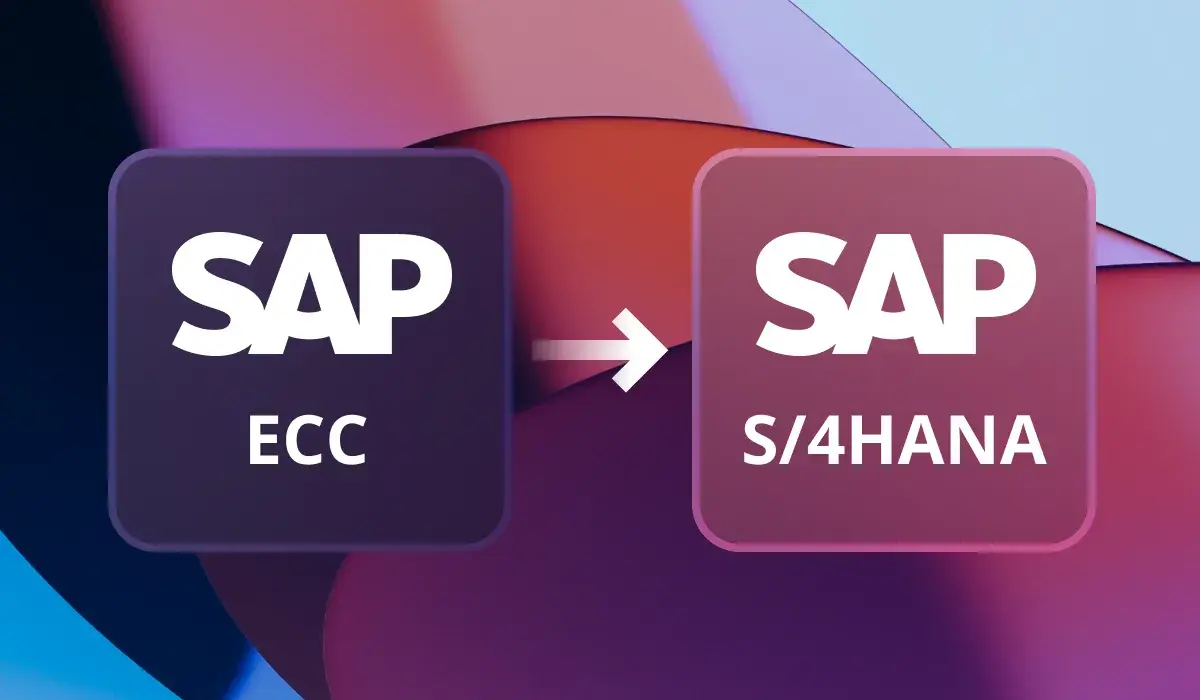
Moving from SAP ECC to SAP S/4HANA is more than a technical system upgrade. For many U.S. enterprises, it is an opportunity to rethink business processes, simplify the SAP landscape, modernize the user experience, and build a foundation for future growth.
The decision also goes beyond choosing a migration method. Organizations need to determine what their future SAP environment should look like, which deployment model fits their business, how much process change is appropriate, and where SAP S/4HANA can create measurable business value.
This guide explains the strategic considerations behind SAP S/4HANA transformation and helps U.S. enterprises evaluate their options before moving into detailed migration planning.
At a Glance
Before planning an SAP S/4HANA transformation, U.S. enterprises need to answer a few practical questions about the future SAP environment. The table below summarizes the main decisions that shape the business case, scope, investment, and timeline.
| Consideration | Key question |
| Business case | What business problems should S/4HANA solve, and what improvements should the company achieve? |
| Target platform | Which S/4HANA deployment model - Public Edition, Private Edition, or on-premise - best fits the business? |
| Transformation scope | Are we primarily moving to S/4HANA, redesigning business processes, or transforming the broader operating model? |
| Architecture | What should stay in the S/4HANA core, and where should integrations, extensions, data, and SAP BTP fit? |
| Compliance | How will the target environment support U.S. GAAP, SOX, tax, security, and other applicable requirements? |
| Investment | What will the transformation require in software, implementation, data, integrations, change management, and ongoing operations? |
| Timeline | How long will the transformation take based on the business scope, system complexity, deployment model, and organizational readiness? |
These decisions are connected. The target platform and transformation scope influence the architecture; the architecture and business requirements affect investment and timeline. Defining these factors early gives the organization a clearer basis for choosing the right transformation approach.
Why Are Enterprises Moving to SAP S/4HANA?
SAP S/4HANA is SAP's strategic ERP platform, while SAP ECC represents the previous generation of SAP ERP. For organizations still running ECC, the question is increasingly not just whether to move, but how long the existing environment can support the business without growing more difficult and expensive to change.
ECC can continue to support established processes, but over time, new business requirements may require more custom development, workarounds, and complex integrations. This can increase technical debt and reduce the flexibility to adopt new processes, technologies, or business models.
SAP's maintenance roadmap adds another reason to plan ahead. For eligible SAP ERP 6.0 environments, mainstream maintenance currently runs through December 31, 2027, with extended options available for some releases and scenarios. The exact maintenance position depends on the customer's SAP release and contract.
S/4HANA provides a more modern foundation for evolving business needs, with SAP HANA-based architecture, the Universal Journal (ACDOCA), and SAP Fiori's role-based user experience. But the value does not come from the platform alone. The strongest transformation cases use the move to simplify processes, reduce technical debt, and make the SAP environment easier to adapt as the business changes.
What Changes When a Business Moves From ECC to S/4HANA?
Moving from ECC to S/4HANA can affect more than the underlying ERP technology. For U.S. enterprises, the transformation can change how financial, supply chain, procurement, and other core processes are standardized across legal entities and business units while maintaining U.S. accounting, tax, compliance, and reporting requirements.
For many organizations, the transition is an opportunity to decide what should be kept, simplified, replaced, or retired rather than reproducing the existing ECC environment as-is.
Business processes
S/4HANA transformation can change how core processes are designed and executed across U.S. entities and shared-service organizations. Instead of carrying forward every ECC variation, companies can establish common processes while preserving differences required for specific businesses, tax jurisdictions, or regulatory requirements.
For example, a U.S. enterprise may standardize procure-to-pay across business units, reduce manual journal entries in finance, or establish a common order-to-cash process while accounting for different customer, tax, or distribution requirements.
The business impact should be measurable. Depending on the process, relevant metrics may include cycle time, cost per transaction, number of manual steps, exception rates, or hours spent on repetitive activities.
Data, analytics, and AI
S/4HANA provides a modern data foundation for operational reporting and analytics. Its architecture supports direct access to business data and embedded analytics, while SAP Business Technology Platform, SAP Datasphere, and SAP Analytics Cloud can support broader data and analytics requirements.
For U.S. enterprises, this can support more consistent reporting across legal entities and business units while providing the data foundation for financial, operational, and management reporting.
The transformation can also create opportunities for automation and AI, including document processing, forecasting, recommendations, and other use cases available through SAP's broader portfolio. The specific capabilities depend on the S/4HANA edition, architecture, SAP services, and licensing.
The important change is not simply moving data from ECC to S/4HANA. Organizations need to determine which historical data must be retained for operational, audit, and reporting purposes, what can be archived, who owns critical master data, and how data will support decision-making.
AI and automation should also be tied to measurable business outcomes. Depending on the use case, organizations can track hours saved, processing costs, error rates, processing time, forecast accuracy, or other relevant financial and operational metrics.
Finance, tax, and compliance
S/4HANA changes the underlying financial data model. The Universal Journal (ACDOCA) brings financial and controlling data into a common structure, supporting integrated financial reporting and analysis.
For U.S. enterprises, the target environment also needs to support requirements such as U.S. GAAP, SOX controls, federal and state tax requirements, auditability, and entity-level reporting. These requirements can influence the design of financial processes, master data, access controls, reporting, and integrations.
For organizations operating across multiple legal entities or states, the transformation may also provide an opportunity to standardize financial processes while maintaining the local requirements that cannot be eliminated.
User experience
SAP Fiori provides role-based experiences for many S/4HANA processes. Users can work with applications and workflows designed around specific roles and tasks rather than relying exclusively on traditional transaction-based screens.
For U.S. enterprises with large finance, procurement, sales, or shared-service organizations, redesigned workflows can reduce the number of steps required for activities such as purchase approvals, invoice processing, or financial review.
However, replacing the interface does not guarantee better user experience. Process design, role and authorization models, training, and change management also affect adoption and productivity.
Customizations and extensions
One of the most important changes is how organizations approach custom development.
ECC environments often contain custom reports, modifications, interfaces, and applications built to address requirements that accumulated over many years. During an S/4HANA transformation, each customization should be evaluated rather than automatically rebuilt.
The Clean Core approach favors standard S/4HANA functionality and appropriate extension mechanisms outside the core where additional functionality is needed. Organizations can therefore decide whether a requirement should be handled through standard functionality, configuration, an extension, integration, or automation.
For U.S. organizations, this assessment should include customizations related to tax, EDI, payroll or third-party systems, industry-specific processes, reporting, and compliance. Retaining a customization should be based on an ongoing business or regulatory requirement, not simply on the fact that it exists in ECC.
What this means for U.S. enterprises
These changes make an S/4HANA transformation more than a technical migration. U.S. enterprises need to decide which processes to standardize, which local requirements to preserve, which data to retain, which customizations to retire, and where automation or AI can deliver measurable value.
Those decisions should shape the target architecture and transformation scope before the organization selects a transition approach. A system conversion may be appropriate when existing processes and customizations remain fit for purpose; a selective data transition or new implementation may be more appropriate when the organization needs broader process and architecture changes.
ECC vs. SAP S/4HANA: What Is Different?
To put these differences in context, it is useful to compare SAP S/4HANA with its predecessor. The table below highlights key differences in architecture, business processes, user experience, scalability, and other areas that can influence a transformation decision.
|
Aspect |
SAP ECC |
SAP S/4HANA |
|
User experience |
Primarily SAP GUI, with other interfaces available |
SAP Fiori provides modern, role-based experiences |
|
Data model |
More complex, with many legacy structures |
Simplified architecture built for SAP HANA, including the Universal Journal (ACDOCA) |
|
Analytics |
Reporting may rely on separate systems and batch-oriented processes |
Embedded analytics and real-time access to operational data, with broader analytics through SAP's portfolio |
|
Deployment |
Traditionally on-premise |
Public Edition, Private Edition, or on-premise deployment |
|
Scalability |
Scaling can require significant infrastructure and architecture changes |
Designed to support scalable enterprise operations across entities, processes, and business growth |
|
Business processes |
Often shaped by years of customization and process variations |
Supports process standardization, redesign, and fit-to-standard approaches |
|
Extensibility |
Customizations are often embedded in the core |
Clean Core approach favors standard functionality and extensions outside the core where appropriate |
|
Enterprise operations |
Can support complex organizations but may require extensive legacy configuration |
Designed to support integrated processes across finance, supply chain, procurement, manufacturing, and other business functions |
|
U.S. requirements |
Supports U.S. requirements through established configurations and customizations |
Supports U.S. financial, tax, compliance, and reporting requirements, with configuration depending on the deployment and business scenario |
|
Commercial model |
Existing customers may continue under established licensing and maintenance arrangements |
Cloud editions introduce subscription-based commercial models; costs depend on edition, scope, users, services, and contract |
|
Innovation |
Mature platform with a more limited future innovation roadmap |
Current SAP ERP platform with access to evolving cloud, automation, data, and AI-related capabilities, depending on edition and services |
|
Overall |
Mature ERP platform that can continue to support established operations but may carry significant legacy complexity and customization |
Modern ERP platform designed to support process standardization, scalable operations, cloud adoption, and a more adaptable technology architecture |
The comparison does not mean that every ECC customer needs to redesign every business process. The right degree of transformation depends on business priorities, technical constraints, industry requirements, and the desired target operating model. These factors should guide the choice of deployment model and transition approach.
SAP S/4HANA Transformation Options
There is no single transformation model that fits every organization.
For an ECC customer, SAP's core transition approaches include System Conversion, New Implementation, and Selective Data Transition. These approaches determine how much of the existing system, configuration, data, and processes move into the target environment.
From a strategic perspective, however, the more important question comes first:
What should the future SAP environment look like?
System conversion
A system conversion preserves much of the existing SAP environment while moving it to S/4HANA.
This can make sense when the current business processes are fundamentally sound and the organization wants to minimize disruption. It can also be appropriate when retaining historical configuration and process continuity is important.
The trade-off is that legacy complexity may remain unless the organization deliberately addresses custom code, unused functionality, data, and process variations.
New implementation
A new implementation starts with a clean target environment and redesigns processes around the new platform.
This offers greater freedom to standardize and simplify, but it typically requires more business transformation and organizational change.
Selective data transition
Selective Data Transition takes a middle path by allowing an organization to retain selected data, structures, or processes while redesigning other parts of the environment.
This can be useful for complex enterprises that need more flexibility than a straightforward conversion provides but do not want to rebuild everything from scratch.
Bluefield is commonly used in the industry to describe certain selective transition approaches. It is not a separate fourth SAP transition path.
Choosing the Right SAP S/4HANA Deployment Model
The deployment model determines how much standardization, flexibility, and technical control the organization wants. The right choice depends on the business model and future operating needs, not simply on IT preference.
SAP S/4HANA Cloud Public Edition: Standardization
Public Edition is a good fit for organizations that want to standardize business processes and minimize the effort of managing infrastructure and deep customizations. It works best when the business is willing to adopt SAP standard processes rather than reproduce complex ECC-specific functionality.
Best fit: organizations prioritizing standardization, a standardized cloud operating model, and a simpler SAP landscape.
SAP S/4HANA Cloud Private Edition: Flexibility
Private Edition is a good fit for organizations that need more flexibility to support complex processes and existing SAP investments while moving to a cloud-based environment. For relevant ECC customers, it can support transition scenarios such as system conversion and selective data transition.
Best fit: organizations that need a balance between cloud adoption and flexibility for complex business requirements.
SAP S/4HANA On-Premise: Control
On-premise is a good fit for organizations that need direct control over the SAP environment, infrastructure, and technical architecture. It can remain relevant when specific regulatory, operational, integration, or infrastructure requirements make that level of control important.
Best fit: organizations where control over infrastructure and the operating environment is a strategic requirement.
The choice is ultimately a business decision. Public Edition favors standardization, Private Edition balances flexibility with cloud adoption, and on-premise provides the greatest control. The organization should evaluate these trade-offs alongside its processes, compliance requirements, integrations, internal capabilities, and long-term SAP strategy.
Building the Business Case for SAP S/4HANA
A business case for SAP S/4HANA should not be built by the IT team alone. It should connect the cost of transformation with the business problems the organization needs to solve and the value it expects to create.
Start by bringing together the people who understand both the current SAP environment and the business: executive leadership, SAP and IT, finance, operations, supply chain, data and integration owners, security and compliance, and key business process owners. Together, they can identify where the current environment limits the business and what needs to change.
The assessment should answer practical questions:
- Which business processes are too costly, slow, or difficult to change?
- Where do customizations, workarounds, or legacy integrations create technical debt?
- What business changes are expected - such as new markets, acquisitions, new entities, or process standardization?
- What would the organization need from the future SAP environment?
- What investment, resources, and timeline would the transformation require?
Organizations can conduct this assessment internally or bring in an experienced SAP partner to perform a readiness assessment or SAP landscape audit. An external assessment can provide an independent view of the current environment, identify major risks and dependencies, and help estimate the scope and investment before a transformation program is approved.
The result should be a business case that connects business priorities, current-state limitations, target outcomes, transformation scope, investment, and expected timeline. This gives leadership a basis for deciding whether to move forward and which transformation approach makes sense.
SAP S/4HANA and the Future Enterprise Architecture
For many organizations, the architecture decision is ultimately about how much flexibility and cost efficiency the SAP environment can provide over the next several years.
Continuing to build on ECC can become increasingly difficult as the business grows or needs to adopt new capabilities. Customizations, legacy integrations, and workarounds can increase maintenance effort and total cost of ownership. At the same time, organizations may want to introduce new analytics, automation, AI-related capabilities, or SAP solutions as their business evolves.
Moving to S/4HANA gives the organization an opportunity to reconsider what belongs in the ERP core and what should be handled through extensions, integrations, or specialized applications. The goal is not to add more technology, but to create an architecture that is easier to maintain, adapt, and scale.
This is where Clean Core becomes important. Keeping the S/4HANA core as standard as practical can reduce unnecessary customization and make future upgrades, integrations, and new capabilities easier to manage.
For organizations planning significant growth, expansion into new markets, or broader digital initiatives, this architectural flexibility can be an important part of the S/4HANA business case - not simply a technical consideration.
What Should U.S. Enterprises Consider?
U.S. enterprises need to consider both local compliance requirements and the ability to respond to global business changes.
The target environment may need to support U.S. GAAP, SOX controls, federal, state, and local tax requirements, as well as EDI, multiple legal entities, shared services, security, and data governance. At the same time, a U.S.-based company operating globally may need to adapt its SAP environment to acquisitions, new markets, changing supply chains, or new global processes.
This can be harder to manage when the organization remains on ECC. Legacy customizations, integrations, and dependencies can make changes more complex and may increase reliance on specialized resources or external SAP partners. That can affect how quickly changes can be implemented and how much they cost, particularly when several markets or business units are involved.
For this reason, U.S. enterprises should treat S/4HANA transformation as more than a compliance or technology project. The target environment should give the business enough flexibility to meet U.S. requirements while adapting to global changes without repeatedly rebuilding the legacy SAP landscape.
How Long Does SAP S/4HANA Transformation Take?
There is no standard timeline for an SAP S/4HANA transformation. As a broad planning reference, many enterprise programs take approximately 12 to 21 months, while highly complex transformations can take longer.
| Transformation scope | Indicative timeline | Typical characteristics |
| Focused transformation | 12–15 months | Limited entities, relatively stable processes, and lower integration and data complexity |
| Mid-sized transformation | 12–18 months | Multiple entities, moderate process redesign, and broader integration and data requirements |
| Large / global transformation | 15–21+ months | Multiple countries, significant process redesign, complex integrations, large data volumes, and phased rollout |
These figures are general planning ranges, not timelines provided or guaranteed by LeverX. A project-specific assessment is more useful than applying an industry average to every organization.
The size of the company matters, but the complexity of the existing SAP environment matters just as much. A large organization with standardized processes and limited customization may move faster than a smaller company with extensive custom code, legacy integrations, fragmented data, and highly specialized processes.
Organizations that need to shorten the timeline can reduce complexity before and during the transformation. This may include limiting unnecessary process redesign, prioritizing critical functionality, reducing customizations, using standardized SAP processes, automating migration and testing activities, and taking a phased approach where appropriate.
However, accelerating the project should not mean skipping critical assessment, testing, data validation, or cutover preparation. The objective is to remove unnecessary complexity - not to transfer project risk into go-live.
How Much Does SAP S/4HANA Transformation Cost?
There is no standard price for an SAP S/4HANA transformation. Total investment can vary significantly depending on how complex the current SAP environment is, how much needs to change, and how much of the legacy environment the organization wants to carry forward.
For general U.S. market planning purposes, broad implementation ranges are often estimated at:
| Program scope | Indicative investment |
| Smaller / focused transformation | $500K–$1.5M |
| Mid-sized enterprise | $1.5M–$4M |
| Large / complex enterprise | $4M–$10M+ |
| Global transformation | $10M+ |
These are general market estimates, not LeverX pricing, quotes, or delivery benchmarks. A reliable project budget requires an assessment of the current SAP landscape, target architecture, transformation scope, data, customizations, integrations, deployment model, and organizational requirements.
A large enterprise with standardized processes, limited customization, and clean data may require less investment than a smaller organization with extensive custom code, complex integrations, poor data quality, and highly specialized processes. Transformation scope also matters: a system conversion focused on continuity can have a very different cost profile from a broader transformation that redesigns processes, consolidates systems, or rolls out a global template.
The target deployment model can also affect the investment. A more standardized cloud approach may reduce the need to reproduce complex legacy functionality, while highly customized environments can require more implementation, remediation, integration, and testing effort. Data migration, custom-code remediation, integrations, change management, and post-go-live support can all materially affect the final cost.
Organizations can also reduce unnecessary investment by retiring obsolete customizations, adopting standard SAP processes where practical, simplifying integrations, prioritizing the most important transformation scope, and using migration and testing automation where appropriate.
Common Risks in S/4HANA Transformation
The largest risks in an SAP S/4HANA transformation are often organizational and architectural rather than purely technical. They can affect the business case, timeline, compliance, and ability to realize the expected value from the new environment.
Treating transformation as a technical upgrade
Moving existing processes and customizations to S/4HANA without reconsidering how the business operates can reproduce unnecessary legacy complexity. A transformation should define which processes need to be standardized, redesigned, or retired rather than simply recreating the existing environment on a new platform.
Underestimating data quality
Poor-quality master and transactional data can create problems long after the technical transition is complete. Duplicate records, inconsistent master data, outdated information, and unclear data ownership can affect financial reporting, operational processes, analytics, and downstream systems.
Over-customizing the target environment
Excessive custom development can undermine Clean Core objectives and increase future maintenance effort. It can also make it harder to adopt cloud capabilities and new SAP functionality. Organizations should distinguish between requirements that genuinely need extensions and processes that can be supported through standard S/4HANA capabilities.
Ignoring integration dependencies
Large enterprises often connect ERP with tax systems, banks, EDI networks, CRM platforms, supply chain applications, data platforms, and other business systems. Changes to S/4HANA can affect these dependencies even when core business processes remain largely unchanged. An incomplete integration strategy can therefore create operational disruptions after go-live.
Underinvesting in change management
S/4HANA transformation can change processes, roles, approvals, reporting, and the day-to-day user experience. Without sufficient training, communication, and stakeholder engagement, adoption may lag even when the technology performs as expected.
Overlooking U.S. compliance requirements
U.S. enterprises may need to support U.S. GAAP, SOX controls, federal and state tax requirements, auditability, and industry-specific regulations. These requirements can influence process design, data structures, reporting, access controls, and integrations. Addressing them late in the program can lead to rework and delays.
Underestimating multi-entity and multi-state complexity
Organizations operating across multiple U.S. states, legal entities, or global markets may need to balance standardized processes with local requirements. Tax jurisdictions, legal-entity structures, shared services, and global templates can significantly affect the target operating model and rollout strategy.
Treating security and access controls as an afterthought
A transformation can change user roles, identity management, integrations, and privileged access. For U.S. organizations subject to internal controls or regulatory requirements, these changes can affect segregation of duties and audit readiness. Security and access design should therefore be incorporated into the transformation from the beginning.
These risks are easier to manage when the target operating model, architecture, compliance requirements, and transformation scope are defined before detailed implementation begins.
A Practical Framework for Evaluating S/4HANA Transformation
Before choosing a transition approach or deployment model, organizations should first define what they want the transformation to achieve. These five questions can help structure that decision:
- What business problems are we trying to solve?
Define measurable objectives for the transformation rather than treating the end of ECC maintenance as the only reason to move. - What should the future operating model look like?
Determine which processes should be standardized, redesigned, localized, automated, or retired across the organization. - What should the target architecture look like?
Define the role of S/4HANA, SAP BTP, analytics, integrations, extensions, and other SAP or third-party solutions in the future landscape. - How much legacy should we carry forward?
Assess custom code, data, configurations, interfaces, and process variations based on their future business value rather than assuming they should all be retained. - Which transformation approach and deployment model best support the target state?
Once the business and technology direction is clear, evaluate whether system conversion, selective transition, or new implementation - and which S/4HANA deployment model - best fits the organization's requirements.
This sequence helps avoid a common mistake: choosing a migration method first and then trying to make the business fit it. Starting with the desired business outcome and target state creates a stronger foundation for the transformation roadmap and investment decision.
What Does a Successful S/4HANA Transformation Look Like?
A successful S/4HANA transformation should have measurable success criteria defined before implementation begins. Replacing ECC with S/4HANA is not, by itself, a business outcome.
Organizations should define what they expect to improve and how they will measure it. Depending on the transformation scope, relevant metrics may include:
- Process time: Reduce the time required to close the books, process orders, or complete other critical workflows.
- Operating cost: Reduce the cost of maintaining legacy systems, manual work, or duplicated processes.
- Automation: Increase the share of transactions completed without manual intervention.
- Data quality: Reduce duplicate, incomplete, or inconsistent master data.
- Reporting: Shorten the time required to produce financial and operational reports.
- System performance: Reduce processing times and improve availability for critical business processes.
- User productivity: Reduce the time employees spend on repetitive tasks or navigating complex processes.
These metrics should have a baseline from the current ECC environment and a target value for the S/4HANA environment. For example, a transformation might target a 20% reduction in order-processing time, a 15% reduction in ERP operating costs, or a 30% reduction in manual finance activities.
The transformation approach should then be evaluated against these objectives. A system conversion may be sufficient when the existing processes already support the required business outcomes. A new implementation or selective data transition may be justified when achieving the targets requires significant process redesign or a different operating model.
The measure of success is not simply going live on S/4HANA. It is achieving the business improvements defined at the start of the program.
Why Choose LeverX for SAP S/4HANA Transformation?
LeverX combines 20+ years of SAP experience, U.S. presence, global delivery capabilities, and expertise across SAP transformation, data, integrations, and business processes.
| LeverX advantage | What it means for your transformation |
| 20+ years of SAP experience | Experience supporting complex SAP modernization and S/4HANA transformation programs across industries |
| U.S. presence and global delivery | Local engagement for U.S. enterprises with global resources for complex, multi-entity programs |
| 1,500+ SAP projects delivered | Experience across different industries, business processes, and SAP landscapes |
| End-to-end transformation support | Support from assessment and approach selection through implementation, go-live, and optimization |
| Data, integration, and Clean Core expertise | Helps address data quality, integrations, legacy customizations, and target-state architecture |
| SAP Gold Partner | SAP-focused expertise for S/4HANA transformation programs |
LeverX can assess your current SAP landscape, help define measurable transformation goals, and select the right transition approach and deployment model. Our teams can then support the transformation across processes, data, integrations, implementation, testing, and post-go-live optimization.

Use Case: SAP S/4HANA Transformation for a Global Machinery Manufacturer
A global manufacturer of agricultural, construction, and industrial equipment partnered with LeverX to standardize warehouse operations as part of its SAP S/4HANA transformation. The company operates across North America, the U.K., and Latin America, including a large network of U.S. production and warehouse facilities.

LeverX developed and deployed a global SAP EWM template integrated with SAP S/4HANA. The template established a common warehouse operating model while allowing for local processes and compliance requirements.
The solution was rolled out across 13 facilities in the U.S., U.K., and Mexico, connecting warehouse operations with production, inventory, quality, returns, suppliers, and logistics.
Key outcomes:
- Standardized warehouse operations across three regions
- Improved inventory visibility across production and aftermarket operations
- Improved production supply and staging processes
- Reused a common EWM template across multiple facilities
- Supported local requirements without creating separate warehouse solutions
- Established a scalable architecture for future facilities
Read the full case study to see how LeverX supported the company's S/4HANA transformation through a standardized, scalable warehouse architecture.
Conclusion
SAP S/4HANA transformation should start with the business outcome, not the migration method. Before deciding how to move from ECC, organizations need to define what they want to improve, how success will be measured, and what the target SAP environment should look like.
That decision should determine the transformation scope, deployment model, and transition approach. For some organizations, a system conversion may be the right fit. Others may benefit from selective data transition or a new implementation to address process, data, and architecture challenges that cannot be solved through a technical conversion alone.
With the direction established, the next step is to turn the strategy into an implementation plan covering readiness, data, custom code, integrations, testing, cutover, and go-live.
FAQ
Is SAP S/4HANA the replacement for SAP ECC?
Yes. SAP S/4HANA is SAP's current ERP platform and the strategic successor to SAP ECC.
Does every ECC customer need to move to S/4HANA?
Organizations should evaluate their SAP roadmap, maintenance position, business requirements, and technology strategy. For many ECC customers, S/4HANA is the long-term ERP direction, but the timing and transformation scope can vary.
Is SAP S/4HANA only available in the cloud?
No. SAP S/4HANA is available in Public Edition, Private Edition, and on-premise deployment models, with different capabilities and implementation approaches.
Should an organization choose Greenfield or Brownfield?
The decision depends on the desired target state. Organizations that want to preserve much of their existing SAP environment may favor system conversion, while those seeking substantial process redesign may benefit from a new implementation. Selective Data Transition can provide a middle path.
What is Clean Core in SAP S/4HANA?
Clean Core is an approach to keeping the ERP core as close to standard as practical while using appropriate extension mechanisms for additional requirements. It is intended to improve maintainability and make future changes easier.
How long does an SAP S/4HANA transformation take?
Large enterprise programs can take roughly 12 to 21 months as a broad planning reference, but actual timelines vary significantly based on scope, complexity, data, integrations, deployment model, and organizational readiness.
How much does SAP S/4HANA transformation cost?
Costs vary widely. Enterprise transformation programs can range from hundreds of thousands of dollars to several million dollars or more. A detailed estimate requires an assessment of the organization's scope, landscape, data, integrations, and target architecture.
What is the difference between SAP S/4HANA transformation and migration?
Migration focuses primarily on moving an existing SAP environment to the target platform. Transformation is broader: it can include process redesign, architecture changes, data strategy, organizational change, and adoption of new SAP capabilities.
Where should an organization start?
Start by defining the business objectives and target operating model. Then assess the current SAP landscape, data, customizations, integrations, and architecture to determine the appropriate transformation scope and transition approach.
Disclaimer: This article is provided for general informational purposes only and does not constitute professional, legal, financial, tax, or other advice. SAP S/4HANA transformation requirements, costs, timelines, and approaches vary by organization. Organizations should conduct their own assessment and consult qualified professionals before making transformation decisions.