Find out how SAP EAM redefines asset performance, value, and reliability
As Global Market Insights states, the global market of industrial asset management is expected to increase at a CAGR of 15.5% between 2024 and 2032. It’s time to act: while infrastructure and asset investments are growing, companies adopt digital tools to optimize operational efficiency and control maintenance expenses.
However, many organizations still risk relying on outmoded systems, disintegrated data, and asset planning processes that aren’t backed by quantifiable data and analysis. The numbers are staggering: according to research cited by Forbes, the average downtime cost has reached US$9,000 per minute for large organizations.
SAP Enterprise Asset Management (SAP EAM) is intended to help organizations boost the efficiency, safety, and reliability of their assets by creating a comprehensive system for strategic management of asset value and performance. The solution consolidates processes and data that are related to asset management, covering the entire asset lifecycle and providing transparency for analytics and pivotal decision-making.
Meet SAP EAM That Extends Classic Asset Management
SAP Enterprise Asset Management (SAP EAM) is a comprehensive platform for the management of physical assets, such as machinery, equipment, transportation means, and networks, that completely covers the processes during the entire asset lifespan.
Typically, classic enterprise asset management primarily focuses on supporting asset reliability, availability, and compliance, encompassing spare parts management, order processing, and, of course, preventive maintenance. Historically, SAP EAM supports these fundamentals, expanding them with IoT and sensor connectivity, instant updates and insights, as well as with intelligent analytics — all built into daily operations.
Starting from SAP Plant Maintenance (SAP PM), a dedicated module for the support of core maintenance operations at industrial organizations, the solution evolved into a modern platform with a number of functionalities and components that can be naturally integrated with:
- SCADA systems and IoT platforms;
- Field-service and mobile apps;
- ERP financial and procurement modules;
- Core operational and logistics processes.
In the landscape of SAP S/4HANA, which is an advanced SAP ERP platform, SAP EAM plays a fundamental role in operational asset management. These fundamental capabilities are enhanced by cloud-based applications for advanced analytics, insights, and asset collaboration; together they form SAP Intelligent Asset Management (SAP IAM). The platform also integrates with other SAP offerings and technologies, such as SAP Analytics Cloud (SAC), SAP Business Network, and industry cloud solutions.
Core SAP EAM Building Blocks
Want to better understand the platform? Let’s consider its key elements that are designed to improve the reliability and efficiency of your enterprise assets.
- SAP S/4HANA Asset Management: This is a core component responsible for handling work orders, maintenance planning, execution, and tracking processes, without which you cannot imagine asset management.
- SAP Business Network Asset Collaboration (SAP BNAC): A cloud hub that is used for sharing physical asset data, best practices in enterprise asset management, and related documentation across stakeholders. It also supports the creation of a digital thread to cover maintenance, sourcing of spare parts, and collaboration with external service partners.
- SAP Linear Asset Management (SAP LAM): A set of functionalities that is applied for the management of assets that are geographically dispersed, such as roads, pipelines, and railways.
- SAP Asset Performance Management (SAP APM): A cloud solution that helps you use real-time data, ML, and advanced analytics to establish maintenance strategies that will meet your expectations.
- SAP Service and Asset Manager: A mobile app for maintenance personnel and technicians that helps them complete tasks in the field, even when they are offline.

What is SAP EAM Capable of
As a rule, organizations seek to establish complete control over their assets, which is understandable. SAP EAM capabilities were developed based on this requirement. Here is what you can expect from the platform.
Asset lifecycle management
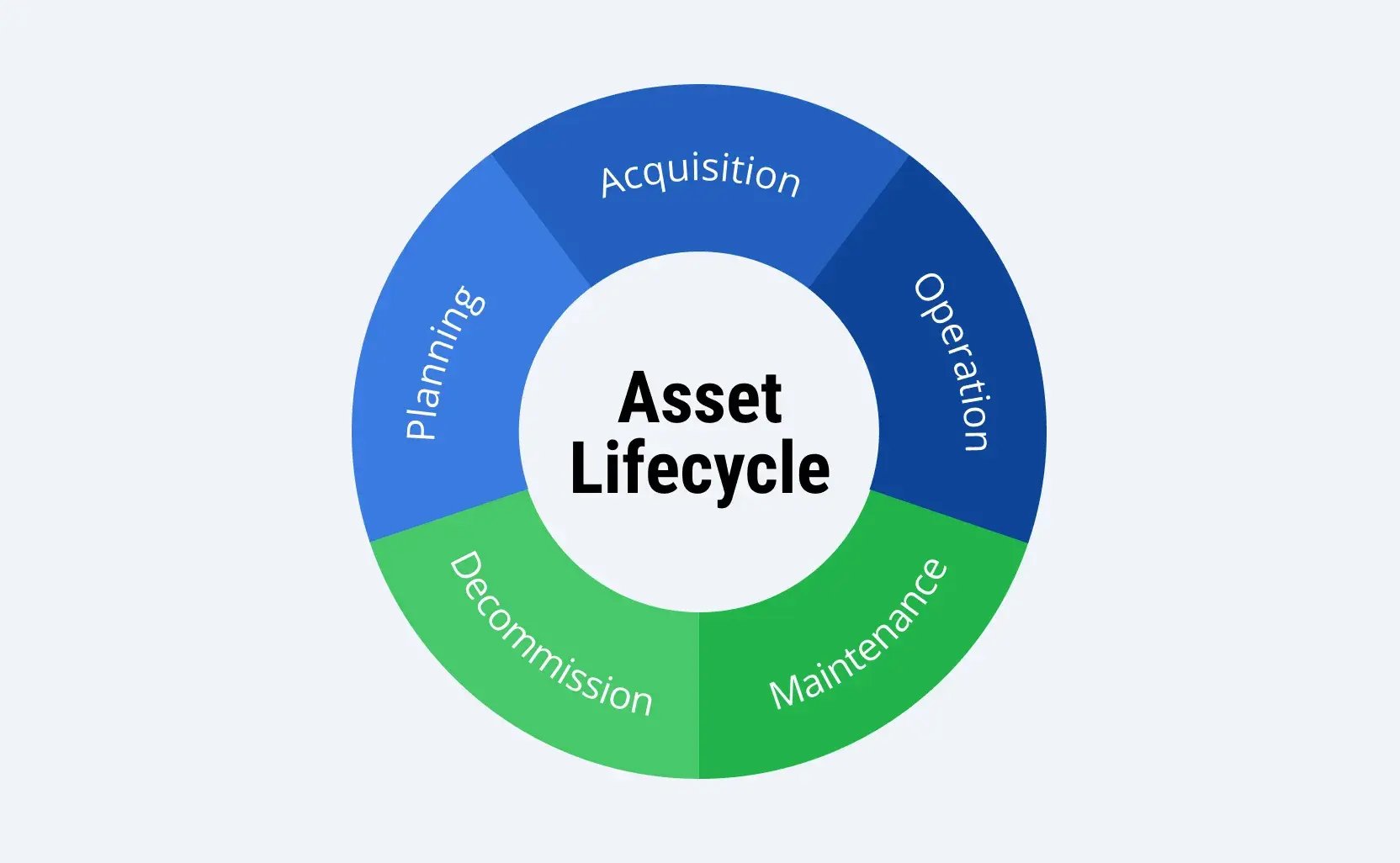
The platform provides full-cycle control over enterprise assets, including strategic planning, asset acquisition, installation, work maintenance, and final decommissioning. SAP EAM supports asset master data consistency, ensures the observance of asset hierarchies, and helps track costs, risks, and performance at each step.
Maintenance planning and scheduling
The solution allows you to create maintenance algorithms, assign technicians, and distribute materials. SAP EAM can be used for all types of maintenance, preventive, corrective, predictive, condition-based, and reliability-centered maintenance. This way, you can improve resource utilization.
Comprehensive work order management
The processes for request creation, execution, approval, closure, and reporting are digitized so that technicians can effectively work within a single system, even remotely, with the help of mobile apps.
Analytics integration
You can connect analytics tools with SAP EAM to analyze asset performance and KPI implementation on specialized dashboards.
What is Under the Hood
SAP EAM is backed by a technology stack that ensures collaboration, integration, and complex decision-making rather than the work of isolated features.
IoT-connectivity
You can incorporate controllers, machines, or field devices into the platform’s processes to get actual operational data that will help monitor asset performance and detect anomalies in real-time.
Intelligent processing
The system has an analytical layer with AI and ML capabilities to boost asset planning, reporting, and execution processes.
Mobile capabilities
Mobility is provided as a part of the user experience layer, with the same level of security and process availability for work on phone, desktop, or tablet.
Large-scale data handling
The system processes large volumes of operational and asset data, so that you can have access to history and multi-year analysis. Also, the processes stay reliable even when working with complex assets.
Cloud and hybrid deployment
Since SAP EAM is built on SAP S/4HANA and SAP BTP, you can run it in the cloud, on your own servers, or both, while still keeping all the modules connected and cohesive.
Improvements You Can Achieve With SAP EAM
If we list the most valuable benefits of implementing the solution, they will be:
- Improved operational availability through advanced planning and predictive maintenance.
- Maintenance cost efficiency with the help of optimized schedules, distribution of materials, and labor.
- Decreased CAPEX due to prolonged asset lifespan.
- Better process transparency across operations, supply chain, and maintenance.
- Enhanced regulatory compliance and asset safety.
- Optimized budget planning backed by prompt analytics.
There are several KPIs you can use to evaluate the success of SAP EAM adoption.
|
Indicator |
Interpretation |
|
MTTR (Mean Time To Repair) |
Lower average time required to repair an asset after a failure means better efficiency and shorter downtime. |
|
MTBF (Mean Time Between Failures) |
The higher average time an asset works before a failure means increased operational stability. |
|
Equipment Downtime |
Reducing total time when physical assets don’t operate means an organization is on the way to better productivity and operational continuity. |
|
PMP (Planned Maintenance Percentage) |
A higher share of planned maintenance work means implementation of the proactive maintenance approach. The target figures vary between 80% and 90%, also depending on asset criticality and industry type. |
|
Maintenance Cost as % of RAV (Replacement Asset Value) |
The comparison of maintenance spending towards asset replacement cost indicates the efficiency of maintenance investments. The accepted industry standards usually vary from 1.5% to 6% yearly. |
Working Across Different Asset-Sensitive Industries
The solution supports various economic sectors, providing the needed level of visibility and unified processes that are also tailored to specific industry needs.
Energy and utilities
SAP EAM ensures remote condition assessment and maintenance planning for such assets as power plants, substations, pipelines, and transmission lines. Organizations can also establish a smooth coordination of service contractors and field crews.
Manufacturing
The main focus is to establish stable work in production environments, which can be achieved through interactive monitoring of operating equipment, prompt detection of anomalies, and synchronizing maintenance and production processes.
Oil and gas
SAP EAM helps achieve safer operations through remote management, support, and maintenance coordination of remote assets or facilities in dangerous environments.
Transportation and logistics
The platform’s work is focused on scheduling and meeting commitments with the help of fleet condition tracking, monitoring the state of critical components, and workshop management.
Mining and metals
SAP EAM can be applied to assets used in harsh environments. For example, you can monitor the performance of heavy machinery, plan repairs and component replacements, and shorten the cases of unexpected downtime.

Implementation Methodology and Stages
LeverX applies a classic methodology to ensure the success of SAP EAM projects. It’s based on the SAP Activate framework, consisting of several phases:
- Discovery: Understanding the existing digital infrastructure, including MES, ERP, and SCADA environments.
- Prepare: Forming the project team, establishing governance, and conducting early change management activities.
- Explore: Validating business requirements and defining data flows to ensure smooth processes.
- Realize: Configuring processes, developing enhancements, building and testing integration interfaces, and preparing a pilot rollout.
- Deploy: Migrating master data, going live, and conducting change management activities.
- Run: Establishing performance monitoring, solution stabilization support, and continuous improvement with the use of relevant KPIs.
LeverX Can Help You Transform Asset Management Into the Catalyst for Operational Excellence
As an SAP Gold Partner, LeverX brings together years of experience working with SAP technologies across various industries, including projects for companies on the Fortune 500 list.
We deliver SAP EAM services to meet your business requirements:
- Audit and consulting
- Platform’s implementation
- Integration of analytics, IoT, and mobile solutions
- Ongoing support and upgrades
- Knowledge-sharing and training
LeverX can also become your partner in driving asset performance, profitability, and security.
Introduce Smart Asset Strategies Into Your Organization With SAP EAM
Asset complexity is growing, as are investments in asset maintenance. The costs of failures and downtimes are getting too high. Businesses have to evolve and adopt new, preventive management strategies, which are most effective when supported by the right software.
SAP EAM has gone from an asset recording system to an intelligent platform that provides the foundation to get the most out of your assets, maintaining stable work and sustainable evolution alongside modern enterprises and markets.