Explore how enterprises use selective SAP data migration to consolidate complex landscapes, reduce risk, and modernize global operations.
Large SAP transformation programs rarely begin from a clean and centralized ERP environment. Most enterprises operate landscapes shaped by years of regional expansion, acquisitions, local process variations, and independent IT decisions.
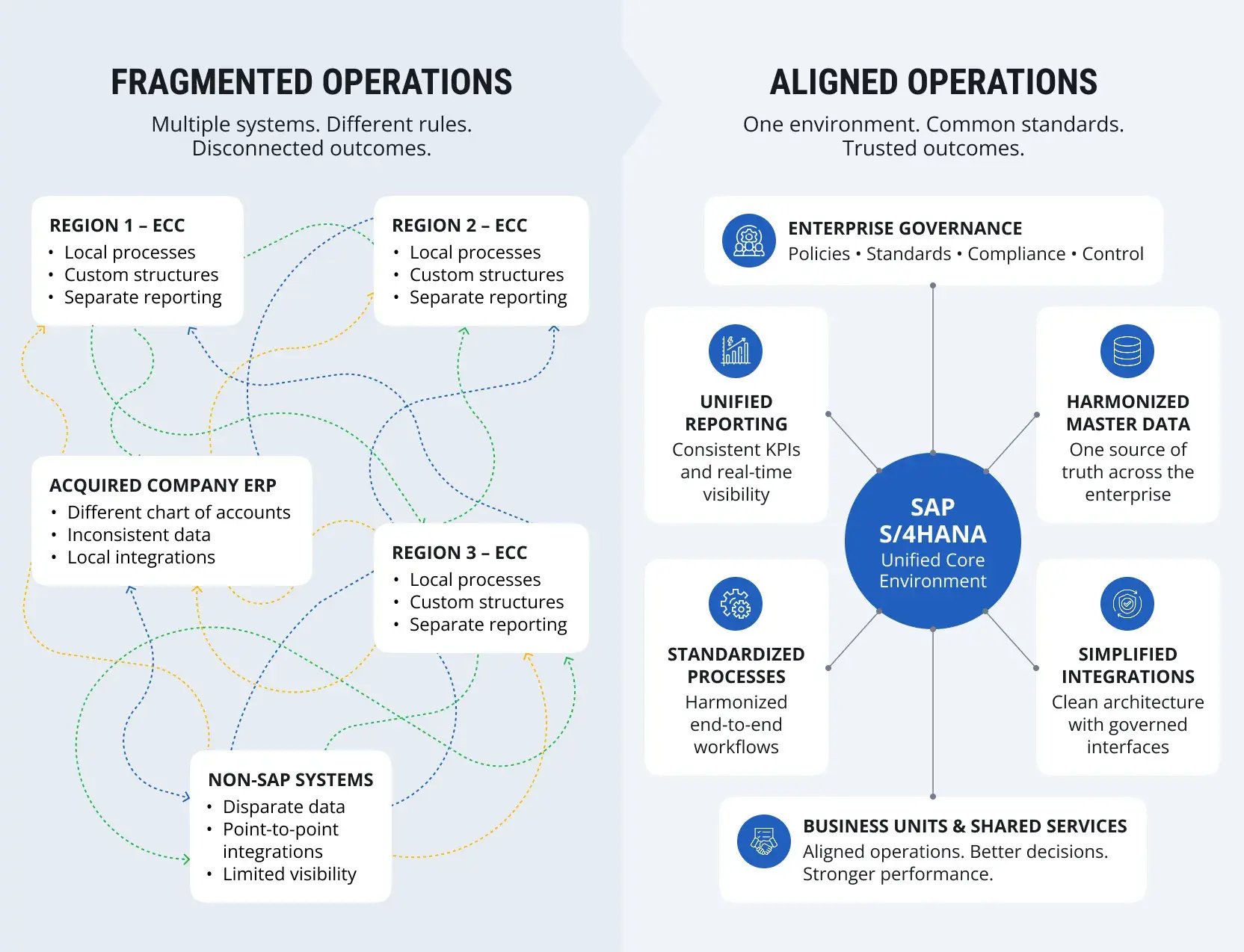
In practice, organizations often manage several SAP ECC systems running in parallel, each with its own reporting logic, finance structures, and operational processes. Regional SAP instances may have evolved independently for years, especially after mergers or decentralized growth periods. It is also common to see disconnected non-SAP applications, overlapping master data, inconsistent charts of accounts, and locally developed integrations that were originally built to solve short-term business problems but gradually became permanent parts of the landscape.
Over time, these environments become increasingly difficult to govern consistently. Finance teams may struggle to reconcile reporting structures across entities, while IT teams spend more effort maintaining integrations and supporting duplicated processes. In some cases, even relatively simple organizational changes require coordination across multiple ERP environments that no longer follow the same standards.
For many enterprises, migration is therefore not just a technical upgrade initiative. The larger objective is often operational consolidation and governance alignment across previously independent systems.
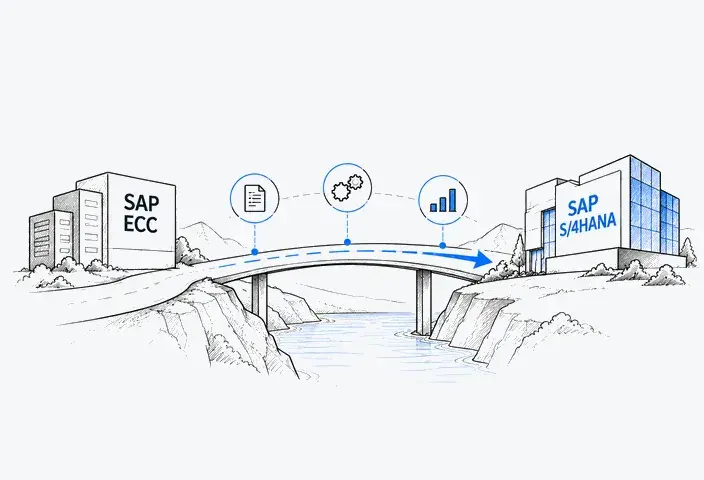
This shift changes the role of SAP selective data migration from a basic technical tool into a core enterprise consolidation strategy. Rather than lifting and shifting every legacy structure into SAP S/4HANA unchanged, organizations can determine which data, processes, and organizational units belong in the future environment while securely archiving or retiring obsolete assets. This precise control is critical for large-scale environments where maintaining reporting continuity and driving regional harmonization must happen alongside clearing out years of accumulated system complexity.
What Is Selective Data Migration in SAP?
Companies choose selective data migration when they realize that a standard "lift-and-shift" of their entire legacy system into SAP S/4HANA will drag too much legacy data into the new platform.
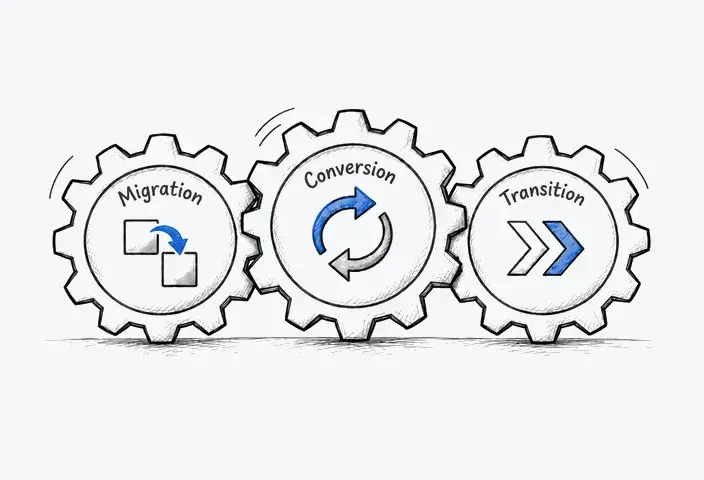
Selective Data Transition serves as a practical alternative to either starting from scratch with Greenfield or copying everything over with Brownfield. Instead of spending millions to rebuild the entire system or blindly dumping a messy legacy layout into SAP S/4HANA, companies can pick and choose. You retain the exact data, organizational units, and configurations that still make sense, and fix the rest while the data is in transit.

This logic is especially useful when a business needs to fold multiple separate SAP ECC systems into one central SAP S/4HANA production database. It allows you to align mismatched finance ledgers, master data definitions, and reporting rules right during the migration window itself. By fixing these inconsistencies upfront, you avoid the operational nightmare of trying to clean up your data models after the new system is already live.
While people call selective migration a middle path between Greenfield and Brownfield, actual implementations are far messier than that neat label implies. It is a constant trade-off. You can't just wipe out your reporting history or stall daily operations, but you also can't afford to bring along every bad custom shortcut your team built over the last decade.
Ultimately, the technical data cutover is just the starting point of a much larger cleanup strategy. The actual goal is to secure a simpler, highly standardized SAP footprint. That is what gives you clean governance, numbers you can trust, and a platform that can scale without defaulting back to old habits.
Enterprise Consolidation Scenarios Where SDT Is Critical
Multi-system SAP ECC consolidation
It is incredibly common for global businesses to find themselves stuck managing multiple SAP ECC instances that were built entirely in silos. The result is usually a fragmentation of redundant master data, conflicting financial setups, and processes that vary wildly across business units. Selective migration fixes this by serving as an architectural filter. It lets you consolidate these separate environments into one clean SAP S/4HANA setup without dragging all that historical data mess into your new system.
Post-M&A harmonization
When you buy a company, they usually keep running their own ERP system long after the deal is finalized. That separation is often necessary at first to keep the business running, but eventually, corporate leadership needs standardized workflows, shared governance, and consolidated numbers. Selective Data Transition (SDT) solves this by letting you absorb these acquired environments in waves. It keeps daily operations stable while you align the systems at a manageable pace.
Shared services centralization
As a company matures, it typically tries to centralize back-office functions like HR, procurement, finance, and reporting. To make a shared services model work, you have to drastically restructure your underlying data. Selective migration handles this transition by rewriting and aligning your organizational structures right during the actual move, protecting your business-critical data while forcing the systems into a uniform shape.
Divestitures and carve-outs
Splitting a business apart requires the exact same level of precision, just in reverse. When you sell off a subsidiary or spin out a specific business unit, you have to untangle that entity's data from the rest of the company. Selective migration lets you cleanly slice out only the relevant data, regional workflows, and business structures into a standalone SAP environment, ensuring the new company gets exactly what it needs while you keep compliance records intact.
Template harmonization
Many enterprises try to roll out a standardized, global SAP template after suffering through years of local customizations. One of the biggest mistakes you can make is waiting until after go-live to force people onto the standard template. Selective migration lets you enforce template harmonization during the cutover window itself, aligning regional processes, governance rules, and master data before the new system ever goes live.
Data Scope Strategy in Complex Landscapes
One of the most important decisions in selective migration programs involves determining which data actually belongs in the future SAP landscape.
Migrating excessive historical information often increases project complexity without providing meaningful operational value. At the same time, insufficient historical retention can create reporting gaps and audit concerns.
Historical data strategy
Organizations typically evaluate:
- Active transactional data
- Open financial items
- Inventory balances
- Compliance-relevant records
- Archived historical information
The decision is rarely driven by storage limitations alone. Reporting continuity, legal retention requirements, and operational dependencies usually influence the final scope.
Open item migration
Open items often require special treatment because they directly affect operational continuity after cutover. Financial reconciliation, procurement processing, and customer operations may depend on maintaining accurate open balances during transition.
Master data harmonization
Master data alignment becomes one of the most complex parts of enterprise migration programs.
Common issues include:
- Duplicate customer and vendor records
- Conflicting material structures
- Incompatible unit definitions
- Inconsistent naming conventions
- Different financial hierarchies across regions
Without early harmonization planning, these inconsistencies can create long-term reporting and governance problems inside the new SAP S/4HANA environment.
Reporting continuity
Executives and finance teams usually expect uninterrupted visibility across historical and future reporting periods. Maintaining continuity between legacy and target environments often requires careful reconciliation planning, archive accessibility, and alignment of reporting structures before migration begins.
Technical Architecture and Tools for Selective Data Transition
Large-scale selective migration programs require much more than moving records from one SAP system to another. Before data reaches the future SAP S/4HANA environment, it usually has to be standardized, validated, and aligned across systems that were built independently over many years.
Differences between legacy environments often appear in places that directly affect reporting and operational consistency. The same material may exist under different identifiers across regions, finance structures may follow incompatible hierarchies, and customer or supplier records may use conflicting classifications. If these inconsistencies are transferred without proper transformation, the consolidated landscape can quickly become difficult to govern.
For that reason, SDT projects typically rely on dedicated transformation and validation layers rather than simple extraction and loading procedures. The SAP Landscape Transformation (LT) software suite, paired with specialized migration tools, is frequently used in these scenarios because it supports selective transfer and restructuring across multiple source systems, although the broader migration architecture usually plays an equally important role.
Most enterprise programs also establish staging and reconciliation environments where migration results can be reviewed repeatedly before deployment. Financial balances, inventory positions, open items, and reporting outputs are commonly validated through several migration cycles to confirm that the future SAP S/4HANA environment behaves consistently once consolidation is complete.
Downtime planning also becomes a major architectural concern. Large organizations often cannot afford long interruptions to manufacturing, logistics, procurement, or financial operations. As a result, migration teams usually break the transition into smaller deployment waves, reduce unnecessary historical data scope, and prepare transformation environments in advance to limit cutover pressure.
Integrations add another layer of complexity. SAP systems are rarely isolated. Over time, companies build connections to warehouse platforms, manufacturing systems, tax engines, reporting tools, procurement applications, and regional databases. Some interfaces are well documented, while others only become visible once testing starts. Consolidation projects often expose dependencies that were never fully understood when the systems operated separately.
Because of that, the technical architecture in selective migration programs is designed as much around operational stability as around data movement itself. The goal is not simply to transfer information into SAP S/4HANA, but to reorganize the landscape without disrupting reporting, finance operations, or business-critical processes.
Governance and Risk Management in Multi-System Consolidation
People routinely underestimate the sheer amount of governance required to pull off an SAP consolidation. Large enterprises face a massive coordination challenge across several fronts:
- Managing who actually owns the source data before it moves
- Designing the financial reconciliation steps between different systems
- Mapping out all the messy, overlapping integration dependencies
- Keeping up with different regional compliance obligations
- Getting separate business units to agree on unified reporting lines
One of the first real roadblocks is figuring out who is responsible for legacy data structures. You will almost always find that different business units have spent years running conflicting definitions for basic things like customer masters, product codes, financial dimensions, or reporting hierarchies.
Reconciling data across multiple legacy systems is another incredibly sensitive area during a consolidation. Teams have to carefully validate:
- Ledger balances to make sure the books actually match
- Intercompany transactions so internal balances clear out cleanly
- Live inventory counts across your various facilities
- Open operational documents that are still active when you cut over
- Historical records so your year-over-year reporting stays consistent
Legal data retention laws make this planning even trickier. Different countries have strict rules about how long you must keep historical records accessible, and these mandates don't go away just because you consolidated or turned off an old system.
Lastly, mapping out your integration dependencies is a major risk area. It is almost a guarantee that your project team will uncover undocumented local connections, shadow IT spreadsheets, or custom interfaces way too late in the game. If you don't track down and test these hidden dependencies early, they will cause major operational disruptions the moment you flip the switch at cutover.
Avoiding Common Pitfalls in Enterprise Selective Data Transition Programs
Selective migration programs are rarely limited by technology alone. Most project risks emerge from organizational complexity, inconsistent governance, and underestimated transformation effort.
Underestimating data complexity
Large enterprises often discover significantly higher transformation effort once detailed data analysis begins. Similar-looking entities across systems may follow completely different business rules and reporting structures.
Assuming master data is already harmonized
In many organizations, master data evolved independently across regions or acquired companies for years. Without proper standardization, consolidation can introduce long-term operational inconsistencies into the new environment.
Migrating unnecessary historical data
Excessive historical migration frequently increases testing effort, reconciliation complexity, and cutover duration without creating substantial business value.
Incomplete reconciliation planning
Finance-led validation should begin early. Reconciliation gaps discovered near cutover can delay deployment timelines and increase operational risk significantly.
Ignoring reporting redesign
Legacy reports often reflect outdated organizational structures and historical process models. Consolidation projects usually require a reporting redesign rather than simple report replication.
Integration failures after cutover
Some of the most disruptive issues appear after migration when previously isolated systems begin operating within a unified environment. Middleware dependencies, warehouse integrations, manufacturing interfaces, and regional reporting tools often require extensive post-cutover validation.
Our Experience in Enterprise SAP Landscape Consolidation
LeverX supports organizations managing large-scale SAP transformation and consolidation initiatives across complex enterprise environments.
Our experience includes:
- Multi-instance SAP ECC consolidation programs
- SAP S/4HANA selective migration initiatives
- Post-M&A harmonization projects
- Carve-out and carve-in scenarios
- Finance-led migration governance
- Global template harmonization
- Post-migration stabilization and optimization
We focus not only on migration execution, but also on governance alignment, reporting continuity, operational harmonization, and long-term architectural sustainability. For enterprise programs, successful consolidation usually depends as much on organizational coordination and data governance as on technical implementation itself.
Business Impact of Selective Data Migration
When executed correctly, selective migration can help enterprises modernize SAP landscapes without transferring years of accumulated fragmentation into the new environment.
Common business outcomes include:
- Reduced migration risk
- Lower operational disruption during transition
- Shorter downtime windows
- Harmonized reporting structures
- Simplified long-term system maintenance
- Improved governance consistency
- Cleaner integration architecture
- Better scalability for future acquisitions and restructuring
For many organizations, selective migration becomes an opportunity to simplify enterprise operations while establishing a more stable foundation for future SAP innovation initiatives.