LeverX and CloudPaths connect supply chain planning and execution.
LeverX and CloudPaths are partnering specifically on initiatives within the supply chain domain, bringing complementary expertise across planning, transportation, logistics, and execution. One of the first joint activities reflecting this collaboration is Beyond the Silo: Why Transportation Planning Is Becoming the Nerve Center of the Modern Supply Chain, a podcast featuring LeverX and CloudPaths and released on October 7 during SAP Connect Las Vegas.
A transportation constraint rarely stays a transportation problem for long. When capacity disappears, lead times change, or part of the network is disrupted, the effects can quickly reach customer commitments, production schedules, inventory, and operating costs.
That raises a broader question: if transportation influences decisions across the supply chain, should it still be treated mainly as a downstream execution function? The podcast explores this shift and how organizations can better connect strategic planning with execution.
Why Transportation Planning Is Becoming More Strategic
Transportation traditionally entered the process after key decisions had already been made. Planning teams determined what to source, produce, and deliver, while transportation teams focused on moving the resulting shipments.
That model becomes less effective when logistics conditions determine whether a plan is realistic. Freight costs can influence sourcing, lead times can affect inventory policies, and available capacity can determine when and where products should move. Transportation, therefore, plays a role before execution begins by providing information on constraints, costs, and capacity that can shape upstream decisions.
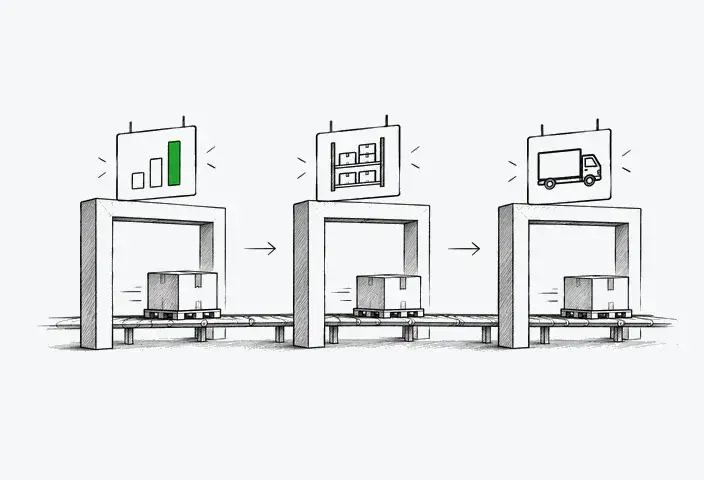
The shift is from treating transportation as the final step in a plan to using logistics realities as one of the inputs that help create it.
Planning and Execution Are Moving Closer Together
Bringing logistics considerations into planning solves only part of the problem. Once execution begins, the assumptions behind the plan can change quickly. A supplier may miss a delivery, demand may shift, or a disruption may alter what the network can support. If planners continue working with outdated assumptions, even a strong plan can quickly become disconnected from reality.
Information, therefore, needs to move in both directions. Planning gives operational teams priorities and requirements, while execution provides updated information about delays, capacity, and constraints that may require replanning. The sooner relevant execution information reaches planners, the sooner they can assess the impact and respond.
The Risk of Optimizing Supply Chain Functions in Isolation
Connecting planning and execution does not automatically produce better end-to-end results. Teams can still make decisions that improve their own KPIs while creating problems elsewhere.
A transportation team might lower freight costs through consolidation, but the additional wait could affect service. Production may maximize equipment utilization while creating warehouse congestion. Lower inventory targets may improve working capital while reducing the buffer available to absorb logistics variability.
The problem is not the objectives themselves, but optimizing them independently. The podcast examines why trade-offs should be evaluated against broader outcomes such as service, total cost, resilience, inventory, and capacity utilization rather than functional KPIs alone.
What Supply Chain Visibility Should Actually Deliver
Making those trade-offs requires visibility, but more data does not automatically lead to better decisions. Knowing that a shipment is delayed is useful. Knowing which customer commitments are exposed, whether production will be affected, what alternatives exist, and which response produces the best overall outcome is more valuable.
That is the difference between event visibility and decision support. The challenge is not simply capturing supply chain data, but connecting the information relevant to a specific decision and showing its consequences. Visibility creates value when it helps teams move from “What happened?” to “What does it affect, and what should we do next?”
Bringing Transportation Into Planning Earlier
The same information that improves execution decisions can also help prevent problems before they reach operations. Transportation capacity, lead times, constraints, and cost signals can inform network planning, sourcing, and inventory placement before shipment requirements are finalized. This allows planners to test whether the logistics network can support the supply plan.
Consider a forecast showing strong demand growth in one market. Production capacity may be sufficient, but the lanes serving that region could face a seasonal bottleneck. Identifying that constraint early gives the organization time to secure capacity, adjust sourcing, reposition inventory, or reconsider timing. Once the issue reaches execution, the options are usually narrower and more expensive. Bringing transportation into planning earlier preserves more choices.
Connecting the Supply Chain Across SAP
Making this model repeatable also requires information to move effectively across the technology landscape. SAP solutions such as SAP IBP, SAP TM, SAP EWM, SAP Business Network, and logistics execution can support different parts of planning and operations. Their value, however, depends on how the surrounding processes and information are connected.
Organizations need to define which planning signals operational teams require, which execution events should trigger replanning, what data needs to move between systems, and who should act when conditions change. Expected volumes can help transportation and warehouse teams prepare capacity, while transportation constraints and delays can give planners a more realistic view of what the network can support.
The podcast approaches this connection from a process perspective rather than putting technology at the center. SAP solutions provide the supporting landscape, but organizations still need to define how decisions, data, and responsibilities move across it.
Moving Toward a More Integrated Supply Chain
For most organizations, improving these connections does not require redesigning the entire supply chain at once. A practical starting point is to identify where disconnected decisions already create measurable business problems.
Recurring service failures, unexpected logistics costs, unrealistic planning assumptions, or handoffs with limited information can reveal the highest-value areas to address. The root cause may be process design, data availability, integration, ownership, or a combination of these factors. Starting with a specific business problem keeps integration tied to an outcome rather than treating connectivity as an objective in itself.
The podcast brings these ideas together through a supply chain lens. LeverX and CloudPaths are partnering specifically on initiatives within the supply chain domain, bringing complementary expertise across planning, transportation, logistics, and execution. Together, the companies aim to help organizations strengthen the connection between strategic supply chain decisions and day-to-day operations across SAP supply chain processes.
Listen to the full conversation on Apple Podcasts or Spotify:
Apple Podcasts: https://podcasts.apple.com/de/podcast/the-future-of-supply-chain/id1666475604?i=1000793586610
Spotify: https://open.spotify.com/episode/1yqnlcICigXSnNAx6skKoE?si=40V8poe4RiitiK5wCxmfKw
How useful was this article?
Thanks for your feedback!