Discover how smart warehouse technologies modernize operations and supply chains.
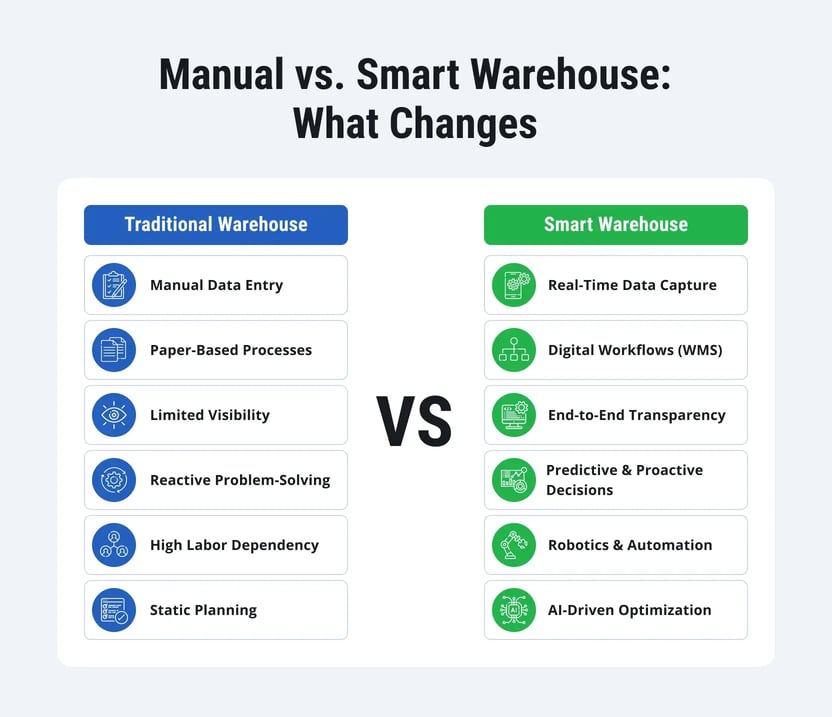
Warehouses have always played an important role in the operations between organizations and customers. However, the past decades have changed a lot: technologies have evolved, customer expectations have grown, and there are no more opportunities to rely on old-school warehousing with paperwork and manual processes.
A modern warehouse is no longer just a storage location. It’s a pivotal hub on which work, customer experience, supply chain velocity, and financial agility depend. That’s why organizations should reimagine their operations and embrace a warehouse automation system as fuel for entering the new era of smart supply chains.
In this blog post, we consider what a smart warehouse is, as well as the perspectives and benefits of an automated warehouse.
What We Used in the Past Doesn’t Work Anymore
You might ask what warehouse management challenges are to be feared today and in the upcoming future. Most of them, at least the ones that we can affect, are related to outdated tools and processes:
- Delays, manual and legacy errors
- Constrained scalability and flexibility, especially during demand peaks
- Labor shortage and staff turnover
- Limited visibility into operations, KPIs, and analytics insights
A comparison of automated vs. manual warehouse operations favors the former. The modern pace and expectations from the supply chain demonstrate that traditional models with manual operations and repetitive tasks leave warehouses behind in an increasingly automated market.
The Rising Relevance of Warehouse Automation
Where is all this going? Apparently, towards smart and connected systems with automation, scalability, and intelligent data processing. A modern warehouse automation system makes an organization more proactive in dealing with potential issues and planning future workload. This is due to a number of prerequisites:
- The usage of IoT sensors, radio-frequency identification, tracking devices, and scanners
- Comprehensive process transparency
- Data gathering and processing in real time for further actionable insights
The result will not take long. Organizations get a driver of their strategic efficiency and customer experience improvements with fewer disruptions.
SAP EWM vs. Microsoft Dynamics 365 SCM — Choosing the Right Tool for the Job
A Warehouse Management System (WMS) as the Heart of Modern Distribution
A modern warehouse cannot function without a proper warehouse management system. Its most important input is the standardization of workflows and operations, which removes the issue of process fragmentation, simplifies process coordination, and minimizes the number of errors.
Typical scenarios include cross-docking and slotting, the management of inbound and outbound logistics, product picking, and yard-to-dock operations — everything with a high level of transparency and real-time analytics.
Modern warehouse management systems have a modular architecture, which means you can activate the needed functional modules and add more when it’s time to grow.
SAP Extended Warehouse Management: a vivid example of warehouse empowerment
SAP EWM is an advanced control and management system designed for warehouse operations. The solution is embedded within SAP S/4HANA and enabled with features and tools:
- To introduce real-time visibility across warehousing operations.
- To deliver system flexibility in workflow adaptation to the warehouse-related changes.
- To support complex logistics scenarios.
- To manage yard, dock, and labor operations.
- To improve traceability and compliance.
- To optimize resource allocation.
- To integrate warehouse management with automation equipment and robotics.
- To orchestrate material flow systems, providing interaction between automation equipment and warehouse processes.

The Rise of Robotics and Autonomous Systems
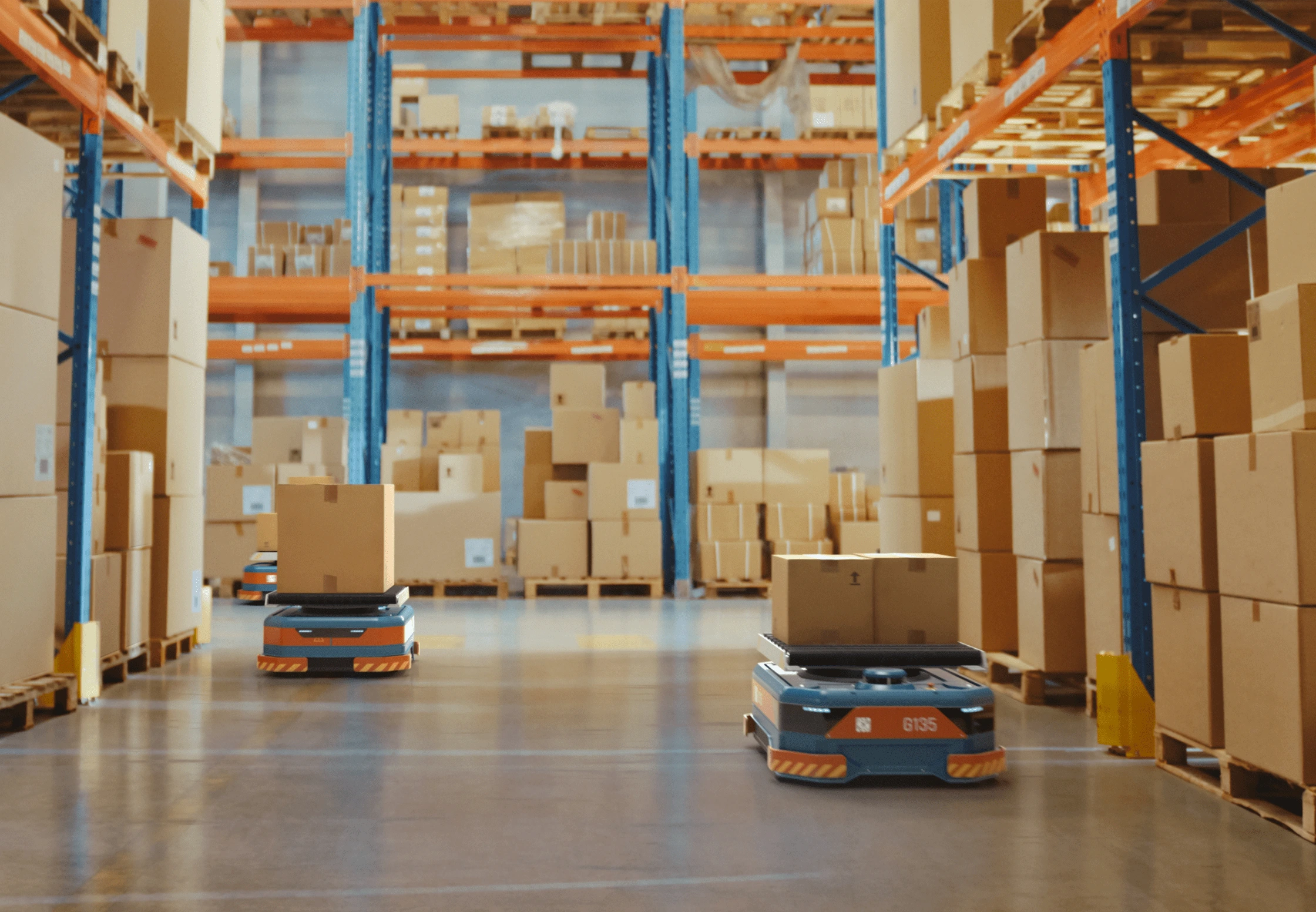
Robotics and autonomous systems are new smart solutions for a warehouse. These systems can handle tasks such as inventory picking, tracking, and moving while navigating on their own.
The most popular and demanded types of autonomous warehouse equipment include:
- Drones and aerial vehicles conduct inventory auditing, promptly reaching even high shelves and hard-to-reach areas.
- Autonomous mobile robots move goods within warehouses, navigating with the help of sensors and cameras.
- Automated storage and retrieval systems reach goods and place them where needed.
- Automated guided vehicles transport goods, following predetermined routes.
- Collaborative robots complete tasks together with human workers.
The use of autonomous mobile robots and automated guided vehicles helps lower labor dependency and optimize operational costs. Besides, the adoption of robots and fully automated warehouse systems can speed up order execution several times.
Predictive Modeling for Anticipatory Decision-Making
Organizations can modify their decision-making approaches and switch from reactive responses to proactive management. A digital warehouse that combines the capabilities of WMS with AI, ML, and IoT enables organizations to forecast demand at the Stock Keeping Unit level, which implies the usage of historical data, real-time updates from sales, and externalities. Also, enabling AI-based replenishment, you can forecast future demand and inventory levels, align workforce planning with a forecasted throughput, and prevent bottlenecks.
A Warehouse Digital Twin: More Details at a Glance
You can virtually represent your physical warehouse with the help of its digital twin. It will mirror all movements and operations in the warehouse in real-time. With this technology, you can:
- Simulate and test peak demand periods and crisis scenarios.
- Refine SKU placement and product navigation before physical changes occur.
- Implement the strategic people, process, technology (PPT) framework.
- Track warehouse activities in real time.
A digital twin of your warehouse serves as a sophisticated decision support tool, providing you with opportunities for testing and continuous improvements.
On the Way to a Comprehensive Supply Chain Integration
To ensure a more effective operation of the supply chain, organizations choose to connect their warehouse systems with other units. You can imagine a modern automated warehouse management system as a solution working together with:
- ERPs (SAP S/4HANA): provide a unified view of warehouse and business data, synchronizing warehouse operations with the records of business transactions.
- Transportation management systems (SAP TM): align the execution of warehouse operations with transportation schedules.
- Yard logistics systems (SAP YL): coordinate warehouse loading with truck arrival and yard operations.
- Logistics business networks (SAP BN4L): improve data exchange and collaboration among warehouses, carriers, and logistics service providers.
How it works
Tracking across the supply chain
To make the shipment status and arrival time clearer, an automated warehouse sends shipment updates to the network of carriers and logistics partners, while carriers send real-time location data to the warehouse system. As a result, shipments are visible, delivery delays are reduced, and all the exceptions are handled proactively.
Carrier collaboration in real time
When schedules change, the warehouse can be informed too late to adjust tasks such as picking and loading. To avoid that, all carrier updates are displayed in the warehouse management system, so all the replanning goes smoothly despite carriers’ schedule disruptions.
Dynamic restocking according to market needs
To balance between excess inventory and shortages, the supply chain network automatically gets updates on inventory levels, which are considered during further replenishment.
Embracing Smart Warehouse Transformations With LeverX
At LeverX, we have developed a profound approach to automating and optimizing stock and materials handling. First, we have been working with SAP solutions, encompassing the ones for supply chain, for more than 20 years, across various markets and industries. Second, we have become an SAP Gold partner and maintain the high standards of delivering warehouse automation systems. We implement SAP EWM according to standard and advanced scenarios, SAP TM, and SAP Yard Logistics, and integrate them with IoT systems, AMRs, RFID, and AGVs. Third, our experts design and deploy automated warehouse system architectures that not only introduce new work approaches but also bring measurable results for businesses. For example, our clients benefit from a higher throughput, more prompt order processing, and fewer errors.
Navigating the Future
Warehouse automation solutions are evolving. Yesterday, the conveyor surprised us; today, we are thinking about the complete operational autonomy of the future warehouses. It is expected that AI and ML will initiate self-optimizing task management, resource distribution, and predictive maintenance, while human intervention will be minimized.
We also observe that warehouses are evolving into intelligent nodes within logistics networks. The connectivity between warehouse management systems, ERPs, transportation, and partner networks synchronizes the work of the supply chain, which creates a long-lasting competitive advantage for organizations.

Warehouse Digital Transformation Is a Pivotal Step Forward
The evolution of warehousing has taken a giant leap. And the advantages will go to those who are ready to embrace the change. Working in the 24/7 digital economy conditions leaves little chance for sustainable commerce without modernizing warehouse processes.
The LeverX team is here to guide you through warehouse automation challenges and support every step towards a fully automated warehouse system.


%20(1).webp)