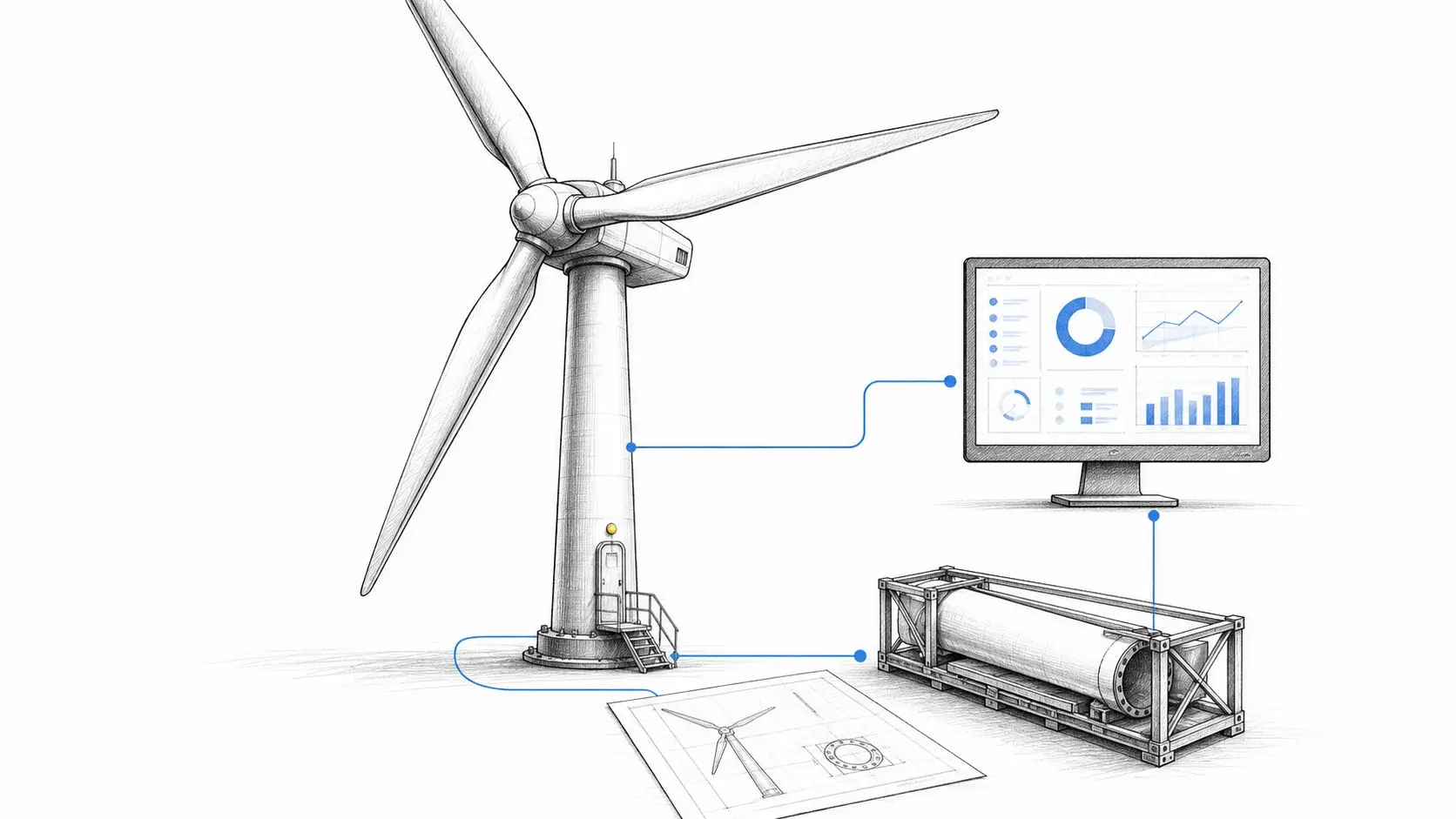
Find out how SAP EAM redefines asset performance, value, and reliability
As Global Market Insights states, the global market of industrial asset management is expected to increase at a CAGR of 15.5% between 2024 and 2032. It’s time to act: while infrastructure and asset investments are growing, companies are adopting digital tools to optimize operational efficiency and control maintenance expenses.
However, many organizations still rely on legacy systems, fragmented data, and maintenance processes that lack reliable performance metrics. For asset-intensive businesses, unexpected equipment downtime can disrupt production, delay operations, and increase maintenance costs. In the U.S., these challenges affect manufacturers, utilities, oil and gas operators, transportation providers, and mining companies managing large asset portfolios across multiple facilities.
SAP Enterprise Asset Management (SAP EAM) helps organizations improve the reliability, availability, and performance of physical assets by connecting asset-related processes and data across different lifecycle stages. Combined with complementary SAP solutions, it can provide a foundation for more structured maintenance planning, equipment monitoring, work execution, and data-driven asset decisions.
Meet SAP EAM That Extends Classic Asset Management
SAP EAM encompasses SAP capabilities and solutions for managing physical assets, such as machinery, equipment, vehicles, and infrastructure. Core maintenance processes are supported by SAP S/4HANA Asset Management, while additional SAP products can extend functionality across the asset lifecycle.
Typically, classic enterprise asset management primarily focuses on supporting asset reliability, availability, and compliance, encompassing spare parts management, order processing, and, of course, preventive maintenance. SAP EAM has traditionally supported these core maintenance processes. Organizations can extend them with IoT connectivity, advanced analytics, and asset performance capabilities through additional SAP products and integrations, depending on their system landscape.
SAP Enterprise Asset Management (SAP EAM) is a broad term covering SAP capabilities and solutions for managing physical assets. SAP Plant Maintenance (SAP PM) refers to established maintenance functionality in SAP ERP, including equipment records, maintenance planning, notifications, and work orders.
In SAP S/4HANA, these core maintenance capabilities are part of SAP S/4HANA Asset Management and can be integrated with:
- SCADA systems and IoT platforms;
- Field-service and mobile apps;
- ERP financial and procurement modules;
- Core operational and logistics processes.
SAP Intelligent Asset Management (SAP IAM) refers to a portfolio of complementary asset management applications, rather than another name for SAP PM or SAP S/4HANA Asset Management. These applications can extend core maintenance processes with advanced asset performance analysis and collaboration capabilities.
Core SAP EAM Building Blocks
Want to better understand the platform? Let’s consider its key elements that are designed to improve the reliability and efficiency of your enterprise assets.
- SAP S/4HANA Asset Management: This is a core component responsible for handling work orders, maintenance planning, execution, and tracking processes, without which you cannot imagine asset management.
- SAP Business Network Asset Collaboration (SAP BNAC): A cloud hub that is used for sharing physical asset data, best practices in enterprise asset management, and related documentation across stakeholders. It supports collaboration across asset stakeholders by enabling the exchange of equipment information, maintenance documentation, and spare-parts data.
- SAP Linear Asset Management (SAP LAM): Specialized functionality within supported SAP ERP and SAP S/4HANA environments for managing linear assets, such as roads, pipelines, and railways. It is not a separate cloud application.
- SAP Asset Performance Management (SAP APM): A cloud solution that helps you use real-time data, ML, and advanced analytics to establish maintenance strategies that will meet your expectations.
- SAP Service and Asset Manager: A mobile app for maintenance personnel and technicians that helps them complete tasks in the field, even when they are offline.
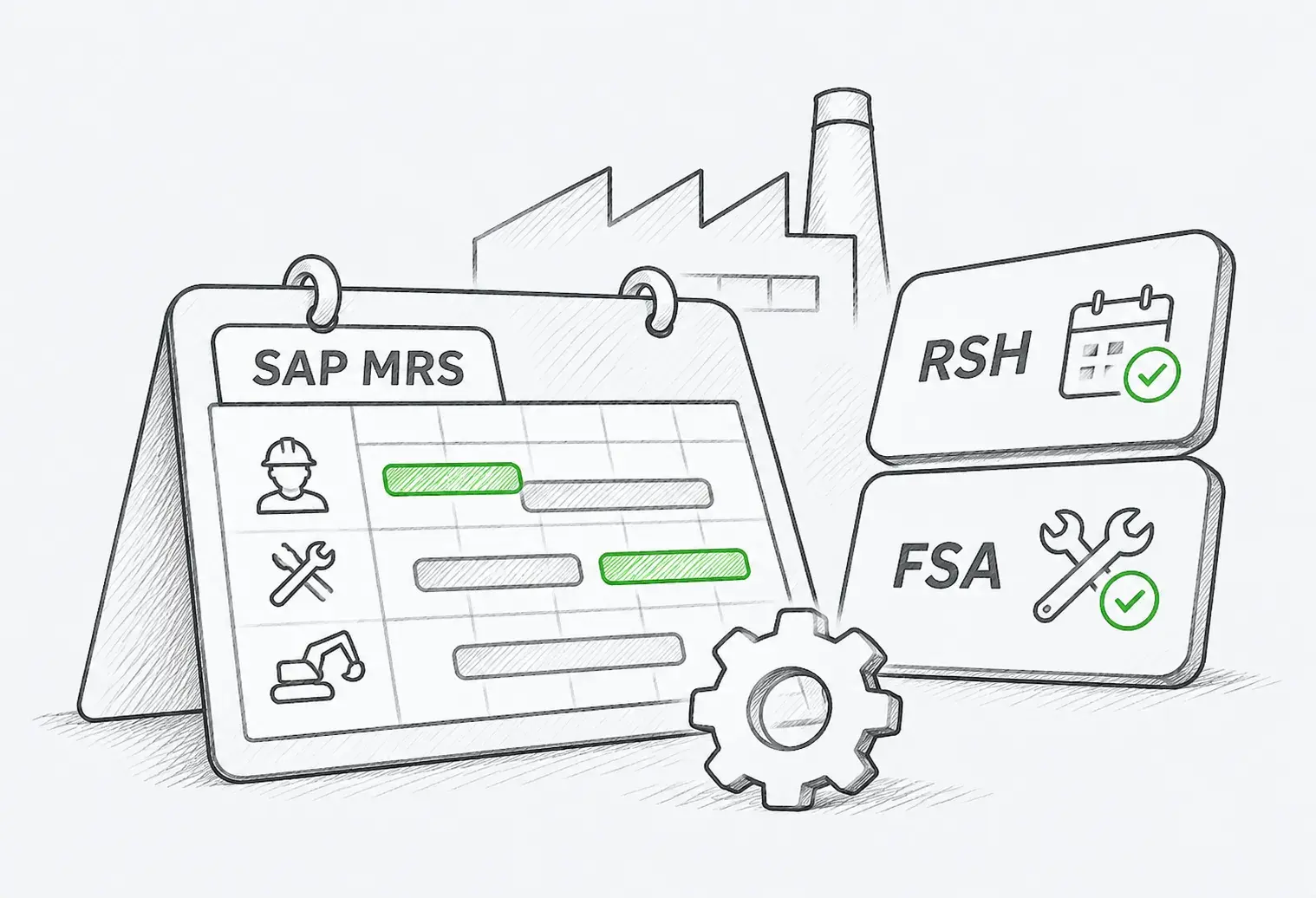
- SAP Field Service and Asset Management: An AI-assisted cloud solution that brings together planning, scheduling, dispatching, and mobile execution for asset maintenance and field service operations. It expands on the capabilities previously offered by SAP Field Service Management.
These products are not included in a single standard SAP EAM package. Their availability, licensing, deployment models, and integration requirements depend on the selected SAP landscape.
“Companies evaluating SAP EAM should first determine which capabilities they need for core maintenance operations and which require additional solutions. Mobile execution, advanced reliability and asset performance management, and collaborative asset management with external partners (via SAP Business Network Asset Collaboration) introduce different integration and data requirements. Clear implementation priorities help organizations avoid unnecessary architectural complexity.”
Yauheni Sarachynski, SAP Asset Management Lead at LeverX

Explore LeverX SAP Enterprise Asset Management consulting and implementation services to understand how these capabilities can support your maintenance environment.
What Is SAP EAM Capable Of?
Organizations need reliable visibility into their physical assets, maintenance activities, and associated costs. SAP EAM capabilities address these requirements through connected processes and asset data.
Asset lifecycle management
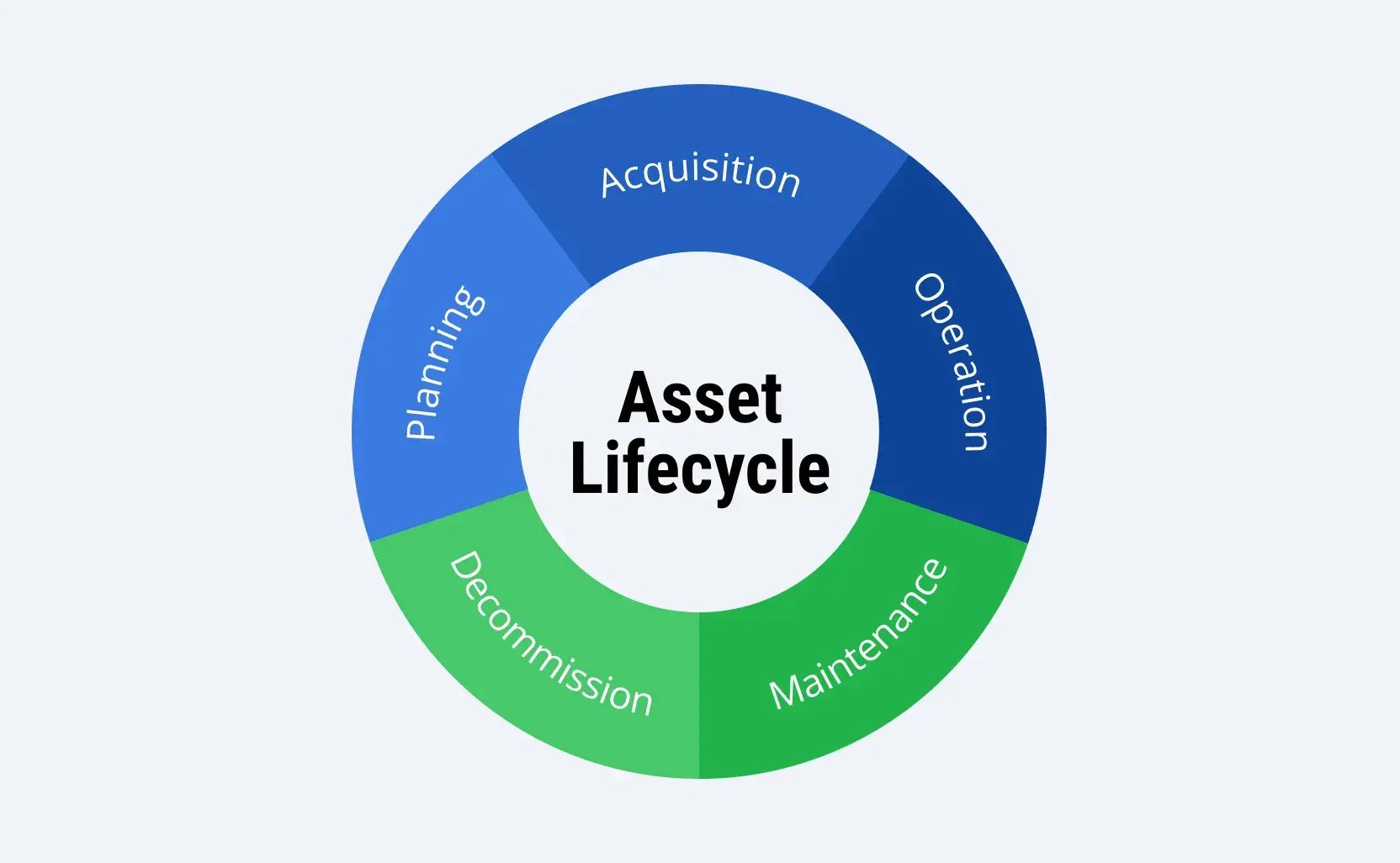
SAP S/4HANA Asset Management supports maintenance-related asset lifecycle processes, while other SAP ERP and asset management capabilities contribute to acquisition, financial management, and retirement activities.
SAP EAM supports consistent asset master data, helps maintain asset hierarchies, and enables organizations to track costs, risks, and performance throughout the asset lifecycle.
For U.S. organizations managing assets across several plants, field locations, or operating companies, consistent equipment records and functional location structures also help establish standardized maintenance reporting and asset accountability.
Maintenance planning and scheduling
The solution allows organizations to create maintenance plans, assign resources, and coordinate spare parts and materials. SAP EAM can support different maintenance approaches, including preventive, corrective, predictive, condition-based, and reliability-centered maintenance.
The available planning and scheduling functionality depends on the SAP edition, deployment model, and selected complementary solutions. An effective maintenance strategy can improve resource utilization and reduce avoidable equipment interruptions.
Comprehensive work order management
SAP S/4HANA Asset Management supports maintenance processes from request creation and work order planning through approval (where required), preparation, scheduling, execution, and completion.
When a compatible mobile solution is implemented, technicians can also perform supported maintenance tasks in the field, access equipment documentation, record confirmations, and update work order information.
Analytics integration
Organizations can connect analytics tools with SAP EAM to track asset performance and maintenance KPIs through specialized dashboards.
Combining maintenance history, equipment condition data, and cost information helps managers evaluate asset performance and prioritize maintenance activities or replacement investments.
SAP EAM Maintenance Planning and Scheduling
Effective maintenance planning follows four steps: assess asset criticality, select an appropriate maintenance strategy, plan activities and resources, and define performance indicators.
SAP S/4HANA Asset Management supports maintenance planning, work order management, and materials coordination. Advanced resource scheduling and technician assignment capabilities depend on the selected edition, functional scope, and licensing. It supports corrective and preventive maintenance, including measurement- and counter-based maintenance in supported editions. Advanced predictive analysis may require additional data sources, integrations, or complementary SAP solutions.
Depending on failure history and the consequences of downtime, companies may combine three maintenance approaches:
- Corrective maintenance is suitable when equipment failures have limited operational consequences and repairs can be performed without significant disruption.
- Preventive maintenance is appropriate when servicing can be scheduled at defined time or usage intervals to reduce the likelihood of failure.
- Condition-based maintenance uses inspection results, measurements, or sensor data to determine when intervention is needed. It requires reliable condition information and defined intervention thresholds.
Once a strategy is selected, maintenance planners should align activities with technician capacity, spare parts availability, procurement lead times, and production schedules.
Effectiveness can then be evaluated using schedule compliance, unplanned downtime, maintenance costs, and equipment reliability indicators.
What Is Under the Hood?
SAP EAM is supported by a technology landscape that enables collaboration, integration, and complex decision-making rather than relying on isolated functionality.
IoT connectivity
Equipment measurements can be recorded in SAP S/4HANA Asset Management, while continuous sensor data may be integrated through connected monitoring systems.
The architecture must account for data flows, update frequency, integration requirements, and the responsibilities of enterprise and operational technology teams.
For U.S. companies managing equipment across multiple plants or remote facilities, it is particularly important to establish consistent connectivity, data ownership, and monitoring standards across locations.
Intelligent processing
Advanced analytics can use maintenance records and operational data from connected systems.
Data quality, integration methods, and processing requirements determine how analytical insights can support maintenance decisions. SAP APM can extend core asset management with condition monitoring and predictive maintenance capabilities.
Mobile capabilities
Mobile maintenance solutions depend on the SAP backend.
SAP Service and Asset Manager supports field maintenance in compatible SAP ERP, SAP S/4HANA on-premises, and SAP S/4HANA Cloud Private Edition environments.
For SAP S/4HANA Cloud Public Edition, SAP provides SAP Maintenance Assistant. Available features, offline capabilities, and integration requirements vary by application and release.
Mobile access is particularly valuable for technicians working across production facilities, utility infrastructure, remote sites, and field service locations. It allows them to retrieve work orders, equipment information, and technical documents without depending exclusively on desktop access.
Large-scale data handling
The system processes large volumes of operational and asset data, providing access to historical records and multi-year analysis.
Reliable asset hierarchies, equipment identifiers, maintenance history, and measurement records help organizations work with complex asset portfolios and make more informed decisions.
Cloud and hybrid deployment
SAP S/4HANA Asset Management is available in supported on-premises, private cloud, and SAP S/4HANA Cloud Public Edition environments, although the functional scope differs by edition and release.
Complementary solutions, such as SAP APM and SAP Business Network Asset Collaboration, follow their own cloud deployment models and integration requirements.
The choice between on-premises, private cloud, and public cloud should reflect existing SAP investments, security requirements, integration dependencies, and the level of customization required by the maintenance organization.
Improvements You Can Achieve With SAP EAM
When evaluating the business value of SAP EAM, organizations should focus on measurable operational outcomes rather than the number of implemented features.
Potential benefits include:
- Improved asset availability through structured maintenance planning and, where supported by SAP APM and the necessary data integrations, predictive maintenance.
- Improved maintenance cost efficiency through optimized schedules and more effective allocation of materials and labor.
- Better asset replacement decisions and opportunities to extend useful asset life through more effective maintenance.
- Better process transparency across operations, supply chain, and maintenance.
- Enhanced regulatory compliance and asset safety.
- Optimized budget planning backed by prompt analytics.
There are several KPIs you can use to evaluate the success of SAP EAM adoption.
|
Indicator |
Interpretation |
|
MTTR (Mean Time To Repair) |
Lower average time required to repair an asset after a failure means better efficiency and shorter downtime. |
|
MTBF (Mean Time Between Failures) |
A higher average operating time between failures indicates greater operational stability. |
|
Equipment Downtime |
Tracking unplanned equipment downtime helps organizations assess the operational impact of unexpected failures. Planned shutdowns should be recorded separately to ensure meaningful comparisons between reporting periods. |
|
PMP (Planned Maintenance Percentage) |
PMP measures maintenance labor hours spent on planned work as a percentage of total maintenance labor hours. Planned work can include both preventive maintenance and corrective repairs prepared in advance. This KPI should be evaluated alongside schedule compliance and unplanned downtime to assess maintenance planning effectiveness. |
|
Maintenance Cost as % of RAV (Replacement Asset Value) |
Comparing annual maintenance spending with replacement asset value helps assess maintenance cost efficiency. Results should be evaluated against the organization's baseline and comparable asset portfolios rather than a universal target range. |
How to measure SAP EAM implementation results
Before defining KPI targets, organizations should identify which maintenance problems they expect SAP EAM to address. For example, a company facing frequent equipment failures may prioritize MTBF and unplanned downtime, while one struggling with maintenance scheduling may focus on planned maintenance percentage and schedule compliance.
The next step is to establish a baseline using historical maintenance data from a representative period. Teams should verify that failures, repair times, equipment operating hours, and maintenance costs are recorded consistently.
After implementation, results should be compared with the baseline across similar assets and operating conditions. Reviewing several related KPIs helps determine whether improvements reflect better maintenance performance rather than changes in data collection or reporting practices.
For U.S. enterprises, it can also be useful to compare results across facilities, regions, equipment classes, and operating units. This makes it easier to identify locations where maintenance processes or asset performance differ significantly from the corporate baseline.
Working across different asset-sensitive industries
The solution supports various economic sectors, providing the needed level of visibility and unified processes that are also tailored to specific industry needs.
Energy and utilities
SAP S/4HANA Asset Management supports maintenance planning and tracking for assets such as power plants, substations, pipelines, and transmission lines.
Remote condition monitoring can be enabled through SAP APM and connected IoT data sources. Organizations can also coordinate service contractors and field crews.
For U.S. utilities, these capabilities can support maintenance planning across geographically distributed infrastructure, including generation, transmission, distribution, and water treatment assets.
Manufacturing
SAP S/4HANA Asset Management helps manufacturers plan and coordinate equipment maintenance with production operations.
Continuous equipment monitoring and anomaly detection can be enabled through SAP APM and relevant production-system or IoT integrations.
Integration between maintenance and production planning helps teams coordinate equipment availability, planned shutdowns, spare parts, and work orders without relying on disconnected departmental systems.
Oil and gas
SAP EAM helps support maintenance and reliability programs for refineries, drilling rigs, pipelines, and processing facilities.
It can connect equipment records, inspection schedules, maintenance orders, spare parts, and cost information to support operations across fixed and remote assets.
In U.S. oil and gas operations, maintenance processes may also need to account for site-specific safety procedures and applicable environmental and industry requirements. SAP supports the underlying operational records but does not independently establish regulatory compliance.
Transportation and logistics
SAP EAM supports asset maintenance for fleets, rail systems, vehicles, and logistics infrastructure.
Companies can use maintenance planning, condition information, and work order management to improve equipment availability and service reliability.
For U.S. transportation operators, this can include maintaining vehicles, rail infrastructure, warehouses, terminals, and other assets distributed across multiple locations.
Mining and metals
SAP EAM can be applied to assets used in harsh operating environments. Organizations can manage maintenance activities for heavy machinery, production equipment, processing facilities, and supporting infrastructure.
For example, mining companies can monitor asset performance, plan repairs and component replacements, coordinate spare parts, and reduce unplanned downtime.
For asset-intensive mining operations, connecting SAP maintenance processes with procurement, inventory, finance, and production data also helps establish better visibility into maintenance and MRO costs.
What to Check Before Implementing SAP EAM
Before starting an SAP EAM project, organizations should evaluate whether their existing asset data, maintenance processes, and system integrations are ready to support the target solution.
This assessment helps identify issues that could affect implementation scope, timelines, and costs.
- Equipment master data: Check equipment identifiers, classifications, critical attributes, duplicate records, and missing information.
- Functional locations: Verify that technical hierarchies accurately represent plants, systems, and equipment locations.
- Maintenance history: Assess the completeness of failure records, completed maintenance activities, operating hours, and historical costs.
- Existing processes: Document how maintenance activities are requested, planned, approved, executed, and completed. Identify differences between sites that may require standardization.
- System integrations: Review existing connections with ERP modules, manufacturing execution systems (MES), supervisory control and data acquisition (SCADA) platforms, and other maintenance applications.
- User readiness: Identify maintenance planners, technicians, supervisors, and other stakeholders who will participate in testing, training, and process changes.
The assessment should result in a prioritized list of data issues, process decisions, and integration dependencies. These findings can then inform the implementation roadmap and help prevent avoidable rework during system configuration and migration.
“One of the most common mistakes in SAP EAM implementation is underestimating the work required to prepare asset data and standardize maintenance processes. When equipment hierarchies, historical maintenance records, and process responsibilities are not clearly defined, problems often emerge during integration testing and migration, when they are most expensive to fix. Addressing these issues early helps organizations avoid unnecessary rework.”
Inna Ostrykova, SAP Consultant at LeverX

SAP EAM Implementation Roadmap: Key Stages
SAP EAM implementations can be structured around the six phases of SAP Activate, with activities adapted to the target SAP landscape and maintenance requirements.
- Discover: Understanding the existing digital infrastructure, including MES, ERP, and SCADA environments. The team also reviews maintenance processes, asset criticality, and key operational challenges.
Outcome: Initial EAM implementation scope and a list of priority maintenance scenarios. - Prepare: Forming the project team, establishing governance, and conducting early change management activities. Responsibilities for master data preparation, process ownership, and integration planning are assigned.
Outcome: Approved project plan and data readiness approach. - Explore: Conducting fit-to-standard workshops to validate maintenance requirements against standard SAP capabilities and identify gaps. The team designs target maintenance workflows, technical-object structures, and integrations with SAP MM, SAP CO, and relevant production systems.
Outcome: Agreed process and integration design. - Realize: Configuring processes, developing enhancements, building and testing integration interfaces, and preparing a pilot rollout. Activities include configuring maintenance plans, task lists, and technical objects; preparing data; and validating end-to-end maintenance scenarios through integration testing and user acceptance testing (UAT).
Outcome: Configured solution validated through integration testing and UAT. - Deploy: Migrating master data, going live, and conducting change management activities. The team completes data reconciliation, confirms business readiness based on completed testing, delivers role-specific training, and finalizes cutover preparation.
Outcome: Solution live in production with trained users. - Run: Establishing performance monitoring, solution stabilization support, and continuous improvement with the use of relevant KPIs. Maintenance performance is reviewed against the baseline, while data quality, integration stability, and user adoption are monitored.
Outcome: Prioritized optimization plan.
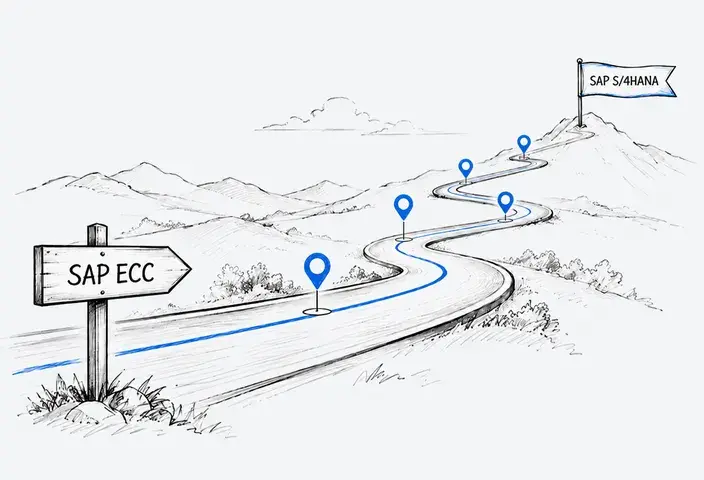
For organizations transitioning from legacy SAP environments, EAM implementation may also involve a broader SAP S/4HANA migration. In such cases, maintenance data, integration dependencies, and cutover activities need to be coordinated with the overall migration plan.
What Affects SAP EAM Implementation Costs and Timelines?
SAP EAM implementation costs and timelines depend on the scope of the project, the existing system landscape, and the amount of preparation required. Key factors include:
- Number of assets and locations: Larger asset portfolios and multiple sites may require more extensive data migration, validation, and rollout coordination.
- Master data quality: Incomplete equipment records, inconsistent functional locations, and unreliable maintenance histories increase data cleansing and migration efforts.
- Integration requirements: Connections with SAP MM, SAP CO, production systems, and third-party applications add design, development, and testing activities.
- Mobile maintenance: Field applications, offline capabilities, and device requirements may introduce additional configuration and integration work.
- Process complexity: Site-specific workflows, approval procedures, and custom requirements can increase configuration and testing efforts.
- Migration and training scope: Historical data volumes, the number of users, and the rollout approach affect cutover preparation and change management activities.
Defining an initial scope around priority maintenance processes can help organizations estimate resources more accurately and plan subsequent rollout phases.
How LeverX Helps Transform Asset Management Into a Driver of Operational Excellence
As an SAP Gold Partner, LeverX helps organizations prepare, implement, and optimize SAP EAM solutions based on their maintenance requirements, existing systems, and asset management priorities.
Our SAP Enterprise Asset Management services in the U.S. cover the full implementation lifecycle, from initial assessment and solution design to integration, go-live, and ongoing optimization.
Our services include:
- EAM readiness assessment: Evaluate existing maintenance processes, asset data quality, and system dependencies to identify implementation gaps and define project priorities.
- Maintenance process design: Define target maintenance workflows, planning requirements, and responsibilities aligned with the selected SAP solution's capabilities.
- Master data preparation: Support equipment and functional-location data cleansing, harmonization, migration, and validation.
- SAP EAM implementation and integration: Configure maintenance functionality and connect it with SAP MM, SAP CO, and relevant production systems to support end-to-end maintenance processes.
- Go-live support and user enablement: Prepare maintenance teams through role-specific training, cutover assistance, and initial production support.
- Post-go-live optimization: Review maintenance KPIs, address process and configuration issues, and identify opportunities for further improvements.
LeverX helps establish maintenance processes and system integrations that support daily operations and provide a foundation for ongoing asset management improvements.
SAP EAM implementation in practice: LeverX project example
A leading gold mining enterprise needed to integrate its maintenance, repair, and operations (MRO) processes into SAP S/4HANA. Maintenance requests were managed through separate applications, while procurement activities were handled in SAP MM. This fragmentation made it difficult to maintain complete equipment histories, track maintenance costs, and coordinate approvals.
LeverX implemented SAP PM and integrated maintenance processes with SAP MM and SAP CO. The project included designing 11 standardized business process flows, preparing an updated equipment hierarchy, configuring maintenance strategies, and improving maintenance order approval procedures.
Over the 14-month project, the customer transitioned 100% of its MRO business processes to SAP. The resulting system centralized maintenance activities, connected repair operations with materials and cost management, and improved visibility into maintenance information.
Introduce Smart Asset Strategies Into Your Organization With SAP EAM
Before implementing SAP EAM, assess your asset data quality, maintenance process maturity, equipment criticality, and integration requirements.
These findings will help you prioritize improvements, define a realistic project scope, and develop an implementation roadmap.
Whether you are modernizing SAP Plant Maintenance, implementing SAP S/4HANA Asset Management, or extending maintenance operations with mobile and predictive capabilities, LeverX can help define the right approach for your organization.
Discuss your SAP EAM project with LeverX
Disclaimer: This article is provided for informational purposes only and does not constitute technical, legal, regulatory, or professional advice. SAP EAM capabilities, product availability, licensing, deployment options, and integration requirements may vary by SAP product, release, and system configuration. Predictive maintenance, mobile execution, and advanced asset performance capabilities may require additional SAP products, subscriptions, integrations, or third-party technologies. Organizations should evaluate their specific requirements and verify the relevant SAP documentation before making implementation decisions. Implementing SAP EAM does not automatically ensure compliance with applicable U.S. safety, environmental, or industry regulations.