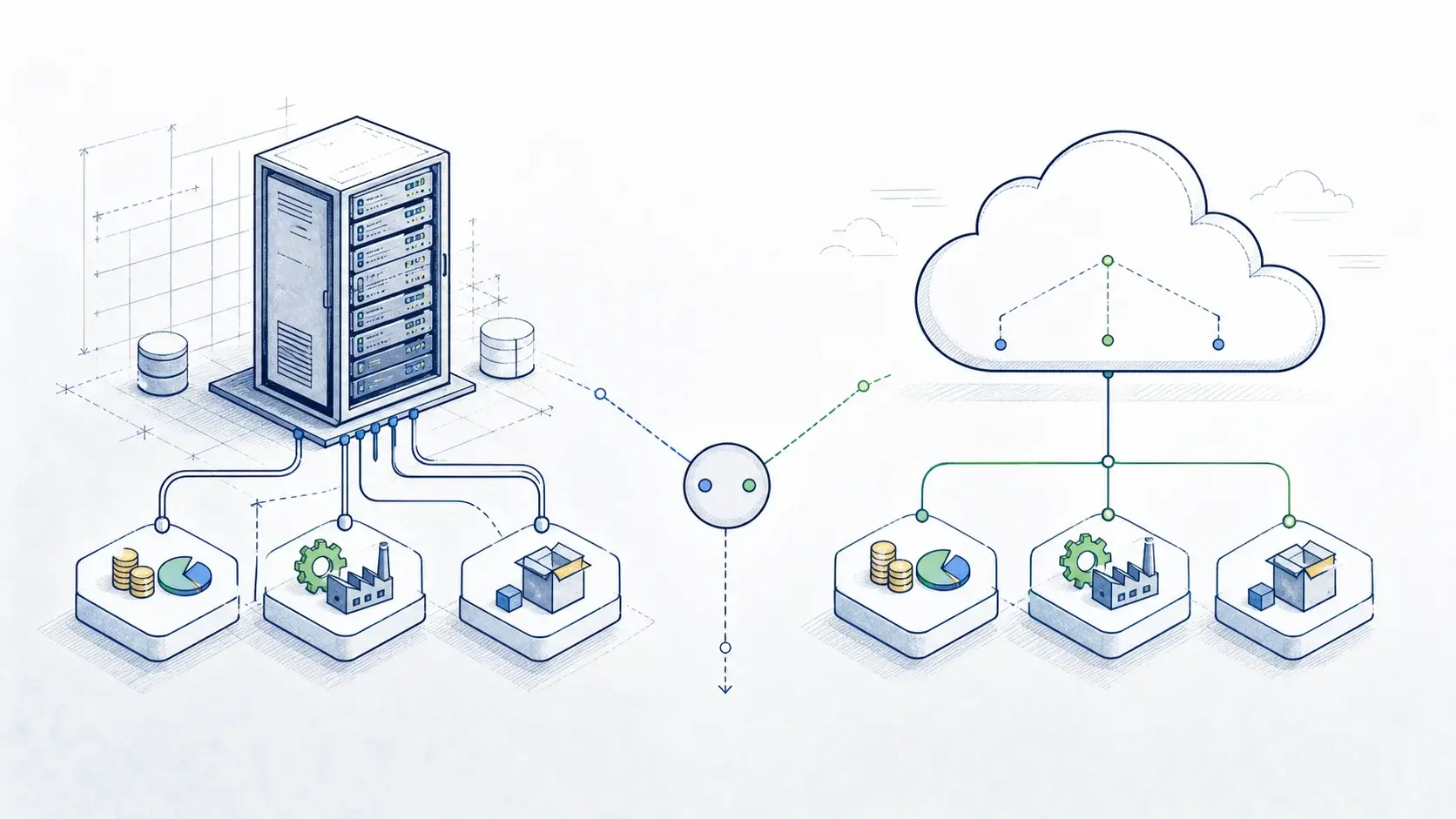
Learn what SAP S/4HANA Cloud Public Edition is, how it works, what it includes, and how US organisations can approach implementation, migration, extensibility, costs, localization, and Clean Core.
US businesses are modernizing ERP environments to reduce legacy complexity, standardize core processes, improve financial and operational visibility, and establish a foundation for automation, analytics, and AI.
For many organizations, this means moving from traditional on-premises ERP to cloud ERP. The change is not just technical. Cloud ERP also changes how businesses manage software updates, process standardization, custom development, integrations, and ongoing innovation.
Within SAP's cloud ERP portfolio, SAP S/4HANA Cloud Public Edition is designed for organizations prepared to adopt standardized processes and use supported configuration, extensibility, and integration mechanisms to address business-specific requirements.
This approach can be particularly relevant for US companies looking to establish a common ERP foundation across multiple legal entities, business units, and locations while reducing the complexity inherited from legacy systems.
SAP provides a US country version of SAP S/4HANA Cloud Public Edition, including country-specific capabilities for relevant US business requirements, such as sales and use tax.
The defining principle of Public Edition is therefore not simply ERP in the cloud. It is:
Cloud ERP + Standardization + Controlled Extensibility + Continuous Innovation
This guide explains what SAP S/4HANA Cloud Public Edition is, what it includes, how it compares with Private Edition, and what US businesses should consider when planning implementation, migration, integration, costs, and long-term operations.
Public Edition can provide a scalable ERP foundation for organizations that want to simplify core processes while retaining the flexibility to connect external applications and build supported extensions. Success depends on how well the solution's standard processes and operating model fit the business.
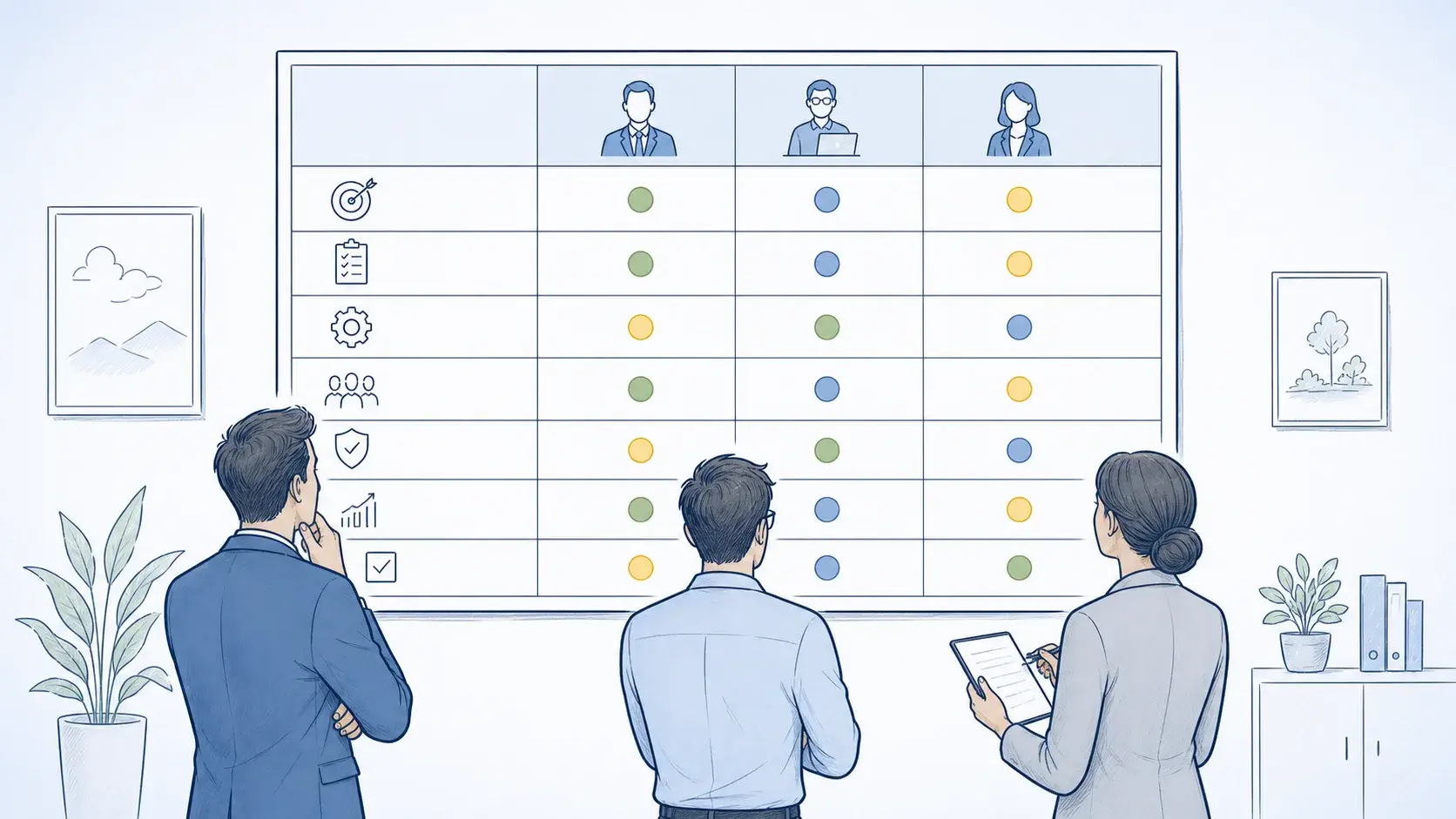
What Is SAP S/4HANA Cloud Public Edition?
SAP S/4HANA Cloud Public Edition is SAP's software-as-a-service (SaaS) ERP offering for core business processes, including finance, procurement, sales, supply chain, manufacturing, and asset management.
SAP manages the underlying cloud infrastructure and software lifecycle. Customers and their implementation partners configure the solution, adopt relevant standard processes, establish integrations, and develop supported extensions.
Public Edition follows a different implementation philosophy from traditional ERP environments that rely heavily on custom modifications.
In a traditional ERP approach, organizations often adapt the system to replicate existing business processes:
Existing process → Customize SAP to match it
Over time, this can lead to extensive custom development, higher maintenance effort, and technical debt.
With Public Edition, the approach starts with standard SAP capabilities:
Business requirement → Evaluate standard SAP → Configure → Extend or integrate where necessary
The goal is to use standard functionality wherever it meets business requirements and introduce additional complexity only when there is a clear business need.
For US companies, this can provide a common ERP foundation across multiple legal entities, business units, and locations while supporting relevant country-specific requirements.
How Can Public Edition Be Extended?
Standardization does not mean that Public Edition cannot support business differentiation. SAP provides several extensibility options, including key-user extensibility, developer extensibility, released APIs and events, and side-by-side applications built on SAP Business Technology Platform (SAP BTP).
These approaches allow organizations to add capabilities while keeping the ERP core as standard as practical.
For example, a company may use standard SAP purchasing processes, configure supported fields and workflows, build a supported developer extension for a specific requirement, and connect an external application through released APIs.
The appropriate option depends on the business requirement and the extension points available in the relevant SAP release.
Expert insight: Before approving custom development, establish whether the requirement can be met through standard functionality or configuration. If an extension is necessary, choose the simplest supported approach that meets the business need.
What Does SAP S/4HANA Cloud Public Edition Include?
SAP S/4HANA Cloud Public Edition provides a broad cloud ERP foundation for core business operations. It brings key functions into one integrated environment, while additional applications, integrations, and extensions can be connected around the ERP core.
The main areas include:
| Business Area | Key Capabilities |
| Finance | General ledger, accounts payable and receivable, asset accounting, financial close, controlling |
| Procurement | Purchasing, requisitions, purchase orders, supplier processes, invoice management |
| Sales | Sales orders, pricing, deliveries, billing, returns |
| Supply Chain | Inventory, MRP, supply planning, procurement, logistics |
| Manufacturing | Production planning, production orders, material planning, product costing |
| Asset Management | Maintenance, asset-related processes, planning and execution |
| Analytics | Operational reporting, embedded analytics, business insights |
These capabilities are connected through the ERP core, allowing transactions and business data to flow across functions.
For example, a sales transaction can affect inventory, fulfilment, receivables, revenue, and financial reporting without requiring separate systems for each step.
Public Edition can also be connected with external applications and SAP technologies such as SAP BTP, CRM, e-commerce, tax platforms, banking systems, warehouse and transportation solutions, and enterprise data platforms.
This makes Public Edition more than a collection of ERP modules: it provides a standardised cloud foundation for running and connecting core business processes.
How Does SAP S/4HANA Cloud Public Edition Work?
Public Edition follows a SaaS model in which SAP manages the underlying cloud environment and software lifecycle. Customers remain responsible for business-process decisions, configuration, data readiness, integrations, user adoption, and the operation of their business processes.
A simplified architecture looks like this:
SAP S/4HANA Cloud Public Edition
↓
SAP BTP + Integration + Extensions
↓
External Applications + Data Platforms + Industry Systems
Depending on business requirements, a US organization may connect Public Edition with:
- CRM and e-commerce applications
- Banks and payment providers
- Tax and payroll systems
- Manufacturing applications
- Warehouse and transportation platforms
- EDI networks and supplier applications
- Enterprise data and analytics platforms
Not every integration requires SAP BTP. The appropriate design depends on available interfaces, system compatibility, existing middleware, security requirements, and the intended business processes.
The key principle is to keep the ERP core standardized while connecting the applications needed to run the business.
Practical insight: For each interface, define which system owns the data, which system owns the business process, and how errors will be handled. These decisions help prevent duplicated logic and conflicting records.
Why Are US Businesses Considering Public Edition?
US organizations may operate across multiple legal entities, states, business units, and distribution networks. Acquisitions, organizational changes, disconnected legacy systems, and inconsistent processes can increase the complexity of managing finance, procurement, inventory, and reporting.
Public Edition can be particularly relevant for organizations seeking to:
- Standardize core business processes across entities and locations.
- Reduce dependence on heavily customized legacy ERP environments.
- Improve visibility into financial and operational performance.
- Connect SAP with existing enterprise applications.
- Establish a common platform for analytics and automation.
- Introduce new business units through a consistent ERP template.
However, Public Edition is not automatically the right choice for every US business. Organizations with extensive legacy dependencies or requirements that do not fit standard SAP processes may need to consider Private Edition or a different target architecture.
The key question is whether the business can operate effectively within the Public Edition model without introducing excessive exceptions.
Practical insight: Before choosing Public Edition, assess which requirements fit standard SAP and which need local variation or differentiation. Our team can conduct a Public Edition assessment and recommend the right approach for your organisation.
SAP S/4HANA Cloud Public Edition vs. Private Edition
SAP S/4HANA Cloud is available primarily in two deployment options: Public Edition and Private Edition. They differ in their level of standardisation, flexibility, customisation, and approach to legacy processes.
The table below compares the two options and highlights the key differences to consider when choosing the right model for your organisation.
| Public Edition | Private Edition | |
|---|---|---|
| Deployment | Public cloud SaaS | Private cloud |
| Standardisation | Higher | More flexibility |
| Customisation | More controlled | Broader options |
| Extensibility | In-app, developer, side-by-side | Broader extensibility |
| Legacy processes | Greater need for redesign | More flexibility |
| Core modifications | Not supported | More options under SAP guidance |
| Typical fit | Standardisation-focused organisations | Complex requirements or significant legacy dependencies |
The key difference is not simply the complexity of the organisation, but the degree of standardisation, flexibility, and compatibility with existing business requirements each deployment model provides.
Public Edition is built around a more standardised SaaS approach, while Private Edition provides a broader framework for organisations that need greater flexibility in adapting the ERP environment to existing processes and requirements.
SAP S/4HANA Cloud Public Edition US Localization
US localization should be considered during solution design rather than treated as a final configuration step.
Relevant requirements may include:
- Sales and use tax determination
- Tax jurisdiction codes and related master data
- Tax reporting and financial processes
- Country-specific accounting requirements
- Integrations with external tax services where needed
US sales and use tax can involve state and local jurisdictions. The appropriate configuration depends on the company's business model, transaction types, operating locations, and tax requirements.
SAP offers an AI-enabled capability for configuring US tax jurisdictions in SAP S/4HANA Cloud Public Edition. It uses language models to extract address information and identify relevant jurisdiction codes. SAP reports up to a 75% reduction in the effort required to configure US sales tax jurisdiction rules. This figure applies to that specific configuration task, not to the cost or duration of an entire ERP implementation.
Learn more about SAP S/4HANA Cloud Public Edition configuration for US tax jurisdictions.
The required functionality, product entitlements, and configuration should be validated for the organization's SAP release and tax architecture. External tax services may still be appropriate for particular requirements.
Practical insight: Include finance, tax, IT, and business stakeholders in localization workshops. Confirm tax determination rules, master data, reporting requirements, and external integrations before finalizing the design.
SAP S/4HANA Cloud Public Edition for US Multi-Entity Organisations
For organizations with multiple legal entities or business units, Public Edition can provide a common ERP foundation while accommodating relevant entity-level requirements.
A typical model is:
Global process standard → US template → Approved entity-specific requirements
This approach can support consistency across finance, procurement, sales, reporting, and master data while allowing necessary differences to be addressed within the target design.
Key areas to align include:
- Financial structures and accounting processes
- Procurement and supplier workflows
- Tax and compliance requirements
- Payments and banking interfaces
- Reporting and consolidation
- Master data and organizational structures
- Shared-service processes
The main challenge is controlling local variation. Every exception may affect configuration, testing, integrations, training, and ongoing support.
Organizations should define their standard processes, entity-level requirements, data ownership, and governance model before the implementation scope is finalized.
Practical insight: Establish the US template early and require business justification for entity-specific deviations. This helps prevent local exceptions from gradually increasing the complexity of the overall ERP environment.
SAP S/4HANA Cloud Public Edition Extensibility
Standardisation does not mean that Public Edition cannot support business differentiation.
SAP provides several extensibility approaches that allow organisations to address requirements without unnecessarily modifying the ERP core.
Key User Extensibility
Business users can make supported adaptations such as adding custom fields or adapting certain application interfaces.
Developer Extensibility
Developers can build extensions using ABAP Cloud and released SAP APIs within the supported Public Edition framework.
Side-by-Side Extensibility
Applications and extensions that should remain separate from the ERP core can be developed using SAP BTP.
APIs and Events
Released APIs and business events can connect Public Edition with external applications and support loosely coupled architectures.
This creates several possible decisions for a business requirement:
Standard SAP → Configuration → Developer Extension → Side-by-Side Extension → Integration
The goal is to choose the simplest supported approach that delivers the required business value.
SAP S/4HANA Cloud Public Edition and Clean Core
Clean Core is a core principle of SAP S/4HANA Cloud Public Edition.
SAP's Clean Core approach aims to keep the ERP core as standard and stable as possible while allowing businesses to add specific capabilities through supported extensions and integrations. SAP explains that the goal is to separate business differentiation from unnecessary changes to the core.
In practice, this means:
- using standard SAP functionality where it meets the requirement;
- relying on released APIs and extension points;
- moving suitable custom capabilities outside the ERP core;
- using SAP BTP for side-by-side extensions where appropriate;
- managing extensions through clear governance;
- continuously monitoring technical debt.
Expert insight: Clean Core does not mean avoiding customisation altogether. It means putting each custom requirement in the right architectural layer so the ERP core remains easier to update, maintain, and evolve.
This approach is particularly important in Public Edition because the solution follows a continuous cloud update model. The cleaner the core, the easier it is to adopt new SAP functionality without repeatedly reworking custom developments.
SAP S/4HANA Cloud Public Edition Implementation
Implementing SAP S/4HANA Cloud Public Edition is not simply a matter of configuring an ERP system. The programme needs to align business processes, data, integrations, extensions, security, and user adoption within a standardised cloud model.
A typical implementation roadmap looks like:
Assess → Define → Fit-to-Standard → Design → Configure → Integrate → Migrate → Test → Deploy → Stabilise
1. Assess the Current Landscape
Start by reviewing the existing ERP environment, business processes, data, integrations, reporting, security, and custom developments.
The goal is to identify what should be retained, redesigned, replaced, or retired before moving to Public Edition.
2. Define the Target Operating Model
Establish how core functions such as finance, procurement, sales, supply chain, and manufacturing should work in the future and where common processes can be applied across the organisation.
3. Conduct Fit-to-Standard
Compare business requirements with standard SAP capabilities.
Each requirement should lead to a clear decision:
Adopt Standard → Configure → Extend → Integrate → Redesign
This helps prevent unnecessary customisation from entering the target solution.
4. Design the Target Architecture
Define how Public Edition will work with integrations, extensions, SAP BTP, external applications, data platforms, and security services.
The objective is to create a target architecture that supports current requirements without adding unnecessary complexity.
5. Prepare the Data
Determine what data should be migrated, cleansed, transformed, archived, or retired.
Data preparation should start early because poor data quality can directly affect testing and business operations after go-live.
6. Configure and Extend
Configure standard SAP processes and implement only the extensions required to address genuine business needs, following the Clean Core approach.
7. Integrate
Connect Public Edition with relevant external systems such as CRM, banking, tax, payroll, e-commerce, manufacturing, warehouse, or transportation platforms.
8. Test
Validate the complete business flows rather than testing individual applications in isolation.
Testing should cover processes, integrations, migrated data, security, and end-to-end scenarios.
9. Prepare Users
Support the organisational transition through training, communication, updated process documentation, role changes, and user support.
10. Go Live and Stabilise
Move the solution into production, monitor critical processes, resolve initial issues, and transition into the ongoing operating model.
Practical insight: Run a fit-to-standard assessment before committing to the implementation scope. It will show which requirements can be covered by Public Edition as standard, which need configuration or extensions, and which may indicate that another deployment approach should be considered.
SAP S/4HANA Cloud Public Edition Migration
Public Edition can support both new implementations and transformations from existing ERP environments.
For organisations moving from SAP ECC or another ERP system, migration should not be approached as a technical copy of the existing landscape. The target system is built around a different cloud operating model, so legacy processes, data, custom developments, and integrations need to be reassessed before they are moved.
The migration strategy should address:
- master data;
- transactional data;
- historical data;
- custom processes and developments;
- reporting;
- integrations;
- legal entities;
- US localization;
- cutover requirements.
A typical migration lifecycle is:
Assess → Cleanse → Map → Transform → Migrate → Validate → Reconcile → Cut Over
The key question at each stage is not simply “How do we move this?”, but “Does this still need to exist in the new environment?”
A legacy report may no longer be required.
A custom workflow may be replaced by standard SAP functionality.
Historical information may need to be retained for compliance or analysis without becoming operational data in Public Edition.
This makes migration an opportunity to reduce legacy complexity instead of carrying it into the new cloud environment.
Practical insight: Before defining the migration scope, classify legacy processes and data into migrate, redesign, replace, archive, or retire. This can significantly reduce unnecessary migration effort and help keep the new Public Edition environment clean.
SAP S/4HANA Cloud Public Edition Integration
Public Edition typically operates as part of a broader enterprise application landscape rather than as an isolated ERP system.
Depending on the business, it may exchange data with:
- CRM and e-commerce;
- banks and payment providers;
- tax and HR platforms;
- warehouse and transportation systems;
- manufacturing applications;
- EDI and supplier networks;
- data and analytics platforms.
The integration layer connects these systems with SAP S/4HANA Cloud Public Edition and enables data to move between business processes without placing all functionality inside the ERP.
For example, an e-commerce order can be transferred to SAP for order processing, while fulfilment, payment, tax, or customer interactions remain handled by specialised applications.
Practical insight: For each integration, define which system owns the data and which system owns the business process. This helps avoid duplicated logic, conflicting data, and unnecessary interfaces.
SAP S/4HANA Cloud Public Edition and AI
SAP S/4HANA Cloud Public Edition can also serve as a foundation for AI-enabled business processes. Rather than treating AI as a separate technology layer, organisations can apply it to specific ERP activities where automation or decision support can improve business outcomes.
Potential use cases include:
- finance and accounting assistance;
- procurement and supplier processes;
- sales and customer operations;
- supply-chain planning and exception handling;
- workflow automation;
- business information and decision support.
SAP is also introducing AI-assisted capabilities for specific US scenarios, including US tax-jurisdiction configuration.
For US businesses, the most valuable AI opportunities are typically those tied directly to measurable process outcomes rather than AI adoption alone.
Practical insight: Start with a business process, not the AI technology. Identify where AI can reduce manual effort, accelerate decisions, or improve accuracy, then evaluate the use case against measurable business value.
Common SAP S/4HANA Cloud Public Edition Challenges
Even when Public Edition is a good functional fit, implementation can still create challenges. Most are related not to the software itself, but to decisions made around processes, scope, people, and delivery.
Process Alignment
Business teams may have different expectations about how processes should work, particularly when several entities or functions are involved. Reaching agreement on the target process can become more difficult than configuring the system.
Scope Management
Public Edition projects can expand quickly when organisations try to include too many processes, entities, integrations, or exceptions in the initial rollout. Unclear scope can affect both budget and timeline.
Business Readiness
Users need to understand how their roles and daily activities will change. Limited engagement from business teams can lead to resistance, weak adoption, and additional work after go-live.
Decision-Making and Ownership
Public Edition requires timely decisions on processes, requirements, data, and priorities. Without clear ownership, unresolved issues can slow the project and create conflicting expectations between business and IT teams.
Testing and Cutover
End-to-end testing can be challenging when multiple business functions and external systems are involved. Cutover also requires coordinated planning for data, users, integrations, roles, and critical business operations.
Post-Go-Live Adoption
Going live is not the end of the transformation. Teams may need additional support to adopt new processes, resolve operational issues, and make effective use of the capabilities available in the new environment.
SAP S/4HANA Cloud Public Edition Best Practices
The effectiveness of a Public Edition implementation also depends on how the program is governed and operated.
Establish Clear Decision Rights
Define who can approve process changes, scope adjustments, extensions, and exceptions. Avoid leaving key decisions to informal discussions without documented ownership.
Maintain One Source of Truth for Requirements
Keep a controlled backlog of requirements, decisions, dependencies, and approvals so that new requests do not become undocumented additions to the project.
Govern Exceptions
Every exception should have a clear business owner, rationale, approval, and assessment of its effect on cost, testing, and ongoing support.
Rehearse Critical Business Scenarios
Validate complete business cycles such as order-to-cash and procure-to-pay, including relevant integrations and migrated data, rather than testing system functions in isolation.
Prepare Operational Teams Before Go-Live
Define how incidents, service requests, changes, and business-process issues will be handled from the first day of production.
Define KPIs Before Deployment
Establish baseline measurements so that improvements in data quality, process efficiency, reporting, or other outcomes can be measured rather than assumed.
Review the Solution After Go-Live
Use the initial operating period to identify adoption issues, process bottlenecks, and opportunities to simplify the solution.
How Much Does SAP S/4HANA Cloud Public Edition Cost in the US?
There is no single implementation price for SAP S/4HANA Cloud Public Edition. The total investment depends on the size of the rollout, business-process scope, number of entities, data, integrations, and level of transformation required.
For US organisations, the following can be used as indicative implementation planning ranges, excluding SAP subscription fees and potentially other third-party costs:
| Project Scope | Indicative US Implementation Budget* | Typical Scope |
|---|---|---|
| Assessment and roadmap | $50,000–$125,000 | Current-state assessment, fit-to-standard, architecture and roadmap |
| Focused Public Edition implementation | $250,000–$650,000 | Core ERP processes, limited entities and integrations |
| Mid-sized transformation | $650,000–$1.5m+ | Multiple functions, data migration, integrations and broader rollout |
| Large US enterprise programme | $1.5m–$4m+ | Multiple entities, complex integrations, significant data and change |
| Global / multi-country programme | $4m–$10m+ | Global template, US localization, multiple countries and major integrations |
*Indicative planning ranges only. They are not SAP or LeverX fixed prices. Actual costs vary by project scope, users, entities, integrations, data, extensions, internal resources, testing, change management, and rollout strategy.
For US enterprises, the biggest budget differences usually come from scope and organisational complexity rather than the ERP software alone. A single-entity rollout with standard processes can be significantly different from a programme involving multiple entities, global templates, legacy migration, and numerous external systems.
A complete business case should therefore consider:
SAP Subscription + Implementation + Data + Integration + Testing + Change Management + Ongoing Support
It is also useful to distinguish between implementation cost and total cost of ownership. A lower initial project price does not necessarily mean a lower long-term cost if the solution requires more manual work, additional integrations, or extensive support after go-live.
Practical insight: Before requesting implementation quotes, define the number of entities, core processes, integrations, migration scope, and rollout model. This gives SAP partners a consistent baseline and makes cost proposals much easier to compare.
How Long Does SAP S/4HANA Cloud Public Edition Implementation Take?
Implementation timelines depend on business scope, data readiness, integrations, decision-making, and organizational complexity.
The following ranges are indicative planning estimates rather than delivery commitments.
| Project Stage | Indicative Timeframe |
|---|---|
| Assessment and roadmap | 4–8 weeks |
| Fit-to-standard and solution design | 6–12 weeks |
| Configuration and development | 3–6 months |
| Data migration and integrations | 2–6 months |
| Testing and training | 1–3 months |
| Focused implementation overall | Approximately 4–8 months |
| Large enterprise transformation | 12–24+ months |
Project phases frequently overlap, so durations should not simply be added together. Actual timelines depend on the scope, delivery model, data quality, and organizational readiness.
A phased rollout may help an organization prioritize critical entities and processes before expanding to additional business units. However, multiple deployment waves can also increase testing, cutover, and support effort.
Practical insight: If speed is a priority, evaluate whether a phased rollout is appropriate. Start with a manageable scope, establish a stable template, and expand once the initial deployment is operating effectively.
SAP S/4HANA Cloud Public Edition Checklist for US Businesses
Before starting an implementation, organizations should be able to answer the following questions.
|
Assessment area |
Key questions |
|
Business processes |
Which processes can adopt standard SAP, and where are exceptions necessary? |
|
Organizational scope |
Which legal entities, locations, and business units are included? |
|
US localization |
Which sales and use tax processes apply? Are external tax services or additional integrations required? |
|
Data |
What data must be migrated, cleansed, archived, or retired? |
|
Integration |
Which CRM, banking, tax, HR, manufacturing, warehouse, or transportation systems need to connect? |
|
Extensibility |
Which requirements can be configured, developed within SAP, handled through SAP BTP, or addressed by external systems? |
|
Governance |
Who owns process decisions, data, extensions, and change approvals? |
|
Delivery |
What is the rollout strategy, how will testing and training work, and how will success be measured? |
|
Operations |
Who will manage incidents, ongoing support, changes, and continuous improvement? |
The answers create the foundation for a realistic implementation roadmap, budget, and operating model.
How LeverX Supports SAP S/4HANA Cloud Public Edition
LeverX helps US organisations assess, design, and implement SAP S/4HANA Cloud Public Edition, covering fit-to-standard, US localization, data migration, integration, Clean Core, SAP BTP, testing, and post-go-live support.
We recommend starting with an assessment to evaluate your current landscape, business requirements, and Public Edition fit before defining the implementation scope. Our SAP consulting, data, integration, engineering, and AI expertise helps businesses build a scalable cloud ERP foundation.
Conclusion
SAP S/4HANA Cloud Public Edition gives US organisations a modern SaaS ERP foundation for core business operations, combining finance, procurement, sales, supply chain, manufacturing, and asset management in a connected cloud environment.
For businesses looking to reduce ERP complexity, standardise core operations, and move away from heavily customised legacy environments, Public Edition can provide a strong foundation for long-term transformation. Its cloud delivery model, controlled extensibility, and continuous innovation also create a platform for automation, analytics, and AI.
The critical question is not whether Public Edition offers enough functionality. It is whether its operating model, standard processes, and extensibility framework fit the way your organisation needs to run and evolve.
A structured assessment of your current landscape, business requirements, processes, and target operating model can identify the right deployment approach, define the implementation scope, and highlight potential risks before major investment is made.
Frequently Asked Questions
Frequently Asked Questions
What is SAP S/4HANA Cloud Public Edition?
SAP S/4HANA Cloud Public Edition is SAP's SaaS ERP offering for core business processes, including finance, procurement, sales, supply chain, manufacturing, and asset management.
Is SAP S/4HANA Cloud Public Edition suitable for US businesses?
Yes. SAP provides a localized US version of Public Edition with country-specific capabilities, including support for US sales and use tax requirements.
What is the difference between SAP S/4HANA Cloud Public Edition and Private Edition?
Public Edition follows a more standardised SaaS model, while Private Edition provides greater flexibility for adapting the ERP environment to specific business and legacy requirements.
Can SAP S/4HANA Cloud Public Edition be customised?
Yes, but within the Public Edition cloud model. Organisations can use supported configuration and extensibility options, APIs, events, and side-by-side extensions rather than modifying the ERP core.
What is Clean Core in SAP S/4HANA Cloud Public Edition?
Clean Core means keeping the ERP core as standard as possible and placing business-specific extensions and integrations in the appropriate architectural layer.
Can Public Edition integrate with non-SAP systems?
Yes. Public Edition can connect with CRM, e-commerce, banking, tax, HR, manufacturing, warehouse, transportation, EDI, and other enterprise systems.
What is SAP BTP used for with Public Edition?
SAP BTP can provide integration, automation, application development, data, and side-by-side extension capabilities around the Public Edition ERP core.
Can SAP ECC be migrated to Public Edition?
Yes. However, migration typically requires reassessing legacy processes, data, custom developments, and reports rather than simply copying the existing ERP environment.
How does Public Edition support US tax requirements?
SAP provides US-specific functionality for sales and use tax, tax jurisdictions, and related processes. External tax solutions can also be integrated where required.
How much does SAP S/4HANA Cloud Public Edition cost in the US?
Indicative implementation budgets can range from approximately $250,000 for focused programmes to several million dollars for large enterprise or global transformations. Actual costs depend on scope, entities, integrations, migration, extensions, and rollout complexity.
How long does a Public Edition implementation take?
A focused implementation may take approximately 4–8 months, while a large enterprise transformation can require 12–24 months or more.
What are the main SAP S/4HANA Cloud Public Edition implementation challenges?
Typical challenges include aligning business requirements, managing scope, preparing users, coordinating decisions across teams, and executing testing and cutover effectively.
How should a US business assess whether Public Edition is the right fit?
Start with an assessment of the current ERP landscape, business requirements, processes, organisational structure, and target operating model. This can help determine Public Edition fit, implementation scope, and potential risks before investment.
What should businesses look for in a Public Edition implementation partner?
Look for proven Public Edition experience, US localization knowledge, fit-to-standard expertise, data and integration capabilities, Clean Core experience, and a delivery team that can support the organisation beyond go-live.
Disclaimer: This article is provided for general informational purposes and does not constitute legal, tax, financial, regulatory, or professional advice. SAP S/4HANA Cloud Public Edition capabilities, country localization, licensing, pricing, implementation approaches, and product roadmaps may change over time. US tax and regulatory requirements vary by jurisdiction, business model, and transaction type. Organisations should confirm applicable SAP functionality and regulatory requirements for their specific environment before making implementation or investment decisions. Cost and timeline figures are indicative planning ranges only and do not represent LeverX pricing, quotations, or project commitments.