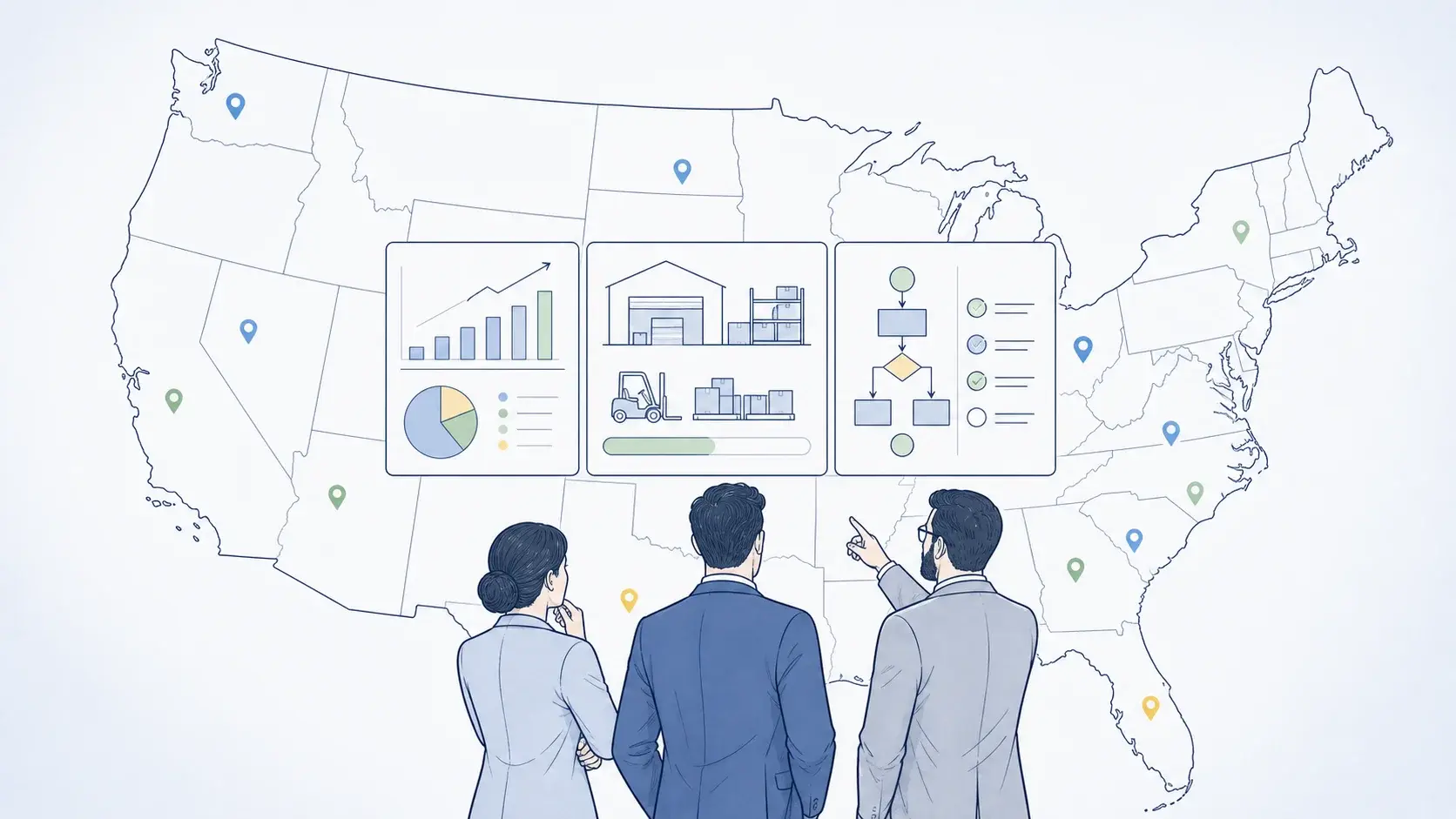
Find out which SAP S/4HANA migration approach fits your existing system, data, and business requirements.
When companies begin planning an SAP ECC to SAP S/4HANA migration, they often have a preferred approach in mind. Some want to preserve their existing processes, while others see migration as an opportunity to redesign their ERP environment. But what happens when an assessment shows that the preferred option could require more time, effort, or investment than expected?
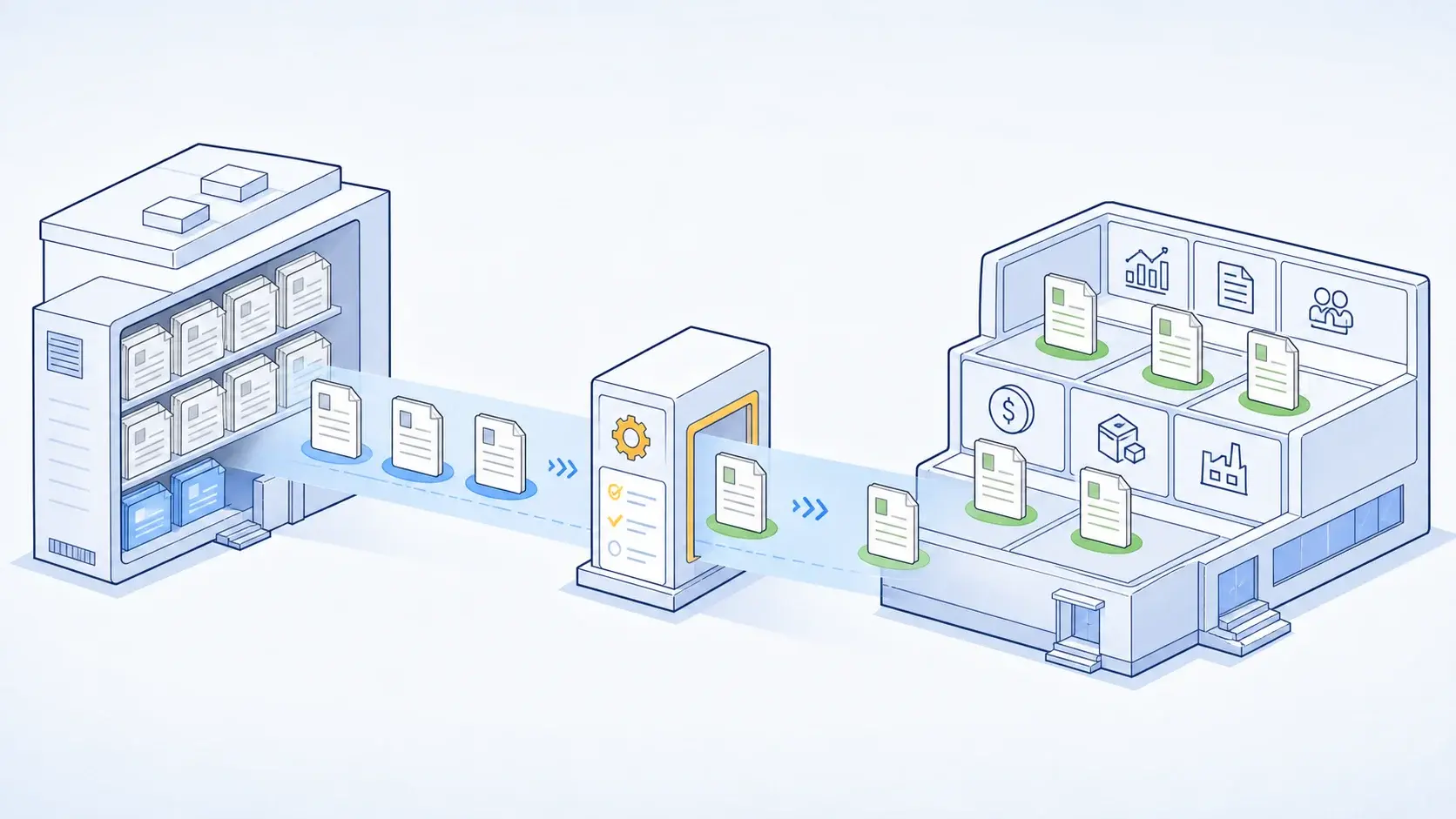
Brownfield allows you to convert your existing SAP ECC system to SAP S/4HANA while retaining much of its configuration, data, and established processes. Greenfield involves implementing a new system and redesigning processes to meet current business requirements. Selective data transition, often referred to as Bluefield, gives you more flexibility in deciding which data and system elements to retain, transform, or transfer.
The right approach depends on your current SAP landscape, custom code, data quality, organizational structure, and transformation goals. For U.S. businesses, the decision may also involve financial reporting, internal controls, tax processes, and the requirements of multiple business units or subsidiaries.
SAP maintenance timelines are another factor to consider. Mainstream maintenance for SAP ERP 6.0 varies by enhancement package and product component. Some maintenance deadlines have already passed, while others extend through 2027, with additional options potentially available depending on the product and support agreement. Check SAP's current maintenance policy for your specific environment when establishing your migration timeline.
Key takeaways
- Brownfield: Build on your existing SAP investment by moving to SAP S/4HANA while preserving established processes and minimizing disruption.
- Greenfield: Rethink how your business operates with a new SAP S/4HANA environment designed around current goals and future growth.
- Bluefield: Take a selective approach by retaining the data and processes that matter while leaving behind unnecessary complexity.
- Choose the right path for your business: Evaluate operational priorities, process improvement opportunities, data quality, costs, and the level of change your organization is ready to manage.
- Think beyond migration: Consider how your decision will affect business continuity, compliance, operational efficiency, and your ability to adapt as the business evolves.
What do Brownfield, Greenfield, and Bluefield actually mean?
The main difference between these approaches is how much of your existing SAP environment you retain and how much you change during migration.
Brownfield (system conversion). You convert your existing SAP ECC system to SAP S/4HANA. Much of the existing configuration, historical data, and business process design is retained, although custom code, integrations, and system components may require adjustment.
Greenfield (new implementation). You implement SAP S/4HANA in a new environment, configure processes around current business requirements, and determine which data to migrate. This approach offers more flexibility to redesign processes and reduce unnecessary customizations.
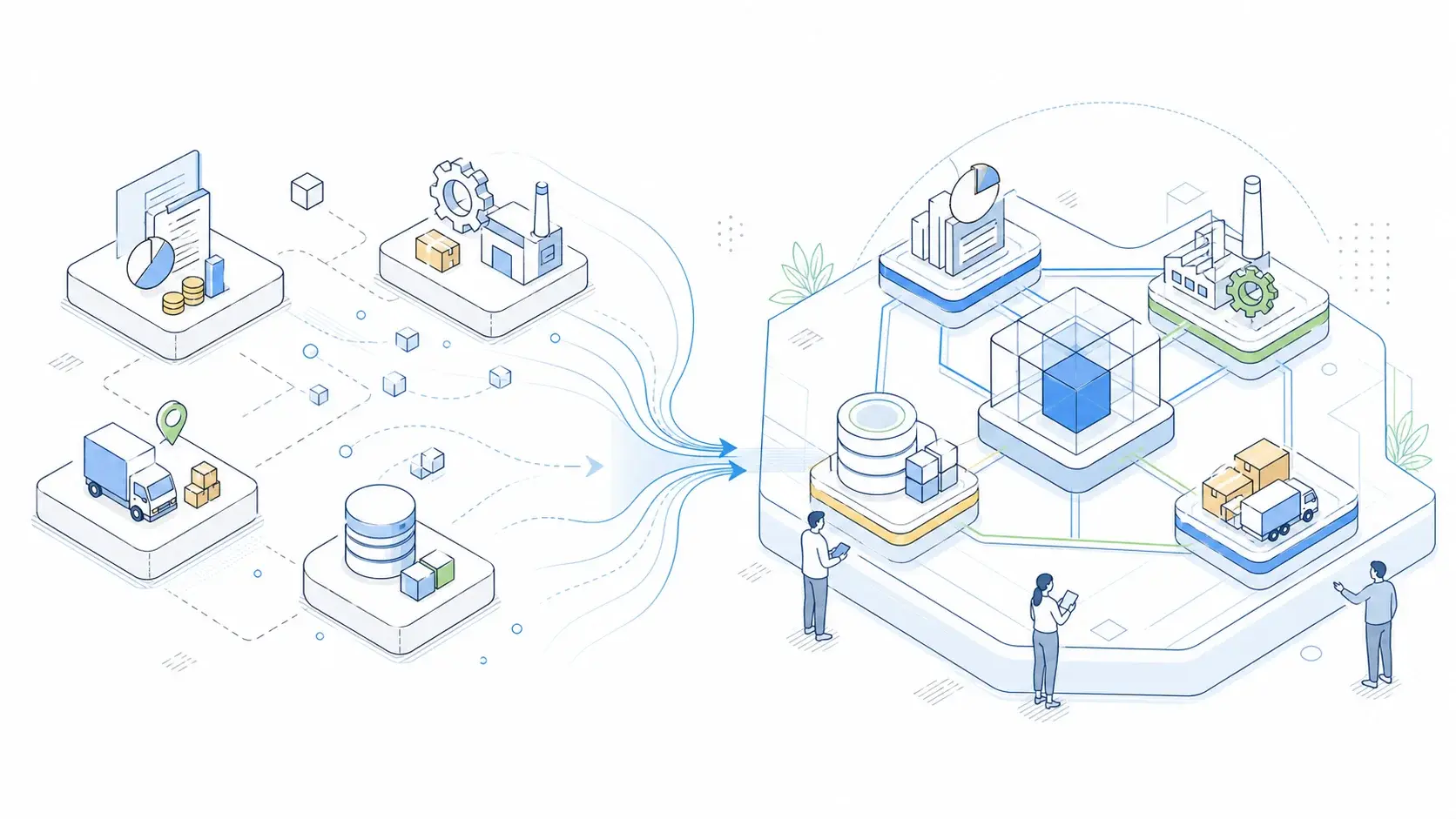
Bluefield (selective data transition). You selectively transfer and transform data and relevant system elements. This approach can be useful when consolidating systems, restructuring organizational units, or retaining specific parts of an existing SAP landscape.
|
Parameter |
Brownfield |
Greenfield |
Bluefield |
|
Main approach |
System conversion |
New implementation |
Selective data transition |
|
Existing processes |
Mostly retained |
Redesigned as needed |
Selectively retained or redesigned |
|
Historical data |
Generally retained |
Migrated according to the scope |
Selected data transferred |
|
Custom code |
Reviewed and adapted as needed |
Rebuilt, replaced, or retired |
Selectively reused or adapted |
|
Organizational changes |
Limited flexibility |
Broad redesign options |
Selective restructuring |
|
Main challenges |
Compatibility and legacy issues |
Process redesign and data migration |
Data selection and transformation complexity |
The target deployment model also affects which options are available. SAP Cloud ERP generally follows a new-implementation approach, while SAP S/4HANA Cloud Private Edition and on-premises deployments can support system conversion, new implementation, or selective data transition, subject to product-specific prerequisites.
Whichever path you choose, consider how much custom code your future SAP S/4HANA environment will need. SAP's clean core principles help organizations limit unnecessary modifications and manage future upgrades more effectively. Greenfield gives you an opportunity to apply these principles from the start, while Brownfield and Bluefield projects may require additional work to assess and address existing developments.
Example SAP S/4HANA migration budget for a growing U.S. business
For a growing U.S. business moving from SAP ECC to SAP S/4HANA, the budget and timeline will depend on the complexity of its current environment, data migration needs, and the extent of process changes.
The following hypothetical example illustrates how a company might compare migration approaches during early planning.
| Migration approach | Illustrative timeline | Illustrative services budget (USD) |
|---|---|---|
| Brownfield | 6–9 months | $300,000–$800,000 |
| Greenfield | 9–15 months | $500,000–$1.5 million |
| Bluefield | 6–12 months | $400,000–$1.2 million |
Disclaimer: These figures are hypothetical planning examples for a growing business with a moderately complex SAP environment. They are not verified market averages, an official SAP estimate, or a cost calculation or commercial proposal from LeverX. Actual costs and timelines may differ significantly based on project scope, system complexity, data volume, integrations, and resource requirements. The illustrative budgets cover implementation services only and may exclude SAP licenses or subscriptions, infrastructure, third-party software, and internal staff costs.
The differences in these estimates reflect the potential scope and complexity of each migration approach, not a fixed cost hierarchy.
- Brownfield may require less process redesign, potentially reducing implementation effort. However, legacy custom code, technical debt, and integration issues can increase conversion costs.
- Greenfield may require more upfront investment in process design, configuration, data migration, and change management. It also creates opportunities to simplify processes and reduce unnecessary customizations.
- Bluefield can limit migration to selected data and system elements, but data selection, transformation, validation, and system consolidation can add complexity.
These approaches are not always cheaper or faster in the same order. A complex Brownfield conversion may cost more than a well-scoped Greenfield implementation, while a Bluefield project involving multiple systems or legal entities may require additional time and resources.
For U.S. businesses, financial reporting, tax processes, internal controls, and multi-entity operations may also affect project scope, budget, and schedule.
Before committing to a migration strategy, conduct a project-specific assessment to establish a realistic budget, schedule, and implementation scope.
How do you assess your SAP ECC landscape before choosing?
Start by understanding what your SAP ECC environment contains and how much work it may need before migration. How much custom code does it use? Which integrations are still necessary? Are there data quality issues that should be resolved? Do your current processes still support the way your business operates?
The answers can help you narrow down your options and identify potential costs and dependencies before committing to a migration plan.
SAP Readiness Check can help identify potential issues when preparing to convert SAP ECC to SAP S/4HANA. Depending on the checks performed, it can provide information about simplification items, custom code, add-on compatibility, financial data, and system sizing. For a more detailed review of custom ABAP code, you can use the ABAP Test Cockpit (ATC).
These tools help identify technical findings, but the results still need interpretation. Review them with SAP specialists to understand which changes are required, estimate remediation effort, and determine how the findings affect your migration options.
If you also plan to redesign business processes, consolidate subsidiaries, or restructure your organization, include those requirements in the assessment.
Consider the following factors before making a decision:
- System readiness: The technical condition of your current SAP release and the compatibility of relevant components.
- Organizational structure: Whether company codes, controlling areas, business units, or other structures need to change.
- Data quality and retention: Which historical records must remain available for operations, reporting, audit, or legal requirements.
- Compliance and internal controls: Whether financial reporting, tax processes, access controls, and applicable regulatory requirements need to be addressed during the transformation.
- Custom code: How much custom development exists, whether it is still needed, and what remediation may involve.
- Integration dependencies: Which connected applications, third-party systems, and interfaces must continue working after migration.
- Deployment and rollout strategy: Whether the business requires a single cutover or a phased rollout across business units or locations.
- Business availability: Whether process owners and key users can participate in decisions, data validation, testing, and go-live preparation.
Even if the assessment leads you to reconsider your preferred approach, the findings remain useful. They provide a clearer picture of custom developments, data quality, and technical dependencies, helping you compare proposals and discuss the scope with potential implementation partners.
What if the assessment contradicts the path you already favored?
Suppose your team prefers Brownfield because you want to preserve established processes. However, the assessment shows that adapting years of custom development could require substantial remediation. It may be worth comparing the effort and business impact of a system conversion with those of a new implementation before making a final decision.
The opposite can happen, too. You might be planning a Greenfield implementation only to discover that your current processes work well and many customizations remain necessary. A complete rebuild could introduce costs, operational changes, and additional training requirements that your business does not need.
Ask your implementation partner to explain which findings support the recommendation and how the alternatives compare in terms of scope, cost, timeline, dependencies, and business disruption.
I recommend choosing the migration approach based on business objectives and assessment findings, then establishing a clear scope baseline. Proposed changes should be evaluated for their business value and impact on cost, timeline, and delivery risk. He also emphasizes assessing data readiness early, with preparation activities tailored to the selected approach, and involving business process owners throughout planning, testing, and go-live readiness.
— Dzmitry Shupayeu, Head of Delivery at LeverX
 Photo: Dzmitry Shupayeu, Head of Delivery at LeverX
Brownfield: when does a system conversion fit?
Brownfield can be a good fit when your existing processes work well and your SAP ECC environment is in reasonable technical condition. Because much of the configuration, historical data, and process design is retained, a system conversion may require less process redesign than a Greenfield implementation.
However, the actual effort depends on the source environment, particularly custom code, integrations, data quality, and conversion prerequisites. Some workflows may need to change to meet SAP S/4HANA requirements, and employees may need time to adapt to new interfaces and capabilities.
A conversion may be worth considering when:
- Your existing process design still reflects how the business operates.
- Custom code is maintained and can be adapted without disproportionate effort.
- Historical data needs to remain available in the converted system.
- You want to retain established business processes while moving to SAP S/4HANA.
- Your maintenance timeline makes a carefully scoped transition a priority.
Brownfield may be less suitable when:
- Legacy modifications have accumulated to the point where remediation is extensive.
- The business requires significant changes to organizational structures or process design.
- You need to migrate individual business units or company codes on different schedules and require more selective transition options.
- Existing technical or data issues would undermine the value of simply converting the system.
A system conversion does not automatically resolve existing problems. Poor data quality, unnecessary customizations, and outdated processes can carry into SAP S/4HANA unless they are addressed as part of the project.
Brownfield in practice: SAP ECC conversion for an optical fiber manufacturer
For a global manufacturer of optical fibers and laser-delivery systems, maintaining production continuity was a key migration requirement. The company relied on SAP ECC to manage manufacturing operations and had a three-day holiday window during which the system could be taken offline.
LeverX used a Brownfield approach to convert the existing SAP ECC system to SAP S/4HANA, preserving established processes and adapting custom code for the new environment. The technical conversion was completed within the planned three-day cutover window.
Following the transition, LeverX also integrated SAP Production Planning and Detailed Scheduling (PP/DS) to extend the company's production planning capabilities.
Greenfield: when is a clean-slate implementation worth it?
Greenfield allows you to redesign business processes during a new SAP S/4HANA implementation. You start with a new system, configure processes around current requirements, and evaluate which existing customizations are still necessary.
Some developments may be replaced with standard SAP functionality, while others may need to be rebuilt for the new environment. Integrations must be reviewed, required data migrated, and employees prepared for changes in their day-to-day work. These activities can make Greenfield more demanding for the business, particularly when the project involves extensive process redesign.
A new implementation may make sense when years of modifications have made your SAP ECC environment difficult to maintain or adapt. It can also suit organizations that have grown through acquisitions and now operate incompatible process models, or businesses undergoing a major operating-model change.
Historical data requires particular attention. A Greenfield implementation typically focuses on migrating the data required for the new environment, which may include master data, opening balances, and selected open transactions. If your business needs years of transaction history available in SAP S/4HANA, define that requirement early. Depending on reporting and retention needs, you may also consider archiving older records or making them accessible through a separate reporting environment.
Greenfield in practice: SAP S/4HANA implementation for a construction group
A group of five European construction companies needed stronger financial control and better coordination across its business units. One company already used SAP S/4HANA, while another needed a new ERP implementation.
LeverX carried out a Greenfield SAP S/4HANA implementation for the second company, covering financial accounting, procurement, sales, project management, and production planning. The project helped automate business processes, improve financial and logistics operations, and support coordination across the group.
Selective data transition (Bluefield): when does the middle path make sense?
Selective data transition allows organizations to retain or transform selected data and system elements when moving to SAP S/4HANA. Unlike a standard system conversion, the migration scope can be designed around specific business requirements.
The technical approach depends on the source and target landscapes, the data being transferred, and the system elements that need to be retained or changed. Selective transition therefore requires careful planning, particularly when several systems or complex organizational structures are involved.
It may be worth considering when:
- Your organization runs multiple SAP ERP systems and wants to consolidate them.
- You need to reorganize company codes or other organizational structures.
- Your business is undergoing a merger, acquisition, or divestiture.
- You want to transfer selected historical data rather than carry everything forward.
- Different parts of the business have different transition requirements.
Depending on the target landscape, selective data transition may also support a phased migration strategy. However, the technical transition method and the rollout schedule are separate decisions and should be planned accordingly.
Before deciding what to transfer, map dependencies between the selected data, business processes, and connected systems. Adding records, company codes, or source systems can increase the work involved in mapping, testing, and reconciliation. Define the initial migration scope early and assess the impact of proposed additions before approving them.
How do you compare and shortlist SAP partners?
When comparing SAP migration partners, look for experience with the approaches you are considering and with environments similar to yours. Ask for examples of relevant projects, including their scope, technical challenges, delivery constraints, and documented results.
A useful assessment should provide more than a methodology presentation. Ask potential partners to explain:
- What the SAP Readiness Check and custom code findings mean for your environment.
- Which developments require remediation and how the effort will be estimated.
- Which data quality issues need to be resolved before migration.
- How the findings affect the suitability of Brownfield, Greenfield, and selective data transition.
- What assumptions, dependencies, and risks could affect the proposed scope, cost, and timeline.
- How testing, cutover, business continuity, and post-go-live support will be handled.
At LeverX, we work on SAP S/4HANA migrations involving different system landscapes, business requirements, and transition approaches. As an SAP Gold Partner and SAP Global Strategic Supplier, we help organizations assess their existing environments, evaluate migration options, and plan and execute implementation activities.
For example, during the Eurasia Group migration, 13 LeverX specialists worked alongside 25 experts from the customer's team. The project took 8.5 months and helped reduce system maintenance costs by 10% and improve data consistency by 15%. These figures describe one project, not a guaranteed outcome. Your migration timeline, resource requirements, and results will depend on the condition of your SAP environment and the work involved.
If you're choosing between Brownfield, Greenfield, and selective data transition, don't rely on the general advantages of each approach alone. Evaluate what needs to change in your SAP environment, how much work those changes involve, and what the transition means for the people running your business. A structured assessment gives you a stronger basis for selecting a migration path and planning the project.
FAQ
What should U.S. businesses consider when choosing an SAP S/4HANA migration strategy?
U.S. businesses should evaluate how each migration approach affects financial reporting, tax processes, internal controls, and compliance obligations. Companies operating across multiple states or legal entities should also consider how the migration will affect entity-level reporting, intercompany transactions, and consolidated financial statements. The right strategy should support business priorities while maintaining data integrity and operational continuity.
How can an SAP S/4HANA migration affect financial reporting and internal controls in the U.S.?
A migration can affect financial data structures, reporting workflows, approval processes, and the controls used to maintain accurate financial records. Public companies should assess implications for their SOX-related controls, while other organizations should review the requirements relevant to their reporting obligations. Finance, tax, compliance, and IT teams should be involved early to validate requirements and test critical controls before go-live.
What should U.S. companies consider when migrating SAP systems used for tax and multi-entity reporting?
Companies should assess how the target SAP S/4HANA environment will support federal and state tax processes, reporting across legal entities, intercompany transactions, and reconciliations. Organizations with complex operations should also review their requirements for currency handling, data retention, and historical reporting. These needs can influence which data and processes should be retained, redesigned, or migrated selectively.
Disclaimer: This article is intended for general informational purposes only and does not constitute professional, legal, tax, or technical advice, or a project-specific recommendation. Migration approaches, timelines, costs, and project outcomes vary depending on each organization's SAP landscape, business requirements, and implementation scope. Any budget and timeline figures are illustrative only and are not verified market averages, an official SAP estimate, or a cost calculation or commercial proposal from LeverX. Case study results reflect specific project circumstances and should not be interpreted as guaranteed outcomes. U.S. businesses should consult qualified advisors to evaluate applicable regulatory, tax, and financial reporting requirements. A project-specific assessment is recommended before making migration decisions.