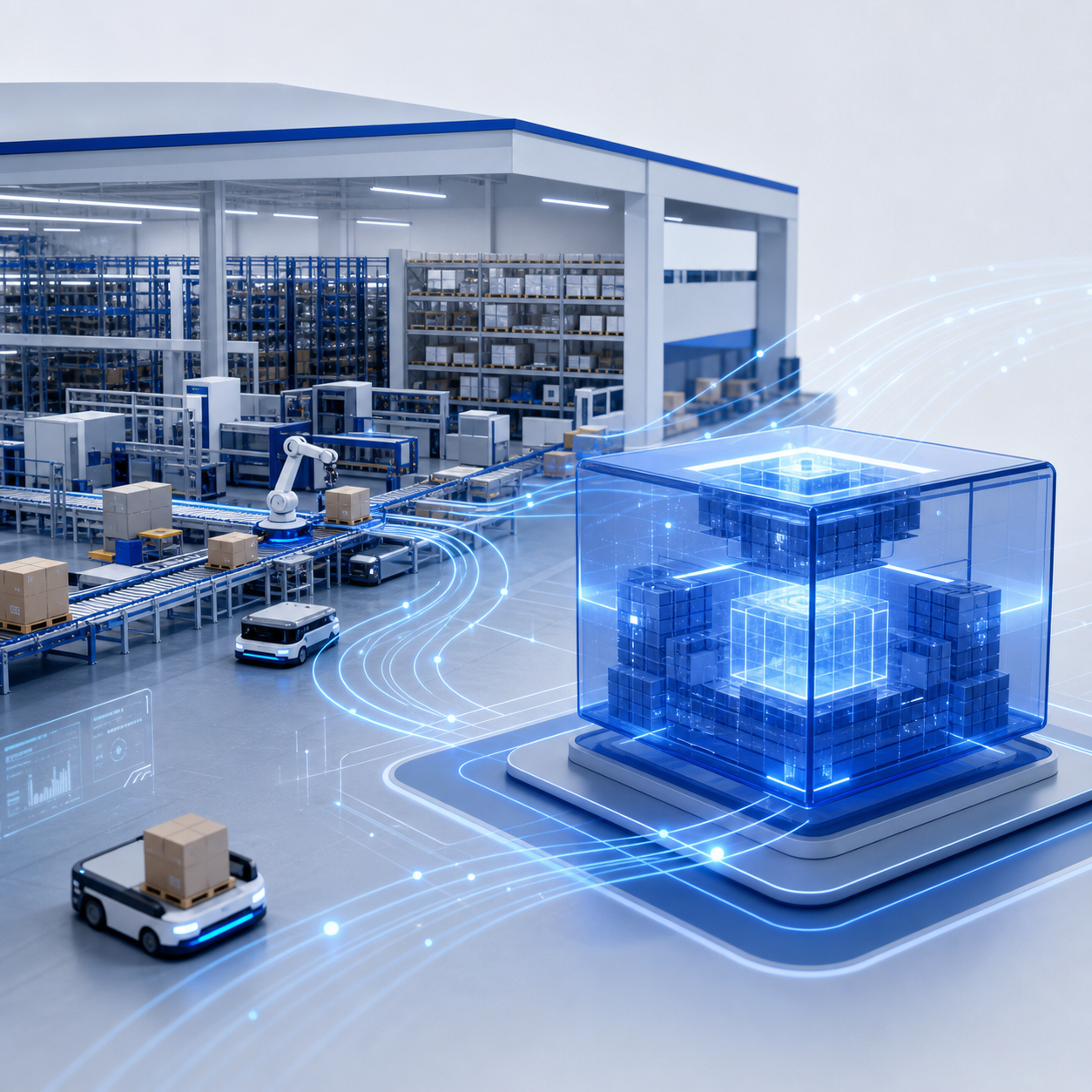
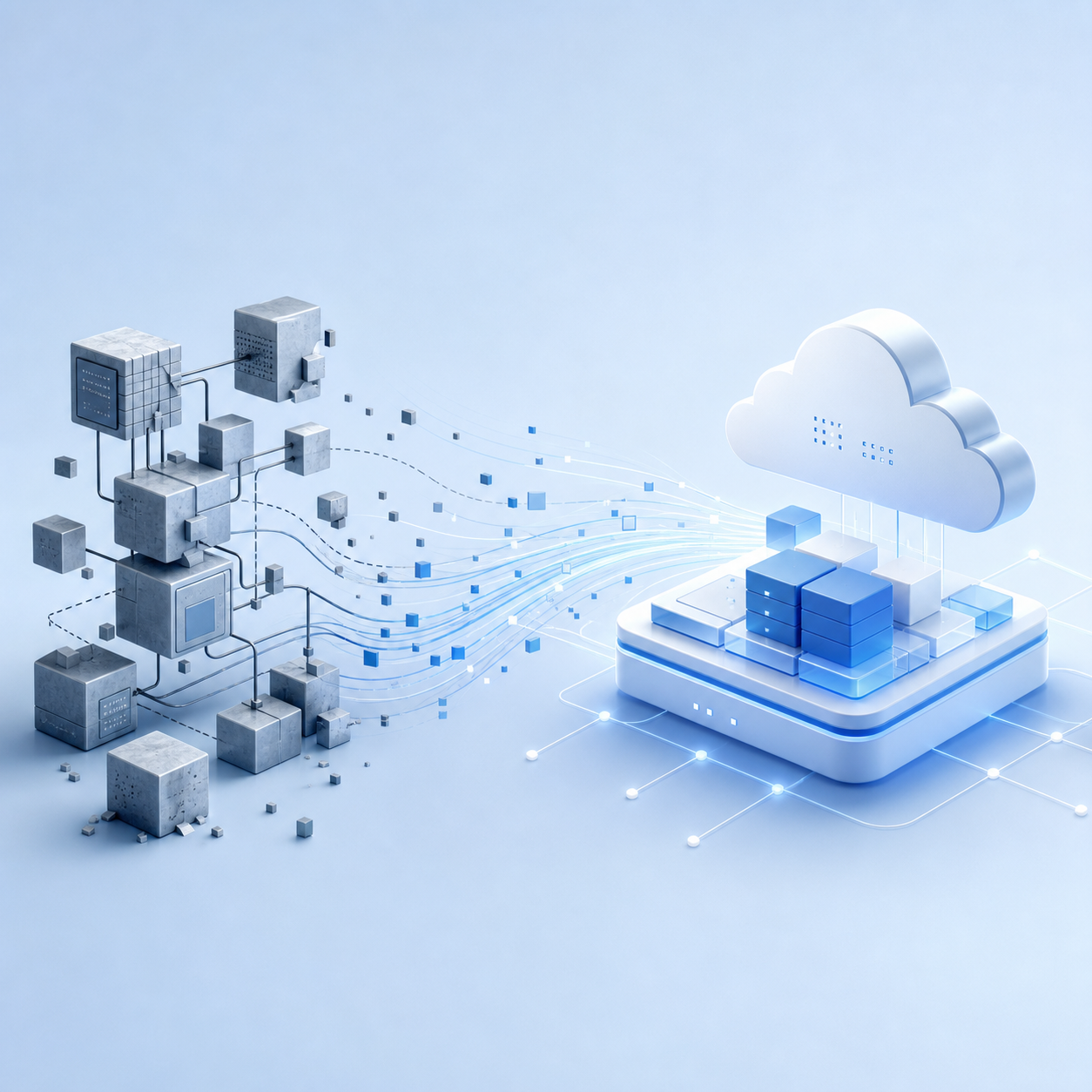
Tobacco manufacturing is one of the more complex consumer-goods environments from an SAP transformation perspective.
Manufacturers need to manage high-volume production, batch-based manufacturing, packaging, strict product traceability, quality controls, complex warehouse operations, supply-chain constraints, excise-duty processes, and regulated distribution - often across multiple plants, warehouses, countries, and legacy systems.
A typical product lifecycle can look like:
Raw Materials → Production → Packaging → Finished Goods → Warehouse → Distribution → Customer
But behind this apparently simple flow sits a much more complex network of relationships:
Material → Batch → Production Order → Production Line → Packaging → Handling Unit → Warehouse Movement → Shipment → Customer
At the same time, every significant operational event can have a financial consequence:
Material Consumption → Production Cost → Inventory Valuation → Sales → Margin
For UK manufacturers, there is another layer:
Production / Packaging → Product Identification → Track-and-Trace Events → Excise / Regulatory Reporting
This is why an SAP transformation for tobacco manufacturing should not be approached simply as an ERP implementation.
The objective should be to create a connected manufacturing and supply-chain operating model in which production, quality, traceability, warehouse operations, finance, and regulatory processes work from consistent data and exchange information reliably.
In this guide, we explore how SAP can support tobacco manufacturers across production, batch management, quality, packaging, warehousing, supply chain, finance, and UK-specific track-and-trace and excise processes.
The Tobacco Manufacturing Value Chain
The Tobacco Manufacturing Value Chain
Tobacco manufacturing is an interconnected process in which planning, procurement, production, quality, traceability, warehousing, distribution, and finance continuously exchange information.
A typical value chain is:
Customer Demand → Supply & Production Planning → Material & Packaging Procurement → Production & Batch Creation → Quality Release → Packaging & Identification → EWM & Inventory → Distribution → Finance & Analytics
These are not independent processes. A change in one area can quickly affect the others.
Packaging Shortage
Packaging Shortage → Production Schedule Change → Finished-Goods Availability → Warehouse Allocation → Customer Delivery Risk
Raw Material Quality Hold
Quality Hold → Affected Production Orders → Alternative Material → Schedule Change → Inventory Impact
Traceability Investigation
Finished-Goods Batch → Production Order → Input Material Lots → Warehouse Movements → Shipments → Customers
SAP Global Batch Traceability can support upstream and downstream batch genealogy across connected SAP and non-SAP systems.
For UK manufacturers, the architecture also needs to connect relevant production and distribution data with excise and tobacco track-and-trace processes.
The SAP landscape can therefore bring together:
S/4HANA + Manufacturing + Quality + EWM + Traceability + BTP / Integration
while specialised systems continue to support plant automation, regulatory processes, and other functions where appropriate.
The objective is not to move everything into SAP. It is to preserve the critical relationships between:
Material → Batch → Production → Quality → Inventory → Distribution → Finance
so the business can manage operational exceptions, trace products, and understand their financial impact.
Why Tobacco Manufacturing Needs a Different SAP Strategy
Why Tobacco Manufacturing Needs a Different SAP Strategy
Tobacco manufacturing operates at the intersection of highly controlled manufacturing, consumer-goods production, and regulated supply-chain operations. Its SAP landscape therefore needs to support both high-volume operational processes and detailed product, batch, inventory, and compliance data.
Tobacco manufacturing combines characteristics of:
- process and batch manufacturing;
- consumer products;
- high-volume industrial production;
- highly automated packaging;
- regulated distribution;
- excise-controlled goods.
A manufacturer may need to maintain relationships between:
- raw-material suppliers;
- material and ingredient lots;
- production batches;
- production orders;
- production lines;
- packaging materials;
- finished products;
- handling units;
- warehouses;
- shipments;
- customers;
- financial documents;
- regulatory events.
Unlike a conventional consumer-goods operation, these relationships often need to remain traceable across the entire product lifecycle. A production, quality, or distribution event can therefore affect several business functions at the same time.
This creates a fundamental requirement:
The organisation must be able to move from a business question to the underlying operational data quickly.
For example:
“Where did this finished-goods batch come from?”
should lead to:
Finished-Goods Batch → Production Order → Production Line → Input Materials → Supplier Batches
And:
“Where did this batch go?”
should lead to:
Finished-Goods Batch → Warehouse Stock → Handling Unit → Delivery → Shipment → Customer / Distribution Point
The same information may then need to support quality investigations, inventory decisions, financial analysis, and relevant UK track-and-trace or excise processes.
That is the practical value of a connected SAP landscape: keeping the relationships between production, quality, inventory, distribution, and finance visible throughout the product lifecycle.
SAP Solutions for Tobacco Manufacturing
SAP Solutions for Tobacco Manufacturing
SAP does not require a single application to perform every function in the tobacco manufacturing lifecycle.
A more realistic architecture combines ERP, manufacturing, quality, warehouse, planning, traceability, integration, data, and analytics capabilities.
| SAP capability | Business area | Typical tobacco-manufacturing use cases |
| SAP S/4HANA / SAP Cloud ERP | Enterprise core | Finance, procurement, inventory, sales, production, costing |
| S/4HANA Manufacturing | Production planning | MRP, production orders, material requirements, manufacturing processes |
| SAP Digital Manufacturing | Manufacturing execution | Shop-floor execution, production monitoring, operator processes, data collection |
| SAP Quality Management | Quality | Incoming inspection, in-process inspection, finished-product release, quality notifications |
| SAP Global Batch Traceability | Traceability | Batch genealogy, tracebacks, distribution analysis, holds, withdrawals, recalls |
| SAP EWM | Warehouse | Receiving, putaway, picking, packing, staging, loading, inventory |
| SAP IBP | Supply-chain planning | Demand, supply, inventory and response planning |
| SAP Asset Management | Maintenance | Preventive maintenance, corrective maintenance, work orders, spare parts |
| SAP Ariba | Procurement | Sourcing, supplier management and procurement processes |
| SAP BTP | Extension platform | Applications, workflows, APIs, automation and extensions |
| SAP Integration Suite | Integration | SAP, MES, WMS, carriers, regulatory and third-party connectivity |
| SAP Datasphere / SAP Analytics Cloud | Data & analytics | Manufacturing, inventory, supply-chain and financial analytics |
| SAP Sustainability solutions | Sustainability | Environmental data and sustainability reporting |
The exact combination depends on the manufacturer's production model, SAP landscape, number of plants, warehouse strategy, automation architecture, and regulatory requirements.
SAP Global Batch Traceability is particularly relevant where genealogy needs to span multiple SAP and non-SAP systems. SAP describes capabilities for both upstream and downstream analysis of tracked objects, including investigation of where a batch originated and where it was subsequently distributed.
SAP S/4HANA as the Digital Core
SAP S/4HANA as the Digital Core
For a tobacco manufacturer, S/4HANA can act as the enterprise backbone connecting core business functions and providing a common source of transactional and financial information across the product lifecycle. It can link:
- finance;
- procurement;
- inventory;
- sales;
- production;
- costing;
- material management;
- enterprise reporting.
Its value is not simply replacing legacy ERP functionality.
The important capability is the connection between operational and financial transactions. Manufacturing, procurement, inventory, sales, and finance can work from the same underlying business documents and master data, creating a clearer view of how operational activity affects financial performance.
For example:
Purchase Order
→ Goods Receipt
→ Material Inventory
→ Production Consumption
→ Finished Goods
→ Sales Order
→ Delivery
→ Revenue and Margin
Another example:
Production Order
→ Raw-Material Consumption
→ Labour / Machine / Overhead Costs
→ Finished-Goods Receipt
→ Inventory Valuation
This creates a common enterprise context around manufacturing and makes it easier to connect production decisions with procurement, inventory, sales, and finance.
Instead of finance receiving production information after the fact, the organisation can analyse:
What was produced + what was consumed + what it cost + what was sold.
For example, a change in raw-material pricing can be assessed against actual consumption, production costs, inventory value, and product margin rather than analysed as a separate procurement or finance issue.
The same principle applies across plants. When production is distributed across several facilities, S/4HANA can provide a common transactional foundation while allowing each site to integrate with its own manufacturing, automation, warehouse, or other specialised systems where required.
For a tobacco manufacturer, this provides a basis for connecting production, inventory, batch management, procurement, sales, and financial processes without requiring every operational function to run inside the ERP.
1. Production Planning and Scheduling
1. Production Planning and Scheduling
In tobacco manufacturing, production planning has to balance changing customer demand with the availability of raw materials, packaging, production capacity, and warehouse space. A production plan that looks feasible from a demand perspective may still be impossible to execute if a critical material is unavailable or a production line is occupied or under maintenance.
Production planning in tobacco manufacturing is therefore rarely just a question of demand.
The schedule can depend on:
- product demand;
- raw-material availability;
- packaging availability;
- production-line capacity;
- maintenance windows;
- labour;
- changeovers;
- cleaning and preparation;
- batch requirements;
- warehouse capacity;
- customer delivery requirements.
The planning logic therefore becomes:
Demand + Materials + Capacity + Constraints → Production Plan → Production Schedule → Production Execution
For a multi-plant organisation, planning may also answer:
- Which plant should manufacture the product?
- Which production line has available capacity?
- Are the required materials available?
- Is packaging available in sufficient quantity?
- Will planned maintenance affect the schedule?
- Can the finished product be stored?
- Can the required customer delivery date be met?
SAP IBP can support the higher-level demand, supply, and inventory planning processes, while S/4HANA manufacturing capabilities support the execution of material and production requirements.
Example
Suppose demand for a particular cigarette SKU increases by 15%.
The planning process should not simply generate a larger production requirement.
It should identify:
Higher Demand
→ additional production requirement
→ additional tobacco / raw-material requirement
→ additional packaging requirement
→ production-line capacity requirement
→ potential additional shifts
→ warehouse-space requirement
→ distribution impact
→ financial / margin impact.
That is the difference between isolated planning and integrated planning.
2. Batch Management and Product Genealogy
2. Batch Management and Product Genealogy
Batch management is about maintaining the link between what went into a product, how it was manufactured, and where the finished product went. In tobacco manufacturing, this relationship can span raw materials, production orders, production lines, packaging, warehouse stock, and customer shipments.
A finished-goods batch should therefore be traceable through the manufacturing process.
For example:
Finished-Goods Batch
→ Production Order
→ Production Date
→ Plant
→ Production Line
→ Input Material Batches
→ Packaging Materials
→ Quality Results
The reverse direction is equally important:
Input Material Batch
→ Production Orders
→ Finished-Goods Batches
→ Warehouse Stock
→ Deliveries
→ Shipments
→ Customers / Distribution Points
This is what turns batch management into product genealogy.
SAP Global Batch Traceability can provide a cross-system view of such relationships and support both upstream and downstream investigations.
Why this matters
Imagine that a particular input material lot is subsequently found to require investigation.
The manufacturer may need to identify:
- Which production orders consumed it?
- Which finished-goods batches were created?
- Where are those batches currently located?
- Which quantities remain in stock?
- Which quantities have already been shipped?
- Which deliveries were affected?
- Which customers or distribution centres received them?
Without connected genealogy, this can become a manual investigation across ERP, MES, WMS, spreadsheets, and logistics systems.
With an integrated traceability architecture, the same investigation can become a structured data query.
3. Packaging and Product Identification
3. Packaging and Product Identification
For tobacco manufacturers, packaging is closely connected to the identity and movement of the finished product. Packaging operations can create or carry information that is later needed for warehouse handling, distribution, traceability, and regulatory processes.
Packaging is therefore not simply the final step before a product enters the warehouse.
For tobacco products, packaging can be closely connected with:
- product identity;
- batch information;
- aggregation;
- handling units;
- warehouse movements;
- regulatory tracking;
- distribution.
A production flow can involve:
Production Batch → Primary Pack → Secondary Packaging → Case / Handling Unit → Pallet → Warehouse → Shipment
The exact identification and aggregation model depends on the manufacturer's products, packaging processes, and regulatory setup.
The SAP landscape can maintain relevant product, batch, handling-unit, inventory, and logistics information, while specialist packaging or identification systems can remain responsible for machine-level or regulatory functions.
The key architectural principle is:
Do not assume that SAP must control every identification event. Define which system owns the event and how the information is transferred into the enterprise process.
This becomes particularly important in highly automated packaging environments.
4. Quality Management
4. Quality Management
Quality management in tobacco manufacturing starts before production and continues through manufacturing and finished-product release. The important issue is not simply recording test results, but making quality decisions visible to the processes that depend on them.
A practical process can be:
Supplier Delivery → Incoming Inspection → Material Release / Hold → Production → In-Process Inspection → Finished Product Inspection → Quality Release → Warehouse
Quality information should remain connected to the relevant material and batch.
For example, if an incoming material is placed on quality hold, the business may need to identify:
- which production orders depend on it;
- whether alternative material is available;
- whether production schedules need to change;
- whether existing inventory is affected.
A finished-product quality issue requires the opposite type of analysis:
Finished-Goods Batch → Production Order → Manufacturing Date / Line → Quality Results → Current Stock → Shipments
SAP Quality Management provides the framework for inspections, results, quality decisions, and quality notifications within the wider SAP process landscape.
5. Manufacturing Execution and Shop-Floor Visibility
5. Manufacturing Execution and Shop-Floor Visibility
ERP planning tells the business what should be produced; manufacturing execution needs to show what is actually happening on the production floor. For automated tobacco plants, this means connecting production orders and material requirements with machine, operator, and production-line events.
A practical architecture separates three levels.
Enterprise layer
SAP S/4HANA
- production planning;
- inventory;
- procurement;
- finance;
- costing;
- sales.
Manufacturing layer
SAP Digital Manufacturing / MES
- production execution;
- operator processes;
- production confirmations;
- material consumption;
- production monitoring;
- manufacturing data.
Operational layer
Plant / OT
- PLCs;
- machine controls;
- packaging equipment;
- conveyors;
- inspection systems;
- sensors.
The process can therefore be:
Machine / Production Event → Manufacturing Context → SAP Business Transaction
The principle is to keep real-time equipment control at the operational level while connecting the resulting business events to manufacturing and ERP processes.
6. Asset Management and Production-Line Reliability
6. Asset Management and Production-Line Reliability
Production-line reliability directly affects output, delivery commitments, and manufacturing cost. For tobacco manufacturers, a problem with a critical processing or packaging machine can quickly become a production and customer-service issue.
A maintenance issue can trigger:
Equipment Failure → Production Downtime → Schedule Disruption → Customer-Service Risk → Rescheduling / Overtime → Financial Impact
SAP Asset Management can structure the maintenance lifecycle around:
Asset → Maintenance Plan → Work Order → Spare Parts → Technician → Completion → Cost → Asset History
This allows the manufacturer to connect maintenance activity with:
- equipment;
- maintenance history;
- spare parts;
- labour;
- downtime;
- cost.
The next step is using historical equipment and maintenance data for predictive use cases.
For example:
Machine Condition + Historical Failures + Maintenance History
→ predicted failure risk
→ maintenance intervention
→ reduced unplanned downtime.
The business case should be based on actual equipment criticality rather than applying predictive maintenance indiscriminately to every asset.
7. Procurement and Supplier Management
7. Procurement and Supplier Management
Procurement in tobacco manufacturing is directly connected to production continuity. Raw materials, packaging, spare parts, and other production inputs need to arrive in the right quantity and timeframe; otherwise, a procurement issue can quickly become a manufacturing constraint.
A connected procurement process can be:
Material Requirement → Supplier → Purchase Order → Inbound Delivery → Goods Receipt → Quality Inspection → Material Release → Production
A connected procurement process is:
Material Requirement
→ Supplier
→ Purchase Order
→ Inbound Delivery
→ Goods Receipt
→ Quality Inspection
→ Material Release
→ Production
The benefit becomes especially clear when a supplier misses a delivery date.
Instead of viewing this simply as a procurement exception, the organisation can identify:
Supplier Delay
→ material shortage
→ production order impact
→ schedule change
→ finished-goods availability
→ customer delivery risk.
This is where supply-chain integration creates value beyond traditional purchasing automation.
8. SAP EWM for Tobacco Warehousing
8. SAP EWM for Tobacco Warehousing
Once tobacco products leave production, warehouse operations need to maintain control over large volumes of finished goods while preserving batch, stock, handling-unit, and shipment information. The challenge is to make inventory status and location visible without breaking the traceability chain.
Stock may need to be managed by:
- material;
- batch;
- stock status;
- handling unit;
- storage location;
- warehouse;
- customer requirement.
A typical finished-goods flow is:
Production Confirmation → Goods Receipt → EWM Putaway → Available Stock → Allocation → Picking → Packing → Staging → Loading → Goods Issue
SAP EWM can support the warehouse execution layer across these processes.
This is especially valuable when warehouse movements must remain connected to batch and handling-unit information.
SAP documentation also describes integration between EWM and Global Batch Traceability, enabling relevant handling-unit and batch information to contribute to broader genealogy analysis.
Example
If a batch investigation identifies affected finished goods, warehouse teams should be able to determine:
- how much stock remains;
- where it is stored;
- which handling units contain it;
- whether it has been allocated;
- whether it has already been picked;
- whether it has been shipped.
This is considerably more useful than having traceability and warehouse information in separate worlds.
9. Supply-Chain Planning
9. Supply-Chain Planning
Supply-chain planning connects the commercial demand for tobacco products with what the manufacturing and procurement organisation can actually deliver. It has to account for demand, inventory, material availability, production capacity, and distribution requirements at the same time.
A planning model can therefore connect:
Demand Forecast → Supply Plan → Material Requirements → Production → Inventory → Distribution
SAP IBP can support demand, supply, inventory, and response planning, while execution takes place through the appropriate SAP operational processes.
The objective is not simply better forecasting.
The objective is to translate commercial demand into an executable supply plan.
For example:
Forecast Increase
→ increased material requirements
→ supplier capacity check
→ production capacity check
→ packaging requirement
→ inventory projection
→ distribution capacity
→ service-level impact.
10. Finance, Product Costing and Margin
10. Finance, Product Costing and Margin
For a tobacco manufacturer, production decisions ultimately affect product cost and profitability. Finance therefore needs visibility into the operational drivers behind material consumption, production costs, inventory valuation, sales, and margin.
A tobacco manufacturer can analyse the relationship between:
Material Consumption
→ Production Cost
→ Inventory
→ Sales
→ Margin
Relevant cost drivers can include:
- raw materials;
- packaging;
- labour;
- energy;
- manufacturing overhead;
- maintenance;
- logistics;
- inventory-related costs;
- applicable duty-related costs.
This allows finance and operations to move beyond:
“What did we spend?”
towards:
“Why did the cost change?”
For example:
Higher Product Cost
may be caused by:
- higher material prices;
- lower production yield;
- additional changeovers;
- overtime;
- machine downtime;
- higher energy consumption;
- packaging variance.
The SAP digital core can provide the transactional foundation needed to connect these operational drivers with financial analysis.
11. UK Tobacco Track and Trace
11. UK Tobacco Track and Trace
For UK tobacco manufacturers, traceability also has a specific regulatory dimension. Product movements must be tracked through the relevant parts of the supply chain, creating an additional data and integration requirement alongside normal manufacturing and logistics processes.
HMRC states that tobacco products manufactured, imported, transported, stored, or sold in the UK are subject to the UK Tobacco Track and Trace requirements. Relevant products must be tracked through the supply chain to the first retail outlet, with required information recorded and reported through the designated system.
This creates an additional information flow:
Production
→ Product Identification
→ Packaging / Aggregation
→ Warehouse
→ Dispatch
→ Transport / Supply Chain
→ First Retail Outlet
The important point is that this regulatory flow should be connected to the enterprise process without assuming that SAP itself has to perform every regulatory function.
A manufacturer may have:
- SAP S/4HANA;
- SAP EWM;
- MES / manufacturing systems;
- packaging systems;
- track-and-trace infrastructure;
- logistics systems;
- regulatory interfaces.
The architecture needs to establish how relevant events move between these systems.
12. UK Excise Duty and the Production Account Point
12. UK Excise Duty and the Production Account Point
Excise requirements introduce another connection between physical production and financial or regulatory processes. For UK tobacco manufacturers, the point at which products are counted in the production account is therefore an important consideration when designing the flow of production and inventory information.
HMRC defines a Production Account Point (PAP) as a clearly defined physical point where tobacco products are counted and recorded in the production account.
HMRC guidance states that once products pass the PAP, they are treated as liable to duty and become subject to the applicable requirements concerning storage and removal.
The production account can therefore require information such as:
- quantity produced;
- product type;
- brand;
- retail-pack size;
- production date.
From an SAP architecture perspective, the important issue is not simply “how to calculate duty”.
It is to establish a reliable relationship between:
Production Quantity
→ Packaging
→ Production Account Point
→ Finished-Goods Inventory
→ Stock Movements
→ Dispatch
→ Financial / Duty-Relevant Information
The precise solution depends on the manufacturer's legal structure, excise arrangements, approved processes, SAP configuration, and specialist systems.
Therefore, the SAP design should explicitly define:
- who owns the production quantity;
- where the PAP event is recorded;
- which system is the authoritative source;
- how inventory is updated;
- how duty-relevant information is calculated or transferred;
- how information is reconciled with regulatory records.
This is an area where business-process design and compliance requirements should be established before technical implementation.
13. Regulatory and Enterprise Integration Architecture
13. Regulatory and Enterprise Integration Architecture
Because tobacco manufacturing combines SAP, plant systems, warehouse technology, logistics platforms, and regulatory applications, integration architecture becomes a core part of the solution. Each system should have a clear role, with relevant events and data passed between systems in a controlled way.
A practical UK architecture can separate responsibilities across several layers.
Manufacturing
SAP S/4HANA + Manufacturing
Owns or supports:
- production orders;
- material movements;
- batches;
- inventory;
- production confirmations;
- sales;
- relevant financial transactions.
Shop Floor
SAP Digital Manufacturing / MES / Plant Systems
Provides:
- machine and production events;
- operator interactions;
- production execution;
- production data;
- packaging events.
Warehouse
SAP EWM
Manages:
- handling units;
- warehouse movements;
- picking;
- packing;
- staging;
- loading;
- goods issue.
Traceability
SAP Global Batch Traceability
Provides a cross-system view of relevant batch and product genealogy.
Regulatory / Track and Trace
Specialist regulatory and tracking infrastructure
Handles the specific regulatory events and reporting requirements applicable to the organisation.
Integration
SAP BTP / SAP Integration Suite
Connects:
SAP ↔ MES ↔ EWM ↔ Packaging ↔ Logistics ↔ Track & Trace ↔ Other Systems
This produces an architecture based on system ownership rather than application replacement for its own sake.
The Critical Role of Integration
The Critical Role of Integration
Integration is one of the most important parts of a tobacco SAP transformation.
A typical manufacturer may already operate:
- ERP;
- MES;
- PLC / OT environments;
- packaging systems;
- warehouse systems;
- transportation systems;
- carrier interfaces;
- track-and-trace platforms;
- quality systems;
- legacy applications;
- data platforms.
Trying to eliminate all of them is rarely the right strategy.
Instead, the transformation should define:
System of Record
Where is the authoritative version of the data?
Event Ownership
Which system creates the business event?
Integration
How is the event transferred?
Reconciliation
How does the organisation verify that the information arrived correctly?
Exception Management
What happens when the integration fails?
This is particularly important for regulatory and traceability processes.
A technically successful interface is not enough.
The business needs to know what happens when:
- a message fails;
- a shipment is cancelled;
- a batch is blocked;
- a production confirmation is corrected;
- packaging information is missing;
- warehouse and ERP quantities do not reconcile.
SAP BTP and Integration Suite
SAP BTP and Integration Suite
SAP BTP can provide the extension and integration layer around the SAP core.
Potential connections include:
SAP S/4HANA
↔ MES / Digital Manufacturing
↔ EWM
↔ Packaging Systems
↔ Carriers / 3PL
↔ Track & Trace
↔ External Applications
↔ Analytics
SAP Integration Suite can support APIs, integration flows, connectivity, and controlled data exchange between these environments.
The principle should be:
Keep the SAP core standard where possible and move differentiated integration, workflow, and extensions to appropriate platform services.
This is especially relevant for long-lived manufacturing landscapes with substantial historical customisation.
Master Data: The Hidden Foundation
Master Data: The Hidden Foundation
Many SAP transformation programmes focus heavily on applications and interfaces while underestimating master data.
For tobacco manufacturing, critical master-data domains can include:
- materials;
- tobacco products;
- raw materials;
- packaging materials;
- batches;
- recipes / formulas where applicable;
- bills of material;
- production versions;
- units of measure;
- suppliers;
- customers;
- plants;
- storage locations;
- warehouses;
- equipment;
- handling units.
A simple example illustrates the problem.
If the same packaging material has:
- one description in SAP;
- another identifier in MES;
- another identifier in EWM;
- another code in the packaging line;
then integration becomes much harder.
A successful transformation therefore needs a common data model and clear governance.
The principle is:
One Business Object → One Definition → Clear Ownership → Controlled Distribution
Without this foundation, analytics and AI initiatives will inherit the same inconsistencies.
SAP and AI for Tobacco Manufacturing
SAP and AI for Tobacco Manufacturing
AI should be introduced after the organisation has established sufficiently reliable data and integrated processes.
A practical sequence is:
Trusted Data
→ Integrated Processes
→ Analytics
→ AI
Potential use cases include:
Predictive Maintenance
Analyse:
- equipment condition;
- maintenance history;
- downtime;
- production parameters.
Objective:
Predict failure risk before an unplanned breakdown.
Quality Analytics
Connect:
Production Parameters + Batch Data + Quality Results
to identify patterns associated with quality deviations.
Demand Forecasting
Use historical demand and relevant business signals to improve forecasts.
Inventory Optimisation
Balance:
Service Level + Stock Availability + Working Capital
Supplier Risk
Analyse:
- lead times;
- delivery performance;
- quality;
- historical disruptions.
Production Planning
Help planners identify the impact of:
- material shortages;
- capacity constraints;
- maintenance;
- demand changes.
AI should therefore be positioned as the decision-support layer on top of the integrated SAP operating model, not as a substitute for basic data and process discipline.
Clean Core for Tobacco Manufacturers
Clean Core for Tobacco Manufacturers
Long-established tobacco manufacturers often have SAP landscapes with significant customisation.
Over time, custom developments may have been introduced to address:
- local processes;
- plant-specific requirements;
- legacy integrations;
- regulatory needs;
- warehouse processes;
- production interfaces;
- reporting.
During an S/4HANA transformation, these developments should be classified rather than automatically migrated.
A useful framework is:
Retain → Remediate → Replace → Remove
For differentiated capabilities that still need to exist, the architecture can use:
SAP Standard
→ Configuration
→ BTP Extension
→ Specialist External Application
This is preferable to continuing to add custom logic directly into the ERP core wherever possible.
The objective of a clean core is not “zero customisation”.
It is:
Keep the core maintainable while preserving the capabilities that genuinely differentiate or enable the business.
An End-to-End Tobacco Manufacturing SAP Model
An End-to-End Tobacco Manufacturing SAP Model
The resulting operating model can be represented as a single horizontal value chain:
Customer Demand → Supply & Production Planning → Material & Packaging Procurement → Production & Batch Creation → Quality Release → EWM & Inventory → Customer Delivery → Cost & Margin Analysis → Analytics & AI
Underneath this flow sits the technology architecture:
SAP S/4HANA
connected to:
Manufacturing + Quality + EWM + Batch Traceability + Asset Management + IBP
and extended through:
BTP + Integration Suite + Data & Analytics
while connecting to:
MES + Plant Automation + Packaging Systems + Logistics + Track & Trace + Other Specialist Systems
This is the architecture that makes the individual SAP components valuable.
Practical Tobacco Manufacturing Use Cases
Practical Tobacco Manufacturing Use Cases
Use Case 1: Raw Material to Finished Product
Supplier Batch
→ Goods Receipt
→ Quality Inspection
→ Material Release
→ Production Order
→ Consumption
→ Finished-Goods Batch
→ Warehouse.
Business outcome: complete material-to-product genealogy.
Use Case 2: Finished Product Investigation
Finished-Goods Batch
→ Production Order
→ Production Line
→ Input Material Batches
→ Quality Results.
Business outcome: faster root-cause analysis.
Use Case 3: Downstream Traceability
Finished-Goods Batch
→ Handling Unit
→ Warehouse
→ Delivery
→ Shipment
→ Customer / Distribution Point.
Business outcome: faster identification of affected stock and shipments.
Use Case 4: Packaging Shortage
Packaging Requirement
→ Supplier Delivery Delay
→ Material Shortage
→ Production Schedule Impact
→ Finished-Goods Availability
→ Customer Delivery Risk.
Business outcome: earlier identification of supply-chain impact.
Use Case 5: Production-Line Failure
Equipment Condition
→ Maintenance Alert
→ Work Order
→ Spare Parts
→ Technician
→ Equipment Recovery
→ Production Rescheduling.
Business outcome: reduced production disruption.
Use Case 6: Quality Hold
Material / Finished-Goods Batch
→ Quality Hold
→ Inventory Status Change
→ Production Impact
→ Distribution Restriction
→ Investigation / Release.
Business outcome: controlled material and product disposition.
Use Case 7: UK Regulatory Traceability
Production / Packaging Event
→ Product Identification
→ Warehouse Movement
→ Dispatch
→ Track-and-Trace Event
→ Regulatory Reporting.
Business outcome: better alignment between operational events and regulatory information requirements.
Use Case 8: Cost and Margin
Material Consumption
→ Production Cost
→ Inventory Valuation
→ Sales
→ Revenue
→ Margin.
Business outcome: clearer understanding of product economics.
UK Tobacco Manufacturer: Example Target Architecture
UK Tobacco Manufacturer: Example Target Architecture
Consider a large tobacco manufacturer operating several UK production lines, warehouses, and distribution channels, with additional European operations.
Its landscape might include:
- SAP S/4HANA;
- SAP EWM;
- manufacturing execution systems;
- automated packaging lines;
- plant-control systems;
- quality systems;
- carrier and 3PL integrations;
- specialist track-and-trace infrastructure;
- analytics platforms.
The transformation challenge is therefore not:
“How do we implement SAP?”
It is:
“How do we connect the business events that currently live across multiple systems?”
The target architecture can be organised around five layers.
1. Enterprise Core
SAP S/4HANA
Finance, procurement, inventory, sales, production and costing.
2. Manufacturing
SAP Digital Manufacturing / MES
Production execution, shop-floor data and manufacturing visibility.
3. Warehouse and Logistics
SAP EWM + Transportation / Logistics Integrations
Inventory, handling units, picking, packing, staging, loading and dispatch.
4. Traceability and Regulatory
Global Batch Traceability + Specialist Track-and-Trace Infrastructure
Product genealogy and regulatory tracking.
5. Integration and Data
SAP BTP + Integration Suite + Datasphere / Analytics
Integration, extensions, data products, reporting and advanced analytics.
The resulting process is:
Demand
→ Planning
→ Procurement
→ Production
→ Quality
→ Packaging
→ Warehouse
→ Distribution
→ Finance
with traceability and regulatory information captured across the relevant events.
What Should a Tobacco Manufacturer Measure?
What Should a Tobacco Manufacturer Measure?
An SAP transformation should ultimately be measured through business outcomes rather than the number of SAP modules implemented.
Manufacturing
- production schedule adherence;
- line utilisation;
- unplanned downtime;
- yield;
- changeover time;
- production variance.
Quality
- batch-release time;
- quality holds;
- quality incidents;
- supplier-quality issues;
- investigation time.
Warehouse
- inventory accuracy;
- picking accuracy;
- warehouse throughput;
- order cycle time;
- stock discrepancies.
Supply Chain
- forecast accuracy;
- material availability;
- supplier lead time;
- stock-outs;
- inventory levels.
Finance
- product-cost variance;
- manufacturing cost;
- working capital;
- product margin;
- inventory valuation accuracy.
Integration
- interface failures;
- message-processing time;
- manual reconciliation;
- integration incidents;
- unresolved exceptions.
Traceability and Regulatory
- completeness of traceability data;
- successful transmission of required events;
- number of unresolved exceptions;
- time required to trace a product;
- time required to identify affected stock and shipments.
A particularly useful KPI is:
How long does it take to trace a finished product from its production batch back to its input materials and forward to its distribution destinations?
The answer provides a tangible measure of the maturity of the company's traceability architecture.
Common SAP Transformation Challenges in Tobacco Manufacturing
Common SAP Transformation Challenges in Tobacco Manufacturing
1. Fragmented Batch Genealogy
Production, warehouse, and distribution information may reside in different applications.
Solution: establish a common genealogy model and integrate relevant events.
2. Packaging and Identification Complexity
Packaging systems can operate independently from ERP.
Solution: clearly define identification ownership and integration points.
3. Highly Automated Production
Production equipment generates large amounts of operational data.
Solution: use a layered architecture separating OT, manufacturing execution, and enterprise transactions.
4. Regulatory Integration
Track-and-trace requirements introduce specialised data and reporting flows.
Solution: integrate SAP with the appropriate regulatory infrastructure rather than forcing regulatory functionality into the ERP core.
5. Excise Controls
Production quantities, inventory movements, and duty-related processes need to reconcile.
Solution: establish explicit process ownership and controlled reconciliation points.
6. Multiple Plants
Different sites often develop different processes and SAP configurations.
Solution: standardise the global template while allowing justified local variations.
7. Legacy Customisation
Older SAP environments can contain large amounts of custom code.
Solution: classify developments using Retain / Remediate / Replace / Remove.
8. Master-Data Inconsistency
Different systems may use different product, material, batch, packaging, or customer identifiers.
Solution: implement master-data governance before scaling integration and analytics.
9. AI Without Data Readiness
AI projects may fail when underlying data is incomplete or inconsistent.
Solution:
Data Foundation → Integration → Analytics → AI
How LeverX Supports SAP for Tobacco Manufacturing
How LeverX Supports SAP for Tobacco Manufacturing
LeverX supports manufacturers across SAP consulting, implementation, integration, migration, optimisation, custom development, and application management.
Relevant capabilities include:
- SAP S/4HANA transformation;
- SAP manufacturing;
- SAP Digital Manufacturing;
- SAP Quality Management;
- batch traceability;
- SAP EWM;
- supply-chain planning;
- SAP Asset Management;
- SAP BTP;
- SAP Integration Suite;
- data and analytics;
- custom SAP development;
- application management.
The focus is not simply on implementing individual SAP products.
It is on connecting:
Production + Quality + Traceability + Warehouse + Supply Chain + Finance
while integrating SAP with specialist systems where they remain the appropriate solution.
For complex tobacco manufacturing environments, this means establishing:
- clear system ownership;
- reliable interfaces;
- governed master data;
- traceable business events;
- controlled extensions;
- measurable business outcomes.
Get a Free Consultation with LeverX
Frequently Asked Questions
What is SAP for Tobacco Manufacturing?
SAP for Tobacco Manufacturing refers to the combination of SAP ERP, manufacturing, quality, batch-management, traceability, warehouse, supply-chain, asset-management, integration, data, and analytics capabilities used to support tobacco production and distribution.
Which SAP solutions are relevant to tobacco manufacturers?
Depending on the operating model, relevant capabilities can include SAP S/4HANA / Cloud ERP, S/4HANA Manufacturing, SAP Digital Manufacturing, Quality Management, Global Batch Traceability, SAP EWM, SAP IBP, Asset Management, SAP BTP, Integration Suite, and SAP data and analytics capabilities.
How does SAP support tobacco product traceability?
SAP Global Batch Traceability can provide cross-system visibility into batch genealogy and distribution relationships, supporting upstream and downstream analysis of tracked objects.
Can SAP integrate with UK tobacco track-and-trace systems?
Yes. SAP can exchange relevant production, packaging, inventory, sales, warehouse, and distribution information with specialist track-and-trace infrastructure through an appropriate integration architecture.
What is UK Tobacco Track and Trace?
The UK Tobacco Track and Trace regime requires relevant tobacco products to be tracked through the supply chain to the first retail outlet, with specified product and transaction information recorded and reported through the designated infrastructure.
Does SAP replace the UK Tobacco Track and Trace system?
Not necessarily. SAP can provide the enterprise manufacturing, inventory, warehouse, sales, and financial information that needs to interact with specialist tracking and regulatory systems.
What is the Production Account Point?
The Production Account Point is a defined physical point at which tobacco products are counted and recorded in the production account. HMRC guidance establishes specific consequences once products pass this point.
Can SAP support excise-related processes?
SAP can provide the manufacturing, inventory, accounting, and financial foundation around excise-related processes. The exact solution depends on the manufacturer's approved excise arrangements, legal structure, processes, and system landscape.
Can SAP support tobacco manufacturing automation?
Yes. SAP can integrate with MES, Digital Manufacturing, plant systems, packaging equipment, and other operational technologies. The architecture should keep real-time machine control at the appropriate OT layer.
Can SAP support batch-based tobacco production?
Yes. SAP batch-management and traceability capabilities can connect input materials, production orders, production batches, finished goods, warehouse movements, and distribution information.
How can SAP EWM help tobacco manufacturers?
EWM can support inbound, putaway, replenishment, picking, packing, staging, loading, inventory, and handling-unit management, while relevant warehouse information can contribute to broader traceability processes.
Can AI be used in tobacco manufacturing?
Yes. Relevant use cases include predictive maintenance, quality analytics, demand forecasting, inventory optimisation, supplier-risk analysis, and production-planning support.
Should a tobacco manufacturer move every system into SAP?
No. Plant automation, MES, packaging, regulatory, track-and-trace, logistics, and other specialist systems may remain in place. The objective is a connected architecture with clear ownership and reliable integration.
Conclusion
Conclusion
Tobacco manufacturing requires more than a conventional ERP implementation.
The real transformation challenge is connecting a highly controlled physical production process with enterprise, warehouse, financial, and regulatory information.
The target operating model can be summarised as:
Customer Demand
→ Supply & Production Planning
→ Material & Packaging Procurement
→ Production & Batch Creation
→ Quality Release
→ EWM & Inventory
→ Customer Delivery
→ Cost & Margin Analysis
→ Analytics & AI
Underneath this business flow sits a connected technology architecture:
SAP S/4HANA
- Manufacturing
- Quality Management
- Global Batch Traceability
- EWM
- Asset Management
- IBP
- BTP / Integration Suite
- Data & Analytics
connected to specialist:
MES + Plant Automation + Packaging + Logistics + Track-and-Trace Systems
The key is not to force every function into SAP.
The key is to establish clear ownership of data and business events, and then connect the systems around those events.
A mature tobacco manufacturing architecture should allow the business to move seamlessly from:
Material → Production → Batch → Packaging → Warehouse → Distribution → Finance
while maintaining the traceability needed to answer both operational and regulatory questions.
For UK manufacturers, this also means designing explicitly for the interaction between production, the Production Account Point, inventory, excise-related processes, and the UK tobacco track-and-trace regime.
The strongest transformation strategy is therefore:
Standardise the Core
Create common processes, master data, and SAP standards across plants.
Connect Manufacturing
Link planning, production execution, shop-floor systems, and inventory.
Strengthen Traceability
Build reliable upstream and downstream product genealogy.
Integrate Specialist Systems
Connect MES, packaging, logistics, regulatory, and track-and-trace platforms without unnecessarily replacing them.
Improve Data
Create trusted material, batch, product, supplier, customer, and operational data.
Automate High-Value Processes
Use workflows, integration, analytics, and AI where they produce measurable operational value.
The end state is not simply a modern SAP landscape.
It is a connected digital manufacturing model in which production, quality, traceability, warehouse operations, supply chain, finance, and regulatory processes work as one business system.
Get a Free Consultation with LeverX
Disclaimer: SAP products, capabilities, supported releases, deployment models, integration options, and availability vary by edition, release, geography, architecture, and customer scenario. UK tobacco manufacturing and distribution are subject to specific excise, track-and-trace, product, packaging, and other legal requirements that may change over time. This article provides general information and should not be treated as legal, tax, regulatory, compliance, or product-selection advice. Organisations should verify current HMRC, GOV.UK, and SAP requirements for their specific operating model before implementation.