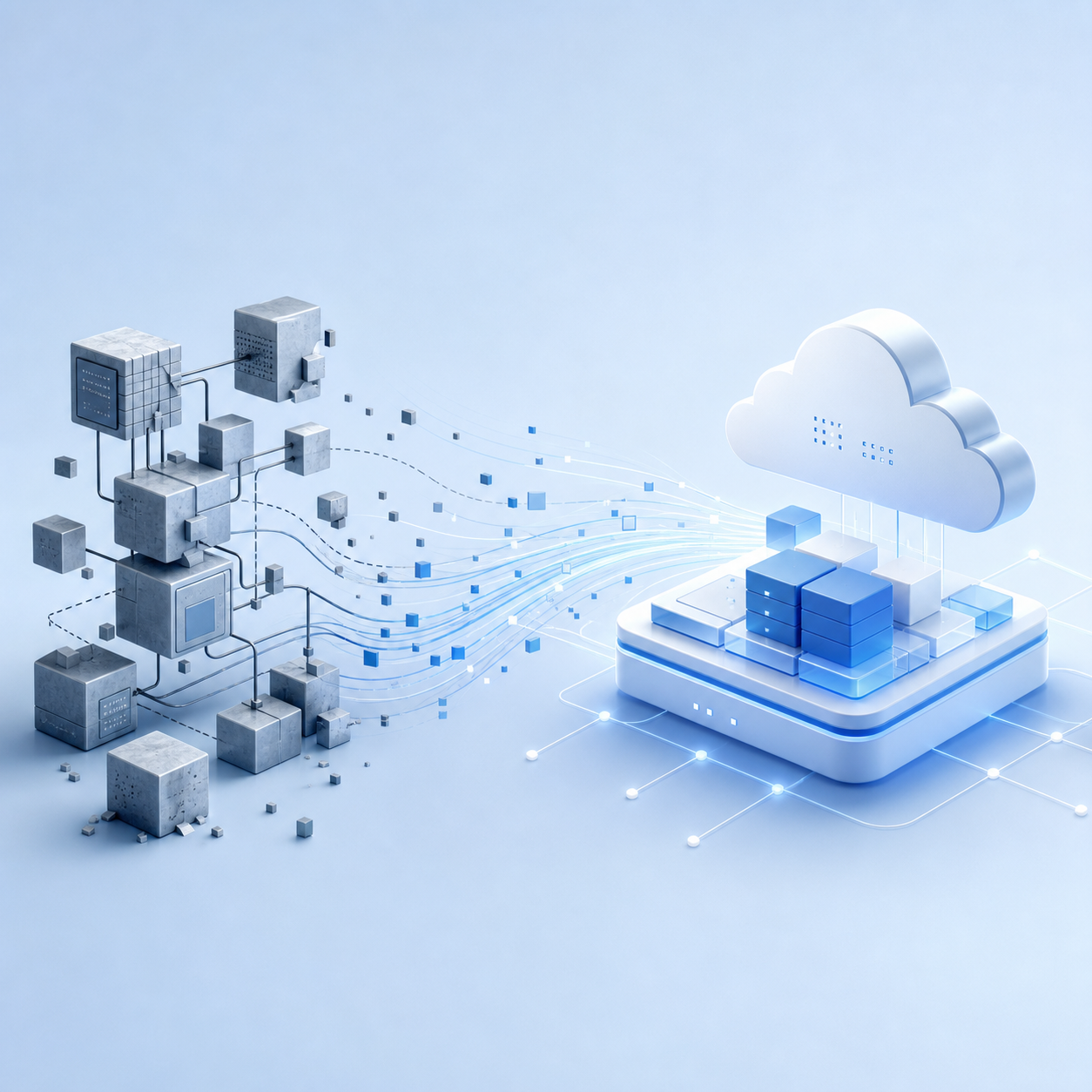
Learn how to move from Microsoft Dynamics GP to SAP S/4HANA, including migration strategies, costs, timelines, data considerations, and implementation best practices for your organisation.
For decades, Microsoft Dynamics GP (formerly Great Plains) has served as a familiar financial platform for organisations across the UK. Your finance teams may know its processes inside out, your controllers may rely on established reporting routines, and your IT department may have spent years maintaining bespoke integrations and third-party add-ons around the system.
However, Microsoft has announced the end of the Dynamics GP product lifecycle, with extended support scheduled to end on September 30, 2029. If your organisation still runs GP, this gives you a defined planning horizon for evaluating a successor platform.
The issue is not only software support. It is whether your existing ERP environment can continue to support your growth, reporting requirements, integrations, and operational processes without increasing technical debt and maintenance effort.
Your business may already be managing requirements that go beyond the way Dynamics GP was originally designed to operate: multiple legal entities, international operations, real-time reporting, automated financial processes, integrated supply chains, and evolving UK tax and statutory reporting requirements.
If your organisation has outgrown Dynamics GP and needs an enterprise-scale ERP platform, SAP S/4HANA can provide a modern digital core for finance, supply chain, procurement, manufacturing, and other business processes.
This guide explains why you may consider moving from Dynamics GP to SAP S/4HANA, how to choose a migration approach, what data and processes need to be redesigned, how long a typical project can take, and what costs you should consider when planning the transformation.
Executive Summary: Why Replace Dynamics GP with SAP S/4HANA?
Moving from Dynamics GP to SAP S/4HANA is not simply a technical ERP replacement. It is an opportunity to redesign your financial and operational processes around a modern enterprise architecture.
Your Dynamics GP environment may have become increasingly difficult to maintain as your organisation added companies, integrations, customisations, reporting tools, and third-party applications. SAP S/4HANA provides a broader enterprise platform that connects financial, operational, and supply chain processes within a common data and process model.
The business case for migration is usually strongest when you need to:
- support multiple legal entities and international operations;
- standardise finance and operational processes;
- improve real-time reporting and analytics;
- reduce reliance on legacy customisations and third-party add-ons;
- integrate finance with procurement, manufacturing, sales, and supply chain processes;
- establish a scalable ERP foundation for future growth.
Planning Your Dynamics GP to SAP S/4HANA Migration?
Evaluate your ERP readiness, data complexity, business requirements, and migration options with LeverX experts. A structured readiness assessment can help you define the right target architecture, migration scope, timeline, and investment requirements before implementation begins.
Request Your ERP Readiness Assessment
Key Takeaways
- The 2029 Support Horizon Requires Planning: Microsoft's published Dynamics GP lifecycle gives you a defined timeframe to evaluate your ERP strategy rather than waiting until support approaches its end.
- Greenfield Can Be the Right Choice: If your GP environment is heavily customised, redesigning processes in SAP S/4HANA can be more effective than reproducing legacy structures and technical debt.
- The Universal Journal Simplifies Financial Integration: SAP S/4HANA's Universal Journal provides a common line-item foundation for financial and management accounting, reducing reconciliation effort between financial and controlling processes.
- Chart of Accounts Redesign Matters: Your Dynamics GP account segments should not automatically be mapped one-to-one into SAP. You should redesign the financial model around SAP dimensions such as G/L accounts, cost centres, profit centres, segments, and business partners.
- Data Scope Directly Affects Cost: You do not necessarily need to migrate every historical GP transaction. Your migration strategy should determine which master data, open transactions, balances, and historical records are required for operational and statutory purposes.
- UK Compliance Needs to Be Designed Into the Solution: SAP provides UK localisation and statutory reporting capabilities, while specific tax and e-invoicing scenarios may require SAP Document and Reporting Compliance and other components.
Batch Accounting vs. a Modern Digital Core
One of the key differences between Dynamics GP and SAP S/4HANA is the underlying approach to financial data and enterprise processes.
Microsoft Dynamics GP
Dynamics GP was designed primarily as a financial and business management platform for small and mid-sized organisations. Over time, your GP environment may have been extended with third-party applications, custom reports, spreadsheets, and integrations.
As your organisation grows more complex, your finance team may find itself maintaining multiple reporting processes and reconciliation activities across different systems.
SAP S/4HANA
SAP S/4HANA uses the SAP HANA database and provides a common digital core for financial and operational processes.
The Universal Journal, represented by table ACDOCA, provides a unified line-item foundation for Financial Accounting and Controlling. This allows financial and management accounting information to be processed using a common data model and supports real-time analytical reporting.
This does not mean that every financial process exists in one physical table or that all reconciliation activities disappear. Rather, S/4HANA significantly reduces data duplication between FI and CO and provides tighter integration between financial and operational processes.
Architectural Capabilities Matrix
| Enterprise Capability | Microsoft Dynamics GP | SAP S/4HANA | Example | Business Benefit |
| Financial Data Model | Financial data distributed across application modules and account structures | Universal Journal provides a common line-item foundation for FI and CO | A finance team can analyse a transaction by company, cost centre, profit centre, and account without maintaining separate reporting structures | Reduces reconciliation effort and improves financial visibility |
| Database Technology | Microsoft SQL Server | SAP HANA in-memory database | Finance and operational users can access current transaction data without waiting for separate reporting batches | Faster reporting and better access to real-time information |
| Financial Closing | Often supported by manual reconciliations, spreadsheets, and add-ons | Integrated financial processes, automation, and embedded analytics | AP, AR, GL, and asset-related data can be processed within an integrated financial environment | Shortens closing cycles and reduces manual work |
| Multi-Entity Operations | Multi-company functionality with additional configuration and reporting considerations | Integrated multi-company and multi-currency capabilities | Your finance team can manage several UK and international entities within a common ERP framework | Simplifies group reporting and supports business expansion |
| Reporting & Analytics | Often extended with Excel, Power BI, or third-party reporting tools | Embedded analytics and real-time access to operational data | A controller can analyse current sales, costs, and profitability without waiting for a separate data refresh | Faster decision-making and less reliance on manual reporting |
| UK Localisation | UK functionality supported within the GP product lifecycle | UK localisation and statutory reporting capabilities within SAP | Your finance team can use SAP-supported UK tax and statutory reporting functionality as part of the ERP environment | Helps maintain regulatory processes and reduces manual compliance work |
| Scalability | Suitable for many mid-market scenarios but can become complex with extensive customisation | Designed for complex enterprise and international operations | Your business can add entities, locations, currencies, and business processes without rebuilding the core ERP architecture | Supports growth while reducing architectural complexity |
| Business Process Integration | Often extended through third-party applications and integrations | Finance, procurement, sales, manufacturing, supply chain, and other processes can operate on a common platform | A purchase order, goods receipt, supplier invoice, and financial posting can be connected within one end-to-end process | Improves process visibility and reduces duplicate data and integrations |
Is SAP S/4HANA the Right Replacement for Dynamics GP?
SAP S/4HANA is not automatically the right replacement for every Dynamics GP customer. Your decision should depend on your business size, process complexity, growth plans, industry requirements, budget, and desired operating model.
If you need a broader enterprise platform, SAP S/4HANA can be a strong fit.
| Strategic Requirement | Dynamics GP Consideration | SAP S/4HANA Fit |
| Multi-Company Operations | Can become increasingly complex as organisational structures grow | Strong support for multi-company and intercompany processes |
| International Operations | May require additional tools and configurations | Designed for global operations and localisation |
| Financial Process Automation | Often extended through add-ons and custom workflows | Broad standard automation and workflow capabilities |
| Supply Chain Integration | Integration with separate systems may be required | Finance and supply chain processes can share the same ERP platform |
| Real-Time Analytics | Frequently relies on external reporting tools | Embedded analytics on operational data |
| Enterprise Scalability | May require significant ecosystem extensions | Designed for larger and more complex enterprise landscapes |
| Legacy Customisation Reduction | Existing customisations may be difficult to rationalise | Opportunity to redesign processes using SAP standard capabilities |
For smaller organisations with relatively simple finance requirements, a lighter ERP platform may be more appropriate. SAP S/4HANA becomes more compelling when you need an integrated enterprise architecture rather than simply a replacement for your accounting system.
Choosing Between SAP S/4HANA Cloud Public Edition, Private Edition, and Other Options
Your target SAP deployment model should be determined before detailed migration planning begins.
SAP S/4HANA Cloud Public Edition
Public Edition is designed around standardised processes and a more prescriptive cloud operating model. It can be attractive if you are willing to adopt SAP standard processes and minimise customisation.
SAP S/4HANA Cloud Private Edition
Private Edition provides greater flexibility if you have complex processes, integration requirements, or industry-specific needs. It can be particularly relevant if you are transitioning from a heavily customised legacy environment.
Other ERP Options
You should also compare SAP S/4HANA with alternatives such as Microsoft Dynamics 365 Finance. The right decision depends on your existing Microsoft ecosystem, SAP strategy, supply chain complexity, international footprint, industry requirements, and long-term technology roadmap.
The goal should not be to select SAP simply because GP is approaching the end of its lifecycle. The goal is to select the ERP architecture that best supports your next stage of growth.
Why Greenfield Implementation Is Often the Preferred Path
When moving from Dynamics GP to SAP S/4HANA, you generally have more freedom than businesses migrating between different generations of SAP ERP.
A direct technical conversion is therefore not usually the objective. Instead, you may choose a Greenfield implementation that uses the migration as an opportunity to redesign processes and data structures.
Eliminating Technical Debt
Over years of operation, your Dynamics GP environment may have accumulated duplicate vendors, obsolete accounts, custom reports, VBA or other custom logic, interfaces, and third-party add-ons.
Recreating all of this functionality in SAP would transfer legacy complexity into your new platform.
A Greenfield approach allows you to ask a more useful question:
Which business capabilities do you actually need in your future-state ERP?
Adopting SAP Standard Processes
SAP Best Practices provide standardised processes that can reduce custom development and simplify future upgrades.
Instead of reproducing every GP workflow exactly, your implementation team can identify where you can adopt a standard SAP process and where a genuine business requirement justifies an extension.
Redesigning the Financial Model
Greenfield implementation also provides an opportunity to redesign your chart of accounts, organisational structures, reporting dimensions, approval processes, and master data governance.
This is particularly important if your Dynamics GP account segments have been used to represent multiple business dimensions within a single account string.
Our Recommendation: Conduct a Data & Workflow Audit First
Before defining your technical blueprint, conduct a structured audit of your existing Dynamics GP environment. Over time, GP databases can accumulate inactive suppliers, obsolete GL accounts, custom reports, interfaces, and third-party add-ons that may no longer be relevant to your future-state ERP.
Including all of this legacy data and functionality in the migration can increase project scope, prolong testing, and add unnecessary complexity.
Instead, determine which data and processes your business actually needs on day one. This typically includes active master data, open transactional items, and required opening balances, while older historical records can be retained in a searchable, compliant archive where appropriate.
The goal is not to migrate everything. It is to migrate what your business needs while creating a cleaner foundation for the future.
-min-Jul-12-2022-09-46-40-14-AM.jpg)
Key Transformation Pillars for UK Organisations
Restructuring the Financial Data Model
Dynamics GP often uses segmented account structures to represent information such as entity, department, location, and account.
For example:
000-1100-01-UK
may encode several business dimensions in one account structure.
SAP S/4HANA separates these concepts using financial and organisational objects such as:
- G/L accounts;
- cost centres;
- profit centres;
- segments;
- company codes;
- business partners.
Your migration should therefore focus on business meaning rather than technical string conversion.
UK Statutory and Regulatory Requirements
Your migration must account for applicable UK tax, statutory reporting, audit, and record-retention requirements.
For VAT reporting scenarios, SAP solutions can support digital tax processes and integration with relevant reporting requirements. Depending on your target architecture, SAP Document and Reporting Compliance may form part of the solution.
Importantly, ERP migration does not by itself make your organisation compliant. Compliance requirements must be translated into specific processes, controls, data structures, and reporting configurations.
Streamlining Third-Party Software
Your Dynamics GP environment may rely on third-party applications for:
- invoice automation;
- fixed assets;
- reporting;
- expense management;
- payment processing;
- inventory management;
- industry-specific functions.
During migration, each application should be assessed individually.
Some capabilities may be available within SAP S/4HANA. Others may be better delivered through SAP BTP, SAP partner solutions, or existing third-party platforms.
The objective should be to reduce unnecessary complexity rather than automatically replace every application.
What Data Should Be Migrated from Dynamics GP?
Data migration is one of the largest cost and timeline variables in an ERP transformation.
You do not necessarily need every historical transaction to become an active transaction in SAP S/4HANA.
A typical data strategy divides information into three categories:
| Data Category | Typical Approach |
| Master Data | Customers, suppliers, materials, G/L accounts, assets, and organisational structures are cleansed and migrated |
| Open Transactions | Open AR/AP items, purchase orders, sales orders, inventory, and other required operational documents are migrated |
| Historical Data | Only required historical information is migrated into SAP; remaining history can be retained in an accessible archive |
The exact scope depends on your statutory requirements, audit policies, reporting needs, business processes, and data-retention policy.
Early data profiling is therefore one of the most effective ways to control migration costs.
Typical Migration Timeline and Milestones
A successful ERP modernisation project follows a structured, milestone-driven roadmap.
| Implementation Phase | Estimated Duration | Key Objectives |
| 1. Assessment and Readiness | 4–8 weeks | Analyse GP environment, business processes, data, integrations, customisations, and target architecture |
| 2. Design and Data Preparation | 2–4 months | Design future-state processes, chart of accounts, organisational model, data mappings, and integration architecture |
| 3. Build and Integration | 4–8 months | Configure S/4HANA, develop integrations, prepare migration tools, reports, workflows, and extensions |
| 4. Testing and Cutover Preparation | 1–3 months | Integration testing, UAT, mock migrations, reconciliation, security testing, and cutover rehearsals |
| 5. Go-Live and Hypercare | 1–3 months | Production deployment, issue resolution, user support, monitoring, and process stabilisation |
For a typical mid-market or enterprise organisation, the overall programme can therefore take approximately 6–14 months, although complex multi-country implementations can take considerably longer.
Dynamics GP to SAP S/4HANA Migration Costs in the UK
Your migration cost will vary substantially depending on the number of legal entities, users, countries, integrations, data volumes, deployment model, customisation requirements, and implementation scope.
As a high-level UK planning guide, you may encounter the following implementation ranges:
| Project Profile | Indicative UK Implementation Cost* | Typical Timeline | Example |
| Focused Finance Transformation | £250k–£500k | 6–9 months | 1–3 entities, limited integrations, relatively clean GP data |
| Mid-Market S/4HANA Transformation | £500k–£1.2m | 9–14 months | Multiple entities, finance + procurement/sales, several integrations |
| Complex Enterprise Programme | £1.2m–£3m+ | 12–24+ months | Multiple countries, complex supply chain, extensive integrations and data migration |
*These are indicative planning ranges rather than quotations. Your actual costs can vary significantly based on SAP licensing, cloud infrastructure, implementation scope, data migration requirements, integrations, change management, testing, and third-party products.
Your total programme budget should also distinguish between one-time implementation costs and ongoing operating costs.
Typical cost categories include:
- SAP software subscription or licensing;
- implementation services;
- data migration;
- integration development;
- custom extensions;
- testing and quality assurance;
- change management and training;
- infrastructure or cloud costs where applicable;
- third-party applications;
- post-go-live support and managed services.
A readiness assessment before detailed solution design can provide a more reliable estimate than applying a standard cost per user or per legal entity.
Risk Mitigation: Security, Continuity and TCO
You should address three critical operational parameters during project planning.
Data Protection and Privacy
During migration, sensitive financial, payroll, banking, customer, and supplier information may be extracted, transformed, and loaded into temporary environments.
Apply appropriate access controls, encryption, data masking, environment segregation, and retention policies throughout the migration lifecycle.
Cutover and Business Continuity
The final cutover requires careful coordination between Dynamics GP and SAP S/4HANA.
Typical activities include:
- Freeze or control transactions in GP.
- Extract final master and transactional data.
- Process the final data transformation.
- Load data into SAP.
- Reconcile opening balances and open items.
- Validate integrations and user access.
- Release SAP S/4HANA for production use.
At least two full mock cutovers are recommended for complex implementations.
Total Cost of Ownership
Your initial implementation budget does not represent the full cost of the new ERP platform.
A realistic TCO model should consider:
- SAP subscription or licensing;
- cloud infrastructure;
- implementation and support;
- integrations;
- extensions;
- third-party applications;
- upgrades;
- internal ERP resources;
- ongoing managed services.
The migration is also an opportunity to retire unnecessary GP add-ons and legacy interfaces, potentially reducing the future application landscape.
Common Challenges in a Dynamics GP to SAP S/4HANA Migration
Poor Data Quality
Your legacy customer, supplier, and account records may contain duplicates, inactive records, inconsistent naming conventions, or incomplete tax information.
Mitigation: begin data profiling and cleansing before the build phase.
Trying to Recreate Every GP Process
A common mistake is to treat your existing GP environment as the blueprint for SAP.
Mitigation: distinguish between mandatory business requirements and historical ways of working. Adopt SAP standard processes wherever practical.
Underestimating Integrations
Your ERP may be connected to banking platforms, payroll, CRM, e-commerce, warehouses, tax systems, reporting platforms, and third-party applications.
Mitigation: create an integration inventory during the assessment phase and classify each interface as retain, replace, redesign, or retire.
Excessive Customisation
Recreating GP customisations inside SAP can increase implementation and long-term maintenance costs.
Mitigation: use standard SAP functionality first and apply extensions only where there is a clear business justification.
Insufficient User Adoption
ERP migration changes how your finance and operational teams perform daily tasks.
Mitigation: involve business users early, use process owners during UAT, and provide role-specific training before go-live.
A Practical Six-Step Migration Roadmap
The overall programme can be summarised into six practical stages.
Step 1: Assess Your Existing GP Environment
Document:
- GP modules;
- legal entities;
- customisations;
- third-party applications;
- integrations;
- reporting processes;
- master data;
- historical data;
- security requirements.
Step 2: Define Your Future-State Architecture
Select the appropriate SAP S/4HANA deployment model and define integrations with surrounding applications.
Step 3: Redesign Finance and Business Processes
Redesign your chart of accounts, organisational structures, workflows, approval rules, reporting dimensions, and other key processes.
Step 4: Cleanse and Transform Your Data
Define your migration scope, clean legacy records, map GP data to SAP structures, and establish reconciliation controls.
Step 5: Build, Test, and Rehearse
Configure SAP, develop integrations, conduct functional and integration testing, perform UAT, and execute mock cutovers.
Step 6: Go Live and Stabilise
Execute the final migration, validate balances and interfaces, support users, monitor performance, and optimise processes during hypercare.
What Changes After Moving from Dynamics GP to SAP S/4HANA?
The most important outcome is not simply replacing one ERP interface with another. Your operating model changes as well.
Finance
Your finance teams gain more integrated financial and management accounting processes, real-time reporting, and automation opportunities across period-end activities.
Procurement
Procurement processes can be connected directly to financial and supplier master data, improving visibility from purchase requisition through invoice and payment.
Supply Chain
Where you use SAP logistics capabilities, finance and supply chain transactions can operate on the same enterprise platform.
Reporting
Instead of relying entirely on periodic data exports, your teams can use embedded SAP analytics and connect SAP data to enterprise BI platforms such as Microsoft Power BI.
Group Operations
If you operate multiple companies, you can standardise financial processes while maintaining the legal and reporting requirements of individual entities.
Conclusion
The end of the Dynamics GP lifecycle gives you a clear reason to reassess your ERP strategy, but the strongest business case for migration usually goes beyond product support.
If your organisation has outgrown GP, SAP S/4HANA can provide a modern digital core for finance and broader enterprise operations. The platform can support more integrated financial processes, real-time analytics, international operations, and closer connections between finance and supply chain activities.
The most successful migrations do not attempt to reproduce your legacy GP environment inside SAP. They use the transition to simplify data, redesign processes, rationalise integrations, and establish a cleaner long-term architecture.
For your business, the most important steps are to assess the existing GP environment early, define the future-state operating model, establish a realistic data strategy, and understand the full implementation and TCO implications before selecting the final migration approach.
How LeverX Can Help
As an SAP Global System Integrator with more than 20 years of engineering experience, LeverX helps organisations navigate complex ERP modernisation programmes.
Our teams can support your organisation with:
- SAP ERP Readiness Assessments: Analysis of your existing Dynamics GP environment, data, integrations, customisations, and business processes.
- SAP S/4HANA Implementations: Design and implementation of a future-state ERP platform based on your business and industry requirements.
- Data Migration and Transformation: Data profiling, cleansing, mapping, transformation, migration, and reconciliation.
- Integration Services: Design and implementation of integrations between SAP S/4HANA, legacy applications, banking systems, CRM, logistics, reporting, and other enterprise platforms.
- SAP BTP Extensions: Development of scalable extensions and integrations without unnecessary modifications to the S/4HANA core.
- Change Management and Training: User enablement, process adoption, UAT support, and post-go-live stabilisation.
Contact us to schedule an SAP Readiness Assessment and develop a practical roadmap for your Dynamics GP to SAP S/4HANA migration.
Frequently Asked Questions
What ERP replaces Microsoft Dynamics GP?
There is no single replacement for every Dynamics GP customer. You may evaluate platforms such as SAP S/4HANA and Microsoft Dynamics 365 Finance. SAP S/4HANA can be particularly suitable if you require complex multi-entity operations, integrated finance and supply chain processes, international capabilities, and an enterprise-scale digital core.
When does Microsoft Dynamics GP support end?
Microsoft has published a lifecycle in which Dynamics GP extended support ends on September 30, 2029. You should review Microsoft's current lifecycle information when planning your migration timeline, as product policies and available options can change.
Is SAP S/4HANA suitable for mid-sized UK businesses?
Yes. SAP offers different deployment and adoption models, including SAP S/4HANA Cloud Public Edition and Private Edition. The appropriate option depends on your company size, process complexity, localisation requirements, integrations, and desired level of standardisation.
How long does a Dynamics GP to SAP S/4HANA migration take?
A mid-market implementation may take approximately 6–14 months. More complex programmes involving multiple countries, legal entities, extensive integrations, manufacturing, supply chain, or large-scale data migration can take significantly longer.
What data should be migrated from Dynamics GP to SAP S/4HANA?
Typical migration scope includes active master data, open transactions, opening balances, and selected historical information required for reporting or compliance.
Historical transaction data does not necessarily need to be loaded into the operational SAP environment. It can potentially be retained in an accessible archive, subject to your legal, tax, audit, and retention requirements.
How much does a Dynamics GP to SAP S/4HANA migration cost in the UK?
Indicative implementation costs can range from approximately £250,000 for a focused finance transformation to £3 million or more for a complex enterprise programme.
Your actual costs will depend on the number of entities, users, countries, integrations, data volumes, SAP deployment model, customisation requirements, and change management scope.
Can SAP S/4HANA support UK VAT and Making Tax Digital requirements?
SAP provides UK localisation and capabilities that can support VAT and statutory reporting processes. Specific MTD and digital reporting scenarios should be assessed based on your tax processes and target SAP architecture. SAP Document and Reporting Compliance may be used for relevant statutory reporting and electronic document scenarios.
What happens to existing Excel and third-party reports?
Your existing reports should be assessed during the migration rather than automatically recreated.
SAP S/4HANA provides embedded analytics and can integrate with enterprise reporting platforms such as Microsoft Power BI. Some legacy reports may be retired, while others may be redesigned using live SAP data.
Should we choose SAP S/4HANA or Microsoft Dynamics 365 Finance?
The decision depends on your requirements rather than the GP support deadline alone.
SAP S/4HANA may be a stronger fit if you are seeking a broad enterprise platform with complex finance, manufacturing, supply chain, international, and multi-entity capabilities.
Dynamics 365 Finance may be attractive if you want to remain closely aligned with the Microsoft ecosystem and have less complex enterprise requirements.
A structured ERP assessment should compare both options against your future-state business model, not only your existing GP functionality.
Disclaimer: The information in this article is provided for general informational purposes and does not constitute legal, tax, financial, or implementation advice. Microsoft product lifecycle dates, SAP product capabilities, UK regulatory requirements, pricing, and implementation approaches may change. Indicative migration costs and timelines are planning estimates and will vary depending on business scope, data quality, deployment model, integrations, customisation, and other project-specific factors. You should verify current Microsoft, SAP, and UK regulatory requirements before making technology or compliance decisions.