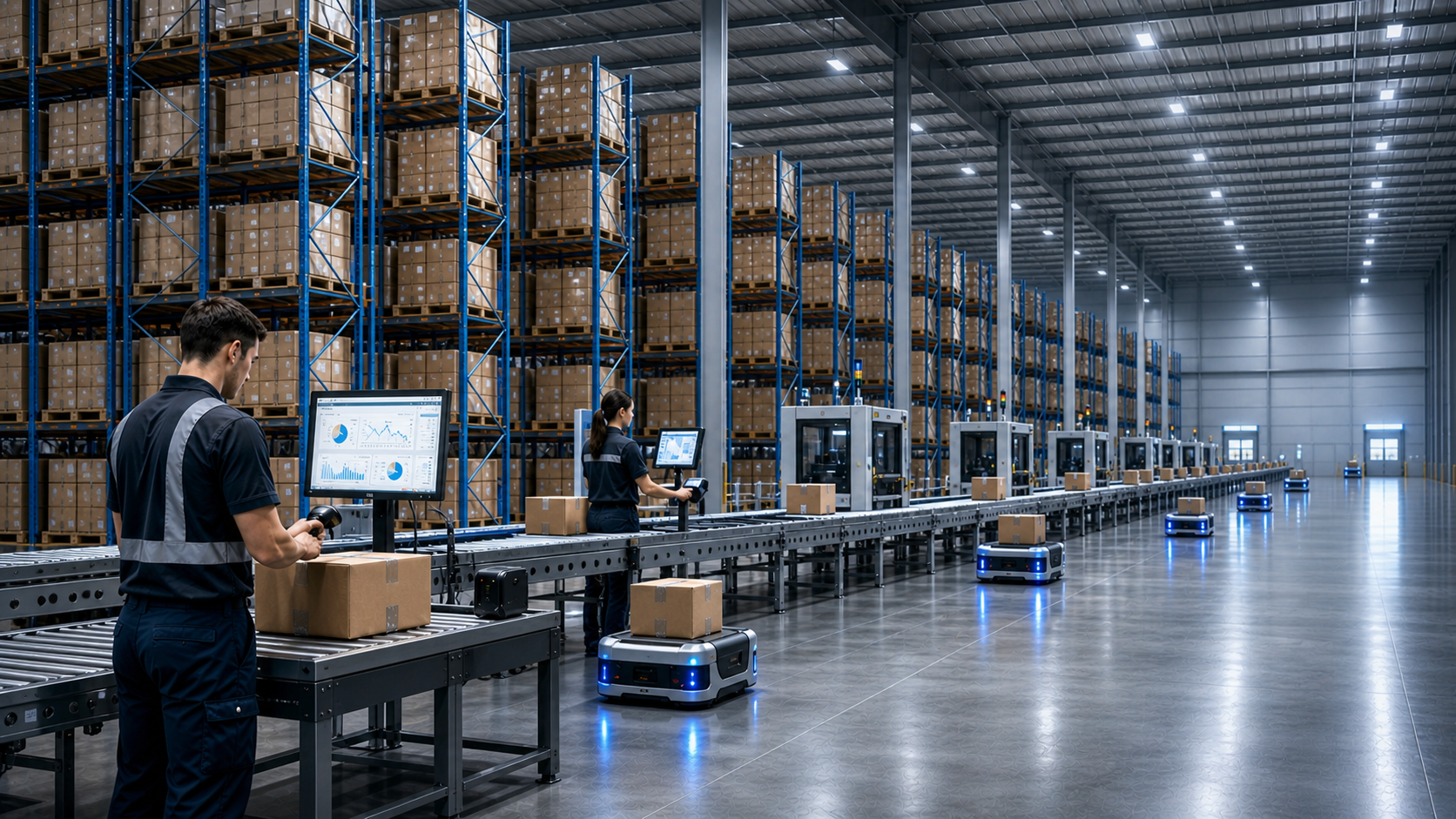
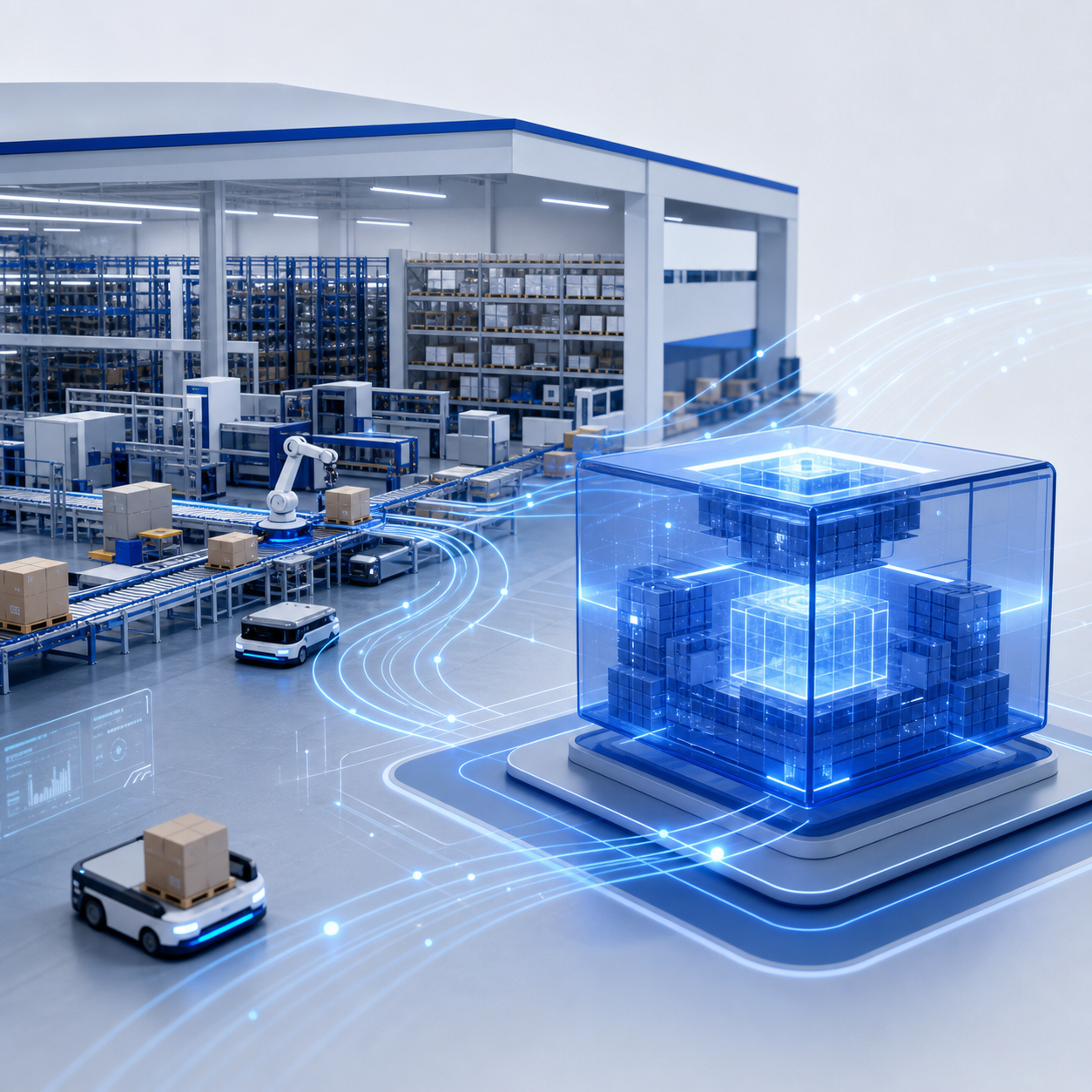
Learn what SAP EWM is, what it includes, and how embedded and decentralised SAP EWM support warehouse management, inventory, automation, and logistics.
SAP Extended Warehouse Management (SAP EWM) is SAP's warehouse management system (WMS) for managing and optimising complex, high-volume warehouse operations. It provides visibility and control over inventory, warehouse activities, and material flows, covering processes from inbound receiving and putaway to picking, packing, staging, and shipping. SAP EWM also supports warehouse automation and integration with broader supply chain processes. Learn more about SAP EWM
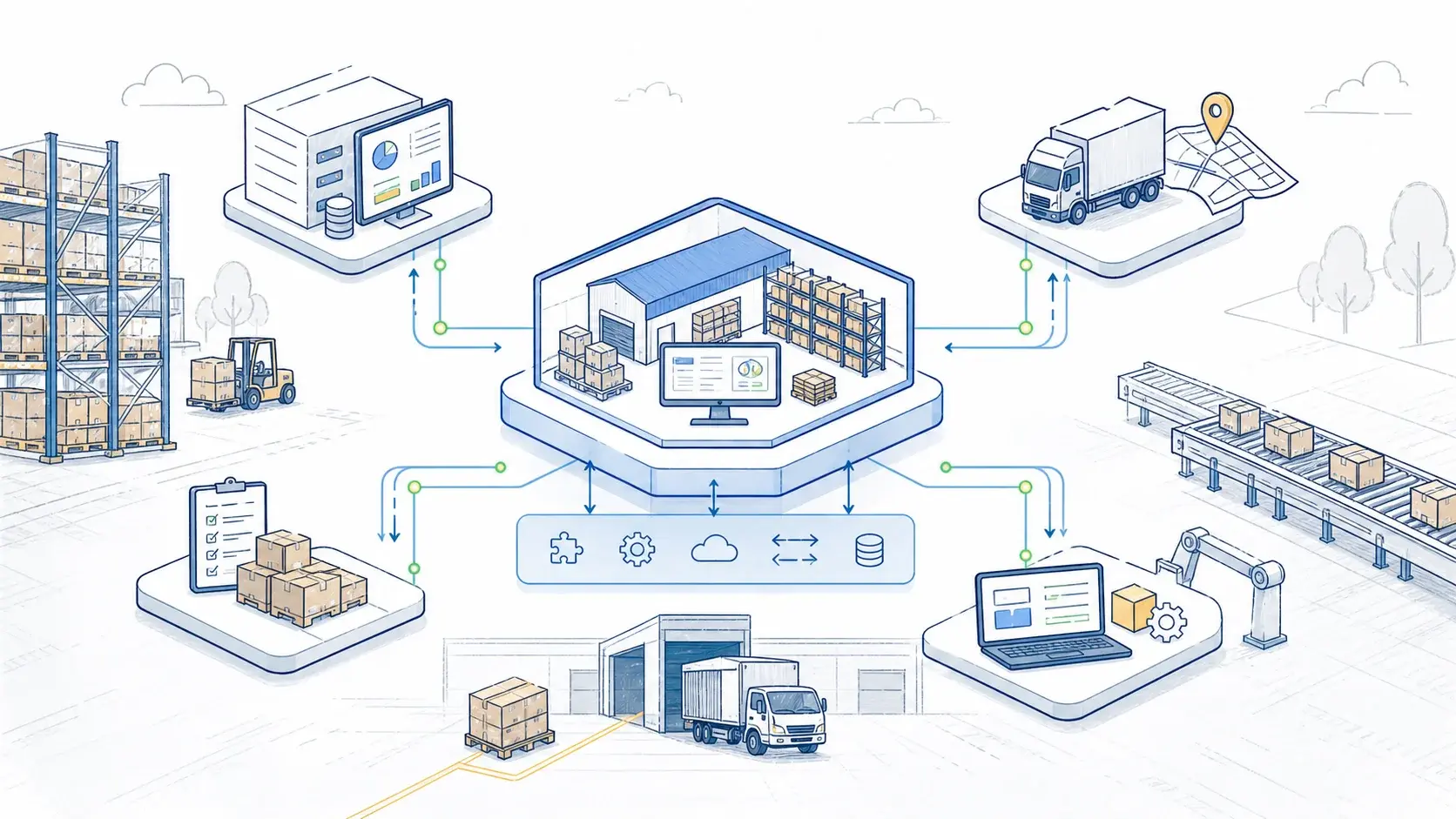
For organisations operating large, complex, or highly automated warehouses, SAP EWM can provide a more advanced level of warehouse execution than basic inventory management. Depending on the business and IT landscape, EWM can be deployed either embedded in SAP S/4HANA or as a decentralised solution.
What Does SAP EWM Do?
SAP EWM manages the physical execution of warehouse operations and connects warehouse activities with inventory, procurement, production, sales, transportation, and other supply chain processes.
Its purpose is to help organisations control not only what inventory they have, but also where it is, how it moves, which warehouse tasks need to be performed, and how those tasks are executed.
SAP EWM supports core warehouse processes such as:
- Inbound and outbound processing - goods receipt, putaway, picking, packing, staging, loading, and shipping.
- Inventory and stock management - visibility into stock, storage locations, movements, and availability.
- Warehouse task and warehouse order management - creation, prioritisation, and execution of warehouse activities.
- Storage-bin and warehouse-layout management - control of storage areas, bins, and putaway and stock-removal strategies.
- Handling unit management - management of products together with pallets, containers, and other packaging units.
- Labour and resource management - planning and monitoring warehouse resources and activities.
- Yard management - management of vehicles, transportation units, and yard movements.
- Value-added services - kitting, labelling, repacking, and other warehouse activities.
- Cross-docking - moving goods between inbound and outbound flows with reduced intermediate storage.
- Warehouse automation and material flow - integration with automated warehouse equipment and material-flow processes.
Key SAP EWM Features
Inbound and Outbound Processing
SAP EWM supports the main physical warehouse processes, including goods receipt, putaway, picking, packing, staging, loading, and shipping.
Warehouse tasks can be created, organised, prioritised, and executed according to operational requirements, helping coordinate the movement of goods from receiving through storage to final delivery.
Inventory Management
SAP EWM provides detailed visibility into stock quantities, locations, movements, and availability.
Inventory can be managed at a granular warehouse level, including storage bins and handling units, giving warehouse teams greater control over how goods are stored and moved.
Warehouse Task and Order Management
Warehouse activities are represented through warehouse tasks, which can be grouped into warehouse orders for execution by employees or automated equipment.
This helps warehouse operators prioritise activities and coordinate work across different areas, resources, and processes.
Storage and Warehouse Layout Management
SAP EWM supports the management of storage bins, warehouse areas, storage types, and warehouse structures.
Putaway and stock-removal strategies help determine where products should be placed and how they should be retrieved, while slotting can be used to optimise product placement and warehouse-space utilisation.
Handling Unit Management
SAP EWM can track products together with their physical packaging units, including pallets, containers, and other handling units.
This provides visibility into how goods are packaged, stored, moved, and shipped through the warehouse.
Labour and Resource Management
SAP EWM supports the management of warehouse employees and operational resources.
Organisations can plan workloads, assign warehouse activities, and monitor resource utilisation as part of overall warehouse execution.
Yard Management
SAP EWM Yard Management helps manage vehicles and transportation units arriving at, leaving, or moving through the warehouse yard.
It connects yard activities with warehouse receiving and shipping processes and provides visibility into the movement of transportation units.
Value-Added Services
SAP EWM supports warehouse activities performed before products are shipped, including kitting, labelling, repacking, and other value-added services (VAS).
These activities can be incorporated into the warehouse flow rather than managed as separate processes.
Advanced SAP EWM Capabilities
For more complex warehouse environments, SAP EWM provides additional capabilities such as:
- Slotting for optimising product placement and warehouse-space utilisation.
- Wave management for grouping and scheduling warehouse activities.
- Cross-docking for reducing unnecessary storage and handling.
- Advanced labour management for monitoring workforce activity and workloads.
- Yard management for coordinating vehicles and transportation units.
- Value-added services such as kitting, labelling, and repacking.
- Internal routing for optimising movement between warehouse areas.
- Radio-frequency processes for mobile warehouse execution.
- Kit-to-stock and kit-to-order processes.
- Consolidation and deconsolidation of handling units and stock.
These capabilities are particularly relevant where warehouse operations involve complex fulfilment requirements, high throughput, multiple warehouse areas, or advanced automation. SAP provides an overview of these functions in its SAP Learning documentation.
SAP EWM Material Flow System (MFS)
For highly automated warehouses, SAP EWM Material Flow System (MFS) enables EWM to communicate directly with warehouse automation equipment.
MFS can connect EWM with programmable logic controllers (PLCs) and coordinate material movements through automated equipment such as conveyors and automated storage and retrieval systems.
This can allow warehouse tasks created in EWM to be translated into physical material movements without requiring a separate warehouse control system for the MFS scenario.
SAP documents MFS as part of EWM's material-flow capabilities in the SAP Help Portal.
SAP EWM Deployment Options
SAP EWM can be deployed in different ways depending on the organisation's SAP landscape, warehouse complexity, and operational requirements.
Embedded SAP EWM
Embedded SAP EWM runs within the SAP S/4HANA environment.
This provides close integration between warehouse execution and ERP processes such as procurement, production, sales, and inventory management.
Decentralised SAP EWM
Decentralised SAP EWM runs as a separate SAP system and integrates with SAP S/4HANA or another ERP system.
This model can be relevant for large or complex warehouse environments that require a separate warehouse-management system, specialised processing, or a different operational architecture.
SAP provides an overview of the available warehouse-management deployment options in its SAP Learning documentation.
Basic vs. Advanced SAP EWM
The level of EWM functionality required depends on the complexity of the warehouse.
Basic warehouse management
Basic warehouse management focuses on core capabilities such as:
- inventory management;
- inbound and outbound processing;
- goods movements;
- reporting and warehouse visibility.
Advanced warehouse management
Advanced EWM extends these capabilities with functions such as:
- material-flow control;
- yard management;
- labour management;
- value-added services;
- kitting;
- cross-docking;
- advanced warehouse optimisation.
SAP describes these differences in its overview of SAP EWM features.
Who Needs SAP EWM?
SAP EWM is particularly relevant for organisations where standard inventory management is no longer sufficient to control warehouse operations.
It can be a strong fit for organisations operating:
- high-volume warehouses or distribution centres;
- complex inbound and outbound processes;
- multiple storage areas and sophisticated putaway strategies;
- advanced inventory-tracking environments;
- complex fulfilment or cross-docking operations;
- highly automated warehouses;
- detailed labour-management processes;
- complex yard operations;
- sophisticated packaging and shipping requirements.
SAP positions EWM for complex warehouse and supply-chain environments where organisations need greater visibility, control, automation, and operational efficiency.
What Are the Benefits of SAP EWM?
The business value of SAP EWM depends on the warehouse environment and implementation scope, but the platform can help organisations improve:
Inventory visibility
More detailed visibility into stock, warehouse locations, movements, and handling units can improve inventory control and operational decision-making.
Warehouse efficiency
Warehouse tasks, order management, slotting, routing, and resource management can help streamline day-to-day warehouse execution.
Space utilisation
Slotting and storage-management capabilities can help organisations make more effective use of available warehouse space.
Automation
SAP EWM can integrate warehouse execution with automated equipment, while MFS can provide direct communication with PLC-controlled material-flow systems in appropriate automated environments.
Supply-chain integration
EWM can connect warehouse operations with procurement, production, sales, transportation, and other supply-chain processes, providing a more integrated view of the physical movement of goods.
SAP EWM and SAP S/4HANA
SAP EWM can be closely integrated with SAP S/4HANA, allowing warehouse processes to work alongside ERP processes.
For organisations modernising their SAP landscape, the choice between embedded and decentralised EWM should be evaluated against warehouse complexity, automation, integration requirements, scalability, and the overall ERP architecture.
The right design depends on the organisation's warehouse processes and its broader SAP landscape rather than on a one-size-fits-all deployment model.
SAP EWM Implementation with LeverX
SAP EWM implementation needs to fit the way a warehouse actually operates, from inventory and material flows to automation, integrations, and day-to-day processes.
LeverX provides SAP EWM implementation, integration, migration, optimisation, and support across the project lifecycle. As an SAP Gold Partner with 20+ years of SAP experience and 500+ SAP-certified experts, LeverX helps organisations design and implement EWM solutions around their warehouse and supply-chain requirements.
Depending on the project, this may include:
- EWM strategy and solution design
- Warehouse process analysis and optimisation
- Embedded and decentralised EWM
- Inbound, outbound, inventory, and warehouse task management
- Warehouse automation and MFS integration
- Labour, resource, and yard management
- SAP S/4HANA and enterprise integration
- Data and SAP WM-to-EWM migration
- Testing, go-live, and post-implementation support
LeverX SAP EWM Experience
| Area | LeverX experience |
| SAP EWM implementation | LeverX helps companies design, set up, test, and launch SAP EWM, covering the main warehouse processes from receiving goods to picking, packing, and shipping. |
| Global SAP EWM experience | 45+ SAP EWM projects delivered worldwide, including projects supporting warehouse operations and supply-chain environments in the UK. |
| Warehouse automation | LeverX connects SAP EWM with warehouse technologies such as conveyors, scanners, robots, and automated storage systems to help warehouses run more efficiently. |
| SAP WM to EWM migration | LeverX helps companies move from SAP WM to SAP EWM, including moving data, adapting warehouse processes, testing the new system, and supporting the transition. |
| SAP S/4HANA integration | LeverX connects SAP EWM with SAP S/4HANA and other business systems, so warehouse activities can work together with inventory, purchasing, production, transport, and other supply-chain processes. |
| Warehouse process improvement | LeverX analyses how a warehouse currently works and helps improve processes such as receiving, storage, replenishment, picking, packing, and shipping. |
| UK-specific requirements | LeverX combines a standard SAP EWM approach with the flexibility needed to support local UK processes and business requirements. |
| SAP expertise and delivery scale | LeverX has 20+ years of SAP experience, 1,500+ projects, and 500+ SAP-certified experts worldwide, supporting its SAP EWM delivery capabilities in the UK and other markets. |
Frequently Asked Questions About SAP EWM
What is SAP EWM?
SAP Extended Warehouse Management is SAP's warehouse management system for controlling and optimising complex warehouse operations, including inventory, inbound and outbound processing, warehouse tasks, storage, labour, automation, and material flow.
What is the difference between SAP EWM and basic warehouse management?
Basic warehouse management focuses on core inventory and warehouse processes. Advanced SAP EWM adds capabilities such as material-flow control, yard management, labour management, value-added services, kitting, and cross-docking. SAP provides a detailed comparison of EWM capabilities.
Is SAP EWM part of SAP S/4HANA?
SAP EWM can be deployed embedded in SAP S/4HANA or as a decentralised SAP EWM system, depending on the organisation's architecture and warehouse requirements.
What is the difference between embedded and decentralised SAP EWM?
Embedded EWM runs within the SAP S/4HANA environment. Decentralised EWM runs as a separate SAP system and integrates with SAP S/4HANA or another ERP system.
What is SAP EWM MFS?
SAP EWM Material Flow System (MFS) enables EWM to communicate with automated warehouse equipment and PLCs. It can be used to coordinate material movement in highly automated warehouse environments. See SAP Help Portal documentation on MFS.
Who should use SAP EWM?
SAP EWM is particularly suited to organisations with high-volume or complex warehouse operations, advanced inventory and fulfilment requirements, sophisticated warehouse automation, or complex material flows.
Does SAP EWM support warehouse automation?
Yes. SAP EWM supports warehouse automation and can integrate warehouse processes with automated equipment. In appropriate automated-warehouse scenarios, MFS can provide direct communication between EWM and PLC-controlled material-flow equipment.
What does SAP EWM manage?
SAP EWM manages warehouse processes including goods receipt, putaway, picking, packing, staging, shipping, inventory, storage bins, warehouse tasks, handling units, labour, resources, yard operations, value-added services, cross-docking, and material flow.
Disclaimer: This article is provided for general informational purposes. SAP EWM capabilities, deployment options, implementation approaches, costs, and timelines may vary depending on an organisation's SAP landscape, warehouse processes, technical environment, and business requirements. The information provided does not constitute professional advice or a project commitment.