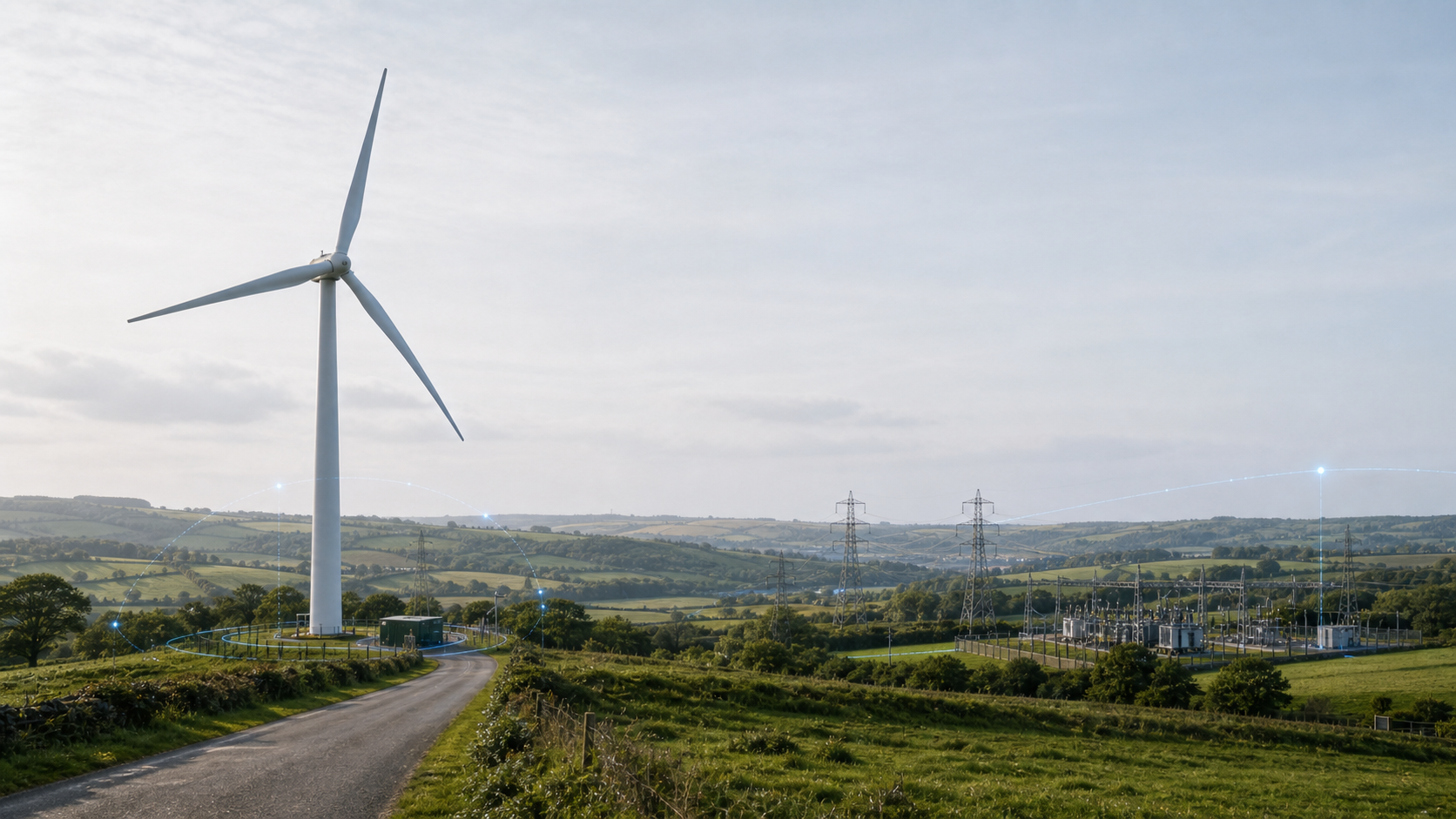
The UK energy industry is entering 2027 in the middle of one of the most significant transformations in its history.
The drive towards Clean Power 2030, rising electricity demand, network investment, renewable generation, energy storage, electrification, flexibility markets, and the digitalisation of the energy system are changing how energy companies operate. NESO says Great Britain achieved a record in 2025 when renewable energy met 97.7% of electricity demand, while its latest planning work anticipates electricity demand increasing by more than 30% by the mid-2030s.
At the same time, energy companies are dealing with complex technology landscapes that may include:
- SAP ERP and finance systems;
- enterprise asset-management platforms;
- SCADA and operational technology;
- GIS;
- IoT and sensor platforms;
- procurement and supplier-management systems;
- trading and commodity applications;
- field-service platforms;
- customer and billing systems;
- data and analytics platforms;
- legacy applications.
The challenge for 2027 is therefore not simply generating more renewable power or implementing another technology platform.
It is creating an energy operating model capable of coordinating assets, networks, customers, markets, finance, supply chain, and data in near real time.
This is where digital transformation becomes strategically important.
For UK energy companies, SAP can form part of the enterprise architecture connecting:
Finance + Assets + Procurement + Supply Chain + Operations + Customers + Data + AI
This article examines the key UK energy trends expected to shape 2027 and what they mean for enterprise technology and SAP transformation.
UK Energy Trends 2027: Executive Summary
UK Energy Trends 2027: Executive Summary
Several trends are likely to define the UK energy sector in 2027:
- Clean Power 2030 will shift from strategy towards large-scale delivery, increasing pressure on networks, assets, projects, supply chains, and operating models.
- Grid investment and connection reform will accelerate, with energy networks adapting to increasing electricity demand and a changing generation mix.
- Flexibility will become a core operating capability, with batteries, smart demand, storage, and flexible consumption increasingly important to balancing the system.
- Energy digitalisation will move from individual projects towards coordinated architectures, with government and Ofgem calling for stronger interoperability, data standards, and system-wide coordination.
- Smart-meter and half-hourly settlement infrastructure will create new operational and commercial opportunities, with the market-wide transition expected to complete by May 2027.
- Asset performance and predictive maintenance will become increasingly important as networks and generation portfolios become more complex.
- AI will move from experimentation towards targeted operational use, particularly where trusted asset, financial, customer, and operational data already exists.
- Energy companies will increasingly connect OT and enterprise systems, linking SCADA, GIS, IoT, asset management, finance, and supply chain.
- Supply-chain resilience will become more strategic as the sector manages large infrastructure and renewable-energy investment programmes.
- Technology investments will face greater scrutiny around measurable business value, with operational efficiency, reliability, capital-project delivery, and cost becoming central transformation metrics.
The organisations that benefit most will not necessarily be those that deploy the most technology.
The advantage will come from building an architecture in which different systems work together around common business processes and trusted data.
1. Clean Power 2030 Moves From Ambition to Delivery
1. Clean Power 2030 Moves From Ambition to Delivery
The UK's energy transition is entering a different phase.
The government has an ambition for Great Britain to achieve clean power by 2030, and NESO has developed pathways and implementation plans for delivering this transformation. In 2026, NESO described the industry as moving from policy development into large-scale delivery, with investment in generation, networks, flexibility, and infrastructure becoming increasingly important.
This creates a different challenge for energy companies.
The question is no longer simply:
“What should the future energy system look like?”
It increasingly becomes:
“How do we deliver and operate the required assets, projects, supply chains, and customer services at the necessary scale?”
What This Means for Technology
Energy companies will need to coordinate:
- capital projects;
- procurement;
- contractors;
- materials;
- asset creation;
- maintenance;
- finance;
- operational data;
- regulatory information.
A wind farm, battery project, grid reinforcement programme, or new energy facility can involve hundreds of commercial, operational, and financial dependencies.
SAP Opportunity
SAP S/4HANA / Cloud ERP can provide the enterprise backbone for:
Project → Procurement → Asset → Operations → Finance
Relevant capabilities can include:
- SAP S/4HANA / Cloud ERP;
- Enterprise Portfolio and Project Management;
- Asset Management;
- procurement;
- supply chain;
- SAP BTP;
- analytics.
The strategic objective is to make new energy investment operationally scalable, rather than managing each new project through another disconnected technology landscape.
2. Grid Investment and Connection Reform Become Critical
2. Grid Investment and Connection Reform Become Critical
As electricity demand increases and generation becomes more distributed, the UK's electricity networks need significant investment.
NESO's 2026 infrastructure update says electricity demand is expected to increase by more than 30% by the mid-2030s and highlights the need for network reinforcement to move electricity from new clean-energy sources to where it is needed.
At the same time, Ofgem is changing the regulatory framework for distribution-network investment for 2028–2033, with the new methodology intended to address increasing demand while recognising uncertainty around the timing and location of electrification.
This creates pressure on energy companies to improve:
- asset visibility;
- project management;
- contractor coordination;
- procurement;
- materials planning;
- field operations;
- cost control.
From Network Investment to Enterprise Process
A network-reinforcement project may involve:
Planning → Design → Procurement → Construction → Asset Creation → Commissioning → Maintenance → Finance
Each step creates data.
The challenge is ensuring that information generated during project delivery becomes useful operational information once the asset enters service.
SAP Opportunity
Energy organisations can use SAP capabilities to connect:
Capital Project → Procurement → Asset → Maintenance → Finance
This can help create a continuous lifecycle from investment planning to long-term asset management.
3. Flexibility Becomes a Core Energy Capability
3. Flexibility Becomes a Core Energy Capability
Flexibility is moving from a specialist energy-market concept towards a core part of system operation.
The UK's Clean Flexibility Roadmap describes flexibility as a foundational element of a smart, secure and decarbonised electricity system. The roadmap highlights batteries, smart tariffs, flexible demand, low-carbon generation, and other mechanisms that allow the system to respond dynamically to changing supply and demand.
UK grid-scale battery storage capacity reached 7.5 GW in 2025, with 2.3 GW energised during the year, showing how quickly flexibility infrastructure is developing.
For energy companies, flexibility can affect:
- asset scheduling;
- energy procurement;
- trading;
- customer propositions;
- storage;
- demand management;
- network operations.
The Technology Challenge
Flexibility depends on information arriving at the right time.
That means connecting:
Asset Data + Market Data + Customer Data + Operational Data + Forecasts
The enterprise architecture needs to support decisions rather than simply store historical transactions.
SAP Opportunity
Potential SAP capabilities can support the surrounding business processes:
- SAP S/4HANA / Cloud ERP;
- SAP Asset Management;
- SAP Commodity Management;
- SAP Analytics;
- SAP BTP;
- integration services.
The SAP system does not need to become the real-time control system.
Instead, it can provide the financial, asset, commercial, and business context around specialised operational and market platforms.
4. Energy Digitalisation Moves Towards Connected Architecture
4. Energy Digitalisation Moves Towards Connected Architecture
A major UK development for 2027 is the move from isolated digital initiatives towards a more coordinated digital energy ecosystem.
In March 2026, government and Ofgem published the Energy Digitalisation Framework, explicitly addressing fragmentation and duplication in the sector. The framework calls for stronger system-wide architectural coherence, common standards, coordination, and clearer data domains.
This is important because energy companies can have many systems that each perform a specific role:
- ERP;
- SCADA;
- GIS;
- asset management;
- billing;
- trading;
- field service;
- IoT;
- data platforms.
The problem emerges when these systems do not share consistent:
- asset identities;
- customer information;
- locations;
- events;
- reference data;
- business definitions.
From Application Landscape to Data Architecture
The direction of travel is:
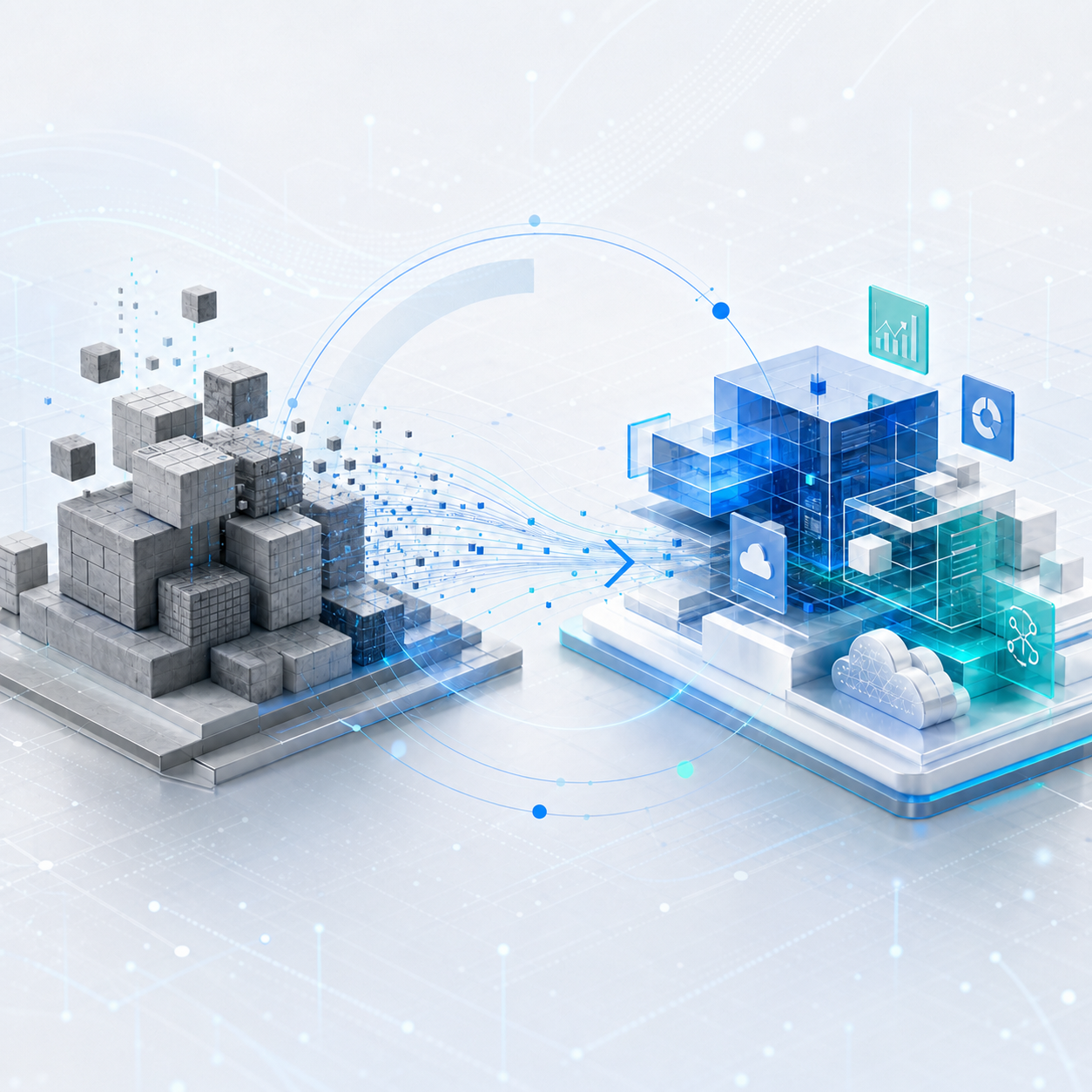
Separate Applications
towards:
Connected Business and Data Architecture
SAP Opportunity
SAP BTP and SAP Integration Suite can form part of this architecture, connecting SAP with specialised operational systems rather than requiring every function to move into the ERP.
The principle should be:
Integrate where the business needs integration; specialise where the operation needs specialist systems.
5. Smart Meters and Half-Hourly Settlement Create New Digital Demands
5. Smart Meters and Half-Hourly Settlement Create New Digital Demands
Market-wide Half-Hourly Settlement is another important UK trend for 2027.
As of mid-June 2026, more than 11.3 million smart meters had migrated to half-hourly settlement, and the programme remained on track to migrate all meters by May 2027. The objective is to create a market structure that better reflects actual patterns of electricity consumption and enables new flexible tariffs and services.
This creates opportunities for suppliers and utilities around:
- time-sensitive pricing;
- flexible tariffs;
- customer engagement;
- demand response;
- billing;
- forecasting;
- collections;
- customer analytics.
Why This Matters for SAP
A utility's customer-to-cash process increasingly needs to connect:
Meter Data → Consumption → Billing → Invoice → Payment → Customer Service → Finance
SAP S/4HANA Utilities provides utilities-specific meter-to-cash capabilities, while broader SAP analytics and integration capabilities can connect customer, finance, and operational data.
The transformation opportunity is therefore not simply better billing.
It is the ability to use customer and consumption data to support new commercial and operational models.
6. Asset Performance Becomes a Strategic KPI
6. Asset Performance Becomes a Strategic KPI
The energy transition means more assets, different asset types, more distributed generation, and increased reliance on infrastructure.
That increases the importance of knowing:
- which assets are performing;
- which assets are deteriorating;
- which assets are high-risk;
- where maintenance spending is concentrated;
- which failures affect customers or production.
The industry therefore moves further from:
Reactive Maintenance
towards:
Risk-Based + Predictive Asset Management
From Asset Data to Decision
A more mature process is:
Condition Data → Asset Risk → Maintenance Decision → Work Order → Materials → Cost → Performance
SAP Opportunity
Relevant capabilities can include:
- SAP Asset Management;
- SAP Asset Performance Management;
- SAP S/4HANA;
- analytics;
- BTP integration;
- AI-supported asset-management scenarios.
The important principle is that AI should come after asset data, processes, and integration are sufficiently mature.
7. AI Moves Into Energy Operations
7. AI Moves Into Energy Operations
AI is likely to become more operational in energy during 2027.
But the important shift is not simply the number of AI pilots.
It is where AI becomes embedded in actual business processes.
Potential applications include:
Asset Management
- predictive maintenance;
- failure-risk assessment;
- maintenance prioritisation.
Procurement
- supplier-risk analysis;
- demand forecasting;
- purchasing recommendations.
Projects
- schedule-risk analysis;
- cost forecasting;
- project-performance analysis.
Energy / Commodity Management
- market and demand analysis;
- operational recommendations;
- risk monitoring.
Customer Operations
- demand forecasting;
- customer segmentation;
- service automation.
SAP currently highlights energy-specific AI scenarios including Autonomous Asset Management, Autonomous Commodity Management, and Autonomous Project Delivery.
The critical enterprise question is therefore:
What decisions can AI improve, and what data is required to support those decisions?
8. OT, GIS and Enterprise Systems Will Need to Work Together
8. OT, GIS and Enterprise Systems Will Need to Work Together
Energy companies increasingly operate across the boundary between IT and operational technology.
A single operational event can involve:
SCADA → Asset → GIS → Maintenance → Procurement → Finance
For example:
A network event identifies an asset problem.
↓
GIS identifies the affected location and asset.
↓
The asset-management system identifies maintenance history.
↓
A work order is created.
↓
Procurement checks spare-parts availability.
↓
Field operations execute the repair.
↓
SAP records costs.
↓
Management analytics assesses operational and financial impact.
This is much more valuable than treating SCADA, GIS, EAM, and ERP as independent systems.
SAP Opportunity
SAP can act as the enterprise context around operational processes while specialised OT and field systems remain in place.
The architecture may include:
OT / SCADA + GIS + IoT
↓
Integration / Data Layer
↓
SAP S/4HANA + Asset Management
↓
Finance + Procurement + Projects
↓
Analytics + AI
This is particularly relevant for electricity networks, generation, infrastructure, and field-service-intensive energy businesses.
9. Supply-Chain Resilience Becomes Part of Energy Strategy
9. Supply-Chain Resilience Becomes Part of Energy Strategy
Energy transition is also a supply-chain transformation.
Large-scale investment requires:
- turbines;
- transformers;
- cables;
- batteries;
- electrical equipment;
- construction materials;
- specialist contractors;
- engineering services.
The risk is not simply whether a supplier delivers.
A delay can affect:
Procurement → Project Schedule → Asset Commissioning → Capacity → Revenue / Service → Regulatory Commitments
Energy companies therefore need stronger visibility across:
- supplier performance;
- inventory;
- material requirements;
- lead times;
- logistics;
- project schedules;
- asset dependencies.
SAP Opportunity
SAP solutions can connect:
Demand → Procurement → Supplier → Inventory → Logistics → Project → Asset
This makes procurement and supply chain part of the wider energy operating model rather than a back-office function.
10. Energy Companies Will Focus More on Operational Efficiency and ROI
10. Energy Companies Will Focus More on Operational Efficiency and ROI
The scale of required energy investment creates another trend: digital transformation will face greater scrutiny.
Energy companies need to demonstrate value from investments in:
- ERP;
- asset management;
- digital infrastructure;
- automation;
- AI;
- analytics;
- supply-chain technology.
The business case will increasingly focus on measurable outcomes such as:
Assets
- reduced downtime;
- maintenance cost;
- asset availability.
Projects
- project-cost variance;
- schedule adherence;
- time to commissioning.
Supply Chain
- inventory;
- supplier performance;
- emergency procurement;
- lead times.
Finance
- financial close;
- working capital;
- cost per transaction.
Digital Operations
- manual hand-offs;
- integration failures;
- data-quality issues;
- decision latency.
The key shift is:
Technology Investment → Operational KPI → Financial Value
rather than:
Technology Investment → System Implementation → Go-Live
What These Trends Mean for SAP Strategy
What These Trends Mean for SAP Strategy
The 2027 energy environment reinforces a broader architectural shift.
Energy companies are unlikely to achieve the required transformation by replacing every system with one platform.
A more realistic model is:
SAP Digital Core + Operational Technology + Specialised Energy Applications + Integration + Trusted Data + AI
SAP S/4HANA / Cloud ERP can provide the enterprise backbone for:
- finance;
- procurement;
- projects;
- supply chain;
- assets;
- commercial processes.
Specialised platforms can continue to support:
- SCADA;
- GIS;
- trading;
- field operations;
- IoT;
- real-time control.
Integration and data architecture connect the two.
The goal is not to make SAP the centre of every technical process.
The goal is to establish a coherent enterprise architecture in which each system has a clearly defined role.
SAP Solutions for UK Energy in 2027
SAP Solutions for UK Energy in 2027
The relevant SAP landscape will depend on the business model.
| SAP capability | Typical energy use case |
| SAP S/4HANA / SAP Cloud ERP | Finance, procurement, projects, inventory, commercial processes |
| SAP S/4HANA Utilities | Meter-to-cash, customer and utility processes |
| SAP Asset Management | Maintenance, work orders, asset lifecycle |
| SAP Asset Performance Management | Asset risk, reliability, performance |
| SAP Commodity Management | Commodity procurement, sales and energy-related commercial processes |
| SAP Supply Chain | Planning, procurement, inventory, logistics |
| SAP Enterprise Portfolio and Project Management | Energy infrastructure and capital projects |
| SAP Ariba | Strategic sourcing, procurement and supplier collaboration |
| SAP Field Service Management | Field workforce and maintenance execution |
| SAP Business Technology Platform | Extensions, integration, automation and applications |
| SAP Integration Suite | SAP, OT and non-SAP integration |
| SAP Datasphere | Enterprise data integration and analytics |
| SAP Sustainability solutions | Sustainability and environmental data |
| SAP Business AI | AI-supported business decisions and automation |
The objective is not to implement every capability.
It is to select the combination that supports the organisation's specific operating model.
What Should UK Energy Companies Do in 2027?
What Should UK Energy Companies Do in 2027?
How LeverX Can Support UK Energy Transformation
The trends point towards a practical transformation agenda.
The energy transition is creating a more complex operating environment for UK energy companies.
Companies are being asked to deliver new infrastructure faster, operate increasingly diverse asset portfolios, manage more variable generation and demand, respond to changing market conditions, and maintain high levels of reliability while controlling costs.
Technology can support these objectives, but only when it is connected to business priorities.
For 2027, UK energy companies should focus on seven practical transformation priorities:
- Connect the asset lifecycle
- Modernise the enterprise core
- Establish a trusted data foundation
- Connect OT and IT
- Automate high-value processes
- Build AI on trusted data
- Measure transformation by business outcomes
The objective is not to deploy technology for its own sake.
It is to create a more connected operating model in which assets, people, processes, data, and financial decisions work together.
1. Connect the Asset Lifecycle
A major priority for energy companies is to connect the complete lifecycle of an asset:
Investment → Design → Procurement → Construction → Commissioning → Maintenance → Performance → Retirement
In many organisations, these stages are still supported by different systems, teams, and processes.
Project teams may manage construction data in one environment. Procurement may operate another system. Asset-management teams may maintain a separate asset register. Finance may receive information only after transactions have already occurred.
This creates a significant problem.
The company may know how much it spent building an asset, but have limited visibility into how that investment affects its long-term operating cost, reliability, or performance.
Why Do This?
Connecting the lifecycle creates a continuous information chain from capital investment to operational performance.
For example:
Capital Project → Asset Created → Maintenance Plan → Work Order → Spare Parts → Maintenance Cost → Asset Performance
This allows management to understand not only whether an asset was delivered on budget, but also whether it is performing as expected once it enters operation.
What Is the Business Benefit?
A connected asset lifecycle can help energy companies:
- improve visibility of total asset cost;
- reduce maintenance inefficiencies;
- improve asset availability;
- identify high-cost or high-risk assets;
- make better repair-versus-replace decisions;
- reduce the time required to transfer project information into operations;
- improve capital-project handover;
- strengthen asset accounting and financial planning.
For infrastructure-heavy businesses, the value can be substantial because a relatively small improvement in asset reliability or maintenance efficiency can affect operating costs and service performance over many years.
What Should Companies Do?
Energy companies should establish clear links between:
Project Management + Procurement + Asset Management + Maintenance + Finance
The objective is to create a digital asset lifecycle, rather than treating project delivery and asset operations as separate activities.
2. Modernise the Enterprise Core
2. Modernise the Enterprise Core
Many energy companies operate SAP environments that have evolved over many years.
The resulting landscape can contain:
- multiple ERP instances;
- heavily customised processes;
- legacy interfaces;
- duplicate master data;
- separate finance and operational applications;
- manual reconciliations;
- custom reporting;
- point-to-point integrations.
This can make it difficult to introduce new business models or respond quickly to changes in the energy market.
Why Modernise?
The enterprise core is where many critical processes converge:
Finance + Procurement + Projects + Inventory + Assets + Commercial Operations
If the core is fragmented or overly customised, every transformation initiative becomes more difficult.
A modern ERP architecture can provide a more standardised foundation for the business while allowing specialised systems to remain where they provide operational value.
For many organisations, this means assessing the move towards SAP S/4HANA and SAP Cloud ERP, rather than simply upgrading technology without changing the underlying operating model.
What Is the Business Benefit?
Modernising the enterprise core can help organisations:
- simplify the application landscape;
- reduce technical debt;
- standardise processes across business units;
- improve financial visibility;
- reduce manual reconciliation;
- accelerate reporting;
- make acquisitions and new businesses easier to integrate;
- support new energy business models;
- reduce the complexity of future upgrades.
The most important benefit is often business agility.
An energy company investing in batteries, renewable generation, new customer propositions, or infrastructure should not have to build a completely separate enterprise architecture every time a new business model emerges.
What Should Companies Do?
The first question should not be:
“How do we migrate our existing ERP to S/4HANA?”
It should be:
“What enterprise processes will the business need to operate effectively over the next 5–10 years?”
The ERP roadmap should then be designed around those requirements.
3. Establish a Trusted Data Foundation
3. Establish a Trusted Data Foundation
Data is becoming one of the most important assets in the energy industry.
But more data does not automatically create better decisions.
Energy companies may have information about the same asset, customer, supplier, or location stored differently across multiple systems.
For example, an asset may have:
- one identifier in GIS;
- another identifier in SCADA;
- another identifier in the EAM system;
- another reference in SAP;
- additional information in an IoT platform.
This makes cross-system analysis difficult.
Why Does This Matter?
AI, analytics, automation, and operational decision-making all depend on reliable data.
If an organisation cannot confidently answer:
“Which asset are we actually talking about?”
then advanced analytics will struggle to deliver reliable results.
The same applies to customers, suppliers, materials, projects, and financial information.
What Should Companies Establish?
Energy companies should define governed enterprise data domains for:
- asset data;
- customer data;
- supplier data;
- material data;
- location data;
- operational data;
- project data;
- financial data.
They should also establish clear ownership:
-
Who creates the data?
-
Who validates it?
-
Who changes it?
-
Which system is the source of truth?
-
How is it shared with other systems?
What Is the Business Benefit?
A stronger data foundation can provide:
- more reliable reporting;
- fewer reconciliation activities;
- better asset visibility;
- faster decision-making;
- improved forecasting;
- better regulatory reporting;
- more effective AI;
- lower data-management costs.
Most importantly, trusted data creates a foundation on which future digital initiatives can be built.
Instead of creating a new data foundation for every AI or analytics project, the company can reuse governed enterprise information.
4. Connect OT and IT
4. Connect OT and IT
Energy companies have a particularly important reason to connect operational technology with enterprise systems.
Operational systems generate information about what is happening right now.
Enterprise systems provide information about the business context.
For example:
SCADA → Asset Condition → GIS Location → Maintenance History → Spare Parts → Supplier → Cost
Individually, each system provides only part of the picture.
Together, they can support a much better operational decision.
Example
Imagine that an operational system identifies abnormal behaviour in a network asset.
The organisation could connect that event to:
- the asset record;
- the asset's maintenance history;
- its criticality and risk;
- available spare parts;
- supplier lead times;
- field-engineer availability;
- the expected operational impact;
- the financial cost of intervention.
This turns an operational signal into a business decision.
Why Do This?
Without integration, employees may have to manually move information between systems.
That creates:
- delays;
- duplicate data entry;
- inconsistent information;
- reconciliation work;
- slower maintenance decisions;
- increased operational risk.
Target Architecture
A practical model can be:
SCADA + GIS + IoT + Field Systems
↓
Integration / Data Layer
↓
SAP S/4HANA + Asset Management
↓
Finance + Procurement + Projects + Supply Chain
↓
Analytics + AI
SAP does not need to replace SCADA, GIS, or specialist operational platforms.
The objective is to give each system a clear role and ensure that critical information can move between them.
What Is the Business Benefit?
Better OT/IT integration can help improve:
- incident response;
- asset reliability;
- maintenance planning;
- field productivity;
- spare-parts availability;
- operational visibility;
- cost control;
- decision speed.
The key metric is often decision latency: how long does it take to turn an operational event into an informed business action?
5. Automate High-Value Processes
5. Automate High-Value Processes
Automation should not be measured by the number of tasks automated.
It should be measured by the business value created.
Energy companies should therefore prioritise processes where automation can improve:
Reliability + Cost + Speed + Customer Experience
Potential opportunities include:
Finance
- invoice processing;
- reconciliations;
- financial reporting;
- approval workflows.
Procurement
- purchase requisitions;
- supplier onboarding;
- contract compliance;
- procurement approvals.
Asset Management
- maintenance notifications;
- work-order processing;
- scheduling;
- spare-parts planning.
Projects
- project reporting;
- cost monitoring;
- schedule-risk identification;
- document processing.
Customer Operations
- billing processes;
- service requests;
- customer communications;
- case management.
Why Automate?
Manual processes become increasingly expensive as an organisation grows.
More assets, projects, suppliers, customers, and transactions mean more administrative work unless processes become more automated.
Automation can allow employees to spend less time:
Searching → Entering → Reconciling → Approving
and more time:
Analysing → Deciding → Improving → Managing Risk
What Is the Business Benefit?
Well-designed automation can produce:
- lower transaction costs;
- shorter process cycles;
- fewer errors;
- better compliance;
- higher employee productivity;
- faster customer service;
- improved scalability.
The strongest candidates are usually processes with high volume, repetitive work, clear rules, and measurable performance indicators.
6. Build AI on Trusted Data
6. Build AI on Trusted Data
AI will become increasingly relevant to energy operations, but companies should avoid treating AI as an independent technology programme.
The better approach is:
Business Problem → Data → Process → AI → Measurable Outcome
rather than:
AI Technology → Search for a Use Case
Where Can AI Create Value?
Potential applications include:
Asset Management
- predictive maintenance;
- failure-risk assessment;
- maintenance prioritisation;
- asset-performance analysis.
Procurement
- supplier-risk analysis;
- demand forecasting;
- purchasing recommendations;
- contract analysis.
Projects
- schedule-risk prediction;
- cost forecasting;
- project-performance analysis.
Energy and Commodity Management
- demand analysis;
- forecasting;
- risk monitoring;
- decision support.
Customer Operations
- customer segmentation;
- service automation;
- demand forecasting.
SAP is also positioning AI around industry scenarios such as Autonomous Asset Management, Autonomous Commodity Management, and Autonomous Project Delivery.
Why Build AI on the Enterprise Foundation?
AI needs reliable context.
A maintenance recommendation becomes significantly more useful when it can understand:
Asset Condition + Maintenance History + Criticality + Spare Parts + Supplier Lead Time + Cost
rather than analysing sensor data in isolation.
What Is the Business Benefit?
The objective is not simply to introduce AI.
It is to improve a measurable business outcome such as:
- fewer failures;
- lower maintenance costs;
- better forecasts;
- faster project delivery;
- reduced procurement risk;
- improved customer service;
- better margins.
For this reason, AI should be introduced where the organisation already has—or can establish—the required data and process foundation.
7. Measure Transformation by Business Outcomes
7. Measure Transformation by Business Outcomes
One of the most important changes for 2027 should be how digital transformation itself is measured.
A project should not be considered successful simply because:
- the system went live;
- the migration was completed;
- the new application was deployed;
- users were trained.
The more important question is:
“What changed in the business?”
Asset KPIs
Measure:
- asset availability;
- downtime;
- maintenance cost;
- mean time to repair;
- preventive versus corrective maintenance;
- maintenance backlog.
Project KPIs
Measure:
- project-cost variance;
- schedule adherence;
- time to commissioning;
- procurement delays;
- change-order levels.
Supply-Chain KPIs
Measure:
- inventory levels;
- supplier lead times;
- supplier performance;
- emergency procurement;
- material availability.
Finance KPIs
Measure:
- financial-close cycle;
- working capital;
- cost per transaction;
- reconciliation effort;
- project-cost visibility.
Digital and Operational KPIs
Measure:
- manual hand-offs;
- integration failures;
- data-quality issues;
- process cycle time;
- decision latency;
- automation rate.
Why Does This Matter?
Linking technology to operational and financial KPIs changes the transformation conversation.
Instead of:
“We implemented SAP.”
the organisation can demonstrate:
“We reduced maintenance costs, improved asset availability, shortened procurement cycles, and reduced manual processing.”
That is a much stronger basis for continued investment.
From Technology Projects to an Energy Operating Model
The seven priorities above are interconnected.
Improving an individual system may create local benefits.
Connecting the systems around an end-to-end business process can create much greater value.
Consider a new energy infrastructure project.
A disconnected model might look like:
Project System → Procurement System → Asset System → Finance → Reporting
with manual hand-offs between each stage.
A connected model can become:
Investment → Project → Procurement → Construction → Asset Creation → Maintenance → Operational Performance → Financial Performance → Management Decision
The second model creates a continuous flow of information across the asset lifecycle.
That is the real objective of digital transformation.
LeverX Recommendation: Build Around the Energy Value Chain
LeverX Recommendation: Build Around the Energy Value Chain
For UK energy organisations, we recommend treating digital transformation as an end-to-end operating-model programme, rather than as a series of disconnected SAP projects.
The starting point should be the business - not the software.
First identify the value chains that have the greatest impact on operational performance and financial results.
For example:
Generate / Operate → Maintain → Procure → Deliver → Bill → Finance
For an infrastructure or network business, the value chain may look more like:
Plan → Invest → Procure → Build → Commission → Operate → Maintain → Renew
For a utility supplier, the focus may be:
Customer → Meter → Consume → Bill → Collect → Serve
The technology architecture should then be designed around these processes.
Step 1: Assess
Map the current landscape across:
- ERP;
- finance;
- assets;
- procurement;
- supply chain;
- OT;
- GIS;
- customer systems;
- data platforms;
- integrations;
- legacy applications.
The objective is to identify where fragmentation creates the greatest business impact.
Typical issues may include:
Duplicate Data + Manual Processes + Poor Integration + Limited Visibility + Technical Debt
Step 2: Prioritise
Not every system or process needs to be transformed at the same time.
Prioritise initiatives according to:
Business Value + Operational Criticality + Transformation Readiness + Complexity
For example, improving asset-maintenance visibility may have a higher business value than replacing a low-impact back-office application.
This creates a transformation roadmap based on value rather than technology preference.
Step 3: Standardise
Before automating or migrating a fragmented process, establish how the process should work.
Define:
- common processes;
- roles and responsibilities;
- master data;
- controls;
- approval rules;
- KPIs;
- system ownership.
This prevents companies from simply reproducing inefficient legacy processes in a new platform.
Step 4: Integrate
Connect the systems that need to exchange information.
For example:
SCADA + GIS + IoT + Field Service + Asset Management + SAP
Integration should be designed around business events and data ownership rather than creating unnecessary point-to-point interfaces.
The goal is to make information available where and when it is needed.
Step 5: Modernise
Once the target processes and architecture are understood, determine which parts of the SAP landscape should be modernised.
This may include:
- SAP S/4HANA;
- SAP Cloud ERP;
- SAP S/4HANA Utilities;
- SAP Asset Management;
- SAP BTP;
- SAP Integration Suite;
- SAP Analytics and data capabilities.
The objective is not to maximise the number of SAP products.
It is to establish a sustainable enterprise core that can support the company's future operating model.
Step 6: Automate
Once processes and data are stable, automate the highest-value activities.
Prioritise processes where automation can deliver measurable improvements in:
Cost + Speed + Reliability + Employee Productivity + Customer Experience
This creates a stronger business case than broad automation programmes with no clear outcome.
Step 7: Optimise
Transformation should not end at go-live.
Energy companies operate in a continuously changing environment.
New assets, regulations, market models, customer expectations, technologies, and energy businesses will continue to emerge.
The operating model should therefore support continuous improvement:
Measure → Analyse → Improve → Automate → Measure Again
This is where analytics and AI can increasingly become part of everyday operational management.
The Business Case for an Integrated Energy Architecture
The Business Case for an Integrated Energy Architecture
The ultimate benefit of this approach is not simply a more modern technology landscape.
It is the ability to make better decisions across the energy value chain.
For example:
Asset Decision
Repair or replace?
Combine:
Condition + Risk + Maintenance History + Parts + Labour + Cost + Operational Impact
Procurement Decision
Which supplier should we use?
Combine:
Price + Quality + Lead Time + Risk + Contract + Inventory + Operational Criticality
Investment Decision
Where should capital be allocated?
Combine:
Asset Performance + Demand + Risk + Project Cost + Expected Return + Regulatory Requirements
Operational Decision
How should the organisation respond to an event?
Combine:
OT Signal + Asset + Location + Customer Impact + Field Resources + Materials + Cost
This is where an integrated enterprise architecture creates value that individual applications cannot provide on their own.
What Good Looks Like in 2027
A mature UK energy operating model should increasingly look like this:
Energy Assets → OT / SCADA / GIS / IoT → Integrated Operational & Enterprise Data → SAP Digital Core → Finance + Procurement + Projects + Supply Chain + Asset Management → Analytics + AI → Business Decisions
The architecture should allow information to move in both directions.
Operational events should influence enterprise decisions.
Financial and commercial information should influence operational priorities.
And management decisions should be based on a consistent view of the business.
That is the difference between digital systems and a digital operating model.
The Expected Business Benefits
The Expected Business Benefits
A successful transformation should ultimately create value across several dimensions.
Lower Cost
Through:
- process standardisation;
- automation;
- reduced manual reconciliation;
- better procurement;
- improved maintenance planning.
Higher Asset Reliability
Through:
- better asset data;
- risk-based maintenance;
- predictive analytics;
- faster response to operational events.
Faster Project Delivery
Through:
- integrated project and procurement processes;
- better material visibility;
- improved contractor coordination;
- earlier identification of cost and schedule risks.
Greater Supply-Chain Resilience
Through:
- supplier visibility;
- inventory optimisation;
- demand forecasting;
- better material planning.
Better Financial Control
Through:
- integrated operational and financial data;
- project-cost visibility;
- asset-cost transparency;
- faster reporting.
Greater Business Agility
Through:
- a modern enterprise core;
- reusable integration patterns;
- standardised processes;
- scalable data architecture.
Better Customer Outcomes
Through:
- more accurate billing;
- faster service;
- improved reliability;
- better understanding of consumption and demand.
Stronger Foundation for AI
Through:
- trusted enterprise data;
- connected processes;
- accessible operational information;
- governed business context.
The Strategic Objective for UK Energy Companies
The Strategic Objective for UK Energy Companies
The goal should not be:
“Implement more technology.”
Nor should it be:
“Move everything into SAP.”
The strategic objective is:
Build an integrated energy operating model in which assets, operations, customers, supply chains, finance, data, and technology work together to improve measurable business outcomes.
For some organisations, SAP S/4HANA or Cloud ERP may be the centre of that architecture.
For others, the immediate priority may be asset management, data, integration, OT/IT connectivity, or process standardisation.
The right starting point depends on the organisation's existing landscape and business priorities.
What matters is that every transformation initiative contributes to the same direction:
More Connected Processes + Better Data + Faster Decisions + Higher Operational Resilience + Measurable Financial Value
How LeverX Can Support UK Energy Transformation
LeverX can support UK energy organisations across SAP consulting, transformation, implementation, integration, data, application management, and continuous improvement.
Potential areas include:
- SAP S/4HANA transformation;
- SAP Cloud ERP;
- enterprise asset management;
- SAP S/4HANA Utilities;
- finance transformation;
- procurement;
- supply chain;
- SAP BTP;
- SAP Integration Suite;
- data and analytics;
- AI-enabled process improvement;
- application management;
- SAP modernisation.
For energy companies, the focus can be on building an architecture and roadmap that connects the ERP core with assets, OT, GIS, supply chain, customers, finance, and emerging energy business models.
Get a Free Consultation with LeverX
Get a Free Consultation with LeverX
If your organisation is assessing its SAP, asset-management, data, integration, or digital-transformation roadmap for 2027, a structured assessment can help identify where technology investment can deliver the greatest business value.
Get a Free Consultation with LeverX to discuss your current landscape, transformation priorities, and potential roadmap for building a more connected energy operating model.
Get a Free Consultation with LeverX
Frequently Asked Questions
What are the biggest UK energy trends for 2027?
The major trends include Clean Power 2030 delivery, grid investment and connection reform, flexibility, energy digitalisation, smart-meter and half-hourly settlement, asset-performance management, AI, OT/IT integration, supply-chain resilience, and greater focus on measurable digital-transformation ROI.
Why is flexibility becoming important in the UK energy sector?
Greater renewable generation and electrification increase the need to balance supply and demand dynamically. The government's Clean Flexibility Roadmap positions flexibility as a core part of a clean, secure and consumer-focused electricity system.
What does Clean Power 2030 mean for energy companies?
It increases the pressure to deliver and operate new generation, networks, storage, flexibility, and supporting infrastructure at scale. NESO's implementation work highlights the need for coordinated investment, planning, and system operation.
Why will energy digitalisation become more important in 2027?
Government and Ofgem's Energy Digitalisation Framework explicitly identifies fragmentation and duplication across the sector and calls for stronger coordination, common standards, data domains, and architectural coherence.
How can SAP support UK energy transformation?
SAP can provide an enterprise digital core for finance, procurement, projects, supply chain, asset management, utilities processes, and commercial operations, while SAP BTP and Integration Suite can connect the ERP with specialised OT and non-SAP systems.
What SAP solutions are relevant to energy companies?
Depending on the business model, relevant capabilities include SAP S/4HANA / Cloud ERP, S/4HANA Utilities, Asset Management, Asset Performance Management, Commodity Management, Supply Chain, Project Management, SAP Ariba, Field Service Management, BTP, Integration Suite, Datasphere, Sustainability solutions, and Business AI.
How can UK energy companies use AI?
High-value applications can include asset performance, predictive maintenance, procurement, project-risk analysis, commodity operations, customer processes, forecasting, and decision support. SAP currently highlights AI scenarios including Autonomous Asset Management, Autonomous Commodity Management, and Autonomous Project Delivery.
What is the role of OT in an SAP transformation?
OT systems such as SCADA, sensors, and plant-control systems provide operational information that can be combined with SAP asset, procurement, finance, and maintenance context. The goal is not to replace OT with SAP, but to connect the two appropriately.
Will all UK energy companies need to move to S/4HANA?
Not necessarily. The appropriate ERP strategy depends on the current landscape, business requirements, SAP release, transformation roadmap, and operating model. Some organisations may first prioritise data, integration, asset, or process transformation.
Where should UK energy companies start their SAP transformation?
Start with an assessment of the current ERP, asset, finance, procurement, supply-chain, OT, GIS, integration, and data landscape. Then prioritise the business areas where transformation can produce the greatest measurable value.
Conclusion
Conclusion
The UK energy sector is entering 2027 with a clear shift from energy-transition strategy towards large-scale delivery.
Clean Power 2030, grid reinforcement, flexibility, smart-meter settlement, digitalisation, asset investment, and new energy business models are changing the requirements placed on energy companies.
The resulting technology challenge is not simply:
“How do we modernise our SAP system?”
It is:
“How do we create an enterprise architecture capable of connecting energy assets, operational systems, customers, supply chains, finance, and data?”
For many UK energy companies, SAP can provide an important part of that foundation through:
S/4HANA / Cloud ERP + Asset Management + Supply Chain + Utilities / Commodity Capabilities + BTP + Integration + Data + AI
But the strongest architecture will also recognise the role of specialised systems such as SCADA, GIS, IoT, trading, and field-service platforms.
The direction for 2027 is therefore clear:
More Electrification + More Assets + More Data + More Flexibility + More Digital Coordination
The energy companies best positioned to respond will be those that can turn those changes into a connected operating model rather than a collection of disconnected technology programmes.
Get a Free Consultation with LeverX
Disclaimer: Energy-market conditions, government policy, regulation, grid plans, technology capabilities, and SAP product availability may change. This article reflects publicly available UK energy-sector information and current SAP positioning at the time of publication. It is intended for general informational purposes and should not be treated as regulatory, investment, commercial, or technical advice. Energy companies should assess their specific operating model, regulatory obligations, technology landscape, and business requirements before making transformation decisions.