The UK energy industry is undergoing a fundamental transformation.
Energy companies are navigating the energy transition, volatile commodity markets, ageing infrastructure, changing customer expectations, regulatory pressure, supply-chain disruption, and sustained investment in new energy assets and business models.
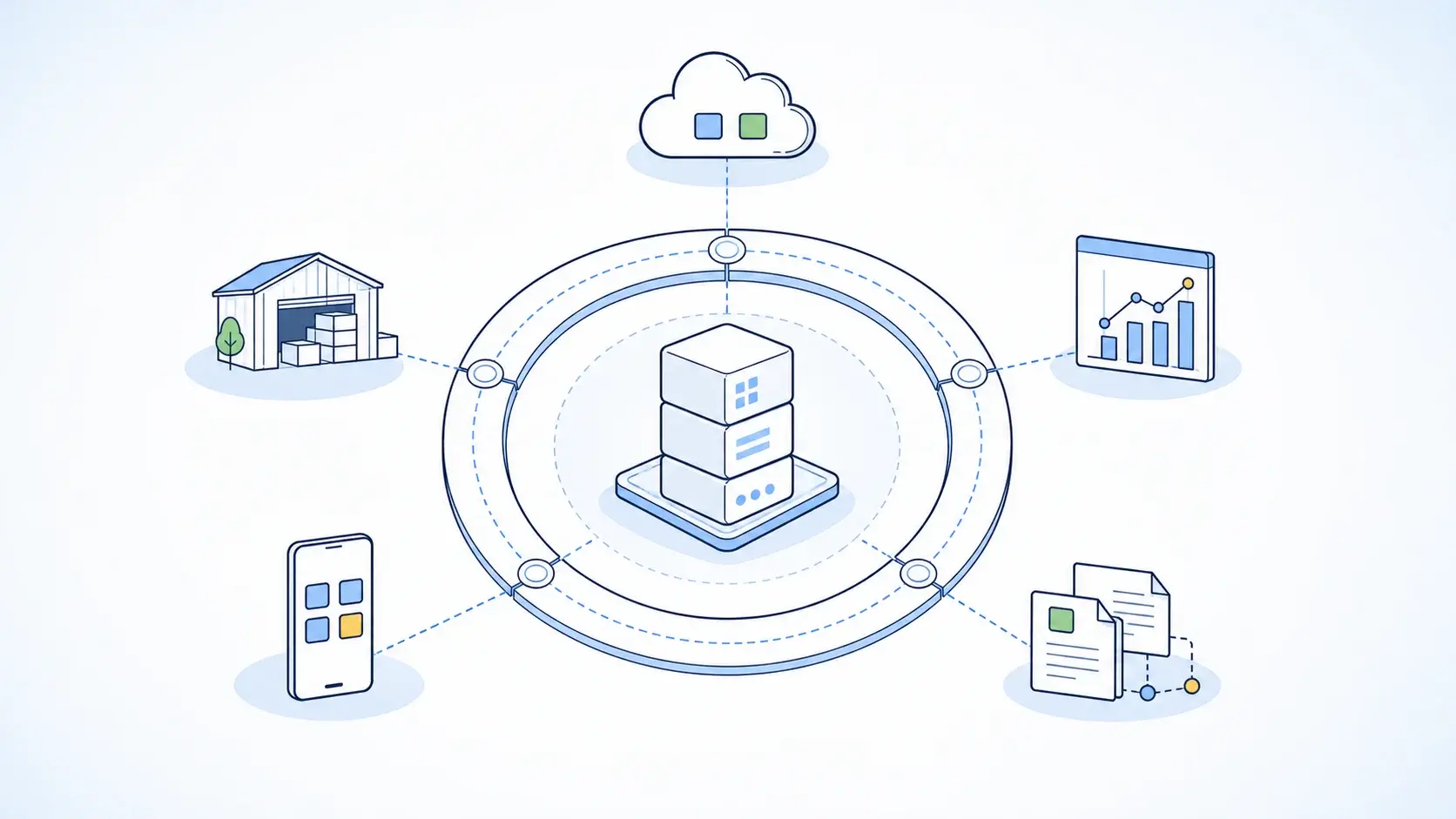
At the same time, many organisations operate complex technology landscapes combining:
- SAP ERP;
- asset-management platforms;
- procurement systems;
- trading and commodity applications;
- field-service solutions;
- billing and customer platforms;
- warehouse and logistics systems;
- operational technology (OT);
- GIS and IoT platforms;
- data and analytics environments;
- legacy applications.
The challenge is no longer simply to keep these systems running.
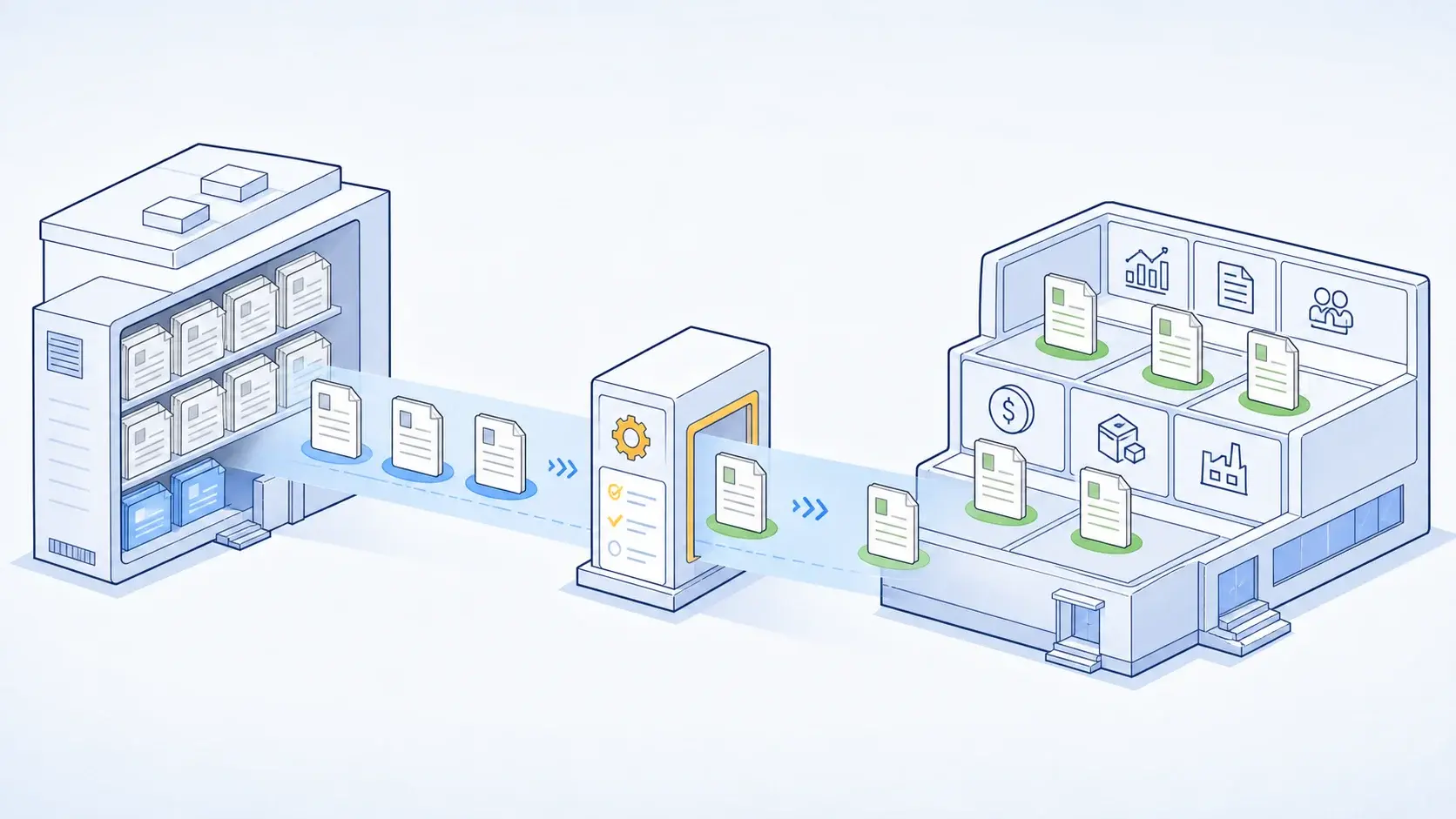
Energy companies increasingly need an operating model that connects finance, assets, procurement, supply chain, projects, operations, customers, and data across the enterprise.
SAP provides industry-specific capabilities for energy and utilities alongside its broader ERP, asset-management, supply-chain, integration, data, and AI portfolio. SAP highlights areas including asset management, energy supply-chain visibility, commodity processes, finance and logistics integration, energy transition, and AI-supported operations.
For UK energy businesses, the opportunity is therefore broader than an ERP implementation.
It is to:
Use SAP as part of an integrated enterprise platform that connects the energy value chain, improves operational decisions, and creates a foundation for future growth.
Why Energy Companies Need a Different SAP Strategy
An energy company does not operate like a typical consumer or services business.
Depending on its business model, it may need to coordinate:
Assets → Projects → Procurement → Materials → Maintenance → Operations → Energy / Commodity Flows → Customers → Finance
A single operational event can therefore have consequences across multiple functions.
For example, a major asset-maintenance programme may involve:
Asset → Work Order → Materials → Supplier → Contractor → Project Cost → Finance → Compliance
When these processes are supported by disconnected systems, organisations can struggle to answer fundamental business questions:
- What does an asset really cost to operate?
- Which maintenance activities are driving expenditure?
- Which suppliers are affecting operational performance?
- Where are critical materials being consumed?
- Which assets create the greatest operational or financial risk?
- What is the financial impact of an operational decision?
- How quickly can the organisation respond to a market or supply-chain change?
A modern SAP landscape can help connect these processes and provide a common business context across finance, assets, procurement, supply chain, and operations.
The objective is not simply to implement more technology.
It is to create a better energy operating model.
What Does SAP for Energy Cover?
“SAP for Energy” is not a single application.
It is better understood as a combination of SAP capabilities supporting different parts of the energy operating model.
Depending on the organisation, this can include:
Core ERP
- finance;
- procurement;
- sales;
- inventory;
- projects;
- accounting;
- enterprise reporting.
Asset Management
- maintenance;
- work orders;
- inspections;
- asset performance;
- maintenance planning;
- resource management.
Supply Chain
- procurement;
- inventory;
- logistics;
- planning;
- transportation;
- warehouse operations.
Energy-Specific Processes
Depending on the business model:
- oil and gas processes;
- utilities;
- commodity management;
- energy trading;
- meter-to-cash;
- energy supply;
- industry-specific regulatory processes.
SAP's energy portfolio distinguishes between capabilities for oil, gas and energy businesses and those designed specifically for utilities, while also providing broader ERP and enterprise technology capabilities that can support both models.
The first step for any UK energy enterprise should therefore be to define its actual operating model and transformation priorities before selecting the SAP capabilities required.
SAP Solutions for the Energy Industry
SAP's energy portfolio combines core ERP with industry-specific applications, asset management, supply chain, customer, sustainability, integration, data, and AI capabilities. The exact solution landscape depends on whether the organisation operates in oil and gas, utilities, energy trading, generation, networks, or a diversified energy model.
| SAP solution | Business area | What it can support |
|---|---|---|
| SAP S/4HANA / SAP Cloud ERP | Core ERP | Finance, procurement, projects, inventory, sales, accounting, enterprise processes |
| SAP S/4HANA Utilities | Utilities | Meter-to-cash, customer processes, billing, contracts, utility-specific operations |
| SAP Asset Management | Asset-intensive operations | Maintenance, work orders, inspections, asset lifecycle and resource planning |
| SAP Asset Performance Management | Asset reliability | Asset performance, risk-based maintenance, reliability and predictive insights |
| SAP Enterprise Portfolio and Project Management | Capital projects | Project planning, resources, costs, investment and project performance |
| SAP Commodity Management | Energy trading / commodities | Commodity procurement, sales, contracts, risk and operational integration |
| SAP Supply Chain solutions | Supply chain | Planning, procurement, inventory, logistics, warehousing and transportation |
| SAP Ariba | Procurement | Strategic sourcing, supplier management, purchasing and supplier collaboration |
| SAP Field Service Management | Field operations | Workforce scheduling, mobile field service and technician productivity |
| SAP Business Network | Supplier and partner collaboration | Collaboration across suppliers, assets and business partners |
| SAP Business Technology Platform (BTP) | Extensions and integration | APIs, application extensions, integration, data and automation |
| SAP Integration Suite | Enterprise integration | Integration between SAP, OT and non-SAP applications |
| SAP Datasphere | Data and analytics | Connecting and governing data across enterprise sources |
| SAP Sustainability solutions | Sustainability / ESG | Sustainability data, emissions, reporting and compliance |
| SAP Business AI | AI and automation | AI-assisted decisions and automation across selected business processes |
SAP's current energy portfolio specifically highlights commodity management, asset performance, field logistics, portfolio and project management, hydrocarbon supply and primary distribution, asset management, and AI scenarios such as Autonomous Asset Management, Autonomous Commodity Management and Autonomous Project Delivery.
For utilities, SAP highlights asset performance, field service, meter-data processes, customer value, sustainable supply chains, and energy-transition capabilities.
Which SAP Solutions Matter Most?
The right combination depends on the energy business model.
Oil & Gas
SAP S/4HANA + Asset Management + Asset Performance Management + Commodity Management + Supply Chain + Project Management + Integration
Typical focus: assets, commodities, procurement, logistics, projects, and finance.
Utilities
SAP S/4HANA Utilities + Asset Management + Field Service + Supply Chain + Finance + Sustainability + Analytics
Typical focus: meter-to-cash, customer operations, network and asset performance, maintenance, and regulatory requirements.
Renewable / Diversified Energy
SAP S/4HANA + Asset Management + Project Management + Supply Chain + Sustainability + BTP + Data + AI
Typical focus: new asset development, investment programmes, operational efficiency, sustainability, and integration of new energy businesses.
The important point is that SAP should be treated as a solution landscape rather than a single product selection.
The target architecture should be built around the organisation's most important business processes, assets, data, and operational systems.
SAP for Oil and Gas vs. SAP for Utilities
For UK energy businesses, this distinction matters.
Oil, Gas and Energy
SAP's energy portfolio addresses complex value chains involving assets, commodities, procurement, logistics, finance, supply chains, and energy-transition activities.
This can be particularly relevant for organisations managing:
- production assets;
- hydrocarbon operations;
- commodities;
- trading;
- logistics;
- capital projects;
- physical assets;
- complex supply chains.
The transformation challenge is often to connect operational and commodity processes with finance, procurement, projects, and asset management.
Utilities
Utilities have a different set of requirements.
Their operating model can include:
- customer management;
- meter-to-cash;
- billing;
- asset management;
- supply chain;
- finance;
- sustainability;
- regulatory processes;
- new energy business models. (SAP Utilities)
SAP S/4HANA Utilities provides utilities-specific capabilities including meter-to-cash processes for regulated and deregulated markets, role-based applications, and analytical scenarios.
For a UK utility, the transformation should therefore be designed around the complete customer-to-cash and asset lifecycle, rather than treating ERP as a finance-only platform.
SAP S/4HANA as the Digital Core for Energy
SAP S/4HANA can provide the enterprise backbone connecting finance, procurement, inventory, projects, maintenance, sales, and other core processes.
For an energy company, the value of the ERP core comes from connecting physical operations to commercial and financial information.
For example:
Maintenance Work Order
→ Materials Consumed
→ Contractor Costs
→ Asset Availability
→ Project / Cost Centre
→ Financial Posting
→ Management Reporting
The same principle applies to procurement:
Operational Requirement
→ Purchase Requisition
→ Supplier
→ Purchase Order
→ Delivery
→ Goods Receipt
→ Invoice
→ Payment
The objective is to create a common transaction and financial context around the processes that drive the energy business.
S/4HANA should therefore be viewed as the digital core, not as the entire technology landscape.
1. SAP Asset Management for Energy
Asset management is one of the most important SAP transformation opportunities for energy companies.
Energy organisations can manage highly valuable and operationally critical assets, including:
- generation equipment;
- substations;
- pipelines;
- plants;
- turbines;
- wells;
- networks;
- storage facilities;
- fleets;
- field equipment.
The challenge is not simply knowing where an asset is.
The organisation needs to understand:
Asset Condition + Maintenance History + Cost + Risk + Availability + Performance
SAP positions enterprise asset management for energy around asset reliability, performance, efficiency, and lifecycle management. SAP also highlights AI-supported asset-management scenarios designed to improve reliability and uptime while addressing compliance, safety, and sustainability requirements.
A useful target operating model is:
Asset → Condition → Risk → Maintenance Plan → Work Order → Materials → Labour → Cost → Performance
This creates a connection between physical asset activity and its financial and operational consequences.
From Reactive to Predictive Maintenance
Moving From Reactive to Predictive Maintenance
Many energy companies still devote significant resources to responding to equipment failures.
A more mature maintenance model is:
Monitor → Predict → Plan → Maintain → Measure
rather than:
Failure → Emergency Work → Downtime → Investigation
SAP's energy and utilities positioning includes AI-assisted asset-management scenarios aimed at improving reliability, uptime, compliance, safety, and sustainability.
But AI should not be the starting point.
The foundation is:
- reliable asset master data;
- consistent asset hierarchies;
- maintenance history;
- structured work orders;
- standard failure and damage codes;
- sensor and operational data where available;
- integrated maintenance processes;
- appropriate OT-to-enterprise integration.
Without this foundation, predictive-maintenance initiatives can produce technically sophisticated models without generating corresponding operational value.
The sequence should therefore be:
Data Foundation → Process Standardisation → Integration → Analytics → AI
2. SAP for Energy Supply Chain Transformation
Energy supply chains are particularly sensitive to disruption.
Depending on the business model, an energy company may need to coordinate:
- suppliers;
- contractors;
- materials;
- inventory;
- transportation;
- plants;
- warehouses;
- field operations;
- commodity flows;
- customers.
SAP's energy-industry portfolio highlights supply-chain visibility, planning, risk management, and integration across energy value chains.
The business objective is not simply better procurement.
It is:
Know what is needed, where it is, when it will arrive, what it costs, and how it affects the operation.
This becomes increasingly important as energy companies invest in infrastructure, renewable generation, storage, network modernisation, and other transition programmes.
3. Procurement Transformation With SAP
Procurement is often one of the highest-value transformation areas for an energy enterprise.
Spending can be fragmented across:
- direct materials;
- engineering;
- maintenance;
- construction;
- professional services;
- field services;
- contractors;
- indirect procurement.
A modern SAP architecture can connect:
Demand → Sourcing → Supplier → Purchase Order → Delivery → Receipt → Invoice → Payment
This provides greater visibility into:
- supplier performance;
- spend;
- lead times;
- contract compliance;
- procurement cycle time;
- material availability.
For energy organisations with fragmented procurement processes and systems, the opportunity is not simply automation.
It is standardisation, control and operational visibility.
4. SAP Finance Transformation for Energy
Finance in an energy company needs visibility into operational events occurring far beyond the finance function.
For example:
Asset Maintenance → Contractor Cost → Project → Capex / Opex → Accounting → Financial Reporting
Or:
Commodity Purchase → Logistics → Inventory → Sale → Margin → Financial Result
The ERP environment therefore needs to connect financial and operational information.
SAP highlights the integration of commodity procurement and sales with financial and logistics processes within its energy portfolio.
For UK energy companies, finance transformation can focus on:
- faster financial close;
- project accounting;
- asset accounting;
- procurement visibility;
- cost allocation;
- working capital;
- margin visibility;
- management reporting;
- scenario analysis.
The objective is to move from:
Finance Reporting
to:
Finance + Operations + Assets + Supply Chain Insight
This can enable finance teams to understand not only what happened, but also the operational drivers behind the result.
5. SAP for the Energy Transition
The energy transition is changing the operating model itself.
Companies may be expanding into combinations of:
- renewable generation;
- distributed energy;
- storage;
- electric mobility;
- energy services;
- new customer propositions;
- low-carbon investments;
- new asset classes.
SAP positions its energy portfolio around diversification, low-carbon investment, new business models, supply-chain visibility, asset management, and responding to changing market conditions.
This creates a fundamental ERP challenge.
New businesses need to be added without creating a new disconnected operating model every time.
A useful target architecture is therefore:
Core ERP + Standard Processes + Governed Extensions + Integrated Data
rather than:
Legacy ERP + Separate Application for Every New Business
This is particularly important for energy groups that expect their portfolio to evolve over the coming decade.
6. SAP for UK Utilities: Meter-to-Cash
Utilities face an additional challenge that is less central to upstream oil and gas:
meter-to-cash.
The process can span:
Meter Data → Consumption → Billing → Invoice → Payment → Customer Service → Finance
SAP S/4HANA Utilities provides meter-to-cash capabilities and utilities-specific applications and analytics.
For a UK utility, transformation can therefore involve:
- customer processes;
- meter data;
- billing;
- invoicing;
- collections;
- finance;
- regulatory processes;
- customer analytics.
The business case should be built around the complete customer lifecycle, not simply the replacement of an ERP system.
7. SAP + AI for Energy
AI is becoming an increasingly important part of SAP's energy strategy.
SAP currently highlights industry AI scenarios including:
Autonomous Asset Management
AI-supported capabilities intended to improve asset reliability, uptime, compliance, safety, and sustainability.
Autonomous Commodity Management
AI-supported capabilities for coordinating trading, logistics, and processing decisions to improve operational and commercial outcomes.
Autonomous Project Delivery
AI-supported capabilities across project-related activities including scoping, project setup, staffing, financial management, billing, and performance insights.
For UK energy companies, however, the central question should not be:
“Where can we add AI?”
It should be:
“Which business decisions can be improved through trusted enterprise data, automation and AI?”
That distinction matters.
AI creates value when it is embedded into processes such as maintenance, procurement, project management, trading, customer operations, and financial planning.
What Does an AI-Ready SAP Energy Landscape Require?
Before scaling AI, organisations should assess their data maturity.
A practical model is:
Level 1 — Fragmented Data
Asset, finance, procurement and operational data reside in disconnected systems.
Level 2 — Integrated ERP Data
Core business processes are connected through the enterprise platform.
Level 3 — Trusted Enterprise Data
Master data, asset hierarchies, financial information and operational data are governed.
Level 4 — Advanced Analytics
The organisation uses predictive models and increasingly real-time business insight.
Level 5 — AI-Enabled Processes
AI supports decisions, recommendations and automation within business processes.
Many organisations attempt to jump directly from Level 1 to Level 5.
A more sustainable path is:
Connect → Govern → Analyse → Automate → Scale AI
8. SAP BTP and Integration for Energy Companies
Energy companies rarely operate a single-vendor technology landscape.
Their environment may include:
- SAP;
- SCADA;
- trading systems;
- EAM;
- field-service platforms;
- customer systems;
- IoT;
- GIS;
- data platforms;
- cloud applications;
- legacy applications.
SAP Business Technology Platform (BTP) and SAP Integration Suite can form part of the integration and extension strategy around the ERP core.
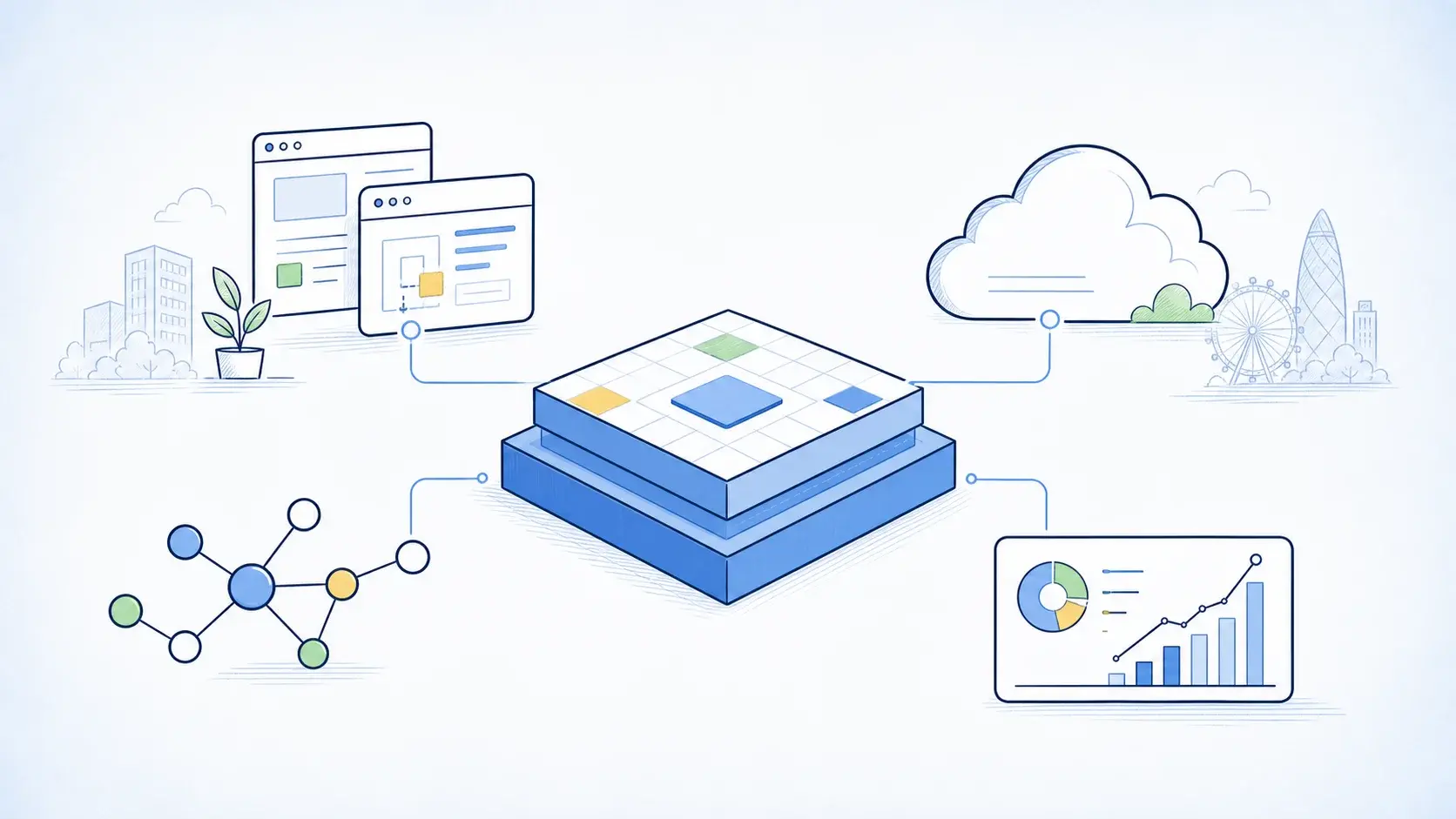
A target architecture could look like:
Operational Systems
↓
Integration / Data Layer
↓
SAP S/4HANA / Cloud ERP
↓
Finance + Procurement + Assets + Supply Chain
↓
Analytics + AI
The objective is not to force every energy application into SAP.
It is to establish clear ownership, integration patterns and data flows across the landscape.
9. Connecting SAP With OT, GIS and IoT
This is a critical consideration for energy companies that is often underestimated in conventional ERP programmes.
Operational decisions can depend on information generated outside SAP:
- SCADA;
- sensors;
- IoT devices;
- GIS;
- plant-control systems;
- field-service platforms;
- network monitoring;
- telemetry.
At the same time, SAP can provide business context such as:
- asset hierarchy;
- maintenance history;
- spare parts;
- procurement;
- work orders;
- costs;
- suppliers;
- projects.
The opportunity is to connect operational data with enterprise context.
For example:
Sensor / SCADA Data → Asset Condition → SAP Asset Record → Maintenance Decision → Work Order → Materials → Cost → Performance
Or:
GIS / Network Event → Affected Asset → Work Order → Field Resource → Parts → Customer / Business Impact
This creates a more complete operational picture than either OT or ERP data can provide independently.
What a UK Energy Enterprise Should Assess
Before designing the target architecture, determine:
- which system is the source of truth for each asset;
- where operational events are generated;
- how OT data reaches enterprise applications;
- how asset identities are reconciled;
- which data requires real-time processing;
- which information belongs in SAP;
- which systems should remain specialised.
The objective should not be:
“Put operational data into SAP.”
It should be:
“Create a governed architecture in which SAP, OT, GIS, IoT and specialised systems exchange the information required for safe, reliable and economically efficient operations.”
10. SAP Clean Core for Energy
Energy companies often have highly specialised processes.
This can create a temptation to customise the ERP core extensively.
Over time, excessive customisation can increase:
- technical debt;
- upgrade complexity;
- testing effort;
- support costs;
- dependency on specialist skills.
A more sustainable approach is:
Standard SAP → Configuration → Governed Extension → Integration
with customisation reserved for areas where the business case clearly justifies it.
For energy organisations expected to evolve over decades, this is particularly important.
The goal is not to eliminate differentiation.
It is to place differentiation in the right architectural layer.
LeverX Recommendation: Start With the Energy Operating Model
For UK energy companies, we recommend starting with the business operating model rather than the SAP product.
Assess where fragmentation across assets, operations, supply chain, finance, OT and data is creating the greatest business impact.
Then prioritise the highest-value processes and build the SAP architecture around them.
A practical approach is:
Assess → Prioritise → Standardise → Integrate → Modernise → Automate
The goal is not to move everything into SAP.
It is to create an integrated operating model that delivers measurable improvements in asset performance, operational efficiency, cost, resilience and decision-making.
Why UK Energy Companies Need a Transformation Roadmap
A UK energy transformation may need to balance several priorities simultaneously:
- operational reliability;
- energy-transition investment;
- regulatory requirements;
- cost pressure;
- asset performance;
- supply-chain resilience;
- customer expectations;
- digital transformation.
That makes sequencing critical.
A practical roadmap is:
Assess → Standardise → Integrate → Modernise → Automate → Optimise
Assess
Map the current ERP, asset, finance, supply-chain, OT, GIS, data and integration landscape.
Standardise
Define common processes and clear rules for justified local variations.
Integrate
Connect SAP with operational and external systems.
Modernise
Move toward the appropriate S/4HANA / Cloud ERP target architecture.
Automate
Introduce workflow, analytics and AI where there is a measurable business case.
Optimise
Continuously improve processes using operational and financial performance data.
Where Should an Energy Company Start?
The answer depends on the business model.
Oil and Gas
Priorities may include:
- asset management;
- procurement;
- commodity processes;
- supply chain;
- project management;
- finance;
- maintenance;
- integration.
SAP's energy portfolio is positioned around areas including hydrocarbon processes, asset lifecycle management, commodity management, supply-chain visibility and energy-transition activities.
Utilities
Priorities may include:
- meter-to-cash;
- customer management;
- billing;
- asset management;
- supply chain;
- finance;
- regulatory processes;
- energy-transition capabilities.
SAP's utilities portfolio highlights meter-to-cash, asset performance, customer value, sustainable supply chains and new energy business models.
Integrated Energy Companies
Priorities may span:
Finance + Assets + Supply Chain + Procurement + Trading / Commodity Processes + New Energy Businesses
The strategic objective is to avoid creating a separate operating model for every new business.
A Practical SAP Energy Transformation Framework
A useful assessment can score the organisation across eight dimensions:
| Dimension | Key Questions |
| ERP | Is the current SAP landscape fit for the future business model? |
| Assets | Do we have trusted asset data and lifecycle visibility? |
| Finance | Can finance see the operational drivers of cost and margin? |
| Supply Chain | Can we plan and respond to disruption quickly? |
| Integration | Are SAP and operational systems connected effectively? |
| OT / IoT / GIS | Can operational data be connected to enterprise asset and business context? |
| Data & AI | Is the data foundation ready for advanced analytics and AI? |
| Operating Model | Can the organisation continuously improve the SAP landscape? |
This helps identify where transformation should start, rather than assuming that ERP migration must always be the first initiative.
SAP Energy Transformation: What Should Be Measured?
The business case should translate technology investment into operational and financial outcomes.
Asset Performance
- asset availability;
- downtime;
- maintenance cost;
- mean time to repair;
- preventive vs. corrective maintenance.
Supply Chain
- supplier lead time;
- inventory levels;
- fulfilment;
- procurement cycle time;
- supply disruption.
Finance
- financial close;
- cost per transaction;
- working capital;
- project cost variance;
- margin visibility.
Customer
- billing cycle;
- payment collection;
- customer service;
- complaint resolution.
Technology
- integration failures;
- support effort;
- technical debt;
- custom-code footprint;
- automation.
Operational Technology
- time from operational event to business decision;
- data latency;
- asset-data completeness;
- number of manual hand-offs;
- OT-to-ERP reconciliation effort.
The objective should always be:
SAP Transformation → Measurable Business Improvement
SAP for Energy: Example Transformation Scenario
SAP for Energy: Use Cases
The value of SAP transformation becomes clearer when it is connected to specific operational problems.
The following examples are illustrative scenarios based on common energy-industry operating models. They are not presented as results achieved by a specific company.
1. Asset Maintenance: From Reactive Work to Planned Maintenance
Consider a UK energy company operating a large portfolio of generation and network assets.
Maintenance data is split between SAP, an asset-management application, spreadsheets, and field-service tools. Maintenance planners manually review equipment history and create work orders. Spare-parts availability is checked separately with procurement.
A recurring equipment issue can therefore lead to:
Asset Issue → Manual Investigation → Work Order → Parts Search → Procurement → Maintenance → Cost Reconciliation
The target model connects:
Asset Data → Maintenance History → Risk → Planned Work → Materials → Field Resource → Cost → Asset Performance
With the relevant SAP capabilities, planners can work from a more consistent asset and maintenance record, while operational data can be integrated where required.
Potential business outcomes:
- fewer manual hand-offs;
- better visibility of maintenance backlog;
- improved spare-parts planning;
- clearer maintenance cost by asset;
- better prioritisation of high-risk equipment.
The business case should then measure metrics such as planned vs. corrective maintenance, asset downtime, maintenance cost per asset, and mean time to repair.
2. Procurement and Supply Chain: A Critical Part Does Not Arrive on Time
Consider a UK energy operator carrying out scheduled maintenance on a critical facility.
A replacement component is required before the planned maintenance window. In the current environment, the requirement is raised in SAP, but supplier status, logistics information, inventory and the maintenance schedule are managed across different systems.
The risk is discovered late:
Maintenance Requirement → Purchase Order → Supplier Delay → Parts Not Available → Maintenance Delayed → Asset Availability Risk
A more integrated process can connect:
Maintenance Plan → Material Requirement → Procurement → Supplier → Delivery → Inventory → Work Order
The procurement team can see not only that a supplier shipment is late, but which maintenance activity and asset could be affected.
Potential business outcomes:
- earlier identification of supply risks;
- better supplier escalation;
- fewer maintenance delays caused by missing parts;
- improved inventory decisions;
- clearer link between procurement and operational priorities.
Relevant KPIs could include supplier lead time, material availability, emergency procurement volume, maintenance delays caused by material shortages, and inventory levels.
3. Utilities: From Meter Data to Cash
Consider a UK utility with millions of customer accounts and multiple meter-data and billing processes.
A customer payment is received, but billing, payment allocation, customer information and finance processes are supported by separate systems.
The result can be:
Meter Data → Billing → Invoice → Payment → Exception → Manual Investigation → Clearing
A more integrated operating model can connect:
Meter Data → Consumption → Billing → Receivables → Payment → Clearing → Finance
This can help identify exceptions earlier and provide finance and customer-service teams with a more consistent view of the customer account.
Potential business outcomes:
- fewer billing exceptions;
- faster payment allocation;
- lower unapplied cash;
- better receivables visibility;
- improved customer-service response.
Relevant KPIs could include billing cycle time, exception rate, unapplied cash, manual touches per account, and payment-clearing time.
SAP for Energy: Example Transformation Scenario
Consider a large UK-based integrated energy group with operations spanning multiple business units, sites, and regions. The company manages a combination of generation and infrastructure assets, field operations, maintenance activities, procurement, capital projects, and corporate finance.
Its technology landscape has developed over many years through business growth, acquisitions, technology investments, and individual transformation programmes. As a result, different parts of the organisation use different applications for closely connected processes.
The landscape includes:
- SAP ERP as the core platform for finance, procurement, controlling, and selected supply-chain processes;
- a separate enterprise asset-management platform used by maintenance and engineering teams;
- several procurement and supplier-management tools introduced across different business units;
- SCADA and other operational technology providing information about equipment, plants, and network operations;
- GIS platforms containing geographical and infrastructure information;
- field-service applications used by operational and maintenance teams;
- warehouse and logistics systems managing spare parts and critical materials;
- spreadsheets used for maintenance planning, operational analysis, and management reporting;
- separate data and analytics environments;
- interfaces between systems that vary significantly in technology, ownership, and monitoring.
The individual systems are not necessarily the problem.
The more fundamental issue is that the business process crosses multiple systems without a common operational and financial view.
For example, an issue with a critical piece of equipment may begin with an operational alert:
SCADA Alert → Operations Assessment → Asset Investigation → Maintenance Decision → Work Order → Spare Parts → Procurement → Contractor → Finance → Management Reporting
Information may be entered or reconciled manually at several points.
The operations team may know that an asset requires attention.
The maintenance team may hold the work-order information.
Procurement may have visibility of the spare-part order.
Finance may see the resulting cost in SAP.
Management may only see the overall impact later through a manually consolidated report.
This makes it difficult to answer a basic business question quickly:
What happened to the asset, what action was taken, what resources were required, what did it cost, and what was the impact on operations?
It also creates additional challenges around:
- duplicated data;
- manual reconciliation;
- delayed reporting;
- inconsistent asset information;
- limited visibility of material availability;
- fragmented supplier information;
- slow hand-offs between operational and corporate teams.
Target Operating Model
A future-state architecture could connect the relevant operational and enterprise processes:
OT / SCADA
→ Operational & Asset Data
→ SAP Asset Management
→ Maintenance Planning / Work Order
→ Materials & Procurement
→ SAP S/4HANA Finance
→ Analytics & Management Reporting
SAP BTP and integration capabilities can connect SAP with specialised OT, GIS, field-service, data, and other operational platforms where those systems remain the appropriate systems of record.
The objective is not to replace every specialist application.
Instead:
- SAP S/4HANA provides the enterprise digital core for finance, procurement, projects, and other relevant business processes;
- asset-management capabilities provide structured lifecycle and maintenance information;
- OT and SCADA systems continue to manage operational technology and real-time equipment information;
- GIS remains the source for relevant geographical and network information;
- integration connects the systems around defined business processes;
- governed enterprise data creates consistent relationships between assets, materials, suppliers, projects, costs, and operational events;
- analytics and AI can be introduced selectively once the underlying data and processes are sufficiently mature.
The resulting business process can move towards:
Operational Event → Asset Context → Maintenance Decision → Work Order → Materials / Procurement → Execution → Financial Impact → Performance Analysis
This creates a clearer connection between what happens in the field and what happens in the enterprise.
What Could the Business Measure?
Rather than measuring the programme by the number of systems migrated, the company could establish a transformation dashboard around measurable operational outcomes.
| Area | Example KPI |
|---|---|
| Asset management | Planned vs. corrective maintenance |
| Reliability | Unplanned asset downtime |
| Maintenance | Mean time to repair |
| Materials | Critical spare-parts availability |
| Procurement | Emergency purchase orders |
| Suppliers | Supplier lead time and on-time delivery |
| Finance | Maintenance cost by asset / site |
| Projects | Project cost variance |
| Integration | Manual hand-offs and interface failures |
| Data | Asset-data completeness and consistency |
| Operations | Time from operational event to work-order creation |
| Reporting | Time required to produce operational and financial reports |
The actual targets and financial benefits should be established from the organisation's current baseline, transaction volumes, asset portfolio, operating model, and transformation priorities rather than assumed in advance.
What This Example Demonstrates
The value of SAP transformation in an energy environment does not come simply from replacing legacy applications.
The greater opportunity is to connect:
Operational Data + Asset Management + Procurement + Finance + Supply Chain + Analytics
so that the organisation can move from fragmented information and manual hand-offs to a more connected decision-making process.
The success of the transformation should therefore be measured not by how many systems were replaced, but by whether critical energy processes become:
More Connected → More Visible → More Predictable → More Efficient
A Key Lesson for UK Energy Enterprises
The biggest SAP opportunity in energy is not the ERP system itself.
It is connecting operational decisions with financial and strategic decisions.
Consider the question:
Should we repair or replace an asset?
A meaningful answer may require:
- asset condition;
- maintenance history;
- spare-part cost;
- contractor availability;
- operational impact;
- production impact;
- financial value;
- regulatory considerations.
Or consider:
Should we use a particular supplier?
The answer may combine:
- price;
- contract terms;
- lead time;
- quality;
- delivery performance;
- supplier risk;
- inventory impact;
- operational criticality.
An integrated SAP landscape can provide the enterprise context for these decisions, while analytics and AI can support more advanced recommendations and automation.
This is where ERP transformation becomes business transformation.
SAP for Energy: Common Transformation Challenges
Fragmented Asset Data
Different systems may contain different versions of the same asset.
Legacy SAP Customisation
Specialised energy processes may have accumulated extensive custom code.
Disconnected OT and IT
Operational data may not be readily available in business applications.
Inconsistent Master Data
Asset, supplier, material and customer data may be managed differently across business units.
Complex Integrations
SCADA, GIS, IoT, trading, EAM and ERP environments can create significant integration dependencies.
Local Process Variations
UK and international businesses may use different operating processes and controls.
AI Without a Data Foundation
Organisations may attempt to scale AI before establishing reliable enterprise data.
Treating ERP as the Whole Technology Stack
SAP should be part of an architecture that includes specialised operational systems where they remain appropriate.
The solution is not simply more technology.
It is clear architecture, ownership, governance and measurable business outcomes.
How LeverX Can Support SAP Energy Transformation
LeverX can support energy organisations across SAP consulting, transformation, implementation, integration, data, application management, and continuous improvement.
Potential areas include:
- SAP S/4HANA transformation;
- SAP Cloud ERP;
- enterprise asset management;
- finance transformation;
- procurement;
- supply chain;
- SAP BTP;
- SAP Integration Suite;
- data and analytics;
- AI-enabled process improvement;
- application management;
- SAP modernisation.
For UK energy companies, the focus can be on developing a practical transformation roadmap that connects the ERP environment with assets, operations, OT, GIS, finance, supply chain and emerging energy business models.
Discuss Your SAP Energy Transformation with LeverX
Frequently Asked Questions
What is SAP for Energy?
SAP for Energy refers to SAP solutions and capabilities supporting oil, gas, energy and utility business processes, including finance, asset management, procurement, supply chain, commodity processes, customer operations, analytics and AI.
Is SAP suitable for UK energy companies?
SAP provides industry-specific capabilities for oil and gas, energy and utilities alongside broader ERP, asset-management, supply-chain, data and integration technologies. The appropriate solution landscape depends on the company's business model, existing architecture and transformation priorities.
What SAP products are important for energy companies?
Depending on the organisation, the landscape can include SAP S/4HANA / Cloud ERP, asset-management capabilities, SAP BTP, SAP Integration Suite, analytics, utilities functionality, procurement solutions and other SAP applications.
How can SAP improve energy asset management?
SAP can help connect asset data, maintenance planning, work orders, materials, labour, costs and operational performance. SAP also promotes AI-supported asset-management scenarios focused on reliability, uptime, compliance, safety and sustainability.
How can SAP support the energy transition?
SAP positions its energy portfolio around diversification, new business models, low-carbon investment, supply-chain visibility, asset management, sustainability and AI-supported operations.
What is SAP S/4HANA Utilities?
SAP S/4HANA Utilities provides utilities-specific ERP capabilities, including meter-to-cash processes for regulated and deregulated markets, role-based applications and analytical scenarios across utility processes.
Can SAP integrate with SCADA, GIS, IoT and other operational systems?
Yes. SAP can form part of an enterprise architecture integrating operational, asset, customer, logistics and external applications. The target architecture should define which systems remain specialised, where data is mastered, and how information is exchanged.
Should an energy company migrate to S/4HANA before modernising its processes?
Not necessarily. The right sequence depends on the existing landscape and business priorities. Some organisations may begin with process, data, asset or integration modernisation before or alongside ERP transformation.
Where should an energy company start its SAP transformation?
Start with an assessment of the ERP, asset, finance, procurement, supply-chain, OT, GIS, integration and data landscape. Then prioritise the areas where transformation can produce the greatest measurable business value.
Conclusion
Conclusion
For UK energy companies, SAP should not be viewed simply as an ERP system.
It can form part of a broader operating platform connecting:
Finance + Assets + Procurement + Supply Chain + Operations + OT + Customers + Data + AI
SAP's energy and utilities portfolio addresses many of the industry's major transformation priorities, including asset performance, supply-chain visibility, energy transition, customer operations, sustainability and AI-enabled processes.
For oil and gas businesses, the focus may be:
Assets + Commodities + Supply Chain + Projects + Finance
For utilities:
Customers + Meter-to-Cash + Assets + Supply Chain + Finance
For diversified energy companies:
Finance + Assets + Supply Chain + New Energy Businesses + OT / IoT + Data + AI
The strongest strategy is therefore not:
“Move everything to SAP.”
It is:
“Build an integrated operating model in which SAP supports the processes, data and decisions that matter most to the energy business.”
For UK enterprises, the starting point should be a structured assessment of the current technology and operating landscape, followed by a prioritised roadmap tied to measurable business outcomes.
Get a Free Consultation with LeverX
Disclaimer: SAP products, capabilities, industry solutions, deployment options and AI features vary by edition, release, geography, licensing model and implementation scenario. This article provides general information for UK energy businesses and should not be treated as a definitive product, architecture or implementation recommendation. Organisations should assess their specific operating model, technology landscape, OT environment, regulatory requirements and business priorities before selecting SAP solutions.