SAP ECC End of Support 2027 UK: What UK Businesses Need to Do Now


SAP ECC End of Support 2027 UK: What UK Businesses Need to Do Now

For many UK organisations running SAP ERP, 2027 is no longer simply a date on the SAP roadmap. It is a planning milestone that can influence ERP strategy, application support, investment decisions, and the timing of an SAP S/4HANA transformation.

SAP has committed to mainstream maintenance for SAP Business Suite 7 core applications through the end of 2027, including SAP ERP 6.0 enhancement packages 6, 7, and 8. SAP also provides an optional extended maintenance offering for eligible Business Suite 7 core applications through the end of 2030, subject to the applicable conditions and additional maintenance fee.

This does not mean that an SAP ECC system will stop operating when 2027 ends. The more important issue is the change in the maintenance model and what it means for future support, innovation, security, and ERP strategy.

For UK businesses, the key question is therefore not simply:

When does SAP ECC end?

It is:

What should our SAP landscape look like after 2027, and what needs to happen now to get there without unnecessary operational risk?

This guide examines the SAP ECC 2027 maintenance milestone, the options available to UK organisations, S/4HANA transition approaches, preparation activities, and practical considerations for building a realistic migration roadmap.

What Does SAP ECC End of Mainstream Maintenance in 2027 Actually Mean?

SAP ECC is part of SAP Business Suite 7. For the relevant SAP ERP 6.0 enhancement packages, SAP's current maintenance strategy provides mainstream maintenance through 31 December 2027.

Eligible customers can also consider SAP's optional extended maintenance offering through 31 December 2030, subject to SAP's applicable terms and conditions.

The distinction between these dates is important.

31 December 2027 is not a technical shutdown date for SAP ECC. An ECC system does not simply stop functioning on 1 January 2028. Instead, organisations need to consider what changes when mainstream maintenance ends and whether the available maintenance options provide sufficient time for their specific transformation plans.

For eligible Business Suite 7 core applications, SAP's extended maintenance offering carries an additional maintenance premium. Organisations should confirm the current commercial and contractual conditions directly with SAP before making financial or migration decisions.

SAP ERP 6.0 maintenance timeline

Period Maintenance position
Through 2027 Mainstream maintenance for the relevant SAP ERP 6.0 enhancement packages
2028–2030 Optional extended maintenance may be available for eligible Business Suite 7 core applications
After the applicable maintenance period Customer-specific maintenance may apply, depending on the product and contractual situation

The exact position depends on the customer's SAP products, releases, enhancement packages, contracts, and applicable maintenance terms.

This is why an organisation should verify its actual landscape rather than rely on the generic statement that "SAP ECC ends in 2027."

Does Every SAP ECC Environment Have the Same 2027 Deadline?

No.

The commonly used phrase "SAP ECC end of support 2027" simplifies a more detailed maintenance situation.

SAP ERP 6.0 enhancement packages 6, 7, and 8 are covered by the 2027 mainstream maintenance commitment for the relevant Business Suite 7 core applications. Earlier enhancement packages have different maintenance histories and should be assessed separately.

A UK organisation should therefore establish:

  • the exact SAP ERP release;
  • installed enhancement packages;
  • relevant SAP components;
  • industry solutions and add-ons;
  • database and operating-system dependencies;
  • custom code and extensions;
  • third-party applications;
  • integrations;
  • business-critical processes.

The first step should be a landscape-specific maintenance and readiness assessment, not simply adding 2027 to the project plan.

Why the SAP ECC 2027 Milestone Matters for UK Businesses

The technical maintenance date is only one part of the challenge.

Large UK organisations often operate SAP as the core of a wider enterprise landscape connecting finance, procurement, manufacturing, warehouse management, logistics, sales, HR, banking, tax, customer systems, suppliers, and data platforms.

As a result, S/4HANA transformation can affect far more than the ERP application itself.

SAP transformation capacity is limited

An S/4HANA programme requires a combination of SAP functional, technical, architecture, data, integration, testing, security, and change-management expertise.

Organisations that postpone planning until the maintenance deadline is close may have less flexibility in selecting implementation partners, allocating internal resources, and scheduling business transformation activities.

Data migration requires business decisions

Moving to S/4HANA is not simply a database migration exercise.

Businesses need to determine:

  • which master data should be retained;
  • what historical data needs to remain accessible;
  • which data requires cleansing;
  • how open transactions will be handled;
  • how data will be reconciled;
  • which legacy information can be archived.

Data decisions can have a direct impact on finance, supply chain, reporting, compliance, and operational continuity.

ECC customisation can complicate transformation

Many long-running ECC systems contain years of custom ABAP, modifications, interfaces, reports, workflows, and bespoke processes.

The migration should determine whether each important customisation should be:

  • retained;
  • redesigned;
  • replaced with standard S/4HANA functionality;
  • rebuilt as an extension;
  • retired.

This assessment is also central to a clean-core strategy.

Integration can be harder than the ERP migration itself

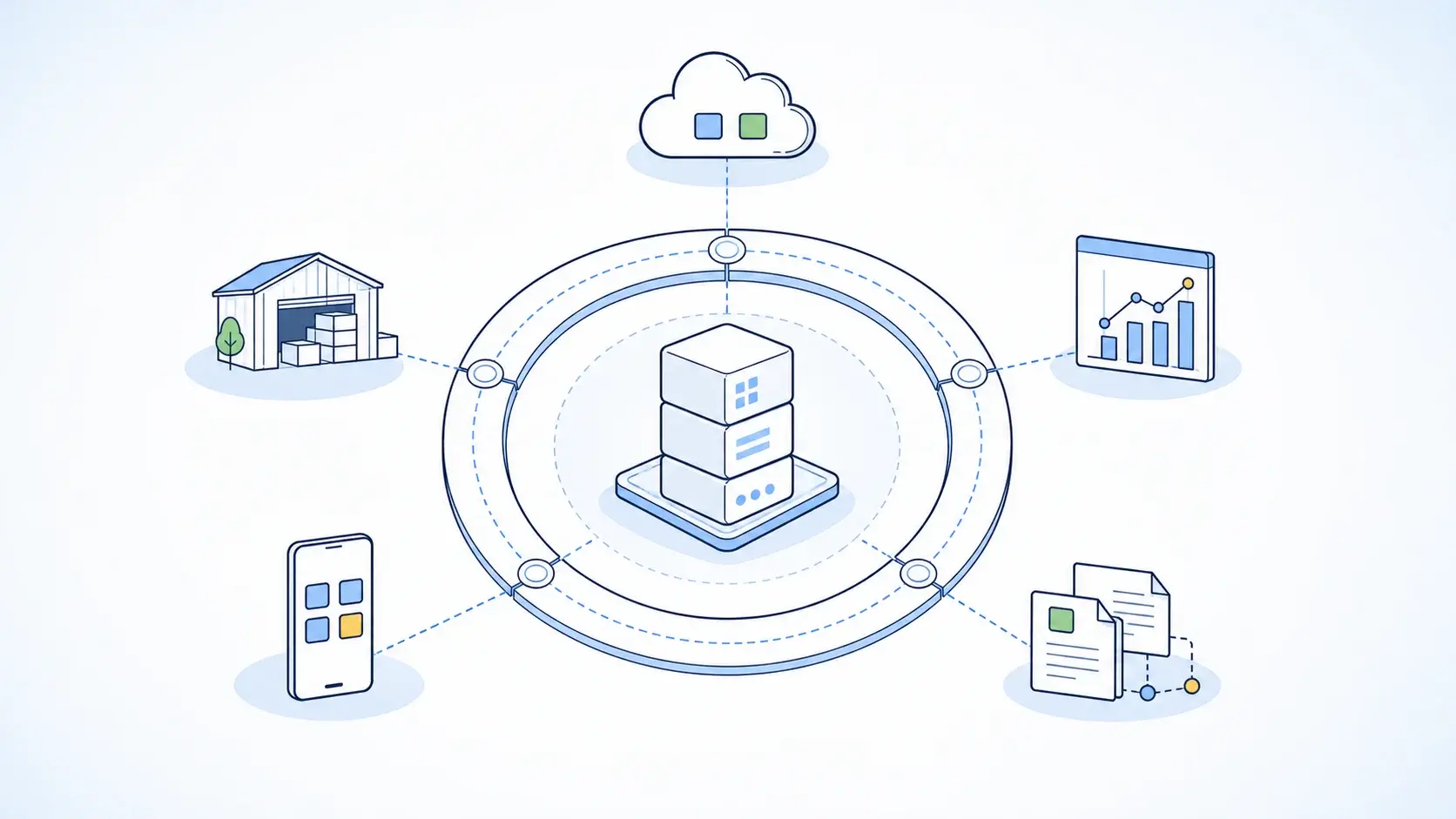
ECC may exchange data with MES, PLM, WMS or EWM, CRM, e-commerce platforms, banks, tax systems, logistics providers, supplier platforms, and other applications.

Every critical integration needs to be considered in the target architecture and migration plan.

Business transformation takes time

The biggest risk is often not the technical migration itself but the time required for process design, testing, training, cutover preparation, and organisational change.

For this reason, UK organisations should treat 2027 as a transformation planning deadline, rather than waiting until 2027 to begin the programme.

What Are the Main SAP ECC-to-S/4HANA Transition Options?

There is no universal migration method.

The appropriate approach depends on the starting system, business objectives, data requirements, customisation, organisational structure, and desired degree of process transformation.

System Conversion

A system conversion — commonly referred to as a brownfield approach — transforms an existing SAP ERP system into SAP S/4HANA while retaining a significant portion of the existing business configuration and process model.

It can be appropriate where:

  • existing processes remain strategically valuable;
  • the organisation wants to limit business disruption;
  • substantial configuration needs to be retained;
  • a full process redesign is not currently justified.

However, system conversion should not be interpreted as "move everything unchanged."

Custom code, business processes, integrations, master data, add-ons, and S/4HANA compatibility requirements still need to be assessed and remediated.

New Implementation

A new implementation, often called a greenfield approach, establishes a new S/4HANA environment around a redesigned target operating model.

This can be appropriate where the ECC environment contains substantial:

  • technical debt;
  • unnecessary customisation;
  • duplicated processes;
  • inconsistent master data;
  • obsolete functionality;
  • process limitations.

The advantage is greater freedom to redesign the ERP landscape.

The trade-off is a larger transformation effort, including process design, data migration, testing, organisational change, and user adoption.

Selective Data Transition

A selective data transition can provide an alternative where an organisation needs to preserve selected business data or organisational structures while changing parts of the existing ERP landscape.

This approach can be relevant for complex organisations dealing with:

  • multiple legal entities;
  • acquisitions;
  • historical data requirements;
  • landscape consolidation;
  • selective process redesign.

The exact method and tooling should be determined through a detailed assessment of the source and target landscapes.

The key point is that brownfield, greenfield, and selective transition are strategic choices — not interchangeable labels for the same technical migration.

SAP S/4HANA Is More Than an ECC Replacement

Moving from ECC to S/4HANA should not be approached as a simple technical upgrade.

S/4HANA introduces a different ERP architecture, data model, application capabilities, and extensibility approach. The transformation therefore creates an opportunity to reconsider how the organisation operates its core business processes.

For example:

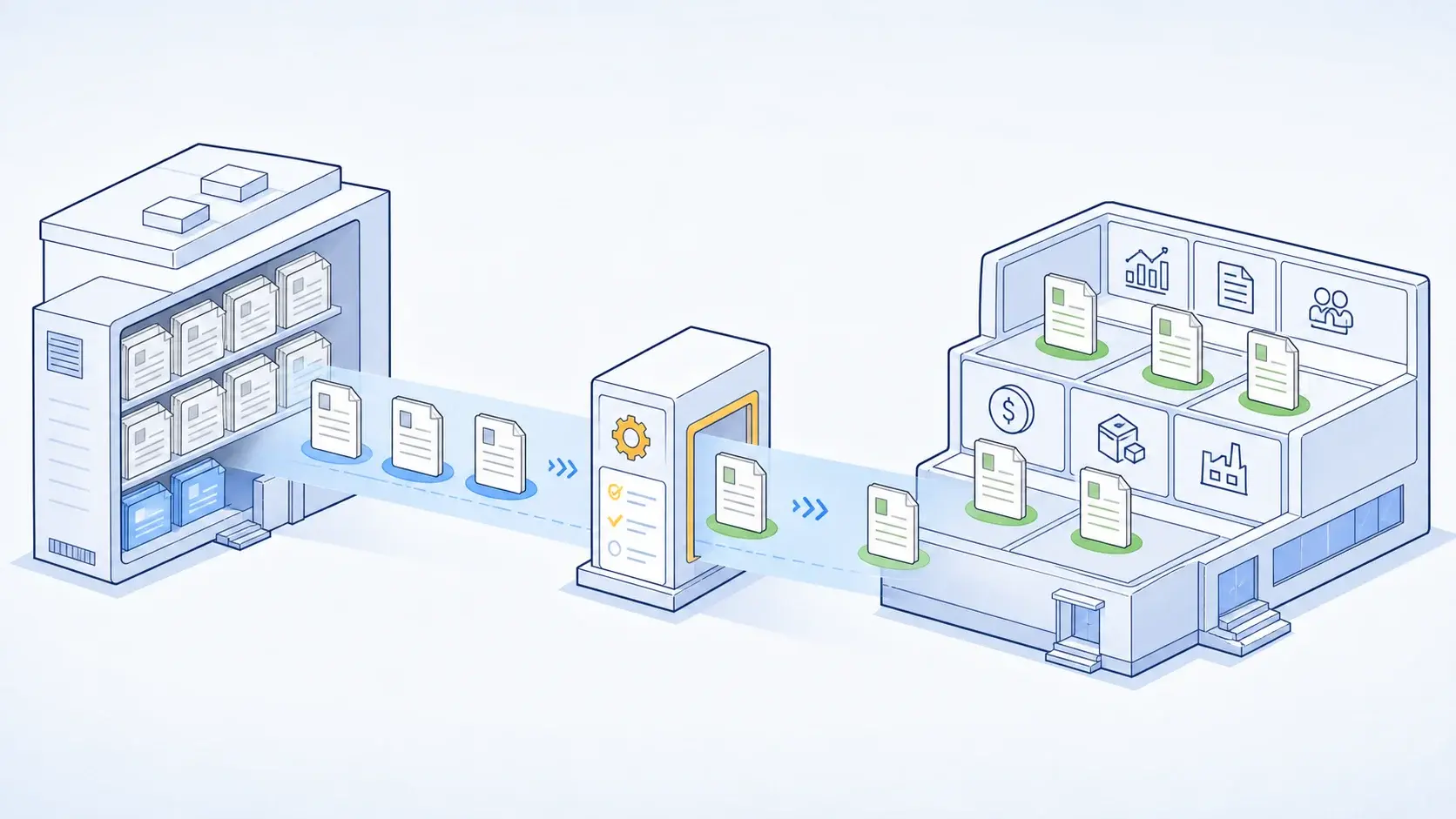
Legacy ERP → process simplification → data quality → clean core → modern integration → analytics → automation

The objective should be to establish a sustainable target architecture rather than reproduce every limitation of the existing ECC environment.

A useful question is therefore not:

"How do we move our ECC system?"

but:

"Which business capabilities should the future SAP landscape provide, and what is the simplest architecture that can support them?"

What Does RISE with SAP Mean for an ECC-to-S/4HANA Strategy?

Some UK organisations may consider RISE with SAP when defining their transition strategy.

RISE with SAP is not simply another name for an S/4HANA migration. It is a broader commercial and transformation framework that can include SAP Cloud ERP Private Edition, infrastructure and cloud services, tooling, and transformation capabilities, depending on the customer's agreement and selected offering.

For organisations moving from ECC, SAP Cloud ERP Private Edition can be relevant where the business wants a cloud operating model while retaining significant flexibility for existing business processes and controlled extensions.

However, cloud deployment should not be selected solely because the ECC maintenance deadline is approaching.

The organisation should first evaluate:

  • business requirements;
  • current SAP architecture;
  • customisation;
  • integrations;
  • data;
  • regulatory requirements;
  • operating model;
  • internal IT capabilities;
  • desired degree of standardisation;
  • long-term transformation objectives.

The choice between on-premise SAP S/4HANA, private cloud, and public cloud should therefore be treated as an architectural and operating-model decision.

How Should UK Manufacturers Approach the ECC-to-S/4HANA Transition?

Manufacturing environments can be particularly complex because SAP ERP is often connected directly to operational systems.

A typical landscape might look like:

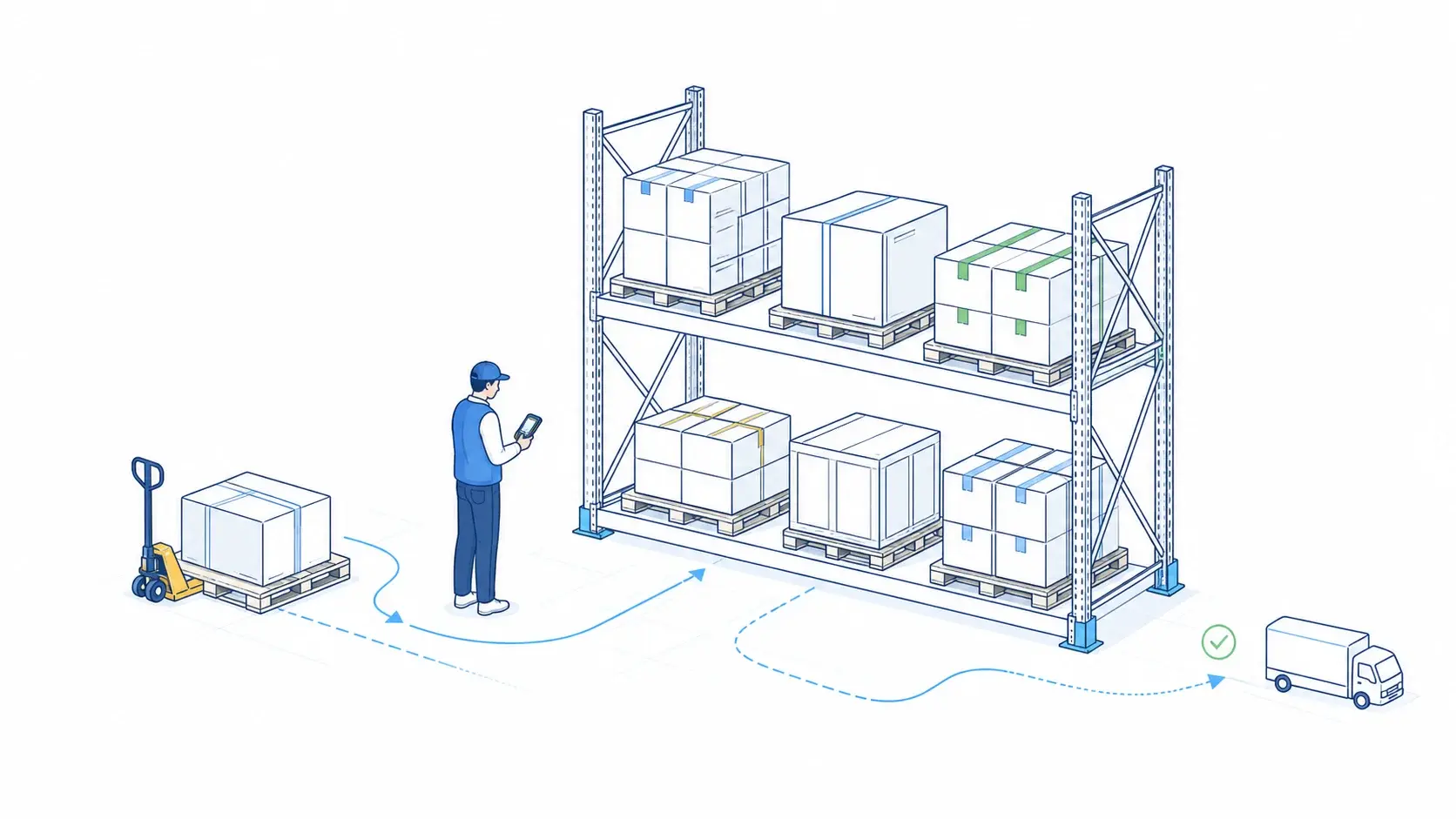
SAP ERP → production planning → MES → PLM → warehouse/EWM → quality → maintenance → logistics

Changing the ERP platform can therefore affect production planning, material availability, inventory, quality processes, engineering, warehouse operations, and shop-floor integration.

Manufacturers should assess:

  • BOMs and routings;
  • production master data;
  • material and inventory data;
  • plant structures;
  • MRP and production planning;
  • engineering change processes;
  • quality management;
  • maintenance processes;
  • MES integration;
  • warehouse and logistics integration;
  • historical production data.

For complex manufacturers, the migration approach should be selected only after these dependencies have been understood.

A Practical SAP ECC-to-S/4HANA Readiness Assessment

Before selecting a migration approach, organisations should establish a fact-based baseline.

1. Analyse the SAP Landscape

Document:

  • SAP releases;
  • enhancement packages;
  • modules;
  • add-ons;
  • databases;
  • operating systems;
  • interfaces;
  • dependent applications;
  • business-critical systems.

The objective is to understand the actual technical scope of the transformation.

2. Assess Business Processes

Map the processes that the organisation depends on most heavily.

These may include:

  • record-to-report;
  • procure-to-pay;
  • order-to-cash;
  • plan-to-produce;
  • warehouse operations;
  • asset management;
  • quality management;
  • supply chain processes.

The assessment should identify where processes depend on custom functionality or manual workarounds.

3. Review Custom Code and Extensions

Custom developments should be inventoried and classified.

For each significant development, ask:

Is it still required? Can standard S/4HANA functionality replace it? Should it become an extension?

This prevents the migration from becoming an exercise in transferring technical debt.

4. Assess Data

Review:

  • master data;
  • transactional data;
  • data quality;
  • data volumes;
  • historical information;
  • archiving;
  • reconciliation requirements.

Data migration should be designed around business requirements rather than assuming that everything currently stored in ECC needs to move.

5. Analyse Integrations

Create an inventory of:

  • interfaces;
  • APIs;
  • middleware;
  • external applications;
  • message flows;
  • monitoring;
  • error handling;
  • security dependencies.

Each integration should have a defined target-state strategy.

6. Establish the Business Case

The business case should include more than implementation cost.

Consider:

  • SAP licensing and subscription costs;
  • cloud or infrastructure costs;
  • implementation;
  • data migration;
  • integration;
  • testing;
  • training;
  • change management;
  • internal resources;
  • application management;
  • ongoing operating costs.

The organisation should compare these costs with the operational, technical, and commercial implications of remaining on ECC.

SAP S/4HANA Readiness Tools and Assessments

SAP provides tools that can support the preparation phase.

SAP Readiness Check can help organisations analyse aspects of an existing SAP ERP system in preparation for an S/4HANA transformation.

Depending on the landscape, assessment activities can also cover:

  • custom code;
  • simplification items;
  • business functions;
  • add-ons;
  • data;
  • integrations;
  • sizing;
  • application compatibility.

These tools should support — rather than replace — a broader business and architecture assessment.

A technical readiness report alone cannot determine whether a particular organisation should choose system conversion, selective transition, or a new implementation.

SAP ECC Migration Roadmap for UK Organisations

A practical programme can be structured into several stages.

Phase 1 — Discover

Establish the current-state baseline.

Analyse:

  • SAP landscape;
  • business processes;
  • custom code;
  • master data;
  • integrations;
  • add-ons;
  • security;
  • infrastructure;
  • business-critical dependencies.

Phase 2 — Define

Establish the target state.

Decide on:

  • S/4HANA deployment model;
  • migration approach;
  • target architecture;
  • clean-core principles;
  • integration strategy;
  • data strategy;
  • security;
  • application lifecycle management.

Phase 3 — Build the Business Case

Estimate the investment and expected business outcomes.

The business case should distinguish between mandatory transformation activities and optional optimisation initiatives.

Phase 4 — Remediate

Address high-impact issues before the main migration where possible.

This can include:

  • obsolete custom code;
  • poor master data;
  • redundant interfaces;
  • unsupported add-ons;
  • duplicated functionality;
  • process inconsistencies.

Phase 5 — Transform

Configure and develop the target environment, migrate data, redesign integrations, and prepare business processes.

Phase 6 — Test

Testing should cover complete business processes rather than isolated SAP transactions.

For example:

Order → production → delivery → invoice

or:

Purchase requisition → purchase order → goods receipt → invoice

For manufacturers and supply-chain organisations, testing should extend into warehouse, manufacturing, logistics, and external systems.

Phase 7 — Cut Over

Execute the transition according to a controlled cutover plan covering:

  • data migration;
  • reconciliation;
  • interfaces;
  • user access;
  • business validation;
  • operational readiness;
  • rollback considerations.

Phase 8 — Stabilise and Optimise

Post-go-live activities should address:

  • user adoption;
  • system performance;
  • data quality;
  • process efficiency;
  • integrations;
  • automation;
  • reporting;
  • remaining technical debt.

LeverX Recommendation: Start with the Landscape, Not the Migration Method

Before choosing between system conversion, selective data transition, or a new implementation, LeverX recommends establishing a detailed baseline of the existing SAP landscape.

This should include the current ERP release, custom code, integrations, master data, business-critical processes, add-ons, and technical dependencies. The assessment should then be mapped against the organisation's target business model and S/4HANA architecture.

Our recommendation: do not select a migration approach because it is the most familiar or appears fastest. Select it based on the complexity of the current landscape, the amount of business change required, and the target operating model.

How Long Does an SAP ECC Migration Take?

There is no reliable universal timeline.

Duration depends on:

System complexity + entities + custom code + data + integrations + migration approach + business transformation scope

A relatively standard SAP environment can require a very different programme from a multinational organisation with multiple plants, countries, acquisitions, complex integrations, and heavily customised processes.

This is why organisations should avoid committing to an arbitrary migration timeline before completing discovery and readiness activities.

For UK businesses planning in 2026, the critical question is not simply:

"Can we migrate before 2027?"

It is:

"Can we complete assessment, design, remediation, testing, change management, and cutover preparation within a timeframe that protects the business?"

What Should UK Businesses Do in 2026?

For organisations still running SAP ECC, awareness of the 2027 deadline should already have turned into concrete planning.

A practical checklist includes:

  • Confirm the exact SAP ERP release and enhancement package.
  • Review applicable SAP maintenance terms and dates.
  • Inventory SAP components, add-ons, and integrations.
  • Run an S/4HANA readiness assessment.
  • Analyse custom code and extensions.
  • Assess master-data quality.
  • Identify business-critical processes.
  • Evaluate system conversion, selective transition, and new implementation scenarios.
  • Define the target deployment model.
  • Estimate implementation and operating costs.
  • Develop the business case.
  • Establish a transformation roadmap with decision gates.
  • Start high-priority remediation activities.
  • Review SAP Solution Manager 7.2 dependencies and the transition to SAP Cloud ALM where applicable.

The earlier these activities are completed, the more options the organisation retains.

What About SAP Solution Manager After 2027?

SAP Solution Manager 7.2 has its own important maintenance milestone.

SAP has stated that mainstream maintenance for SAP Solution Manager 7.2 ends on 31 December 2027. SAP recommends SAP Cloud ALM as the strategic successor for application lifecycle management and cloud-centric transformation scenarios.

For organisations still using Solution Manager extensively, the ECC transformation programme should therefore consider ALM requirements separately rather than assuming that the existing Solution Manager landscape can simply remain unchanged.

The appropriate ALM strategy depends on the organisation's SAP landscape and the capabilities it currently relies on.

Should Businesses Use Extended Maintenance Until 2030?

Extended maintenance can be a legitimate strategic option, but it should not become an accidental migration strategy.

For an organisation with a complex ERP landscape, the additional period may provide time to:

  • complete readiness assessments;
  • remediate custom code;
  • improve master data;
  • redesign processes;
  • select an implementation partner;
  • prepare integrations;
  • build the business case;
  • plan organisational change.

However, the organisation should understand the applicable commercial conditions and the limitations of remaining on the existing platform.

The strongest use of an extended-maintenance period is therefore:

Maintain → Prepare → Transform

rather than:

Maintain → Delay → Reassess later

The 2027 Deadline Should Trigger a Strategy — Not a Panic Migration

The end of SAP ECC mainstream maintenance is an important milestone for UK organisations, but the date itself should not dictate a rushed ERP transformation.

A poorly planned migration can simply transfer legacy complexity into S/4HANA.

A well-designed programme can use the transition to:

  • simplify business processes;
  • reduce technical debt;
  • improve data quality;
  • rationalise integrations;
  • establish a cleaner core;
  • modernise the SAP operating model;
  • improve analytics and automation;
  • create a foundation for future innovation.

SAP has committed to maintaining at least one SAP S/4HANA release through 2040, giving organisations a significantly longer strategic horizon than the Business Suite 7 maintenance window.

For UK businesses still running ECC, the priority in 2026 should therefore be clear:

Understand the current landscape → define the target state → choose the right transition path → build the business case → start remediation → execute the transformation on a controlled timeline.

LeverX Recommendation: Use the 2027–2030 Window Strategically

For organisations that are not ready to complete an S/4HANA transformation before the end of 2027, the available maintenance options should be considered as part of a structured transition strategy rather than as a reason to postpone planning.

LeverX recommends using any additional time to reduce technical debt, improve data quality, rationalise integrations, assess custom developments, and establish the target S/4HANA architecture.

Our recommendation: treat the maintenance period as a controlled runway for transformation - with clear milestones for assessment, remediation, business-case approval, design, and migration - rather than waiting until the maintenance deadline becomes an operational constraint.

Need Help Assessing Your SAP ECC Landscape?

LeverX can help UK organisations assess their existing SAP environment, evaluate S/4HANA transition scenarios, identify technical and business dependencies, and develop a practical transformation roadmap.

Start with an SAP ECC-to-S/4HANA readiness assessment and define your next step with evidence rather than assumptions.


Disclaimer: SAP maintenance dates, product availability, commercial terms, and transition options may depend on the specific SAP product, release, licensing agreement, and customer landscape. Organisations should verify applicable terms and roadmap details with SAP and their SAP service provider before making contractual or migration decisions.


https://leverx.com/en-gb/newsroom/sap-ecc-end-of-support-2027-uk
Don't miss out on valuable insights and trends from the tech world
Subscribe to our newsletter.

Body-1