










SAP S/4HANA for EHS Environment Management
LeverX helps companies in the UK implement SAP S/4HANA for EHS Environment Management to centralise environmental data and support regulatory reporting. We configure processes for emissions, waste, incidents, and compliance tracking.
LeverX is a global SAP Gold Partner and system integrator with over twenty years of experience delivering SAP programmes across manufacturing, energy, chemicals, logistics, and other regulated industries. Our teams have worked on large-scale ERP implementations, including projects for Fortune 500 organisations operating under complex environmental and safety regulatory frameworks.
In the UK market, our SAP S/4HANA сonsulting expertise helps organisations implement and configure SAP S/4HANA's Environment, Health, and Safety module to match their specific compliance obligations — whether those involve Environment Agency reporting, waste management regulations, or emissions tracking under UK REACH and related frameworks. Our specialists design the system architecture, configure EHS processes, and manage integrations between S/4HANA, SAP BTP, and the third-party platforms your environmental teams rely on day to day.
SAP S/4HANA for EHS: From Compliance Records to Operational Control
Permits, emissions figures, incident logs — most organisations have this data. It is just spread across spreadsheets, inboxes, and folders maintained by specific people. When an auditor asks for it, the clock starts on a manual assembly exercise. That is the gap SAP S/4HANA EHS closes: not data collection, but data control.
The platform has moved beyond record-keeping. SAP's AI assistant Joule can process lengthy regulatory permits, extract compliance limits automatically, and create corresponding tasks in the system. Carbon footprint can now be calculated per manufactured product rather than once annually. And the recommended implementation approach, configuring EHS through SAP BTP extensions rather than custom code, means the system stays maintainable as UK regulations evolve.
Key business drivers for SAP S/4HANA for EHS Environment Management in the UK
-
Stricter environmental reporting requirements. UK companies face growing pressure to maintain accurate environmental records and demonstrate compliance during audits and inspections.
-
Centralised EHS data across multiple sites. SAP S/4HANA helps standardise environmental reporting processes between plants, warehouses, and regional operations.
-
Lower dependency on manual reporting. Automated workflows reduce spreadsheet-based reporting and manual consolidation of environmental data.
-
Support for carbon accounting initiatives. Companies can integrate emissions and product footprint data into operational and supply chain processes.
What SAP S/4HANA EHS Delivers in Practice
One auditable record for all environmental data
Compliance deadlines tracked and triggered automatically
Carbon footprint calculated per product, not per year
AI reads your permits so your team does not have to
A Clean Core that absorbs regulatory change without custom development
A controlled exit from legacy EHS systems
If you are trying to understand what SAP S/4HANA EHS would actually change in your operation, that is exactly the conversation we have first.
Which SAP S/4HANA For EHS Environment Management Capabilities Matter Most in Daily Operations?
Compliance obligation management
Environmental compliance becomes difficult when obligations are tracked manually or stored across multiple systems. SAP S/4HANA helps companies organise permits, regulations, policies, and operational requirements in one structured workflow.
Capabilities
-
Maintain registers for permits, regulations, and compliance obligations. Store and manage compliance requirements in a centralised system with linked operational tasks.
-
Track fulfilment status and overdue activities. Monitor task completion, warning statuses, and missed deadlines across compliance processes.
-
Monitor regulatory and operational changes. Receive updates when legal or operational requirements change and assess their impact on existing processes.
-
Improve auditability and reporting transparency. Use SAP S/4HANA Embedded Analytics to review compliance activities, process histories, and change logs.

Automated data collection, calculation, and validation
Environmental reporting often depends on data collected from multiple operational systems. SAP S/4HANA reduces manual consolidation work by connecting environmental monitoring with production and enterprise data sources.
Capabilities
-
Capture environmental data from multiple systems. Collect and unify data from IoT sensors, manufacturing systems, ERP platforms, and data historians.
-
Reduce manual reporting errors. Standardise environmental records and calculations through automated data collection workflows.
-
Monitor environmental parameters in real time. Track emissions, measurements, and operational indicators continuously to support compliance reporting.
-
Support audit-ready reporting processes. Maintain traceable environmental records with validated and structured operational data.

Waste management from generation to disposal
Waste tracking becomes more difficult when disposal records, procurement data, and transport documentation remain disconnected. SAP S/4HANA supports structured waste management processes across the full disposal cycle.
Capabilities
-
Track hazardous and non-hazardous waste streams. Monitor waste generation, movement, storage, and disposal activities.
-
Generate compliant waste shipment documentation. Prepare manifests and related disposal records required for transport and regulatory reporting.
-
Connect waste management with procurement and disposal data. Link disposal activities with operational and purchasing records.
-
Identify waste reduction opportunities through analytics. Use SAP Analytics Cloud to analyse waste volumes, disposal trends, and operational patterns.

AI-assisted permit management
Permit management often requires teams to review large volumes of technical and regulatory documentation manually. SAP Business AI capabilities help reduce repetitive document processing work.
Capabilities
-
Extract permit requirements from PDF documents. Identify reporting obligations, thresholds, and conditions directly from uploaded permit files.
-
Create operational tasks using AI support. Generate maintenance activities, notifications, and reporting actions based on permit requirements.
-
Review AI-generated recommendations before approval. Validate proposed tasks through a controlled user workflow.
-
Maintain permit audit trails. Link documents, approvals, and compliance actions to support inspections and internal audits.

Built-in equations and emission factors
Environmental calculations often vary between departments, plants, or reporting teams. SAP S/4HANA helps standardise calculation methods through predefined equations and emission factors.
Capabilities
-
Use standard environmental calculation models. Apply predefined equations and emission factors through a centralised calculation library.
-
Align reporting with recognised standards. Support sustainability reporting frameworks, including the GHG Protocol.
-
Automate emissions and footprint calculations. Calculate environmental indicators and sustainability metrics using operational data.
-
Improve reporting consistency across sites. Standardise calculation logic between facilities and business units.

Plausibility and threshold checks for environmental data
Environmental reporting depends on data accuracy. SAP S/4HANA helps companies identify unusual measurements, threshold breaches, and inconsistent environmental records before they affect reporting processes.
Capabilities
-
Define environmental thresholds and measurement limits. Configure static limits, rolling averages, and dynamic plausibility checks.
-
Detect anomalies in environmental measurements. Identify unusual values and potential reporting inconsistencies automatically.
-
Monitor emissions against permit conditions. Compare collected environmental data with regulatory and operational thresholds.
-
Address compliance risks earlier. Detect potential issues before they become formal reporting or audit problems.

How LeverX Supports SAP S/4HANA EHS Programmes in the UK
Most EHS implementations fail at the edges: unclear scope, poor data migration, and staff who revert to spreadsheets within six months. Our services are built around those failure points.
Digital environmental audit and EHS roadmap

End-to-end SAP S/4HANA EHS implementation

Clean Core and SAP BTP extension architecture

UK compliance and regulatory advisory

Data architecture and AI readiness

Change management and operational support

Start a working session with our SAP EHS team to assess your current processes and define an implementation roadmap.
Customers' Success Stories
SAP S/4HANA Optimization and Regional Rollout for Retal Group
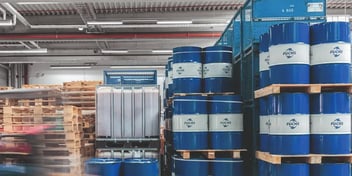
FUCHS’s Digital Transformation of Business Workflows

Production Optimization and Quality Management With AI and SAP

Implementation of SAP S/4HANA Private Cloud for Safia
Where SAP S/4HANA EHS Has the Most Direct Impact
Manufacturing
Energy and utilities
Chemicals and life sciences
Construction and infrastructure
Retail and consumer goods
Transport and logistics
Why Choose LeverX
Proven track record
Industry experts
SAP partnership
Quality and security
Investment in innovation
Flexibility
Frequently Asked Questions
We already have an EHS tool in place. Is there a real case for moving to SAP S/4HANA EHS, or is this just consolidation for its own sake?
The honest answer is it depends on where your current tool sits in your wider SAP landscape. Standalone EHS platforms adequately manage compliance records in isolation. The problem comes when it comes to linking environmental data into procurement decisions, production planning or product-level carbon calculations. Either that link doesn't exist or it requires custom integration work that breaks on every upgrade cycle.
SAP S/4HANA EHS is embedded within the same data environment as your operational processes, which means environmental parameters reflect what is actually happening in production, not what was manually entered after the fact. If your current tool is functionally separate from your ERP, the case for consolidation is structural, not cosmetic.
What does UK regulatory compliance actually look like inside the system? How does SAP S/4HANA EHS handle SECR, UK ETS, and Environment Agency reporting specifically?
SAP S/4HANA EHS does not arrive pre-configured for UK regulatory frameworks out of the box. That is a point worth stating clearly, because some organisations expect it. What the system provides is a structured compliance obligation management layer, a centralised calculation engine with configurable emission factors, and an auditable data environment. UK-specific configuration, including SECR reporting structures, UK ETS obligation tracking, and Environment Agency submission formats, is applied during implementation.
That configuration work is where implementation expertise matters. A system configured generically will not reflect the specific thresholds, reporting periods, and submission requirements that UK regulators expect. It needs to be built to your regulatory position, not to a template.
Our environmental data is currently held across several systems and teams. How realistic is it to consolidate that without losing historical compliance records?
It is realistic, but it requires a structured data migration approach rather than a lift-and-shift. The first step is a data audit: identifying what exists, in what format, and what its quality level is. Historical compliance records held in spreadsheets typically contain inconsistencies in units, calculation methods, and categorisation that need to be resolved before migration, not discovered after.
SAP S/4HANA EHS uses a defined data model for environmental parameters, so incoming data needs to be mapped to that structure systematically. Organisations that treat migration as a technical task rather than a data governance exercise tend to carry legacy data quality problems into the new system. The migration is the opportunity to fix them.
How does SAP S/4HANA EHS handle AI features in practice? Is Joule actually production-ready for regulatory document processing?
Joule's permit processing capability is functional and in active use, but it is worth being precise about what it does. It reads PDF permit documents, extracts compliance conditions and numerical limits, and generates task proposals in the system. A human reviewer confirms those proposals before they are activated. It is not autonomous compliance management. Where it delivers measurable value is in processing time: permits that previously required several hours of manual review to extract and log conditions are processed in a fraction of that time.
For organisations managing permits across multiple sites, each with its own conditions and renewal cycles, that reduction is operationally significant. The AI layer handles extraction and structuring. Compliance judgement remains with your team.
What is the realistic total cost of ownership for SAP S/4HANA EHS, beyond the initial implementation?
Total cost of ownership has three components that organisations sometimes underestimate at the outset. The first is ongoing configuration maintenance: as UK regulations change, permit conditions update, and reporting requirements evolve, the system needs to reflect those changes. Under a clean core implementation using SAP BTP extensions, most of that work is configuration rather than development, which keeps costs predictable.
The second is licensing: SAP S/4HANA EHS is included within certain S/4HANA licence tiers but may require additional entitlements depending on the features used, particularly around AI capabilities and analytics. The third is internal resource: someone in your organisation needs to own the system functionally, not just technically. Organisations that plan for a functional EHS system owner from the start tend to get more from the platform and spend less on external support over time.
Contact Us
What happens next?
-
1
An expert will reach out to you to discuss your specific requirements and objectives.
-
2
We’ll sign an NDA to ensure any sensitive information is kept secure and strictly confidential.
-
3
We’ll work with you to prepare a customised proposal based on the project’s scope, timeline, and budget.
years of expertise
projects
professionals
Contact Us
CONTACT US
If you are looking for an SAP Global Strategic Supplier or Technology Partner for your business, fill out the form below, and we will contact you at short notice.