SAP EWM Integration with Non-SAP Systems: APIs, Middleware and Best Practices


Modern warehouses rarely operate as standalone SAP environments.

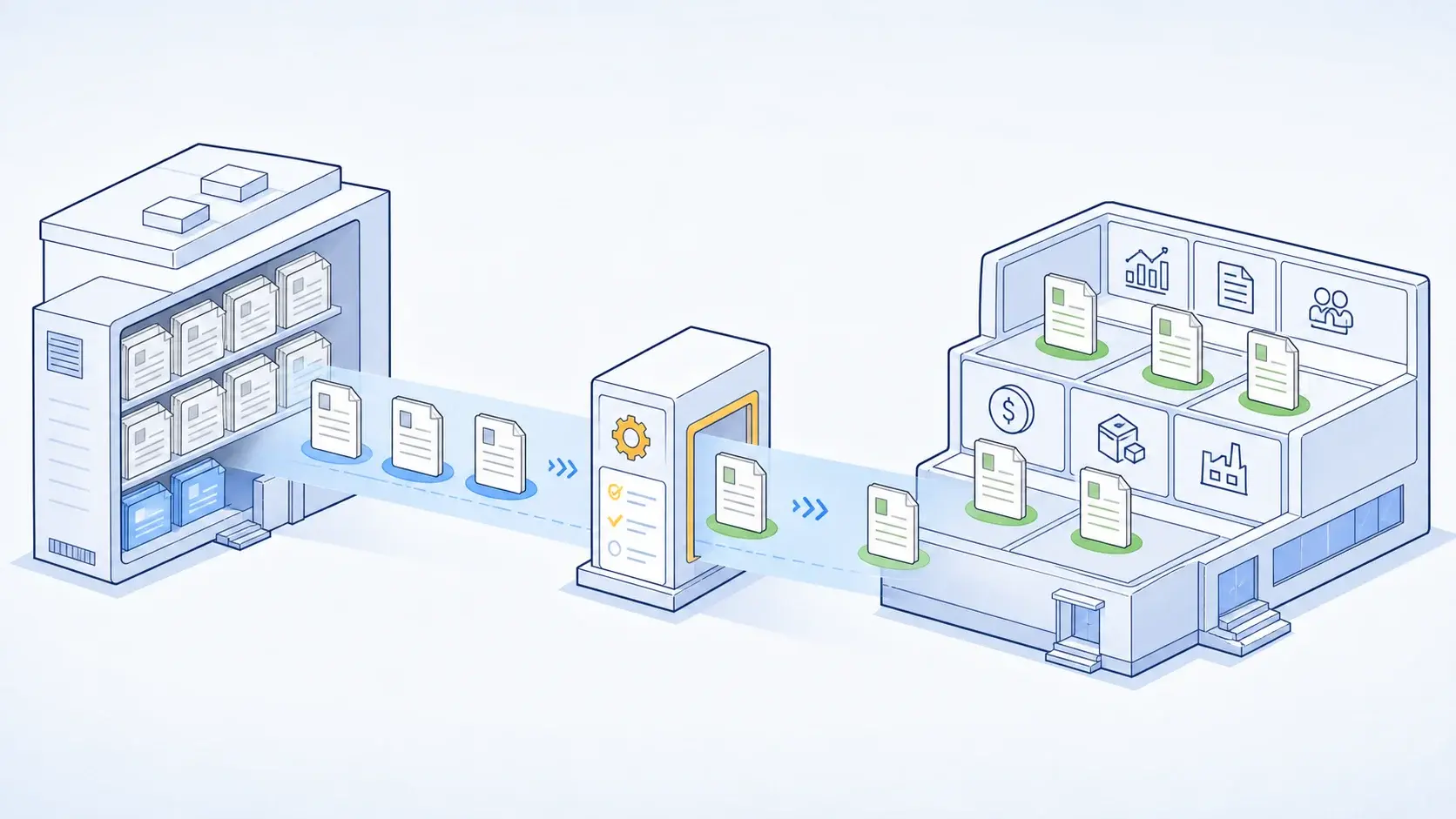
Large logistics organisations increasingly combine SAP Extended Warehouse Management (SAP EWM) with warehouse control systems, robotics, automation platforms, transportation systems, customer portals, e-commerce platforms, legacy applications, and third-party logistics systems.

As a result, the success of an SAP EWM implementation often depends as much on the integration architecture as on the warehouse management system itself.

A typical enterprise warehouse environment may look like:

SAP S/4HANA → SAP EWM → WES/WCS → Automation

while simultaneously exchanging information with:

TMS → Carriers → Customers → 3PL Platforms → External Applications

SAP supports multiple integration mechanisms for connecting EWM with external environments, including APIs, IDocs, RFC-based communication, EWM-specific interfaces, and integration through SAP Integration Suite. SAP also distinguishes warehouse-management responsibilities in EWM from warehouse-control and equipment-execution responsibilities handled by connected systems. 

The challenge for a large logistics organisation is therefore not simply:

“Can SAP EWM integrate with our systems?”

It is:

“How should SAP EWM integrate with our current and future technology landscape without creating unnecessary point-to-point interfaces, operational bottlenecks, or long-term technical debt?”

This guide explains the main integration approaches, where APIs, IDocs, RFC-based communication, SAP Integration Suite and EWM Material Flow System (MFS) fit, how EWM should interact with WES/WCS and automation, and which architectural principles can make an enterprise EWM landscape easier to scale and maintain.

SAP EWM Integration at a Glance

Integration area

Typical technologies

SAP ERP / S/4HANA

Standard integration, APIs, IDocs, RFC

Modern cloud applications

APIs, SAP Integration Suite

Legacy systems

IDocs, RFC, EDI, SFTP

Multiple SAP and non-SAP systems

SAP Integration Suite / middleware

Warehouse automation

EWM MFS, EWM-WCU, WES/WCS depending on architecture

TMS and carriers

APIs, IDocs, integration platform, EDI

3PL and customer systems

APIs, EDI, middleware

Event notifications

Event-driven integration

Analytics and data platforms

APIs, events, integration platform

The key is not to choose one technology for everything.

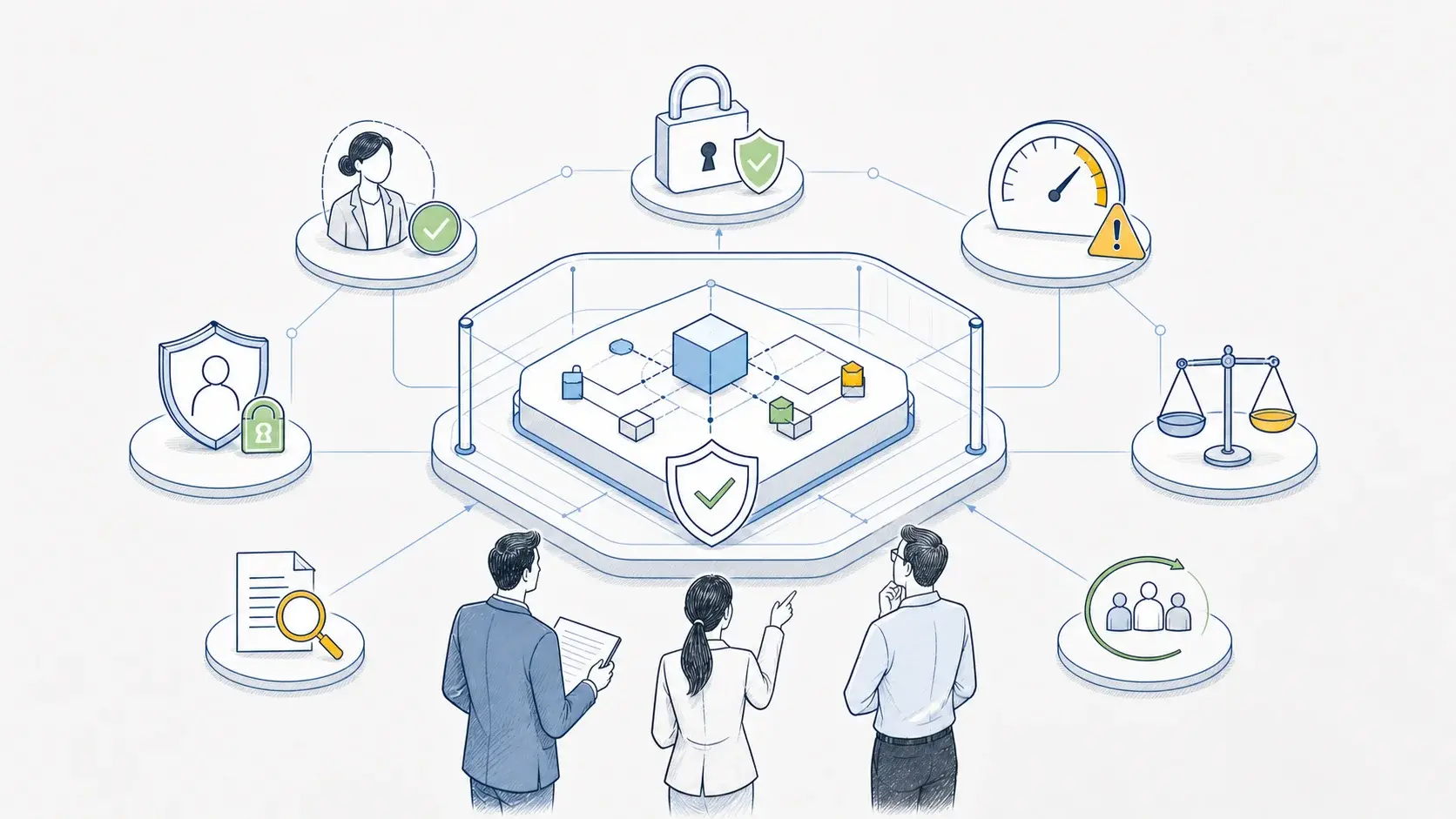
A scalable architecture usually combines several approaches based on business criticality, latency, transaction volume, system ownership, resilience, and lifecycle.

SAP EWM Integration Architecture: Key Systems and Data Flows

What Is SAP EWM Integration?

SAP EWM integration refers to the exchange of business and operational information between SAP EWM and other systems involved in warehouse and supply chain processes.

Depending on the operating model, these systems can include:

  • SAP S/4HANA;
  • SAP Transportation Management;
  • SAP Business Network;
  • non-SAP ERP systems;
  • third-party TMS platforms;
  • third-party WMS platforms;
  • WES and WCS platforms;
  • warehouse automation;
  • robotics platforms;
  • e-commerce and OMS platforms;
  • customer portals;
  • carrier systems;
  • 3PL platforms;
  • legacy applications;
  • analytics and data platforms.

Integration can cover both master data and transactional events.

Typical information flows include:

  • material and product data;
  • business partners;
  • inbound deliveries;
  • outbound delivery orders;
  • warehouse tasks;
  • inventory information;
  • handling units;
  • picking confirmations;
  • goods movements;
  • shipment status;
  • warehouse exceptions.

The appropriate interface model depends on factors such as system ownership, required latency, transaction volumes, business criticality, and the long-term lifecycle of the systems involved.

Why Non-SAP Integration Matters

Why Non-SAP Integration Matters

An SAP EWM implementation can be technically successful and still fail to deliver the expected business value if the systems around it remain disconnected.

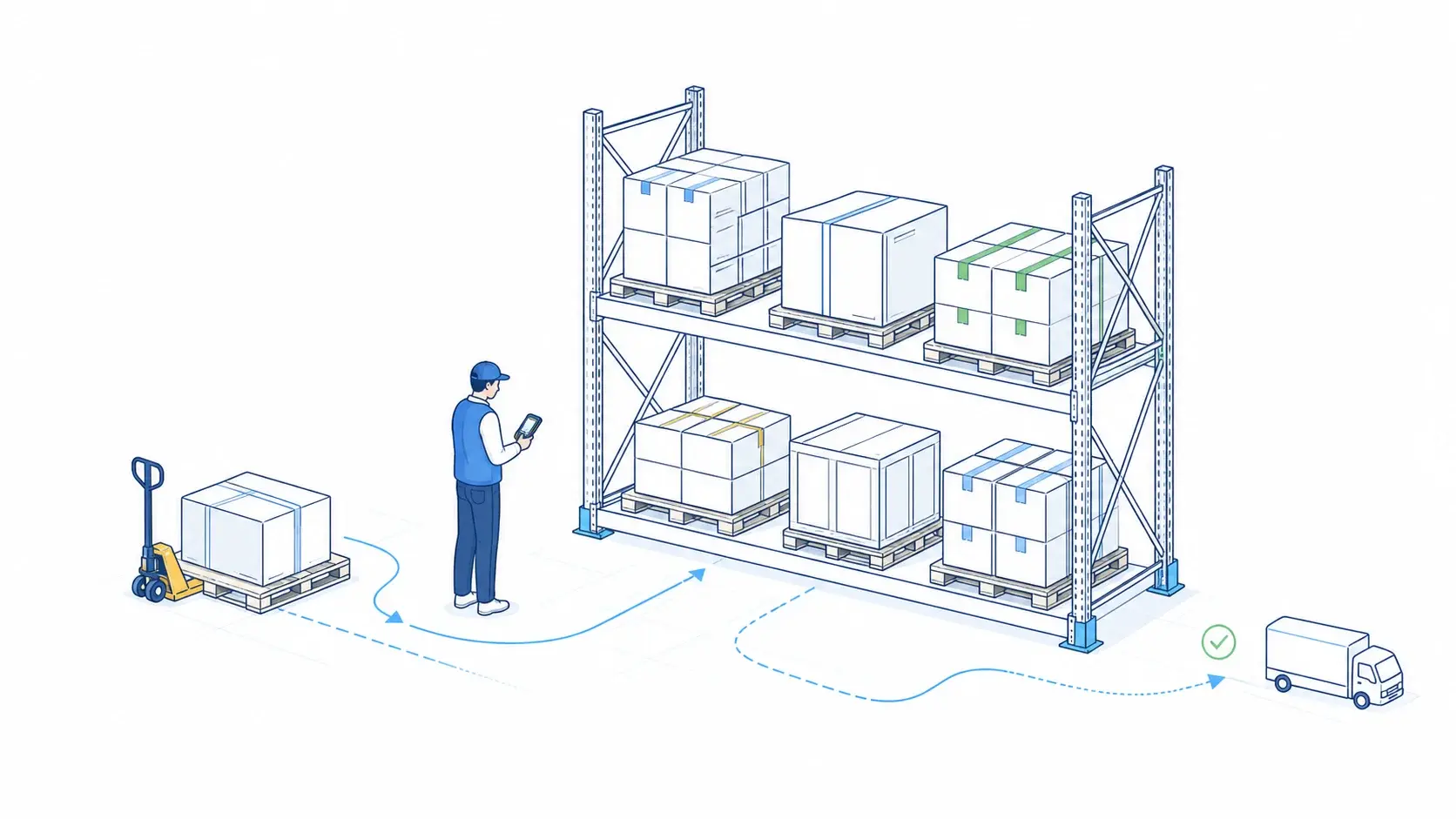
Consider a highly automated distribution centre.

The warehouse may have:

ERP → EWM → WCS → Conveyor / AS/RS / Robot

But the operation may also depend on:

OMS → EWM

EWM → TMS

EWM → Carrier

EWM → Customer Portal

EWM → Data Platform

If these interfaces are unreliable, the warehouse can experience:

  • delayed orders;
  • inventory discrepancies;
  • failed warehouse tasks;
  • duplicate messages;
  • manual reconciliation;
  • inaccurate customer visibility;
  • shipment delays;
  • additional operational support.

The challenge becomes even greater when organisations grow through acquisition.

A logistics group may operate:

  • SAP EWM in one facility;
  • a specialist WMS in another;
  • a legacy ERP in a different country;
  • several carrier platforms;
  • multiple automation technologies.

The integration architecture then becomes a strategic part of the enterprise landscape, rather than simply a technical implementation detail.

The Most Important Design Principle: Define Responsibilities First

The Most Important Design Principle: Define Responsibilities First

One of the most common integration mistakes is choosing the technology before defining which system owns each business process.

For each major object or process, organisations should establish:

  • Who creates it?

  • Who owns it?

  • Who updates it?

  • Who consumes it?

  • Who confirms completion?

For example:

Business object / process

Typical owner

Enterprise material master

ERP / master-data platform

Warehouse inventory

SAP EWM or defined inventory owner

Warehouse task

SAP EWM

Material-flow optimisation

WES/WCS or EWM MFS, depending on architecture

Equipment control

WCS / PLC / automation layer

Transportation execution

TMS

Customer shipment visibility

Agreed visibility platform

Financial posting

ERP

The exact model varies by organisation.

What matters is avoiding competing systems of record.

If EWM and a legacy WMS both believe they own inventory, for example, no integration technology can resolve the underlying business problem.

Integration is an architecture problem before it is a technology problem.

SAP EWM Integration Architecture

There is no single architecture that fits every warehouse.

A relatively simple SAP-centric environment might look like:

SAP S/4HANA

SAP EWM

Warehouse Operations

A more complex environment may look like:

SAP S/4HANA / ERP

SAP EWM

WES / WCS / MFS

Automation / Robotics

with parallel connections to:

SAP TM

OMS / E-commerce

Carriers

3PL / Customer Systems

Analytics / Data Platforms

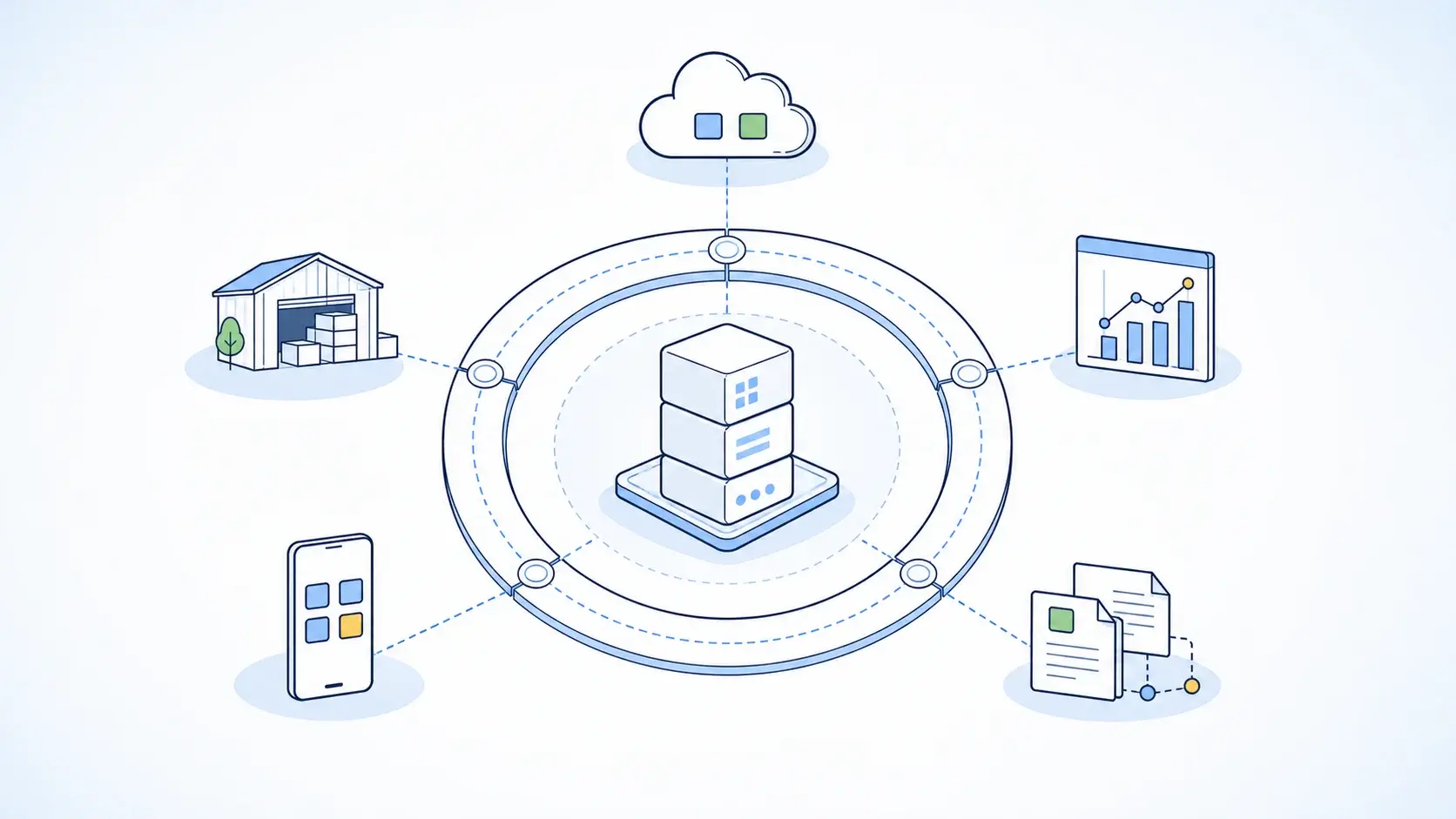
For hybrid landscapes, an integration platform can provide a controlled layer between applications:

SAP EWM → SAP Integration Suite / SAP BTP → Non-SAP Systems

SAP Integration Suite provides integration and connectivity capabilities across SAP and non-SAP applications in hybrid and cloud environments.

However, middleware should not automatically be inserted into every connection.

A good architecture uses it where it creates clear value through:

  • routing;
  • transformation;
  • orchestration;
  • security;
  • monitoring;
  • governance;
  • decoupling;
  • API management.

For some high-performance warehouse automation scenarios, a direct or native EWM integration approach may be more appropriate.

Not Every EWM Integration Needs Middleware

Not Every EWM Integration Needs Middleware

This is one of the most important architectural decisions in a modern warehouse.

Middleware can be valuable when an organisation needs to:

  • connect many systems;
  • transform data between different formats;
  • decouple applications;
  • centralise monitoring;
  • manage APIs;
  • apply security and governance;
  • support hybrid cloud and on-premise landscapes.

But inserting middleware between every system can create additional latency, complexity, and operational dependencies.

For high-throughput automation, direct or native SAP EWM capabilities may be more appropriate.

For example, LeverX SAP EWM MFS Integration supports direct communication between SAP EWM and warehouse automation, including PLC-based equipment, in scenarios where this architecture is appropriate.

The right question is therefore:

Where does middleware create architectural value, and where does it simply add another layer?

SAP EWM Integration with Non-SAP Systems: Main Approaches

SAP EWM Integration with Non-SAP Systems: Main Approaches

The main integration mechanisms include:

  • APIs and web services;
  • IDocs;
  • RFC-based communication;
  • SAP Integration Suite;
  • event-driven integration;
  • EDI and file-based exchange;
  • EWM-WCU interfaces;
  • EWM Material Flow System (MFS).

Each addresses a different integration requirement.

The right choice should be driven by:

business process + latency + volume + reliability + ownership + lifecycle

rather than technology preference alone.

APIs and Web Services

APIs are increasingly important for integrating EWM-related processes with modern applications.

They can be appropriate for:

  • customer-facing applications;
  • e-commerce;
  • portals;
  • external logistics platforms;
  • cloud services;
  • mobile applications;
  • selected real-time business processes.

SAP provides APIs for EWM-related processes and distinguishes between released interfaces and more technical interfaces with different lifecycle and compatibility considerations.

API Best Practices

When designing API integrations, organisations should prioritise:

  • released interfaces where available;
  • clear ownership;
  • authentication and authorisation;
  • versioning;
  • monitoring;
  • error handling;
  • rate management;
  • documented business semantics.

An API that works today but depends heavily on internal application structures can become a migration or upgrade problem later.

IDocs

IDocs remain relevant in many SAP integration scenarios, particularly for asynchronous business messaging and established interfaces.

SAP documentation includes dedicated EWM-related IDoc scenarios, including EWM-WCU communication involving warehouse tasks, confirmations and other warehouse messages.

IDocs can be useful for:

  • asynchronous processing;
  • high-volume transactional exchange;
  • established SAP integration patterns;
  • legacy environments;
  • selected warehouse-control scenarios.

The important question is not whether IDocs are “old” or “new”.

It is whether the interface is supported, reliable, observable, and appropriate for the target architecture.

RFC-Based Communication

SAP EWM also supports RFC-based communication for specific integration scenarios.

SAP's EWM-WCU interface uses transactional RFC (tRFC), which buffers data before transmission and therefore decouples application processing from communication.

This can be particularly relevant to EWM and warehouse-control scenarios where reliable transactional exchange is important.

For newer cloud-oriented architectures, organisations should nevertheless assess whether APIs, events, or an integration platform provide a more suitable long-term model.

SAP Integration Suite

For complex hybrid environments, SAP Integration Suite can provide a central integration layer.

It can support:

  • routing;
  • message transformation;
  • connectivity;
  • security;
  • API management;
  • monitoring;
  • error handling;
  • hybrid integration;
  • governance.

For example, instead of creating numerous direct connections:

EWM → Customer A

EWM → Customer B

EWM → Carrier A

EWM → Carrier B

an organisation may use:

EWM

Integration Layer

External Systems

This does not eliminate complexity, but it can centralise common patterns and make the landscape easier to govern.

LeverX provides SAP Integration Services for connecting SAP and non-SAP systems across APIs, integration architecture, third-party applications, legacy environments, and logistics scenarios.

Event-Driven Integration

Event-driven architecture can be valuable when operational events need to trigger downstream processes quickly.

Examples include:

  • shipment confirmation;
  • warehouse status changes;
  • inventory events;
  • transport milestones;
  • exceptions;
  • customer notifications.

For example:

Shipment confirmed

Event published

TMS updated

Customer notified

Analytics updated

Event-driven architecture requires governance around:

  • event definitions;
  • ownership;
  • retries;
  • ordering;
  • idempotency;
  • monitoring;
  • failure handling.

Not every EWM integration needs to be event-driven.

It should be introduced where the business process genuinely benefits from near-real-time event propagation.

EDI and File-Based Integration

Some external systems, suppliers, carriers, and customers still rely on:

  • EDI;
  • XML;
  • CSV;
  • SFTP;
  • scheduled files.

These approaches should not automatically be treated as obsolete.

For legacy or low-frequency scenarios, file-based exchange can still be practical.

The integration should nevertheless be:

  • secure;
  • monitored;
  • documented;
  • reconciled;
  • resilient;
  • replaceable when the external system changes.

SAP EWM Integration with Warehouse Automation

SAP EWM Integration with Warehouse Automation

Warehouse automation is one of the most important and technically demanding EWM integration scenarios.

Modern warehouses may include:

  • AS/RS;
  • conveyors;
  • sorters;
  • AMRs;
  • AGVs;
  • robotic picking;
  • automated packing;
  • scanners;
  • dimensioning systems.

The critical design question is not simply:

“How do we connect EWM to the robots?”

It is:

“Which system should make the warehouse decision, and which system should execute the physical movement?”

SAP's architecture separates warehouse-management responsibilities in EWM from product-flow control and equipment execution in connected systems.

A typical architecture may therefore be:

SAP S/4HANA

SAP EWM

WES / WCS / MFS

Automation

The exact division of responsibility depends on the site.

SAP EWM MFS vs WES/WCS

This distinction deserves particular attention.

SAP EWM MFS can provide direct integration between EWM and warehouse automation in supported scenarios, reducing the need for a separate middleware layer.

LeverX provides SAP EWM MFS integration for high-throughput warehouse environments involving AS/RS, conveyors, sorters, PLCs, shuttles, AGVs/AMRs, and other automation technologies.

However, a WES/WCS layer may still be appropriate where it performs specific responsibilities such as:

  • multi-system material-flow orchestration;
  • equipment-level optimisation;
  • robotics fleet management;
  • control across heterogeneous automation;
  • advanced physical-flow logic.

The right architecture therefore depends on the warehouse.

A company should not introduce WES/WCS simply because a modern architecture diagram usually contains one.

Conversely, it should not force all material-flow logic into EWM if a separate execution layer is operationally justified.

EWM MFS vs WES/WCS: A Practical Comparison

Capability

EWM MFS

WES/WCS

Warehouse task management

Strong fit

Usually dependent on EWM/WMS

Direct automation integration

Strong fit

Strong fit

Material-flow control

Strong fit

Strong fit

Equipment-level control

Via supported interfaces

Strong fit

Multi-system orchestration

More limited

Strong fit

Robotics fleet management

Scenario-dependent

Often strong fit

Separate control layer

No

Yes

Best suited to

SAP-centric automated warehouses

Heterogeneous or highly orchestrated automation landscapes

The comparison is architectural rather than absolute.

SAP EWM Integration with External WMS

Large logistics organisations may operate multiple warehouse platforms, particularly after acquisitions or regional expansion.

EWM may need to coexist with:

  • legacy WMS;
  • specialist WMS;
  • customer-owned systems;
  • regional warehouse applications.

Before designing interfaces, define:

  • which system owns inventory;
  • which system creates warehouse tasks;
  • where master data originates;
  • how confirmations are exchanged;
  • how exceptions are handled;
  • which system provides customer visibility.

A common failure pattern is allowing two systems to act as the source of truth for the same operational object.

For example:

EWM says 500 units are available.
Legacy WMS says 470.

The integration technology is not the problem.

Ownership is the problem.

SAP EWM Integration with TMS and Carriers

SAP EWM Integration with TMS and Carriers

Warehouse execution is tightly linked to transportation.

An integrated process may look like:

Customer Order

Delivery

Warehouse Planning

Picking

Packing

Loading

Transportation Execution

Carrier

Proof of Delivery

If EWM is integrated with SAP TM, warehouse readiness can be connected with transport planning and execution.

External carriers may require additional integrations for:

  • shipment instructions;
  • bookings;
  • labels;
  • status updates;
  • tracking;
  • proof of delivery;
  • exceptions.

For logistics organisations, integration should therefore be designed around the complete warehouse-to-transport journey, rather than as a simple EWM-to-TM interface.

SAP EWM Integration with 3PL and Customer Systems

SAP EWM Integration with 3PL and Customer Systems

3PL providers have additional integration requirements.

A 3PL warehouse may need to exchange information with each customer's:

  • ERP;
  • OMS;
  • e-commerce platform;
  • inventory system;
  • carrier network;
  • billing platform.

Customer-specific integrations can quickly become expensive if every new customer requires bespoke development.

A more scalable model is:

3PL EWM

Integration Layer

Customer-specific endpoints

Common business messages can be standardised while customer-specific transformations are handled at the edge of the integration architecture.

This can reduce onboarding effort and improve consistency.

For a large 3PL, integration architecture can therefore become a commercial capability: the easier it is to onboard customers, the faster the logistics provider can scale.

SAP EWM Integration with E-Commerce and OMS

SAP EWM Integration with E-Commerce and OMS

E-commerce creates high-volume, time-sensitive integration requirements.

Typical flows include:

OMS → EWM

  • orders;
  • priorities;
  • delivery requirements.

EWM → OMS

  • inventory;
  • fulfilment status;
  • shipment confirmation.

EWM → Customer

  • fulfilment status;
  • tracking;
  • exceptions.

The integration must also handle:

  • cancellations;
  • partial fulfilment;
  • backorders;
  • stock discrepancies;
  • returns;
  • failed deliveries.

For high-volume environments, asynchronous processing, retry mechanisms, and idempotency can be particularly important.

SAP EWM Integration Best Practices

SAP EWM Integration Best Practices

Technology selection is only one part of successful EWM integration.

The following principles can make a significant difference.

1. Design the End-to-End Process First

Do not begin with:

“Which interface should we use?”

Begin with:

“What business process are we trying to connect?”

For example:

Order → Warehouse → Transport → Customer

Map the process first. Select the technology second.

2. Define System Ownership

Every important master-data object and transactional process should have a clear owner.

Avoid situations where multiple systems can independently modify the same operational state without defined reconciliation rules.

3. Prefer Standard and Supported Interfaces

Where SAP provides a released interface for the required business scenario, use it where appropriate.

Avoid unnecessary custom integrations into internal application structures.

SAP distinguishes released APIs from technical interfaces with different lifecycle guarantees, so this assessment should form part of integration design.

4. Avoid Point-to-Point Sprawl

A growing logistics landscape can quickly become:

EWM ↔ TMS

EWM ↔ OMS

EWM ↔ WCS

EWM ↔ Carrier A

EWM ↔ Carrier B

EWM ↔ Customer A

EWM ↔ Customer B

This can make upgrades and operational support significantly harder.

For large heterogeneous landscapes, an integration platform can provide greater consistency and governance.

5. Do Not Add Middleware Without a Reason

Middleware is valuable when it solves a specific architectural problem.

It may be appropriate for:

  • system decoupling;
  • transformation;
  • routing;
  • monitoring;
  • security;
  • API management;
  • multiple consumers;
  • hybrid landscapes.

But a direct EWM interface or native MFS architecture may be more appropriate for certain high-performance warehouse scenarios.

The goal is not:

“Put middleware everywhere.”

It is:

“Use the simplest architecture that remains scalable, supportable, and fit for purpose.”

6. Design for Errors, Not Only the Happy Path

Warehouse operations are full of exceptions.

Examples include:

  • short picks;
  • unavailable stock;
  • equipment failure;
  • cancelled orders;
  • transport delays;
  • duplicate messages;
  • communication outages.

Each critical integration should define:

Failure → Retry → Reconciliation → Escalation

A system that works only when everything goes right is not a resilient integration.

7. Use Idempotency Where Appropriate

Messages may be delivered more than once.

The receiving system should be able to recognise duplicates where necessary and avoid creating duplicate business transactions.

This is particularly important in high-volume asynchronous warehouse environments.

8. Monitor Business Outcomes, Not Just Technical Messages

Technical monitoring may tell you:

“Message delivered successfully.”

The business needs to know:

“Was the warehouse task actually confirmed?”

Monitoring should therefore combine technical and business indicators.

Useful KPIs include:

  • interface success rate;
  • message latency;
  • failed messages;
  • retry volume;
  • reconciliation differences;
  • unprocessed warehouse tasks;
  • inventory mismatches;
  • shipment-status gaps.

9. Secure the Integration Landscape

Integration architecture should address:

  • authentication;
  • authorisation;
  • encryption;
  • credential management;
  • network security;
  • auditability;
  • data minimisation;
  • monitoring.

For UK organisations, security and data governance should also be aligned with applicable organisational and regulatory requirements.

10. Design for Change

A warehouse integration that works today may need to support:

  • new automation;
  • new carriers;
  • additional customers;
  • acquisitions;
  • new WMS platforms;
  • e-commerce growth;
  • cloud migration.

The target architecture should therefore avoid tightly coupling every system to every other system.

How to Choose Between API, IDoc, Middleware, MFS and Direct Integration

How to Choose Between API, IDoc, Middleware, MFS and Direct Integration

There is no universal answer.

Scenario

Potential approach

Modern cloud application

API / integration platform

Established asynchronous SAP process

IDoc

Specific SAP transactional scenario

RFC / standard interface

Multiple SAP and non-SAP systems

Integration platform

Direct warehouse automation scenario

EWM MFS / EWM-WCU where appropriate

Multi-layer automated warehouse

EWM + WES/WCS depending on responsibilities

Event notification

Event-driven integration

Legacy carrier

EDI / SFTP / integration platform

Customer-facing application

API

The selection should consider:

latency + volume + reliability + ownership + lifecycle + security + supportability

rather than simply choosing the newest technology.

SAP EWM Integration and Clean Core

SAP EWM Integration and Clean Core

Integration architecture is increasingly connected with Clean Core.

A logistics organisation should avoid solving every requirement by modifying the EWM or S/4HANA core.

Instead, supported integration patterns, APIs, events, and side-by-side extensions can keep the core more stable while allowing the surrounding architecture to evolve.

LeverX uses SAP BTP and modern integration patterns to support Clean Core architectures, including side-by-side extensions and event-driven integration between SAP and non-SAP systems.

The target principle is:

Stable SAP core + flexible integration architecture + scalable external applications

rather than:

SAP core + growing collection of custom interfaces

Testing SAP EWM Integrations

Testing SAP EWM Integrations

Integration testing should reflect real warehouse operations.

A robust test strategy can include:

Unit Testing

Validate individual integration components.

Integration Testing

Validate communication between systems.

End-to-End Testing

Test complete business processes.

For example:

Customer Order → EWM → WCS/MFS → Automation → Confirmation → TMS → Customer

Volume Testing

Test expected transaction volumes and peak scenarios.

Failure Testing

Simulate:

  • network outages;
  • duplicate messages;
  • unavailable systems;
  • equipment failures;
  • delayed responses.

Cutover Testing

Validate the migration and activation sequence required for go-live.

For large warehouses, testing should also involve operational users.

Technical success is not enough if warehouse teams cannot execute the process reliably.

SAP EWM Integration Architecture Checklist

SAP EWM Integration Architecture Checklist

Before approving the target design, organisations should be able to answer:

Ownership

  • Which system owns inventory?
  • Which system owns warehouse tasks?
  • Which system controls physical equipment?
  • Which system owns transport execution?
  • Which system owns customer-facing shipment status?

Interfaces

  • Which interfaces are API-based?
  • Where are IDocs appropriate?
  • Where is RFC required?
  • Where is EWM MFS appropriate?
  • Where is middleware justified?
  • Which interfaces are event-driven?

Resilience

  • What happens when a connected system is unavailable?
  • How are messages retried?
  • How are duplicates handled?
  • How are failed transactions reconciled?

Operations

  • Who monitors interfaces?
  • Who owns business exceptions?
  • Which KPIs are monitored?
  • How quickly can critical issues be detected?

Architecture

  • Can a new warehouse be added without redesigning the integration model?
  • Can a new carrier be onboarded without customising EWM?
  • Can new automation be introduced without rebuilding the core?
  • Does the architecture support Clean Core?

Five Questions to Answer Before Choosing an Integration Pattern

  1. Who owns the process and data?
  2. What latency does the process actually require?
  3. What happens when the connection fails?
  4. How will the integration be monitored and supported?
  5. Will this architecture still work after the next warehouse, carrier, customer, or automation system is added?

If these questions cannot be answered, the integration design is probably not ready.

A Practical SAP EWM Integration Roadmap

A Practical SAP EWM Integration Roadmap

A structured approach can reduce integration risk.

Step 1: Map the Landscape

Document every system connected to warehouse operations.

Step 2: Map Business Processes

Identify where information originates, where it is consumed, and which system owns the process.

Step 3: Classify Interfaces

Group integrations by:

  • master data;
  • transactions;
  • events;
  • automation;
  • analytics;
  • external collaboration.

Step 4: Assess the Current Architecture

Identify:

  • point-to-point integrations;
  • legacy interfaces;
  • duplicate data;
  • manual workarounds;
  • unsupported custom interfaces;
  • unclear ownership.

Step 5: Design the Target Architecture

Define:

  • system ownership;
  • integration platform;
  • APIs;
  • events;
  • MFS/WCS/WES responsibilities;
  • security;
  • monitoring.

Step 6: Prioritise Critical Journeys

Start with business-critical flows such as:

Inbound → Putaway → Inventory

Order → Picking → Shipping

Warehouse → Transport → Delivery

Step 7: Test and Reconcile

Validate both technical communication and business outcomes.

Step 8: Monitor and Optimise

Track integration performance after go-live and refine the architecture as the warehouse network evolves.

Common SAP EWM Integration Challenges

Common SAP EWM Integration Challenges

Too Many Point-to-Point Interfaces

This increases maintenance and makes changes more difficult.

Unclear Data Ownership

Different systems can show different inventory or shipment states.

Legacy Technology

Older systems may only support file-based or proprietary interfaces.

Automation Complexity

Different equipment vendors can require different protocols and control models.

Unclear EWM vs WES/WCS Responsibilities

Duplicated orchestration logic can create unpredictable warehouse behaviour.

Inconsistent Master Data

Poor data can cause failures across multiple integrations.

Insufficient Error Handling

Messages can technically fail without anyone owning the business recovery process.

Limited Integration Monitoring

IT teams may see successful message delivery while warehouse operations still experience problems.

Integration Built Too Late

Leaving integration design until after the core solution has been configured can create expensive rework.

LeverX Recommendation: Design EWM Integration Around Business-Critical Flows

LeverX Recommendation: Design EWM Integration Around Business-Critical Flows

For large logistics organisations, LeverX recommends starting SAP EWM integration design with the business processes that directly affect customer service and warehouse performance.

Prioritise flows such as:

Order → EWM → Warehouse Execution → Transport → Customer

Inbound Delivery → EWM → Goods Receipt → Inventory

Warehouse Task → WCS/WES/MFS → Automation → Confirmation

For each flow, define:

  • source system;
  • destination;
  • business owner;
  • data model;
  • integration pattern;
  • latency requirement;
  • failure handling;
  • monitoring;
  • reconciliation.

This makes integration architecture a business capability rather than a collection of technical interfaces.

LeverX Recommendation: Treat Non-SAP Integration as Part of the Target Architecture

Assess Your SAP EWM Integration Architecture

If your warehouse environment includes SAP EWM alongside WCS, WES, robotics, TMS, carrier platforms, customer systems, or legacy applications, a structured integration assessment can identify architectural risks before they become operational problems.

Explore SAP Integration Services

Frequently Asked Questions

Frequently Asked Questions

How does SAP EWM integrate with non-SAP systems?

SAP EWM can integrate with non-SAP systems through mechanisms including APIs, IDocs, RFC-based interfaces, EWM-specific interfaces, integration platforms, event-driven patterns, and file- or EDI-based exchange. The appropriate approach depends on the system, business process, volume, latency, and target architecture.

Does SAP EWM work with non-SAP WMS systems?

Yes. EWM can coexist and exchange data with non-SAP warehouse environments where the architecture clearly defines process and data ownership. This is particularly relevant to organisations with multiple warehouses or systems introduced through acquisitions.

Can SAP EWM integrate with warehouse automation?

Yes. SAP provides the EWM-WCU interface for connecting EWM with non-SAP warehouse-control systems. Depending on the architecture, EWM can manage warehouse tasks while connected systems handle product-flow control and equipment execution.

SAP EWM also supports MFS scenarios for direct communication with warehouse automation, which can be relevant when organisations want to reduce or avoid a separate middleware layer for supported warehouse-control scenarios.

Should SAP EWM use APIs or IDocs?

There is no universal answer.

APIs can be appropriate for modern application integration, while IDocs remain relevant in established asynchronous SAP integration scenarios. The selection should consider supported interfaces, volume, lifecycle, latency, and target architecture.

When should a company use SAP Integration Suite?

SAP Integration Suite can be useful when EWM needs to connect multiple SAP and non-SAP systems and the organisation requires integration flows, adapters, API management, security, monitoring, and governance. It is particularly useful for complex hybrid landscapes.

Does every SAP EWM automation architecture need WES or WCS?

No.

The architecture depends on the warehouse and the required control model. In supported scenarios, EWM MFS can provide direct automation integration, while WES or WCS may be appropriate where additional material-flow orchestration or equipment-control capabilities are required.

How should SAP EWM integrate with WES or WCS?

The architecture should clearly define which platform owns warehouse-task planning, orchestration, material-flow optimisation, equipment control, and exception handling. Avoid duplicating decision logic across EWM, WES, and WCS.

What are the biggest SAP EWM integration risks?

Common risks include excessive point-to-point integration, unclear system ownership, duplicated orchestration logic, poor master data, insufficient error handling, weak monitoring, legacy interfaces, and designing integrations too late in the implementation.

How can companies avoid SAP EWM integration technical debt?

Use supported interfaces where possible, define clear system ownership, avoid unnecessary point-to-point connections, use middleware selectively, consider native EWM MFS where appropriate, document integration contracts, and design for future warehouses, automation, and external systems.

How long does SAP EWM integration take?

There is no standard timeline. Complexity depends on the number of systems, data flows, warehouse automation, external partners, legacy technologies, testing requirements, and the amount of process redesign required.

Conclusion

Conclusion

SAP EWM integration is not simply a technical exercise in connecting one application to another.

For large logistics organisations, it is an architectural decision that affects warehouse execution, automation, transportation, customer service, data quality, operational resilience, and long-term IT complexity.

A modern EWM landscape may connect:

SAP S/4HANA → SAP EWM → WES/WCS/MFS → Automation

while also connecting:

TMS → Carriers → Customers → 3PLs → External Applications

The strongest architectures do not try to make every system identical.

They define clear responsibilities, reliable data flows, appropriate integration patterns, strong monitoring, and controlled boundaries between systems.

For UK logistics organisations, the objective should be to build an integration architecture that is:

Reliable → Scalable → Observable → Secure → Maintainable → Ready for Change

The key architectural decision is not whether to use APIs, IDocs, middleware, MFS, or another technology in isolation.

It is where each technology belongs, which system owns each decision, and how the complete warehouse process works end to end.

SAP EWM can provide the warehouse-management foundation, while non-SAP systems, automation, integration platforms, and external logistics networks can perform specialised roles.

For organisations planning an EWM transformation, LeverX supports SAP EWM implementation and integration, specialised EWM MFS and automation integration, and broader SAP Integration Services.

The goal is not to connect everything to everything.

It is to create a controlled digital warehouse ecosystem in which SAP EWM, non-SAP applications, automation, partners, and customers can work together reliably at scale.


Disclaimer: This article is for general informational purposes only. SAP products, integrations, APIs, and capabilities may change over time. The appropriate architecture depends on each organisation’s SAP landscape, business processes, automation, integrations, and technical requirements. Always validate recommendations against current SAP documentation and project-specific requirements.

https://leverx.com/en-gb/newsroom/sap-ewm-integration-non-sap-systems-uk
Don't miss out on valuable insights and trends from the tech world
Subscribe to our newsletter.

Body-1